Why Reading Homeowners Are Looking at Double Glazing Right Now
There’s a quiet revolution happening across Reading’s streets right now. From the Victorian terraces of Newtown and Katesgrove to the post-war semis of Whitley and Tilehurst, homeowners are replacing old single-glazed windows and tired 1990s double glazing at a faster rate than almost anywhere else in the South East, and it’s not hard to understand why.
Reading sits in an interesting position. South East property values mean your home is likely worth considerably more than the national average, so every improvement you make adds real, bankable equity. At the same time, the town’s average EPC rating sits at Band D, right on the national median, which means a large chunk of Reading’s 174,000 residents are living in homes that have obvious, addressable energy inefficiencies. Double glazing is often the most visible and impactful of those fixes.
There’s also the noise factor. Reading is a busy town. The A329, the A33, the rail lines cutting through the centre, if you live within earshot of any of these, you’ll know that single glazing or old sealed units offer almost no acoustic protection. Acoustic-grade double glazing has become one of the most popular upgrades in inner Reading for exactly this reason.
And then there’s timing. Installer availability in the South East fluctuates because companies based in Reading also serve London, Wokingham, Bracknell, and Marlow. Booking slots fill up fast. Homeowners who plan ahead in 2026 are locking in prices before mid-year demand peaks.
What Double Glazing Actually Involves for a Typical Reading Home
Reading’s housing stock tells the story of the town’s growth in bricks and mortar. You’ll find everything from late Victorian and Edwardian terraces in the inner wards, think Palmer Park, Cemetery Junction, and the streets north of the Oxford Road, through to 1930s semis in Caversham and Earley, and post-war estates in Whitley and Southcote. Each era brings its own quirks for window installation.
Victorian and Edwardian Terraces
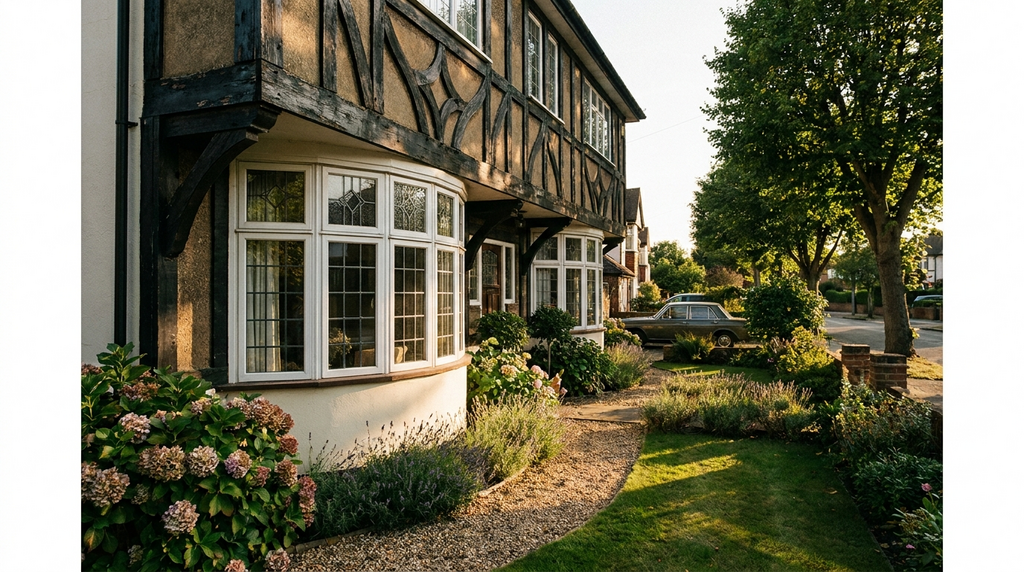
The bay windows, sash openings, and ornate brickwork you’ll find across Newtown or De Beauvoir Road present a genuine challenge. Original timber frames can be warped, rotten, or structurally integral to the bay. A good installer will assess whether you need full frame replacement or can reuse existing frames with new sealed units, the latter is cheaper but only works if the frames are sound.
Slim-profile uPVC or timber-alternative frames are usually the best visual match here. Anything with very wide frames will look out of proportion on a Victorian facade and could attract attention from Reading Borough Council’s planning officers if you’re in or near a conservation area.
1930s and Post-War Semis
Homes built between the wars and into the 1950s typically have larger, more standardised window openings. This actually makes installation more straightforward and cheaper per unit. Steel Crittall-style original windows, common in this era, need careful handling, direct replacement with uPVC or aluminium is usually the practical and cost-effective route.
Practical Installation Realities
Access in Reading’s terraced streets can be genuinely awkward. Narrow roads, residents’ parking zones (RPZs cover large parts of inner Reading), and back gardens that open onto shared alleyways mean installers sometimes need extra time and labour for logistics. Always flag parking restrictions when getting quotes, some firms charge a day rate for parking permits and others absorb it.
How Much Double Glazing Costs in Reading and the South East Area in 2026
Let’s talk real numbers. Prices in Reading sit slightly above the national average but below Central London rates. This reflects the South East premium on labour and the relatively high demand for skilled installers across the region. Here’s what you can realistically expect to pay in 2026:
| Property Type | Windows Replaced | Standard uPVC (Supply & Fit) | Premium uPVC or Composite | Aluminium Slim-Profile |
|---|---|---|---|---|
| 1-bed flat / maisonette | 3-4 windows | £1,800 – £2,400 | £2,600 – £3,200 | £3,200 – £4,000 |
| 2-bed terraced | 5-6 windows | £2,800 – £3,600 | £3,800 – £4,800 | £5,000 – £6,500 |
| 3-bed semi-detached | 7-9 windows | £3,800 – £5,200 | £5,200 – £7,000 | £6,500 – £9,000 |
| 4-bed detached | 10-14 windows | £5,500 – £7,500 | £7,500 – £10,500 | £9,500 – £14,000 |
Compared to neighbouring Wokingham, Reading prices are roughly equivalent. Bracknell tends to be 5-8% cheaper due to slightly lower labour demand, while Henley-on-Thames and Marlow can run 10-15% more expensive, partly because of the higher proportion of conservation and listed properties requiring specialist handling.
The South East average as a whole runs approximately 12-18% above the national baseline, driven by labour costs, fuel surcharges for delivery, and the premium on certified installers in a competitive market.
What Drives Prices Up in Reading Specifically
- Residents’ parking zones, Inner Reading’s RPZ network means installers may need permits or face delays, adding to day rates
- Conservation area requirements, Caversham Village, parts of the Newtown/St. Giles area, and other designated zones require specific frame profiles and sometimes secondary glazing rather than full replacement
- Bay window complexity, Common across Victorian Reading; expect to add £300-£600 per bay for specialist cutting and fitting
- Scaffolding for upper floors, Terraced homes with no rear access may need scaffold tower hire, adding £150-£400 to the job
How Reading’s Weather and Location Shape Your Double Glazing Choices
Reading’s climate is genuinely mild by UK standards. Winters here clock in at around 1,200 to 1,500 heating degree days, that’s noticeably warmer than, say, Manchester or Leeds. What that means practically is that your heating demand is lower, so you don’t necessarily need to specify the absolute highest-specification glazing to see meaningful savings. But that doesn’t mean you should cut corners.
Rainfall in Reading sits between 700mm and 1,000mm per year, moderate rather than extreme, and nothing like the wet conditions of the South West. Wind exposure is similarly balanced; you’re not dealing with the battering that coastal towns receive, so standard weather seals and frame gaskets perform well here without needing marine-grade upgrades.
Where Reading’s climate really does influence your choices is solar gain. The South East gets the best solar irradiance in the UK, around 1,100 to 1,200 kWh per square metre per year. For south and west-facing rooms (very common in Reading’s terraced housing, where the rear gardens typically face south-west), this is actually an asset in winter, passive solar gain through well-specified low-e glass can meaningfully reduce your heating load. But in summer, the same windows can overheat a room quickly.
The practical takeaway: for south and west-facing elevations, specify glass with a solar factor (g-value) of around 0.4-0.5 rather than the lowest available. You want some solar gain in winter without roasting in July. For north-facing windows, prioritise the lowest U-value you can afford.
Reading’s position also means condensation management matters. The Thames valley creates morning fog and higher relative humidity in autumn and winter, particularly in Caversham and the lower-lying parts of Reading near the river. Warm-edge spacer bars, rather than standard aluminium spacers, significantly reduce cold-bridging at the glass edge and cut condensation risk on the frame perimeter.
The Products and Options That Actually Perform Well Here
Given what we know about Reading’s housing stock and climate, here’s what genuinely works rather than a generic product list:
For Victorian and Edwardian Properties (Newtown, Katesgrove, Caversham)
Timber-alternative uPVC with a sculpted or chamfered profile. This replicates the look of original timber sashes without the maintenance headache. Specify A-rated or A+-rated units as a minimum. If you’re in or near a conservation area, your choices may be further constrained, more on that in the planning section below.
For 1930s-1980s Semis and Terraces (Whitley, Tilehurst, Earley, Southcote)
Standard casement uPVC in white or grey is perfectly appropriate and cost-effective. Look for frames with a U-value of 1.2 W/m²K or better and argon-filled double-glazed units. Triple glazing is available but the payback period in Reading’s relatively mild climate is long, double with the right spec will get most homes to EPC Band C.
Key Specifications to Request
- U-value, Aim for 1.2 W/m²K or below on the whole window (not just the glass)
- Gas fill, Argon is standard and fine; krypton is better but costs more and is mainly worth it for slim frames
- Warm-edge spacer bars, Critical for Reading’s autumn humidity; reduces edge condensation and improves thermal performance by around 10%
- Low-e coating, Essential on all units; soft-coat (pyrolytic) performs best in double-glazed units
- Acoustic laminated glass, Worth specifying on any elevation facing a main road; 6.4mm or 6.8mm laminated inner pane makes a genuinely audible difference
How to Find a Trustworthy Double Glazing Installer Near Reading
Reading has a healthy pool of double glazing installers, more so than smaller nearby towns. Companies serving Reading typically also cover Wokingham, Bracknell, Henley-on-Thames, and Marlow, so you have genuine competition working in your favour when getting quotes.
Certifications That Actually Matter
- FENSA, The key one for double glazing. FENSA-registered installers self-certify that your windows comply with Building Regulations and register the work with your local authority. Without this, you’ll need a separate building regulations application costing extra time and money
- CERTASS, An alternative to FENSA; equally valid and accepted by Reading Borough Council
- TrustMark, Government-endorsed quality scheme; membership requires trading standards checks and customer complaints procedures
- Which? Trusted Trader, Useful additional indicator of customer satisfaction history
Questions Worth Asking Before You Sign Anything
- Are you FENSA or CERTASS registered, and will you provide the certificate on completion
- Who actually does the installation, your own employees or subbies
- What is your workmanship guarantee, and is it backed by a deposit protection scheme
- Can you provide three references from jobs in Reading or nearby in the last 12 months
- How do you handle parking and access in an RPZ street
Red Flags to Watch For
Be wary of any company offering same-day or next-day starts with no survey, proper measurement and specification takes time. Unusually low quotes that don’t itemise frame profiles, glass spec, or hardware often mean corner-cutting on sealed unit quality. High-pressure door-to-door selling is rare among reputable South East installers but still happens, never sign on the day of a cold visit.
Lead times from reputable Reading installers in 2026 are typically four to eight weeks from survey to installation. Anything shorter might mean lower demand for a reason; anything over ten weeks suggests the company is overstretched.
Grants and Funding That Could Reduce Your Costs in 2026
Here’s honest news: double glazing sits in an awkward position for grants. It’s rarely funded as a standalone measure, but it does appear within broader retrofit schemes, and Reading homeowners have several routes worth exploring.
ECO4 (Energy Company Obligation)
ECO4 can cover window upgrades as part of a whole-home retrofit package for eligible households. Eligibility is means-tested, you’ll typically need to be receiving a qualifying benefit (Universal Credit, Pension Credit, or similar) and have an EPC of D or below. Given Reading’s average Band D rating, a significant proportion of residents meet the EPC threshold. Apply through your energy supplier or via the national ECO4 portal. Reading Borough Council also has a referral route, contact their energy advice service directly for a fast eligibility check.
Great British Insulation Scheme (GBIS)
GBIS focuses primarily on insulation but can include windows in certain circumstances where glazing is the primary heat-loss measure. Worth applying for alongside any insulation work, the admin is the same and some households qualify for bundled measures.
Reading Borough Council Retrofit Support
Reading Borough Council has historically run supplementary retrofit programmes alongside national schemes. In 2026, check their housing energy section directly, the council has participated in South East regional funding rounds that top up ECO4 funding for households just above the standard eligibility threshold. The specifics change as funding rounds open and close, so a direct call to the council’s housing team is the most reliable route.
VAT on Energy Efficiency Improvements
Glazing is standard-rated for VAT at 20%. The zero rate for energy-saving materials covers insulation, heat pumps and solar panels; HMRC names secondary and double glazing as excluded (VAT Notice 708/6). This is not a grant but it is a meaningful saving, on a £5,000 job, that’s £1,000 you’re not paying. Ensure your installer applies this rate correctly and check your invoice confirms it.
Planning Permission and Regulations in Reading, What You Actually Need to Know
For most Reading homeowners, double glazing falls under permitted development rights and requires no planning permission at all. But there are important exceptions.
Standard Terraced and Semi-Detached Homes
Replacing like-for-like windows in a non-listed, non-conservation-area property is permitted development. You don’t need to apply to Reading Borough Council for planning consent. You do, however, need to ensure the work is Building Regulations compliant, which is where FENSA or CERTASS registration does the job for you automatically.
Conservation Areas in Reading
Reading Borough Council has designated several