Why Basingstoke Homeowners Are Paying Close Attention to Double Glazing Right Now
Basingstoke sits in an interesting position in 2026. With average EPC ratings already at Band C, comfortably above the national Band D average, many local homeowners might assume their homes are already efficient enough. But here’s the thing: that “good enough” attitude is exactly what’s costing people money every month.
The town’s rapid post-war expansion means a huge proportion of Basingstoke’s housing stock was built in the 1960s, 70s, and 80s, decades when single glazing was standard and nobody thought twice about heat pouring out through paper-thin windows. If your home is one of the thousands of semis or detacheds on estates like Popley, Chineham, Oakridge, or South Ham, there’s a very real chance your glazing is either original or a budget replacement that’s well past its best.
Property values here are among the highest in Hampshire, sitting firmly in South East territory. Upgrading to quality double glazing improves warmth and adds to your home’s value and marketability in a competitive local market.
What Double Glazing Actually Involves for a Typical Basingstoke Home
Most Basingstoke homes fall into two camps: the post-war estate houses built between 1950 and 1990, and the newer developer-built homes from the 90s onwards in areas like Chineham and Lychpit. The challenges are quite different depending on which camp you’re in.
Post-War Estate Homes (1950–1990)
This is the largest category in Basingstoke. Think three-bedroom semis on Popley Way, or the larger detacheds around South Ham and Kempshott. These properties often have non-standard window openings, older brick surrounds, and lintels that may need checking before new frames are fitted. Installation teams need to measure carefully, what looks like a standard opening often isn’t.
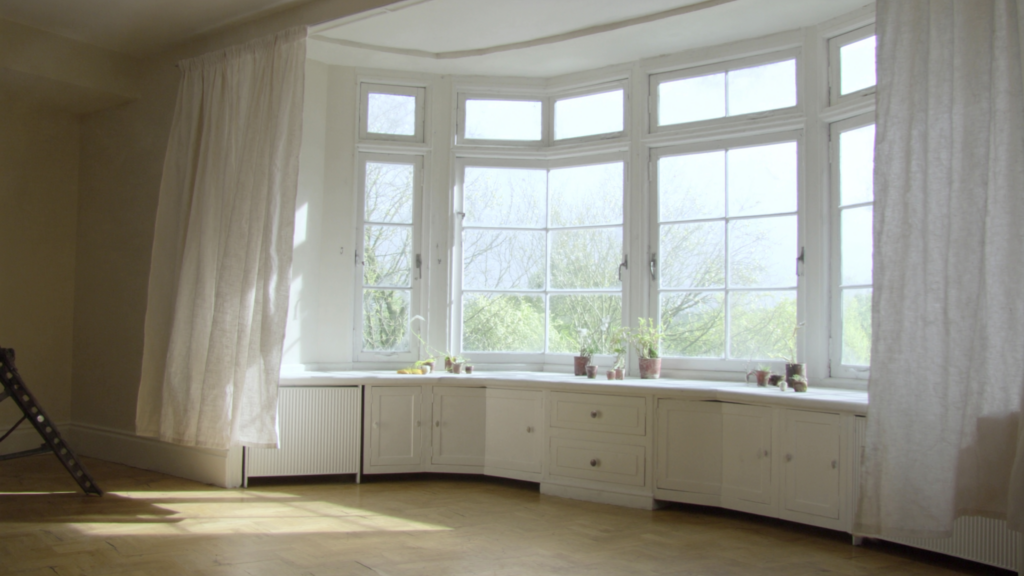
Bay windows are common on these properties, and they add complexity. A single bay can add £400–£600 to an installation because of the angled frames and additional sealing required. Don’t let an installer quote you a flat rate without properly surveying your bay.
Newer Builds (1990–2010)
Homes in Chineham, Brighton Hill, and Hatch Warren from this era often already have double glazing fitted as standard. If you’re in this bracket, the question is usually about upgrading older double glazing to modern A-rated or A+ units, rather than replacing single glazing. The savings here are more modest, but still meaningful.
Older Town Centre Properties
If you’re in or near the Old Basing conservation area, or in one of the older Victorian terraces near the town centre, you face specific constraints. We’ll cover those in the planning section below, but expect more scrutiny and potentially more cost.
How Much Double Glazing Costs in Basingstoke and the South East in 2026
Basingstoke enjoys a useful position for installer pricing. You’re close enough to attract Winchester, Farnborough, and Reading-based companies competing for your business, but far enough from central London that you dodge the premium labour rates that push prices up in Surrey and parts of Berkshire. Even so, South East costs do run 8–12% above the national average, so don’t expect Midlands prices.
| Property Type | Number of Windows | Standard uPVC A-Rated | Premium uPVC or Aluminium | Timber or Heritage Style |
|---|---|---|---|---|
| Small semi-detached (2 bed) | 6–8 | £3,200–£4,500 | £4,800–£6,200 | £6,500–£8,500 |
| Standard semi-detached (3 bed) | 8–10 | £4,200–£5,800 | £6,000–£8,000 | £8,000–£11,000 |
| Larger detached (4 bed) | 12–16 | £6,500–£9,000 | £9,500–£13,000 | £12,000–£17,000 |
| Conservation area property | Varies | Add £800–£1,500 | Add £800–£1,500 | Standard rate |
These figures include fitting, disposal of old windows, and standard making-good. They assume reasonable access, if your home has restricted parking (common in older Basingstoke town centre streets) or requires scaffolding for upper-floor units, budget an extra £300–£700.
Insider tip: Installers based in Fleet, Aldershot, and Newbury regularly quote for Basingstoke jobs. Getting three quotes from companies in this cluster often yields more competitive pricing than sticking purely to firms based within the town itself.
How Basingstoke’s Weather and Location Shape the Right Glazing Choice
Basingstoke doesn’t get the hammering that coastal towns do. You’re inland, reasonably sheltered, and the winters here are genuinely milder than much of the UK, around 1,200 to 1,500 heating degree days per year compared to considerably more in the Midlands or North. What does that mean practically? It means the case for triple glazing is weaker here than in, say, Sheffield or Aberdeen.
Even so, Basingstoke’s position in the Hampshire basin means you do get moderate rainfall, around 700–900mm annually, and the town sits in a slight hollow that can trap cold air on still winter nights. If your home faces north or north-east, heat loss through glazing is still a meaningful factor even in our mild climate.
Making the Most of the South’s Solar Advantage
Here’s where Basingstoke homeowners genuinely win. The South East gets some of the best solar irradiance in the UK, around 1,100–1,200 kWh per square metre per year. South-facing rooms can actually gain meaningful passive solar heat in winter through well-specified double glazing. Choosing a low-emissivity coating with a higher solar factor (g-value above 0.5) for south-facing windows can offset a noticeable chunk of your heating demand.
North-facing windows are a different matter, here you want maximum thermal resistance (low U-value), and the solar gain question matters less. Good installers will specify different glass units for different elevations of your home. If someone quotes you a one-size-fits-all solution, that’s a flag.
The Products and Specs That Actually Perform Well in This Part of Hampshire
Given Basingstoke’s climate profile, here’s what genuinely makes sense for most local homes rather than a generic spec list.
- Frame material: uPVC remains the best value for the vast majority of Basingstoke semis and detacheds. Modern profiles are far better-looking than the chunky 1990s versions, and maintenance is minimal in our damp-but-not-extreme climate. Aluminium is worth considering for larger contemporary homes where slim sightlines matter aesthetically.
- Glass specification: Aim for a whole-window U-value of 1.2 W/m²K or below. The best units now achieve 1.0 W/m²K. Avoid anything above 1.4 W/m²K, it’s effectively older-spec glazing marketed with modern branding.
- Gas fill: Argon-filled units are standard and perfectly adequate for Basingstoke conditions. Krypton fills offer marginal improvement for significant extra cost, not worth it here unless you’re in a heritage property with tight frame dimensions.
- Low-E coating: Non-negotiable. Soft-coat low-E (also called “hard to heat” glass) gives you the best balance of solar gain and heat retention for our latitude.
- Energy rating: Window Energy Rating (WER) of A or above. The Window Energy Rating scheme is straightforward, don’t accept anything below an A for new installations.
- Spacer bars: Warm-edge spacer bars reduce cold-bridging at the edge of sealed units. In Basingstoke’s climate this is the difference between windows that occasionally get condensation on cold mornings and ones that don’t. Worth asking about specifically.
Triple Glazing, Worth It Here?
Honestly, for most Basingstoke homes in 2026, triple glazing is hard to justify on energy savings alone. The step up from quality double to triple might save you an additional £40–£70 per year in heating costs, but the price premium is typically £1,500–£3,000 for a full house. The payback period rarely makes financial sense given our mild winters. Where it does make sense is noise reduction, if you’re near the A339, the ring road, or the railway, triple glazing’s acoustic performance is a compelling secondary reason.
Finding a Trustworthy Double Glazing Installer Near Basingstoke
The installer market in and around Basingstoke is reasonably healthy. You have a good mix of national companies with local branches (some operating out of the Farnborough and Winchester area) and smaller independent firms who’ve been working this patch for decades. Competition keeps prices honest.
Certifications to Look For
- FENSA registration, This is the most important one for double glazing. FENSA-registered installers self-certify that their work meets building regulations, saving you the cost of a council building control inspection. Always check this.
- CERTASS, An alternative competent person scheme to FENSA. Equally valid.
- TrustMark, The government-endorsed quality scheme. Not mandatory but a solid indicator of accountability.
- GGF membership, The Glass and Glazing Federation. Members have deposit protection and a conciliation service if things go wrong.
Questions Worth Asking Before You Sign Anything
- Are you FENSA or CERTASS registered and will you provide the certificate after installation?
- What is the U-value of the complete window unit you’re quoting?
- Do you specify different glass for north-facing versus south-facing windows?
- What deposit do you require and is it protected?
- What is your lead time and who handles any post-installation issues?
Lead times in the South East are currently running at 4–8 weeks for most installations. Be wary of firms promising installation within a week of survey, quality manufacturers need time to produce made-to-measure units properly.
Companies that regularly serve Basingstoke typically also cover Fleet, Aldershot, Newbury, and Reading. If a firm mentions these as part of their regular patch, that’s actually a good sign, it means they’re established in the area rather than travelling down from further afield for one job.
Grants and Funding Available to Basingstoke Residents in 2026
Funding for glazing is more targeted than it used to be, but there are still meaningful options if you know where to look.
ECO4 Scheme
The Energy Company Obligation (ECO4) can cover glazing costs for households on qualifying means-tested benefits including Universal Credit, Pension Credit, or Child Tax Credit. Basingstoke Borough Council works alongside energy suppliers to identify eligible properties. If your home is currently rated Band D or below, and some of the older Popley and Winklebury properties do still fall into this category, you may qualify for fully funded installation. Contact Basingstoke and Deane Borough Council’s housing team to start the referral process.
Great British Insulation Scheme (GBIS)
The Great British Insulation Scheme closed on 31 March 2026. It funded insulation measures only and never covered windows or glazing. Windows can be included as part of a whole-home package assessment. Worth checking even if you don’t receive benefits.
Local Authority Retrofit Schemes
Basingstoke and Deane Borough Council has been active in promoting retrofit funding, and in 2026 the council continues to signpost residents toward Home Upgrade Grant (HUG) funding for off-gas or low-income properties. While glazing alone rarely qualifies as a standalone measure, it often forms part of a wider package alongside insulation or heat pump installation that does receive support.
VAT Position
Glazing is standard-rated for VAT at 20%. The zero rate for energy-saving materials covers insulation, heat pumps and solar panels; HMRC names secondary and double glazing as excluded (VAT Notice 708/6). Glazing is standard-rated for VAT at 20%, so a quote showing 20% VAT is correct and should not be challenged. HMRC names secondary and double glazing as excluded from the energy-saving materials zero rate (VAT Notice 708/6).
Planning Permission and Building Regulations in Basingstoke
For most Basingstoke homeowners, double glazing replacement falls under permitted development, meaning no planning permission is required. Basingstoke and Deane Borough Council follows standard national guidance here. If you’re replacing like-for-like (same material, same style, similar appearance), you won’t need to apply.
Where It Gets More Complicated
Old Basing Conservation Area is the most significant local designation to be aware of. If your property sits within it, any replacement windows must preserve the character of the area. This typically means using timber frames or high-quality painted aluminium rather than white uPVC, and matching original glazing bar patterns. Basingstoke and Deane’s planning department is generally helpful if you contact them before starting work, it’s always better to check than to face enforcement action.
Listed buildings anywhere in the Basingstoke area require Listed Building Consent for window replacement. This is a separate process from planning permission and has stricter requirements. Heritage-approved secondary glazing is sometimes the more practical route for listed properties.
Building Regulations
Even where no planning permission is needed, building regulations still apply to new glazing. This covers thermal performance, safety glazing in critical locations (low-level panels, near doors), and ventilation requirements. If your installer is FENSA or CERTASS registered, they handle this for you. If they’re not, you’ll need a building control inspection from the council, which is an additional cost and admin burden.
What You Will Realistically Save With New Double Glazing in Basingstoke
Let’s be straight with you here, because the glazing industry has a long history of quoting optimistic savings figures that don’t reflect real-world conditions.
Basingstoke’s average gas usage sits at around 10,500 kWh per year, slightly below the national median of 12,000 kWh, which reflects both the milder climate and the fact that local homes are already reasonably well-insulated on average (that Band C average matters). This is important context for savings calculations.
Realistic Annual Savings Figures
- Replacing single glazing with A-rated double glazing (3-bed semi): £180–£280 per year on heating bills. This is the scenario where you see the biggest gains, older Basingstoke estate homes that have never had proper glazing work done.