Why Newbury Homeowners Are Turning to Double Glazing Right Now
There’s a particular kind of draughty chill that Newbury residents know well, the kind that creeps in through ageing single-glazed windows on a January evening when the wind funnels along the Kennet Valley. Even with Berkshire’s relatively mild winters, that cold edge off the North Wessex Downs makes poorly insulated windows feel like a genuine problem rather than a minor inconvenience.
With Newbury already sitting at an above-average EPC Band C, many homeowners here are at an interesting crossroads. You’re not starting from scratch, your home is reasonably efficient. But “reasonably efficient” and “genuinely comfortable and cheap to run” are two different things, and double glazing is often the upgrade that bridges that gap.
There’s also a very practical financial reason to act now. South East property values, Newbury included, are among the highest outside London. That means every pound you spend on meaningful home improvements has strong potential to come back to you when you sell. Estate agents covering the Newbury market consistently flag energy-efficient windows as a visible, bankable feature for buyers coming from Reading, Basingstoke, or London overspill.
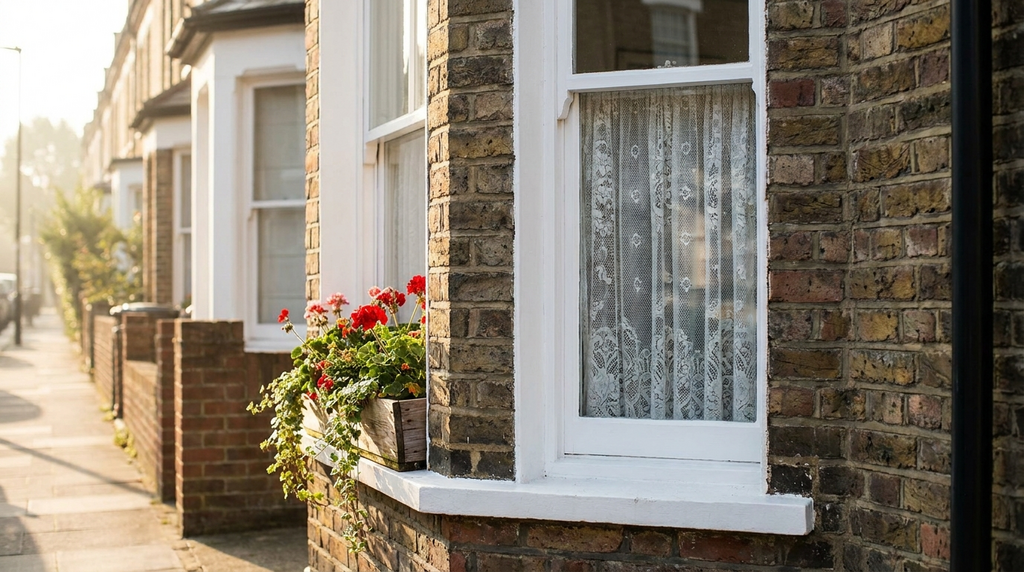
Add to that the fact that older housing stock along roads like Monks Lane, Greenham Road, and the Victorian terraces near the town centre often still carries either original single glazing or early-generation double glazing installed in the 1980s and 1990s that’s long past its best, and you’ve got a very clear picture of why installer enquiries in this part of Berkshire are climbing.
What Double Glazing Actually Involves for a Typical Newbury Home
Newbury’s housing stock tells quite a varied story. You’ve got Victorian and Edwardian terraces close to the town centre and around Northbrook Street’s surrounding streets, interwar semis in areas like Wash Common and Shaw, post-war estates in Newtown and around Andover Road, and then a significant wave of 1970s–1990s detached and semi-detached houses in places like Greenham, Thatcham’s boundary areas, and the newer developments off the A34 corridor.
Each era creates different installation realities. Here’s what that looks like in practice:
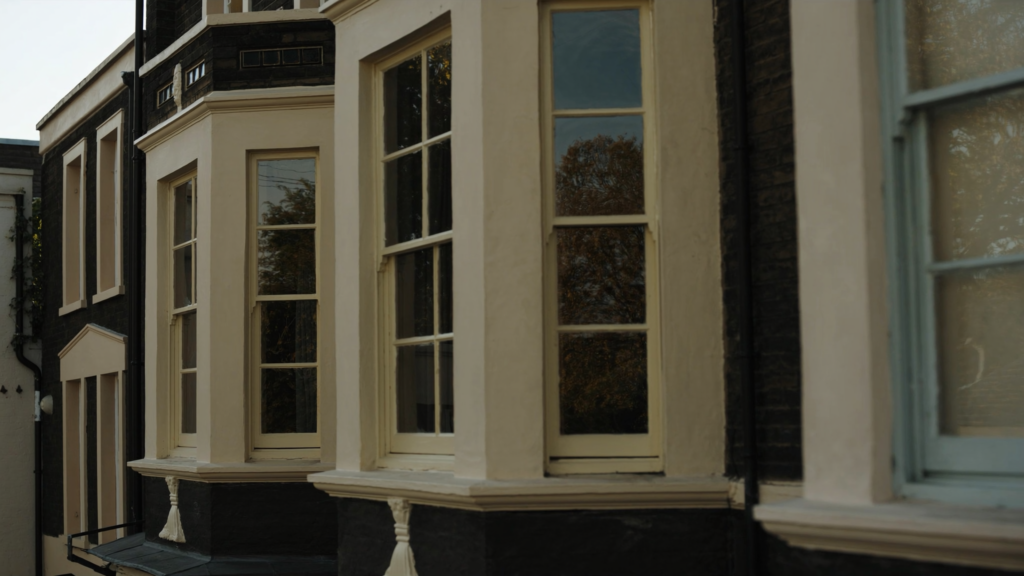
- Pre-1919 Victorian and Edwardian properties, These typically have non-standard timber frame openings and bay windows that require bespoke measurements. Expect longer lead times and higher costs. Many of these homes sit in or near Newbury’s conservation area, which adds planning considerations (more on that below).
- Interwar semis (1920s–1940s), Often feature attractive original timber casements. Replacing these with sympathetically styled uPVC or timber-effect frames is very achievable, but you’ll want to choose profiles carefully so the character of the property isn’t lost.
- Post-war and 1960s–1970s builds, Many of these already had double glazing fitted at some point, but if it’s more than 20 years old, the sealed units are likely to have failed, leaving cloudy or misted panes. A full replacement makes much more sense than individual unit swaps at this age.
- 1980s–1990s and newer detached homes, Often the most straightforward to upgrade. Standard opening sizes, good access, and uPVC frames that can be swapped like-for-like with minimal structural involvement.
For a typical semi-detached home in Newbury, say a 1970s three-bedroom on one of the Wash Common roads, you’re typically looking at replacing 10–14 window units plus a front or back door. Access is generally straightforward, parking for the installer’s van is rarely a problem in suburban streets, and most jobs can be completed in one or two days.
Detached properties, particularly the larger ones in areas like Greenham or Highclere Road, often involve more windows, potentially roof lights, and occasionally orangeries or conservatories that need considering as part of the overall thermal envelope.
How Much Double Glazing Costs in Newbury and the South East in 2026
Let’s talk real numbers. Newbury sits in an interesting pricing zone, you’re not paying London rates, but you are in the South East, where labour costs run roughly 10–15% above the national average. Installers from Basingstoke (23km away), Reading (25km), and Didcot (24km) all cover this market, which keeps competition reasonably healthy, but you won’t find the bargain-basement prices you might encounter in the North East or Midlands.
| Property Type | Number of Windows | Budget uPVC | Mid-Range uPVC | Premium / Composite |
|---|---|---|---|---|
| 2-bed semi (Newbury typical) | 6–8 windows | £2,800–£3,800 | £4,200–£5,500 | £6,500–£8,500 |
| 3-bed semi (most common) | 10–12 windows | £4,200–£5,500 | £6,000–£8,000 | £9,000–£13,000 |
| 3–4 bed detached | 12–16 windows | £5,500–£7,500 | £8,000–£11,000 | £12,000–£18,000 |
| Conservation area / period home (bespoke) | Variable | Not applicable | £7,000–£12,000 | £14,000–£25,000+ |
| Individual sealed unit replacement | Per pane | £80–£150 per unit | £150–£250 per unit | £250–£400 per unit |
These figures include supply, installation, and removal of old frames. VAT at 5% applies to double glazing installation on existing residential properties, make sure any quote you receive makes this clear rather than adding it as a surprise at the end.
Compared to the South East average, Newbury sits roughly in the middle of the regional range. Reading and the M4 corridor tend to attract a slight premium due to congestion charges and parking costs for installers. Basingstoke is broadly comparable. If you’re getting quotes, it’s worth asking whether the company is based locally or travelling from further afield, a Basingstoke or Thatcham-based installer will often be more competitive than one driving from outer London.
Insider tip: Get at least three quotes, and ask each one to itemise the cost per frame style rather than just giving you a total. This makes genuine comparison much easier and reveals whether a low headline price is hiding cheaper specification.
How Newbury’s Weather and Location Shape the Best Double Glazing Choices
Newbury’s climate is genuinely pleasant by UK standards. You’re in a sheltered inland position, not exposed to coastal winds like Brighton, not blasted by the Atlantic like Devon. The Kennet Valley provides natural shelter, and with 1,200–1,500 sunshine hours per year and a best-in-country solar irradiance rating of 1,100–1,200 kWh per square metre annually, you actually get meaningful solar gain through south and west-facing windows for much of the year.
That’s worth factoring into your glazing choices. Here’s what Newbury’s specific conditions suggest:
- South-facing windows, You want to maximise solar gain here without overheating. Look for glass with a solar factor (g-value) of around 0.35–0.45. This lets warming winter sun in while limiting summer overheating. Given Newbury’s sunshine hours, this balance really does matter.
- North-facing windows, Prioritise low U-values (thermal efficiency) above all else. These windows gain almost no solar benefit, so their only job is to keep heat in. A U-value of 1.0 W/m²K or below is the target.
- West-facing windows, Newbury’s prevailing weather comes from the south-west. While rainfall is moderate (700–900mm per year), you’ll want well-sealed frames and good drainage channels on west-facing windows to prevent any water ingress over time.
- Noise considerations, While Newbury isn’t a high-noise environment generally, homes near the A34, the railway line through the town centre, or the racecourse area during event seasons will benefit significantly from acoustic laminated glass in the inner pane, a worthwhile upgrade for around £50–£100 extra per window.
The relatively mild winters (1,200–1,500 heating degree days) mean your payback calculation is more modest than for, say, a house in Manchester. You’re not fighting brutal cold, but you are fighting the drip-drip cost of slightly elevated heat loss across a long mild winter, and that adds up across Newbury’s typically gas-heated homes.
The Products and Specifications That Perform Best in Newbury Homes
Given Newbury’s mix of housing eras and its climate profile, here’s an honest assessment of what actually works well rather than a generic product list.
For 1970s–1990s Detached and Semi-Detached Homes
White or cream uPVC with 70mm chamfered profiles is the standard choice and it performs very well. Look for A-rated or A+-rated units with warm-edge spacer bars (these replace the old aluminium spacers that created cold spots). Pilkington Optitherm or Saint-Gobain equivalent glass with a centre-pane U-value of 1.1 W/m²K or below is the current benchmark.
For Victorian and Edwardian Terraces Near the Town Centre
Slim-profile double glazing, sometimes called slim-line or heritage double glazing, maintains the sightlines of original timber windows without sacrificing modern thermal performance. Timber-look uPVC or actual sustainably sourced hardwood frames are both viable. Avoid standard chunky uPVC profiles on pre-1919 properties; they look wrong and may cause issues if you’re in or near the conservation area.
For Larger Detached Homes in Greenham and Surrounding Villages
Anthracite grey or dark bronze aluminium-framed double glazing has become increasingly popular in Newbury’s higher-value homes. These frames are slimmer than uPVC, more durable long-term, and carry a premium aesthetic that suits larger contemporary or part-renovated properties. Budget for 20–30% above equivalent uPVC pricing.
Key Specifications to Request
- Overall window U-value of 1.4 W/m²K or below (the current Building Regulations requirement for replacement windows is 1.6, but push for better)
- Warm-edge spacer bars as standard, not aluminium
- Low-E glass coating on inner pane as standard
- Argon gas fill between panes (krypton fill is available for slimmer units)
- BFRC Window Energy Rating of A or above
- 10-year minimum guarantee on sealed units against misting
How to Find a Trustworthy Double Glazing Installer Near Newbury
The Newbury and wider West Berkshire market is served by a mix of local independents and regional companies operating out of Reading, Basingstoke, and Andover. There are good installers across all of these, but the market also has its share of high-pressure sales operations, the kind that arrive with a “today only” discount and a price that mysteriously drops by 40% when you hesitate.
Here’s how to protect yourself:
- Check FENSA or CERTASS registration, Any company replacing windows in England must be registered with one of these schemes. This isn’t optional; it’s a legal requirement. Registration means they self-certify compliance with Building Regulations and handle the notification paperwork for you.
- Look for TrustMark accreditation, Government-endorsed quality scheme. Not all glaziers have it, but those that do have been independently assessed.
- Check their local reviews specifically, Google reviews mentioning Newbury, Thatcham, or Hungerford addresses are far more useful than generic five-star scores. Look for mentions of how they handled problems, not just glowing completions.
- Ask about their surveyor, The person who surveys your home and the person who installs are often different. Ask whether they use directly employed fitters or subcontractors, and what quality control exists between survey and fit.
- Get the guarantee in writing before signing, A verbal ten-year guarantee means nothing. Ask to see the actual guarantee document and check whether it transfers to a new owner if you sell.
Red flags to watch out for
- Any salesperson who won’t leave you to think overnight
- Prices that start very high and then fall dramatically during the same visit
- Companies that can’t provide a FENSA registration number upfront
- Very low quotes with vague specifications, often a sign of thinner glass, cheaper spacers, or non-compliant U-values
Lead times in this part of the South East are currently running at 6–10 weeks from survey to installation for most companies, slightly longer for bespoke conservation area work. Don’t be pressured by claims that prices are about to rise dramatically, material costs are stable in 2026.
Grants and Funding That Could Reduce Your Costs in Newbury in 2026
Funding for double glazing has narrowed compared to previous years, but meaningful help is still available for eligible Newbury households. Here’s the honest picture.
ECO4 Scheme (Energy Company Obligation)
ECO4 provides fully or partially funded energy efficiency improvements including glazing upgrades for low-income households. To qualify, you typically need to be receiving a qualifying benefit (such as Universal Credit, Pension Credit, or Child Tax Credit) and have a home currently rated EPC Band D or below. Given Newbury’s above-average Band C rating, many residents won’t qualify on the EPC criterion, but if you’re in an older Band D or E property and receiving benefits, this is absolutely worth exploring. Apply through your energy supplier or via the government’s ECO4 portal.
Great British Insulation Scheme (GBIS)
The Great British Insulation Scheme closed on 31 March 2026. It funded insulation measures only and never covered windows or glazing. West Berkshire Council’s area includes a range of tax band properties across Newbury, and some homeowners in mid-range bands may qualify for partial support. The scheme primarily targets insulation measures, but glazing can be included as part of a whole-home retrofit assessment. Contact West Berkshire Council’s housing energy team directly to check current availability.
West Berkshire Council Local Support
West Berkshire Council runs periodic retrofit support initiatives and has participated in regional South East net-zero schemes. It’s