Why Didcot Homeowners Are Taking Double Glazing Seriously Right Now
Didcot is changing fast. The town’s population has grown steadily over the past decade, and with that growth has come a wave of homeowners investing in their properties, not just for comfort, but because South East property values make every improvement worthwhile. In a town where the average semi-detached house commands serious money, getting your energy performance right matters both for your bills and your resale value.
But there’s something more specific driving the double glazing conversation in Didcot right now. A significant chunk of the town’s housing stock, particularly the terraced and semi-detached homes spread across areas like Ladygrove, Northbourne, and the older streets closer to the town centre, was built during the post-war boom and into the 1970s and 80s. That means single glazing is still surprisingly common, and even where original double glazing was fitted, it’s now approaching the end of its functional life. Seals fail, frames warp, and what was considered adequate in 1992 simply isn’t up to modern standards.
Didcot already sits above the national average at EPC Band C, which is genuinely good news. But “good” doesn’t mean “done”. If your home is still sitting on single-pane windows, or you’ve got tired 20-year-old units with failed argon fills, there’s real money left on the table every winter.
What Double Glazing Actually Involves for a Typical Didcot Home
For most Didcot properties, the 1960s semis on Cow Lane Road, the terraces near Great Western Park, the Victorian-era cottages closer to the old town, double glazing installation follows a fairly predictable pattern. But the details matter a great deal depending on your exact property type.
Semi-Detached and Terraced Homes
These are the bread-and-butter of Didcot’s housing stock, and they’re actually well-suited to double glazing upgrades. Semi-detached homes typically have 8 to 12 windows plus a front door, while terraced properties are often more compact with 6 to 10 windows. Most installations can be completed in one to two days without scaffolding, which keeps costs down considerably.
The key challenge with terraced homes specifically is access. In areas like Edmonds Road or the tighter streets off the Broadway, parking and working space can be limited. Installers need to bring in frames and remove old units, sometimes through the property itself if the rear garden isn’t accessible by vehicle. Always mention access constraints when getting quotes, because it can add £100 to £300 to a job if not planned in advance.
Older Homes and Period Properties
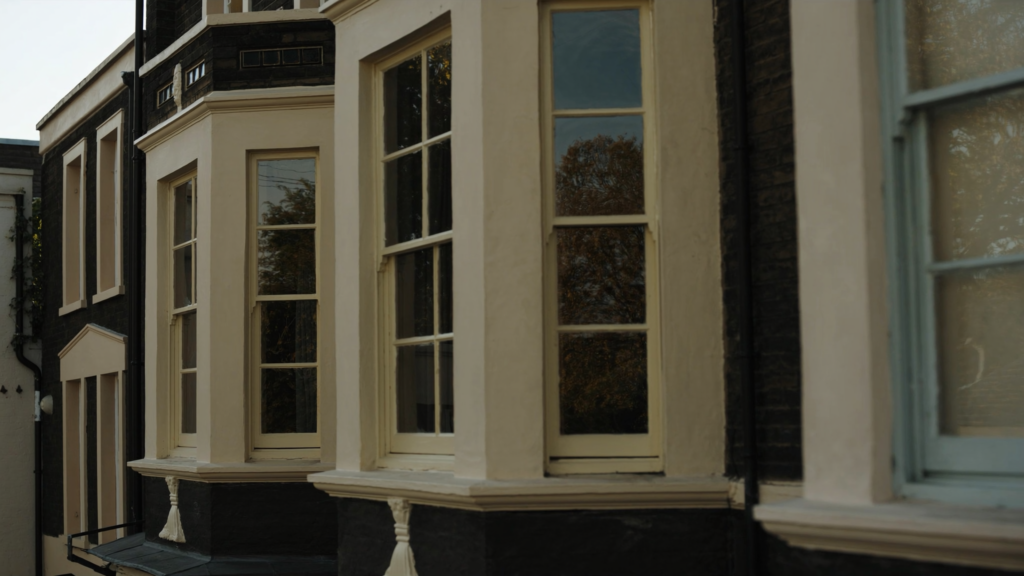
Didcot has a notable number of Edwardian and early Victorian properties, particularly around Lydalls Road and Station Road areas. These homes often have non-standard window openings, wider bays, unusual aspect ratios, or deep reveals, that require bespoke frames rather than off-the-shelf units. This pushes costs up, but also means you need an installer who measures carefully rather than just ordering standard sizes. A poor fit in a Victorian bay window will look wrong and perform worse than you’d hope.
- Post-war semis (1945–1970), Often the easiest upgrades; standard opening sizes, straightforward frame replacement
- 1970s–1990s new builds, May already have early double glazing; focus is on replacing failed units or upgrading to A-rated glass
- Pre-1920 Victorian and Edwardian, Bespoke sizing required; potential conservation area implications (see the planning section below)
- 2000s onwards new builds (Great Western Park), Usually already have good double glazing; triple glazing upgrades or door replacements may be more relevant
How Much Double Glazing Costs in Didcot and the South East in 2026
Let’s talk real numbers. Prices in Didcot broadly track the South East average, which runs around 10 to 15% higher than the national average. This reflects higher labour costs and the fact that many installers operate across a wide patch from Oxford down through Abingdon and Newbury, making scheduling and travel time a factor in their pricing.
| Property Type | Number of Windows | Basic uPVC Double Glazing | Mid-Range A-Rated uPVC | Premium Aluminium or Timber |
|---|---|---|---|---|
| 1-bed terraced | 4–6 windows | £2,400–£3,200 | £3,200–£4,500 | £5,500–£7,000 |
| 2-bed terraced / semi | 6–9 windows | £3,500–£4,800 | £4,800–£6,500 | £7,500–£10,000 |
| 3-bed semi-detached | 8–12 windows | £4,500–£6,200 | £6,200–£8,500 | £9,500–£14,000 |
| 4-bed detached | 12–16 windows | £6,000–£8,500 | £8,500–£11,500 | £13,000–£19,000 |
| Front door (composite) | 1 door | £900–£1,200 | £1,200–£1,800 | £2,000–£3,500 |
Insider tip, installers serving Didcot typically cover a cluster that includes Abingdon, Wantage, Oxford, and Newbury. If you can be flexible on your installation date (mid-week, off-peak months like February or November), you’re more likely to be fitted in as a “filler” job and negotiate a better price. Installers hate empty diary slots.
Compared to somewhere like Henley-on-Thames (25km away), Didcot tends to be slightly more competitively priced simply because there are more installers willing to work here. Henley’s conservation-heavy character means fewer straightforward jobs, which inflates averages. Abingdon sits at a similar price point to Didcot, while Oxford premiums can run 10 to 20% higher due to parking restrictions and conservation area complexity.
How Didcot’s Weather and Location Shape Your Best Double Glazing Choices
Didcot sits in the Vale of White Horse, sheltered from the worst of the southwesterly Atlantic weather by the Berkshire Downs to the south. This is genuinely good news for your home, it means you’re not battling the same wind-driven rain exposure that coastal or upland homes face. Rainfall sits in the 700 to 800mm per year range, which is moderate for the UK.
What this means practically is that your frame material choice is less critical than it might be in, say, a coastal town. uPVC performs excellently here, it doesn’t face the UV bleaching and salt corrosion issues that coastal properties contend with. Even so, south-facing windows in Didcot get excellent solar irradiance (over 1,100 kWh/m² per year, among the best in the UK), so solar gain becomes a real consideration.
The Solar Gain Question
This is something many Didcot homeowners don’t think about until it’s too late. If your living room or kitchen extension faces south or southwest, standard double glazing can make rooms uncomfortably hot in summer. Look for glazing with a solar heat gain coefficient (SHGC) of around 0.35 to 0.45 for south-facing aspects, this lets useful winter warmth in while reducing peak summer overheating. Don’t make the mistake of fitting the highest-rated thermally efficient glass everywhere without checking the aspect.
Thermal Performance in Didcot’s Climate
With 1,200 to 1,500 heating degree days per year, Didcot’s winters are milder than the UK average. This means the payback on triple glazing, which is overkill for this climate, is very long indeed. Standard A-rated double glazing (U-value of 1.2 W/m²K or better) hits the sweet spot for this climate zone. Going triple glazed is more justifiable in Scotland or the north of England; here, the additional cost rarely pays back within a sensible timeframe.
The Products and Options That Actually Perform Best in Didcot
Based on the housing stock and climate here, here’s an honest expert view on what to specify and what to skip.
Frame Materials
- uPVC with reinforced steel inserts, The best all-round choice for most Didcot homes. Durable, low maintenance, and widely available from local installers. Look for multi-chambered profiles (at least 5 chambers) for best thermal performance
- Aluminium with thermal break, Worth considering for contemporary extensions or large pane areas. More expensive but slimmer sightlines. Suits the newer build character of Great Western Park properties
- Engineered timber, The right call for Victorian and Edwardian properties in conservation-sensitive streets. Higher maintenance but planning-friendly and genuinely beautiful. Budget an extra £1,500 to £3,000 over uPVC for a full house
- Avoid solid aluminium without thermal break, Still sold by some installers. It will perform worse than modern uPVC and can cause condensation issues
Glass Specifications to Ask For
- Warm-edge spacer bars, Reduce cold bridging at the frame edge and meaningfully reduce condensation. ThermoBar or SuperSpacer are common brand names to ask about
- Argon gas fill, Standard in good quality units. Make sure you’re not being quoted for air-filled units, which are significantly less efficient
- Low-E coating on inner pane, Reflects heat back into the room. Should be standard; ask specifically for a U-value of 1.2 or below
- Laminated glass for ground-floor front windows, Adds security and acoustic performance. Particularly worth it if your property faces a busy road near the town centre or railway line
One specific Didcot tip, properties near the Didcot Railway Centre or along Station Road can suffer from vibration and low-frequency noise from passing freight trains. Acoustic double glazing (6.4mm laminated inner pane with a wider air gap of 20mm) makes a noticeable difference here, and it’s worth the modest premium over standard units.
Finding a Trustworthy Double Glazing Installer Near Didcot
The South East installer market is well-developed, and Didcot benefits from being within easy reach of firms based in Oxford, Abingdon, Wantage, and Newbury. However, the proximity to London means some larger national companies prioritise the capital, and lead times can stretch to 6 to 10 weeks during busy spring and autumn periods.
Certifications That Actually Matter
- FENSA registered, This is non-negotiable. FENSA installers self-certify that their work complies with Building Regulations, and they issue you with a certificate you’ll need when you sell your home. An unregistered installer means you’ll have to apply for retrospective building control approval, costly and frustrating
- TrustMark accredited, The government-endorsed quality mark for home improvement trades. A good secondary indicator of reliability
- Certass alternative to FENSA, Equally valid; just means they certify through a different competent person scheme. Both are fully acceptable
- Which? Trusted Trader or Federation of Master Builders member, Useful additional indicators, particularly for larger jobs
Questions Worth Asking Before You Sign Anything
- Are you FENSA or Certass registered and will you provide the certificate?
- What U-value will the finished units achieve?
- What’s the exact frame profile and how many chambers does it have?
- What warranty do you offer on frames, sealed units, and hardware, separately?
- Who does the actual installation, your own team or subcontractors?
- Have you worked on properties in conservation areas in South Oxfordshire?
Red flags, pressure to sign on the day, vague U-value claims, unusually low quotes without explanation, no physical business address, wanting full payment upfront. Reputable installers covering Didcot and the surrounding area typically ask for a deposit of 10 to 25% with the balance on completion.
Grants and Funding Available to Didcot Residents in 2026
Didcot sits within the South Oxfordshire and Vale of White Horse district council area, and there are several funding routes worth exploring, though eligibility criteria mean not everyone qualifies.
ECO4 Scheme
The Energy Company Obligation (ECO4) scheme remains active in 2026 and can fund window upgrades as part of a wider package of improvements. To qualify, your household typically needs to receive means-tested benefits (Universal Credit, Pension Credit, income-based JSA or ESA) or have a low EPC rating. Given that Didcot averages Band C, many homes won’t qualify on EPC grounds alone, but if you’re on qualifying benefits and your home is Band D or below, it’s absolutely worth applying. Approach your energy supplier directly or through an ECO4 registered installer.
Great British Insulation Scheme (GBIS)
GBIS focuses primarily on insulation rather than glazing, but windows are sometimes included where they form part of a whole-house package. Properties in Council Tax bands A to D in Didcot and households on qualifying benefits are the primary target group. Contact Vale of White Horse District Council’s energy team for current local scheme status.
Local Authority Retrofit Schemes
Vale of White Horse District Council has participated in various Warmer Homes-type initiatives, sometimes offering subsidised surveys and referrals to approved contractors. These schemes change annually, it’s worth a direct call to the council’s housing and sustainability team to ask what’s currently available. Oxfordshire County Council has also run retrofit funding through the Local Energy Advice Demonstrator programme, and successor schemes may be available in 2026.
VAT
Glazing is standard-rated for VAT at 20%. The zero rate for energy-saving materials covers insulation, heat pumps and solar panels; HMRC names secondary and double glazing as excluded (VAT Notice 708/6). This is automatically applied by compliant installers and is a straightforward 20% saving over commercial installations, make sure your quotes already reflect this rate.
Honest note, if your home is already Band C or above and you don’t receive qualifying benefits, grant funding for double glazing specifically is limited. The biggest financial case