Why Minehead Homeowners Are Turning to Double Glazing Right Now
There’s a quiet but noticeable shift happening across Minehead’s streets, from the Victorian terraces running off The Avenue to the post-war semis spreading up towards the edges of Exmoor National Park. More and more homeowners are replacing rattling single-glazed windows, and it’s not hard to understand why.
Minehead sits in a unique position. With an average EPC rating of Band D, the town is right at the national average, but that masks a wide spread. Plenty of older properties here are losing heat through draughty frames that date back decades, while energy bills have climbed sharply enough to make even modest improvements feel urgent. For a town where a significant number of residents are retired and spending more time at home, comfort and running costs matter enormously.
There’s also the damp factor. Minehead’s position on the Somerset coast, with the Bristol Channel not far to the north and the hills of Exmoor funnelling moisture down towards the town, means condensation and cold spots are a genuine daily problem for homes with inadequate glazing. When your bedroom windows are streaming every morning from October to April, double glazing stops feeling like a luxury.
And then there’s the noise. Minehead’s seasonal tourism trade is wonderful for the local economy, but if you live near The Strand or the seafront areas, summer evenings can be surprisingly loud. Good double glazing makes a real difference to acoustic comfort, something that often gets overlooked in favour of energy savings alone.
What Double Glazing Actually Involves for a Typical Minehead Home
Most of Minehead’s housing stock falls into two broad eras, Victorian and Edwardian terraces built from local sandstone or brick, and mid-20th century semi-detached homes put up in the post-war expansion of the town. Each presents its own quirks for fitting new glazing.
The older terraced properties, particularly those around the town centre and lower slopes, often have non-standard window openings. Victorian builders weren’t working to modern modular dimensions, which means off-the-shelf units frequently don’t fit cleanly. You’ll typically need made-to-measure frames, which adds to both lead time and cost. The good news is that sandstone surrounds are solid and don’t generally require extensive remedial work, but your installer needs experience with older masonry, not just modern UPVC on brick estates.
For the semi-detached homes that dominate areas like Periton and Alcombe, installation is usually more straightforward. Standard-sized openings, cavity walls, and better access all keep costs down. Even so, shared walls mean you’ll want to keep your neighbour informed about scaffolding or access requirements, most installers working in Minehead are used to this kind of coordination, but it’s worth raising early.
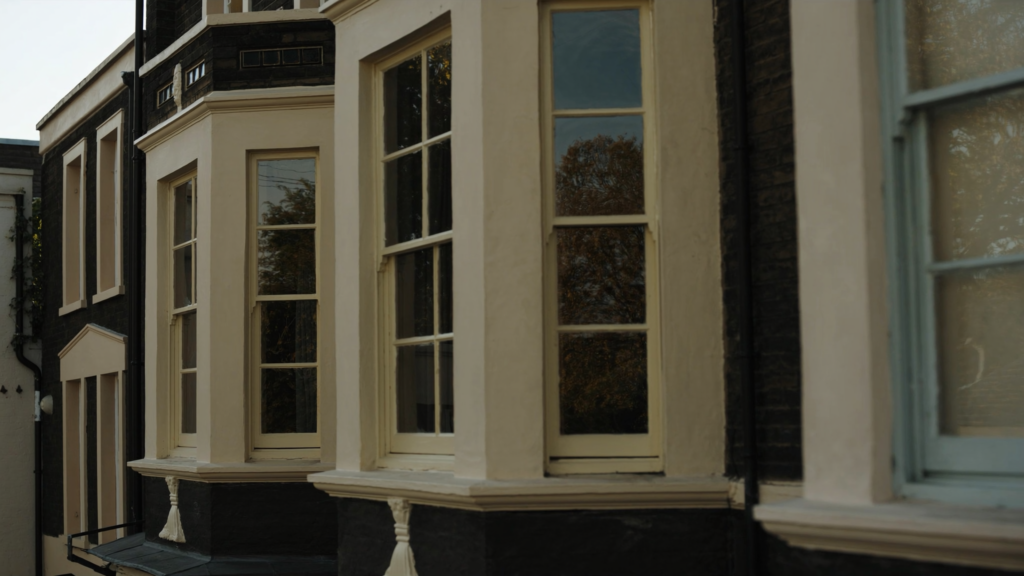
One thing that catches people out in this area is the mix of timber sash windows in older properties. If your home has original sashes, a direct like-for-like UPVC replacement might technically be possible but could look deeply wrong on the building, and could even affect your property value in a conservation-sensitive area. Timber or aluminium slim-profile alternatives are worth discussing with your installer before committing.
How Much Double Glazing Costs in Minehead and the South West Area in 2026
Minehead is a small town of around 12,000 people, which has a direct bearing on pricing. Installers typically travel from Taunton (about 34km away) or occasionally from Tiverton or Bridgwater to cover jobs here. That travel overhead gets factored into quotes, and you’ll generally pay a modest premium compared to homeowners in larger urban centres.
Here’s a realistic breakdown of what to expect in 2026:
| Property Type | Number of Windows | Basic UPVC (A-rated) | Mid-Range UPVC (A+ rated) | Premium Aluminium or Timber |
|---|---|---|---|---|
| Small terraced (2-bed) | 6-8 | £3,200 – £4,400 | £4,500 – £5,800 | £6,500 – £9,000 |
| Mid terraced (3-bed) | 8-10 | £4,200 – £5,500 | £5,600 – £7,200 | £8,000 – £11,500 |
| Semi-detached (3-bed) | 10-12 | £5,000 – £6,500 | £6,500 – £8,500 | £9,500 – £14,000 |
| Semi-detached (4-bed) | 12-15 | £6,200 – £8,000 | £8,200 – £10,500 | £12,000 – £17,000 |
The South West regional average tends to run around 5-10% higher than the national average, largely because of logistics, materials suppliers are concentrated further east, and rural delivery adds cost. Minehead specifically sits at the upper end of that range simply due to its size and relative remoteness compared to Taunton or Tiverton.
If you’re getting quotes from companies in Barry or Porthcawl (both around 34km away on the Welsh side of the Bristol Channel), be aware that Welsh building regulations differ slightly and some guarantees may not be backed by the same English industry bodies, always check FENSA registration applies to your English address.
Insider tip, getting three quotes is standard advice, but in Minehead it genuinely matters more than in a city. With fewer local fitters, competition is tighter and prices can vary significantly between a travelling Taunton firm and a smaller local operator who knows the town’s older property stock intimately.
How Minehead’s Weather and Location Affect Your Double Glazing Choices
Minehead’s climate is genuinely mild by UK standards. With 1,200 to 1,500 heating degree days per year, you’re at the lower end of heating demand nationally, which means double glazing won’t deliver the dramatic savings you’d see in, say, a similar property in Yorkshire or the Scottish Borders. Set your expectations accordingly.
What Minehead does have, though, is excellent solar irradiance, among the best in the UK at 1,100 to 1,200 kWh per square metre per year. This matters more than many people realise when choosing glazing. South-facing windows with the right specification can act as passive solar collectors, contributing meaningful warmth on winter days. Choosing glass with a higher solar heat gain coefficient (SHGC) on south-facing aspects can offset some of your heating costs without any moving parts or maintenance.
On the flip side, Minehead’s proximity to the coast and the Bristol Channel means salt-laden air reaches the town regularly. This is particularly relevant if you’re choosing frames. UPVC handles salt air well, but lower-grade aluminium fittings and hardware can corrode faster than they would inland, always ask about marine-grade or powder-coated finishes if you’re going for aluminium frames.
Rainfall sits in the 700-900mm per year range, moderate, but consistent. Good sealing and drainage channels in your frame profiles matter here. Poor installation that allows water ingress around frames is a common complaint in Somerset generally, and in a town with as many older window openings as Minehead, it pays to check that your installer uses expanding foam tape and silicone sealing as standard, not one or the other.
The Products and Options That Work Best in Minehead’s Homes
Given everything above, here’s what actually makes sense for most Minehead properties rather than a generic product list.
- White UPVC A+ rated casements for the mid-20th century semis in Alcombe and Periton. They’re cost-effective, salt-resistant, low maintenance, and the energy performance is excellent. Look for a U-value of 1.2 W/m²K or better, the legal minimum is 1.4 W/m²K but you can do better than that for a relatively small cost premium.
- Slim-profile timber or aluminium for Victorian terraces, especially in the town centre conservation zone. Modern engineered timber performs well in damp climates when properly finished, and the sight lines look right on a period property in a way that chunky white UPVC simply doesn’t.
- Warm-edge spacer bars are non-negotiable in this climate. The standard aluminium spacer around the edge of a double-glazed unit is a thermal weak point, warm-edge alternatives (Super Spacer, ThermoBar) reduce cold bridging and significantly cut down on edge condensation. They add around £30-50 per window but the difference in cold-weather comfort is noticeable.
- Argon-filled units rather than air-filled. Standard for most reputable installers now, but worth confirming. The denser gas slows heat transfer and improves the centre-pane U-value from around 1.6 to around 1.1 W/m²K.
- Triple glazing, probably overkill for most Minehead homes given the mild climate. The extra weight can stress older frames, and the payback period extends significantly when you’re not fighting harsh northern winters. Save your budget for better-specified double units instead.
How to Find a Trustworthy Double Glazing Installer Near Minehead
Because Minehead doesn’t have a large pool of dedicated local glazing firms, you’ll likely be dealing with companies based in Taunton, Bridgwater, or occasionally further afield. That’s not a problem in itself, but it does mean doing your homework is especially important.
The most important certification to check for is FENSA registration. FENSA-registered installers self-certify that their work meets Building Regulations, which saves you applying for a Building Notice yourself. Always ask for the FENSA certificate on completion, it’s essential for when you sell the property.
TrustMark registration is a strong secondary indicator of quality. It’s government-endorsed and covers workmanship standards beyond just compliance. For older properties in particular, TrustMark installers tend to have the broader skills set needed to handle non-standard openings.
Questions worth asking any installer before signing
- Have you worked on properties of this age and construction type before in the Minehead or Exmoor area?
- What guarantee do you provide on frames and sealed units separately, and who underwrites it?
- Do you handle the FENSA registration or do I need to?
- How do you handle parking and access on a narrow town-centre street?
- What’s your current lead time from survey to installation?
Lead times in the South West are currently running at 6-12 weeks from survey to installation for most reputable firms. Be wary of anyone promising availability in under three weeks, it either means they’re quiet for a reason or they’re subcontracting to teams you haven’t vetted.
Red flag to watch for, installers who quote over the phone without a home survey. In a town with as many non-standard openings as Minehead, anyone quoting without seeing the property is either going to come back with a revised higher price or cut corners on the job. Always insist on a free in-home survey before any quote is finalised.
Grants and Funding That Could Reduce Your Costs in 2026
The funding landscape has shifted somewhat, but there are still real options available to Minehead homeowners in 2026.
ECO4 (Energy Company Obligation) remains the main route for lower-income households. If you receive qualifying benefits, including Pension Credit, Universal Credit, or certain disability payments, you may be eligible for fully or partially funded window upgrades. Eligibility is means-tested and your property must be EPC Band D or below. With Minehead’s average sitting squarely at Band D, a significant proportion of households qualify. Apply through your energy supplier or via Somerset Council’s referral scheme.
Great British Insulation Scheme (GBIS) targets households in EPC Band D to G, with a focus on single measures that deliver meaningful heat retention improvement. Double glazing can qualify as the primary measure in some cases, particularly where existing single glazing is the dominant heat loss pathway. Check current eligibility at the government’s simple energy advice portal.
Somerset Council’s Warmer Homes initiative provides additional top-up support for fuel-poor households, including those over pension age on fixed incomes, which covers a meaningful slice of Minehead’s population. Contact Somerset Council directly to check current availability as funding allocations change through the year.
Glazing is standard-rated for VAT at 20%. The zero rate for energy-saving materials covers insulation, heat pumps and solar panels; HMRC names secondary and double glazing as excluded (VAT Notice 708/6). This applies to the full installation cost, not just the materials, a saving that amounts to £200-£800 on a typical job.Glazing is standard-rated for VAT at 20%, so a quote showing 20% VAT is correct and should not be challenged. The zero rate for energy-saving materials covers insulation, heat pumps and solar panels; HMRC names secondary and double glazing as excluded (VAT Notice 708/6).
For off-grid properties in the surrounding rural areas (and there are quite a few on the Exmoor fringes near Minehead), the Boiler Upgrade Scheme (BUS) won’t cover windows directly, but improving glazing first before installing a heat pump is the recommended sequencing, and some BUS installers will help you prioritise this order of works.
Planning Permission and Regulations in Minehead, What You Actually Need to Know
For most Minehead homeowners, double glazing falls under permitted development rights, meaning no planning application is needed. But there are important local exceptions you need to be aware of.
Minehead has a designated Conservation Area covering much of the older town centre and seafront vicinity. If your property falls within this boundary, permitted development rights for window replacement are restricted. You’ll generally need to ensure that replacement windows match the appearance of the originals, which in practice means like-for-like frames in terms of style, material appearance, and colour. White UPVC replacing timber sashes in a conservation area can technically require prior approval from Somerset Council (the relevant local planning authority following Somerset’s 2023 unitary authority reorganisation).
The practical advice here is simple, contact Somerset Council’s planning department before ordering anything if you’re in or near the conservation area. A pre-application query costs nothing and saves potentially having to undo work. Their planning portal allows you to check your postcode against the conservation area boundary easily.
For listed buildings, and there are some in central Minehead, listed building consent is required for any window replacement, full stop. The process is more involved and you’ll need a specialist who understands heritage glazing options. Secondary glazing (fitted internally without altering the original windows) is sometimes the approved route in these cases.
For standard semi-detached and terraced homes outside these designations, Building Regulations approval is the only formal requirement, and your FENSA-registered installer handles this for you automatically.
What You Will Actually Save, Realistic Numbers for Minehead Homes
Let’s be straight with you here. Minehead’s mild climate means double glazing savings, while real and worthwhile, are more modest than the headline figures some installers quote.
A typical Minehead home uses around 11,200 kWh of gas per year, close to the national median. With single-glazed windows replaced by A+ rated double glazing, the Energy Saving Trust’s current methodology suggests heat loss through glazing can be reduced by 50-65%. But windows account for roughly 18-20% of