Why Thirsk Homeowners Are Looking at Double Glazing Right Now
There’s something quietly urgent happening on the streets of Thirsk right now. With energy bills still biting hard and the town’s average EPC sitting at Band D, a growing number of homeowners on roads like Millgate, Topcliffe Road, and the older terraces off the Market Place are realising that ageing single-glazed or early double-glazed windows are costing them real money every winter.
Thirsk is a market town, and that matters more than people realise for windows. A good chunk of the housing stock here dates back to the Victorian and Edwardian eras, with original timber frames that look charming but do almost nothing to stop heat escaping. When you’re burning through around 13,000 kWh of gas a year, right at the national median, even modest improvements to your glazing can make a measurable dent in your bills.
There’s also the practical reality that Thirsk sits within the Vale of York, where cold air pools in winter in a way that catches people off guard. It’s not the exposed moorland of the North York Moors a few miles east, but clear, still winter nights in this part of North Yorkshire can be colder than you’d expect from a “moderate” climate. Draughty windows feel that much worse when the temperature drops sharply overnight and you’re reaching for the thermostat before breakfast.
What Double Glazing Actually Involves for a Typical Thirsk Home
Most homes in Thirsk are either terraced or semi-detached, and that shapes the whole installation experience in ways that might surprise you. If you’re in a mid-terrace on one of the older streets running off the town centre, access to the front and rear of your property can be tight. Installers sometimes need to manoeuvre large window units through the house itself rather than around the side, something that needs planning in advance and occasionally adds a small surcharge.
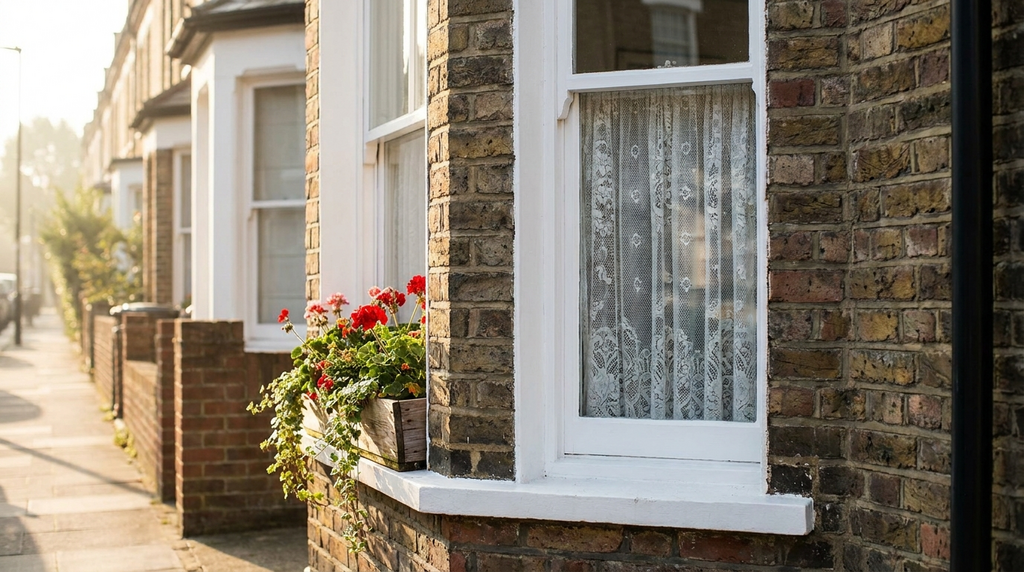
Victorian and Edwardian terraces, the type you’ll find in abundance around Thirsk, typically have larger sash or bay windows at the front that are more complex and costly to replace than a standard casement. The reveals (the depth of the window recess) tend to be deeper in these older homes too, which means you’ll want an installer who’s experienced with period properties rather than one who only deals with modern builds.
Semi-detached homes from the 1930s to 1960s, common on the edges of Thirsk and in the residential streets to the south and west of the town, are generally more straightforward. These properties usually have standard casement windows with decent-sized openings, and access tends to be easier. The main watchpoint with 1930s homes is the original timber frames, if they’ve never been replaced, the surrounding brickwork may need some attention before new frames can be fitted properly.
- Victorian terraces, Deep reveals, sash windows, potential heritage considerations, often require bespoke sizing
- Edwardian semis, Bay windows common at the front, larger panes mean higher glass costs
- Interwar semis (1920s-1940s), Usually steel or timber casements, often the most cost-effective to upgrade
- Post-war homes (1950s-1970s), May already have older double glazing that needs replacing rather than first-time installation
One thing worth knowing, if your home has original timber sash windows and you’re attached to the character they give your property, it’s worth asking about slim-profile double-glazed sash units. These are more expensive but look significantly more authentic than standard uPVC and are increasingly available from Yorkshire-based suppliers.
How Much Double Glazing Costs in Thirsk and the Yorkshire and the Humber Area in 2026
Let’s talk actual numbers, because vague “it depends” pricing helps nobody. Below are typical installed costs for Thirsk in 2026, based on standard uPVC double-glazed units with A-rated glass. These figures include fitting, old window removal, and basic making-good.
| Property Type and Scope | Thirsk Estimate | Yorkshire and the Humber Average | UK National Average |
|---|---|---|---|
| 2-bed terrace (full house, 6-8 windows) | £3,800 – £5,200 | £3,600 – £5,000 | £3,500 – £5,500 |
| 3-bed semi (full house, 8-10 windows) | £4,800 – £6,800 | £4,500 – £6,500 | £4,500 – £7,000 |
| Single casement window (standard) | £450 – £700 | £420 – £650 | £400 – £700 |
| Bay window unit | £1,100 – £1,800 | £1,000 – £1,700 | £1,000 – £2,000 |
| Sash window (slim-profile double glazed) | £900 – £1,400 per window | £850 – £1,300 | £800 – £1,500 |
| Triple glazing upgrade (per window, additional cost) | £150 – £300 per window | £130 – £280 | £120 – £300 |
Thirsk sits very slightly above the regional average, and here’s why. The town doesn’t have the large pool of competing installers you’d find in York or Middlesbrough. Most reputable companies serving Thirsk are based in Northallerton (13km away) or Ripon (16km), and some travel from further afield. That travel time is often built into quotes, either explicitly or as a slightly higher day rate. Getting three competing quotes is even more important here than in a larger city.
If your property requires scaffolding, more common on three-storey Victorian terraces or where first-floor windows are above a bay, add £400 to £700 to your total budget. Conservation area requirements (discussed below) can also push costs up by 15–25% if you need heritage-style frames or specific glass types.
How Thirsk’s Weather and Location Shape Your Double Glazing Choices
Thirsk sits in the Vale of York, a broad flat plain that creates its own microclimate. The Hambleton Hills rise to the east, and that topography funnels cold air down into the vale on still winter nights, a phenomenon locals know well, even if the national weather data doesn’t fully capture it. You get sharp radiation frosts here that aren’t always reflected in regional statistics.
Rainfall sits in the 700–900mm per year range for Thirsk, which means your windows need good drainage channels and quality seals, but you’re not dealing with the driving horizontal rain that coastal Yorkshire towns face. Wind exposure is moderate, you’re well sheltered from the worst of the North Sea weather by the Hambleton Hills to the east, and from westerly Atlantic gales by the Pennines. Standard A-rated double glazing is more than adequate for the wind and rain conditions here.
What the cold, still nights do mean is that condensation can be an issue, particularly on older double glazing where the argon gas filling has degraded over time. If you’re replacing units that are over 15 years old, there’s a good chance the inter-pane space has lost its gas fill entirely, dramatically reducing performance. Modern units with warm-edge spacer bars and argon filling will feel like a genuine step change.
Thirsk also gets reasonable sunshine, around 1,000–1,200 hours per year, and south and south-west facing rooms have real solar gain potential in winter. If you have windows facing that direction, it’s worth asking your installer about low-emissivity (Low-E) coatings that let solar heat in while keeping your own heating from escaping. In a well-orientated semi-detached home, this can reduce heating demand noticeably over winter.
The Products and Options That Actually Perform Well Here
Given Thirsk’s property mix and climate, here’s what genuinely makes sense rather than what sounds good on a brochure.
For most Victorian and Edwardian terraces, uPVC casement windows in a Woodgrain Rosewood or Chartwell Green finish (rather than plain white) tend to suit the aesthetic better and are no more expensive. Specify A++ rated units with warm-edge spacer bars and argon filling. U-values of 1.2 W/m²K or better should be your minimum target.
For sash windows in period properties, Timber-look uPVC tilt-and-turn sash units strike the best balance between authenticity and performance. Full hardwood sash windows are available but will cost roughly 60–80% more and require more maintenance over time. If your property is in or near a conservation area, check with Hambleton District Council before ordering anything.
For 1930s–1950s semis, Standard white uPVC casements with trickle vents are the workhorse choice and there’s nothing wrong with them. Go for A+ or A++ rated units. These homes often benefit more from a composite front door replacement at the same time, it’s worth asking for a combined quote as installers frequently offer a better deal.
On triple glazing, It’s genuinely worth considering for north-facing rooms or bedrooms above single-storey extensions where cold radiates in more directly. The additional cost per window is modest (around £150–£300 more) and the comfort improvement in bedrooms is noticeable. For all other rooms, A++ double glazing remains the better value proposition in Thirsk’s climate, you’d be waiting a very long time to recoup the extra cost through energy savings alone.
- Minimum U-value to aim for, 1.2 W/m²K (centre pane)
- Gas fill, Argon as standard, krypton for triple glazing
- Spacer bars, Warm-edge (foam or hybrid) rather than aluminium
- Energy rating, BFRC Window Energy Rating A+ or A++ minimum
- Trickle vents, Now required under Building Regulations Part F for replacement windows, any reputable installer will include these
How to Find a Trustworthy Double Glazing Installer Near Thirsk
This is where being a smaller town gets real. Thirsk doesn’t have a high street full of glazing showrooms. Most installers serving the area operate out of Northallerton, Ripon, Boroughbridge, or Bedale, and some come down from Teesside or up from York. That’s fine, but it does mean you need to be more methodical about vetting them than you might in a larger city where competition is fierce.
The non-negotiable certification to look for is FENSA registration (or CERTASS as an alternative). FENSA-registered installers self-certify that their work meets Building Regulations, which means you don’t need to apply for separate building regulations approval. Always ask for the FENSA registration number and verify it on the FENSA website before signing anything.
TrustMark registration is the second thing to check. TrustMark is government-endorsed and means the installer has been vetted for both technical competence and trading standards. It’s not compulsory, but its absence isn’t a red flag on its own, smaller local firms sometimes haven’t gone through the process.
Practical questions to ask any installer before committing:
- Are you FENSA registered and will you provide the FENSA certificate on completion
- What’s the U-value of the units you’re quoting, not just “A-rated”
- Do your frames include trickle vents as standard (required under Building Regs Part F)
- How long is your guarantee on both frames and glass units, and who backs that guarantee if your company closes
- Can you show me examples of work on Victorian or Edwardian terraces similar to mine
- What’s your current lead time for installation
Lead times in the Yorkshire and the Humber area currently run at 6–12 weeks for standard uPVC orders, and up to 16–20 weeks if you’re ordering bespoke sizes for period properties. Book earlier than you think you need to, late summer and early autumn are prime booking periods.
Red flags to watch for, pressure to sign on the day, unusually low quotes that don’t specify the U-value or brand of units, no written guarantee provided, and any installer who suggests you don’t need FENSA certification.
Grants and Funding That Could Reduce Your Costs in 2026
The honest picture here is that dedicated double glazing grants are harder to access than some websites suggest, but there are legitimate routes to help with costs if you qualify.
ECO4 (Energy Company Obligation), This is the big one for lower-income Thirsk households. ECO4 is funded by energy companies and delivered through local installers. It covers glazing improvements (including double glazing) for eligible households, generally those on means-tested benefits such as Universal Credit, Pension Credit, or income-based ESA. If you qualify, the work could be fully funded. Contact your energy supplier or check the government’s ECO4 referral service to start an eligibility assessment.
The Great British Insulation Scheme closed on 31 March 2026. It funded insulation measures only and never covered windows or glazing. It focuses primarily on insulation measures, but double glazing can sometimes be included as part of a broader package of improvements. Worth checking eligibility even if you don’t think you qualify on income grounds, as the scheme has both income-based and general eligibility routes.
Hambleton District Council, Thirsk falls under North Yorkshire Council (following the 2023 local government reorganisation that merged Hambleton, Richmondshire, and other districts into a single unitary authority). North Yorkshire Council periodically runs or signposts local retrofit and home improvement schemes, it’s worth checking their website or contacting their housing team directly for any area-specific support available to Thirsk residents in 2026.
Glazing is standard-rated for VAT at 20%. The zero rate for energy-saving materials covers insulation, heat pumps and solar panels; HMRC names secondary and double glazing as excluded (VAT Notice 708/6). This is a genuine saving, make sure any quote you receive reflects this rather than including VAT at the standard rate.
Who is least likely to qualify, If you own your home outright or on a mortgage and don’t receive means-tested benefits, you’re unlikely to access fully funded support. You may still benefit from the VAT exemption, and it’s worth asking North Yorkshire Council whether any local authority funding exists for moderate-income households.
Planning Permission and Regulations in Thirsk, What You Actually Need to Know
For most Thirsk homeowners, replacing windows with like-for-like double glazing falls under permitted development rights, which means no planning permission is required. This applies to the majority of terraced and semi-detached homes in the town, provided the replacement windows are of a similar appearance to the originals.
However, there are two significant exceptions to be aware of: