Why Boroughbridge Homeowners Are Looking at Double Glazing Right Now
There’s something quietly urgent happening in Boroughbridge at the moment. With an average EPC rating of Band D across the town, and energy bills that have tested even the most careful budgeters in recent years, a lot of people living in the older terraced streets near the town centre and the semi-detached properties out towards the A1(M) corridor are asking the same question, is it finally time to sort the windows?
Boroughbridge sits in a sweet spot geographically. It’s not a city, so it lacks the dense installer competition you’d find in Harrogate or York. But it’s not so remote that getting a quality double glazing installer is difficult. Companies from Ripon, Harrogate, Thirsk, and Wetherby all serve this area regularly, which means you have genuine options when shopping around.
What makes this particularly timely is the combination of older housing stock, much of it Victorian and Edwardian, with heating systems that work hard to compensate for draughty single-glazed or aging double-glazed frames. At 12,800 kWh of gas per year, Boroughbridge homes are right at the national median, which means a solid chunk of that energy is likely walking out through inefficient windows. New double glazing won’t transform your bills overnight, but it makes a measurable difference, and in a town of 3,600 where word spreads fast, you’ll quickly hear which installers did a good job and which left a draught behind the sill.
What Double Glazing Actually Involves for a Typical Boroughbridge Home
Most homes in Boroughbridge fall into two broad categories, the older terraced properties clustered around the historic market town centre and St James Square area, and the semi-detached houses built from the 1960s through to the 1990s on the residential streets and newer developments edging toward Roecliffe and Minskip.
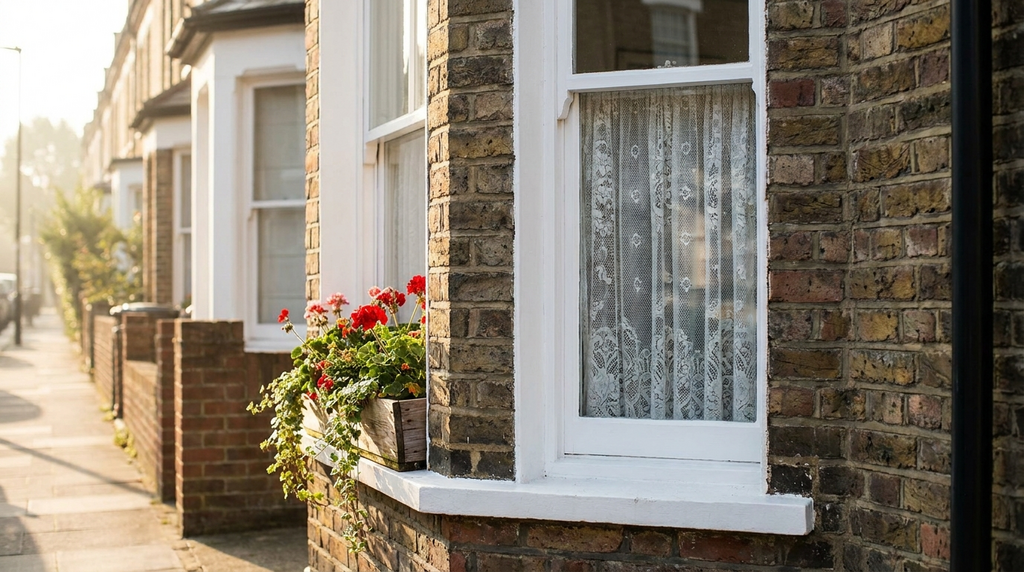
For the Victorian and Edwardian terraces, the main consideration is the existing window openings. These properties typically have sash or timber casement windows with non-standard sizing, which means off-the-shelf uPVC units often won’t drop straight in. You’re more likely to need made-to-measure frames, and sometimes a bit of structural making-good around the reveals. That adds a small premium compared to installing into post-war homes with more standardised openings.
The post-war semis, particularly those built in the 1970s and 1980s, may already have original double glazing that’s now past its best. The sealed units in these older frames lose their gas fill over time and start to mist up internally. In these cases, it’s worth having an installer assess whether unit replacement (cheaper) or full frame replacement (better long-term) is the right call.
Access is rarely a major drama in Boroughbridge compared to, say, a tightly packed Leeds terrace. Most streets have reasonable pavement access and parking nearby, which keeps labour costs sensible. However, for properties directly on the high street or around Bridge Street, parking restrictions may mean an installer needs to factor in limited vehicle access.
- Victorian terraces, likely need bespoke sizing, may suit timber-look or heritage uPVC frames, particularly if near the conservation area
- 1960s–1980s semis, often straightforward replacements, standard sizing, good for full uPVC or composite systems
- 1990s–2000s newer builds, may only need unit replacement rather than full frame change
How Much Double Glazing Costs in Boroughbridge and the Yorkshire and the Humber Area in 2026
Let’s talk honest numbers. Costs in Boroughbridge track closely with the wider North Yorkshire and Yorkshire and the Humber region, sitting a touch above the national average due to lower installer density and the fact that most companies are travelling from Ripon, Harrogate, or Thirsk to reach you. That travel time is factored into quotes, not always explicitly, but it’s there.
Here’s a realistic breakdown for typical Boroughbridge homes in 2026:
| Property Type | Number of Windows | Basic uPVC Double Glazing | Mid-Range (A-Rated) | Premium (Triple Glazing or Heritage Frames) |
|---|---|---|---|---|
| 2-bed terraced | 5–6 windows | £2,800–£3,600 | £3,800–£4,800 | £5,500–£7,000 |
| 3-bed semi-detached | 7–9 windows | £3,800–£5,000 | £5,200–£6,800 | £7,500–£10,000 |
| 4-bed detached | 10–14 windows | £5,500–£7,500 | £7,800–£10,500 | £11,000–£15,000 |
| Front door (composite) | 1 door | £900–£1,200 | £1,300–£1,800 | £2,200–£3,500 |
The Yorkshire and the Humber regional average sits around 5–8% below London and the South East but roughly in line with the East Midlands. Compared to Harrogate, where installer competition pushes prices down slightly, Boroughbridge quotes tend to run about 4–6% higher. Ripon-based companies often offer the most competitive rates for Boroughbridge work given the short 10km travel distance.
Add roughly £150–£300 per window if you need scaffold access (less common in terraces and semis, but relevant for gable-end upper windows on some properties). Made-to-measure heritage-style frames for conservation area properties carry a premium of 20–35% over standard uPVC.
How Boroughbridge’s Weather and Location Affect Your Double Glazing Choices
Boroughbridge enjoys a relatively sheltered inland position in the Vale of York. It doesn’t get the battering coastal winds that affect places like Scarborough, and it’s buffered from the worst Pennine weather that Harrogate and Skipton can experience in winter. Rainfall sits in the 700–900mm annual range, enough to matter for drainage and sealing, but not extreme.
Winters here bring around 1,500–1,800 heating degree days, which is close to the national average and means your heating system works steadily from October through to April. Good thermal performance in your glazing genuinely pays off across a long heating season.
One thing worth knowing about the Vale of York position, frost pockets are common. Cold air drains into the vale on clear nights, and Boroughbridge can experience ground frosts and low overnight temperatures even when nearby higher ground escapes them. This makes thermal efficiency in double glazing more important than you might expect for a town at this latitude.
Solar gain is also worth thinking about. With 1,000–1,200 sunshine hours annually, south and west-facing windows in Boroughbridge can contribute useful passive solar warmth in the colder months. Specifying a higher solar factor (g-value above 0.35) on south-facing windows helps capture that free heat, while a lower solar factor makes sense for any large east-facing windows to avoid summer overheating.
The Products and Options That Work Best Here
For most Boroughbridge homes, here’s my honest recommendation based on the local climate and housing stock.
For Victorian and Edwardian terraces, timber-effect uPVC in white or cream is the sweet spot. It looks right on older properties, handles the made-to-measure sizing gracefully, and performs well thermally. Look for a U-value of 1.4 W/m²K or better (the lower the number, the better the insulation). A-rated units with argon-filled cavities between 16mm and 20mm are the standard to aim for.
For 1970s–1990s semis, standard white uPVC casement windows represent excellent value. If you’re replacing frames that are still structurally sound, ask about unit-only replacement first, you may save 40–50% compared to full frame replacement for the same thermal outcome.
Triple glazing, increasingly popular across Yorkshire, but honestly not essential for Boroughbridge’s moderate climate. The extra cost (roughly 20–30% more than quality double glazing) is harder to justify here than it would be in northern Scotland. If noise reduction is a priority, say, for a property near the A168 or the main road through town, the acoustic benefits of triple glazing can make the upgrade worthwhile on those specific windows.
- Recommended U-value, 1.4 W/m²K or below for frames, 1.0 W/m²K or below for the glass unit itself
- Gas fill, argon as a minimum, krypton for premium performance
- Energy rating, BFRC A-rated or above for best EPC impact
- Solar factor (g-value), 0.35–0.45 for south-facing, 0.25–0.35 for east-facing windows
- Frame colour, white or cream in heritage areas, grey anthracite popular on newer builds
How to Find a Trustworthy Double Glazing Installer Near Boroughbridge
Because Boroughbridge is a small town, you won’t find dedicated local double glazing showrooms here. Most installers covering the area are based in Harrogate, Ripon, or Thirsk, and a few quality companies also travel from York and Wetherby for larger jobs. That’s not a problem, but it does mean you need to do a bit more vetting than you might in a larger town.
The key certification to look for is FENSA registration. FENSA-registered installers are legally able to self-certify that their work complies with Building Regulations, which saves you the cost of a separate building control inspection and gives you a certificate you’ll need when selling your home. Always ask to see their FENSA registration number and check it on the FENSA website, it takes two minutes and weeds out a lot of cowboys.
TrustMark registration is a useful additional indicator of quality, particularly for older properties where the work is a bit more involved. For heritage frames or conservation area properties, check whether the installer has experience with the specific requirements, not all do.
Practical questions to ask any Boroughbridge-area installer:
- Are you FENSA registered and can I verify your number
- Do you manufacture your own frames or source from a supplier
- What’s your process for non-standard or heritage window openings
- What’s your warranty on sealed units and frames separately
- Can you provide two or three local references from North Yorkshire jobs in the past 12 months
Lead times in the Yorkshire and the Humber area currently run at 4–8 weeks from survey to installation for standard jobs, slightly longer for bespoke or heritage frames. Avoid any company that can fit you in within a week, quality installers are in demand and that turnaround is a warning sign.
Grants and Funding That Could Reduce Your Costs in 2026
This is where it gets a bit more complicated for Boroughbridge residents, but there are genuine options worth exploring.
ECO4 (Energy Company Obligation), The ECO4 scheme continues in 2026 and can cover double glazing as part of a broader energy efficiency package for eligible households. To qualify, you typically need to be receiving certain means-tested benefits (such as Universal Credit, Pension Credit, or Child Benefit) and have a property below EPC Band C. Given that Boroughbridge’s average is Band D, a good number of households could qualify. Contact your energy supplier directly or use the government’s ECO4 referral route.
Great British Insulation Scheme (GBIS), GBIS is focused primarily on insulation but can include glazing improvements in some circumstances, particularly for properties in the lower EPC bands. North Yorkshire Council administers referrals for this area, their website lists local contacts and eligibility guidance.
Warm Homes: Local Grant, In 2026 this scheme, administered through local councils, provides funding for low-income households to improve energy efficiency. North Yorkshire Council (the relevant local authority for Boroughbridge following the 2023 council restructure) is the body to contact. Grants can cover a significant portion of glazing costs for eligible households.
Glazing is standard-rated for VAT at 20%. The zero rate for energy-saving materials covers insulation, heat pumps and solar panels; HMRC names secondary and double glazing as excluded (VAT Notice 708/6). This is automatically applied by registered installers, just make sure your quote reflects this rate.
There is no specific Boroughbridge-only grant scheme, but the combination of ECO4 eligibility and North Yorkshire Council’s Warm Homes Local Grant can, in the right circumstances, reduce costs substantially, potentially covering 50–100% for low-income households meeting the criteria.
Planning Permission and Regulations in Boroughbridge
For most Boroughbridge homeowners, double glazing falls under permitted development rights, meaning you don’t need planning permission as long as the replacement windows are similar in appearance to the existing ones. This covers the majority of standard replacements in terraced and semi-detached homes across the town’s residential streets.
However, there are important exceptions you need to be aware of.
Boroughbridge Conservation Area, The historic core of Boroughbridge, including areas around St James Square and the scheduled Roman town of Aldborough nearby, falls within conservation area designation. In these zones, you cannot simply swap timber sash windows for uPVC without consent. You’ll need to apply for planning permission, and North Yorkshire Council’s planning team will expect windows to match the character of the building, typically requiring timber frames or very high-quality timber-effect alternatives. Check the exact boundaries at northyorkshire.gov.uk before ordering anything.
Listed buildings, Boroughbridge has a number of listed buildings, particularly in and around the town centre. If your property is listed, or forms part of a listed terrace, you need Listed Building Consent for any window changes regardless of how minor they seem. This is a firm legal requirement, don’t assume your installer knows about it; always check yourself.
Building Regulations, All new double glazing must comply with Part L of the Building Regulations (thermal performance) and Part N (safety glazing near doors and low-level openings). A FENSA-registered installer handles this automatically. If you use a non-FENSA installer, you’ll need to notify North Yorkshire Council’s Building Control department and pay for an inspection.
What You Will Actually Save
Let’s be straight with you, double glazing is not a get-rich-quick energy saving measure. It’s a comfort improvement first, an energy saver second. But the savings are real.
Based on Boroughbridge’s average gas consumption of 12,800 kWh per year and the typical heat loss profile of a Band D property, replacing single glazing with A-rated double glazing across a 3-bed semi can reduce heating demand by roughly 10–15%. At current gas prices, that translates to around £180–£280 per year in savings