Why Ripon Homeowners Are Looking at Double Glazing Right Now
Ripon sits in a sweet spot of North Yorkshire that catches more than its fair share of cold air rolling down from the Dales. If you live anywhere near the River Skell or out towards Bishopton and Sharow, you’ll already know that winter draughts don’t need much of an invitation. Old windows are usually the first culprit, and right now, more Ripon residents than ever are doing something about it.
The city’s average EPC rating sits at Band D, which puts it squarely at the national average. That sounds fine until you realise it means there’s significant room to climb, and double glazing is one of the most straightforward ways to get there. With energy bills still biting hard and new ECO4 funding available for eligible households, the timing has never been better to look seriously at upgrading your windows.
There’s also something very Ripon-specific going on here. The Cathedral city has a surprisingly high proportion of older stone-built terraces and Victorian semis, particularly around the areas off Bondgate, Blossomgate, and out towards the North Road corridor. These properties were built for an era when draughts were considered character, not a problem. Getting them properly double glazed, especially within or near the conservation area centred on the Market Place, involves a few extra considerations that homes in, say, a newer Harrogate estate simply don’t face.
What Double Glazing Actually Involves for a Typical Ripon Home
Most homes in Ripon fall into two broad camps, Victorian and Edwardian terraces built between roughly 1880 and 1910, and post-war semis put up between the 1950s and 1970s. These two building eras have very different window arrangements, and the installation process reflects that.
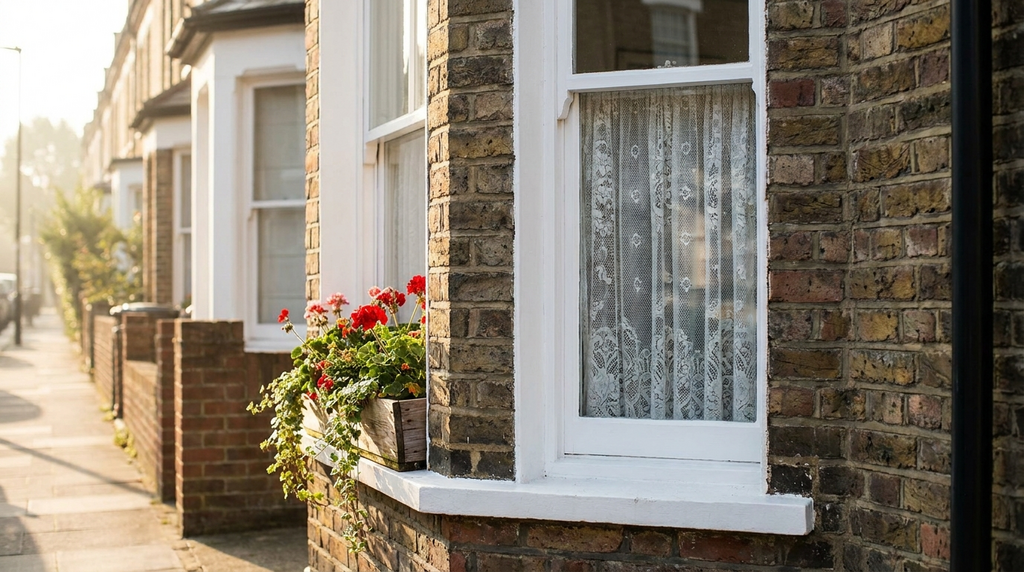
For the older terraces, particularly those with original Yorkshire sliding sash windows or large bay fronts, direct replacement isn’t always as simple as swapping like for like. The reveals (the depth of the wall around the window frame) on a stone-built Ripon terrace can be substantial, sometimes 300mm or more. That actually works in your favour, since it gives installers more to work with, but it does mean a survey visit is essential before anyone quotes you a firm price.
Post-war semis in areas like Clotherholme Road, Princess Road, and the estates around Dallamires Lane tend to have more standardised frames with shallower reveals. These are generally quicker to install and less likely to spring any surprises. If your home was built in the 1960s or 70s with original metal-framed single glazing, double glazing replacement is usually very straightforward, and the improvement you’ll notice immediately is dramatic.
A few practical realities worth knowing before you book a survey:
- Stone lintels on older Ripon properties can be uneven, meaning frames sometimes need custom-made sizing rather than off-the-shelf units
- Parking on Ripon’s narrower streets (particularly around the city centre) can make delivery of large window units tricky, worth flagging this with your installer early
- Some properties in the HG4 postcode that sit close to the River Ure or Skell benefit from trickle vents in their new windows to manage humidity, ask your installer about this specifically
- If your home has had any previous single-glazed replacement already (common in 1990s refurbishments around Ripon), your existing frames may already be UPVC, making like-for-like replacement faster and cheaper
How Much Double Glazing Costs in Ripon and the Yorkshire and the Humber Area in 2026
Let’s talk numbers. Ripon sits slightly below the larger Yorkshire cities for installer day rates, but you can sometimes pay a premium for a company to travel out from Harrogate or Northallerton if local availability is limited. Here’s a realistic breakdown of what you should expect to pay in 2026:
| Property Type | Number of Windows | Standard UPVC Double Glazing | A-Rated Slim-Profile UPVC | Timber-Look or Heritage Frames |
|---|---|---|---|---|
| Mid-terrace (2 bed) | 5–7 | £2,800–£4,200 | £3,500–£5,000 | £5,500–£8,000 |
| Semi-detached (3 bed) | 8–10 | £4,000–£6,000 | £5,000–£7,500 | £7,500–£11,000 |
| Detached (3–4 bed) | 10–14 | £5,500–£8,500 | £7,000–£10,000 | £10,000–£15,000 |
| Bay window upgrade (per bay) | N/A | £900–£1,400 | £1,200–£1,800 | £2,000–£3,500 |
The Yorkshire and the Humber regional average for a typical semi comes in at around £4,800 for standard A-rated UPVC, Ripon tends to sit right at that midpoint. Compare that to Harrogate, where premium installers frequently quote 15–20% higher due to demand, and Boroughbridge or Masham where smaller local traders can sometimes undercut by a similar margin but with longer lead times.
Don’t automatically go for the cheapest quote you receive. Installation quality varies enormously, and a poorly fitted window in a Ripon stone terrace can lead to damp ingress around the frame within a few years. The middle tier of quotes, not the cheapest, not the most expensive, tends to represent genuine value here.
How Ripon’s Weather and Location Affect Your Double Glazing Choices
Ripon’s climate is moderately cool and damp, not brutally cold like the exposed Yorkshire Dales further west, but noticeably chillier than the Vale of York towns further south. The city clocks around 1,050 to 1,150 sunshine hours per year, which means passive solar gain through south-facing windows is genuinely worth thinking about, but it’s not so hot that overheating in summer becomes a major problem.
Rainfall sits in the 750–850mm per year range, which matters more than it might seem. Stone-built properties around the River Skell catchment and the lower parts of the city around North Street can experience higher ambient moisture levels, especially in winter. This makes warm-edge spacer bars, the strip between the two panes, particularly important in Ripon. Standard aluminium spacers conduct cold to the edge of the glass, creating condensation around the frame edge. Warm-edge alternatives (look for Super Spacer or Swisspacer brands specifically) significantly reduce this in damp conditions.
Wind exposure in Ripon is relatively moderate, you’re sheltered from the worst of the westerly gales that hit the western Dales. However, the northern aspects of properties on higher ground like Whitcliffe Lane and Harrogate Road do catch cold northerly air in winter. For these elevations, a higher-specification unit with a centre-pane U-value of 1.0 W/m²K or below is worth the additional cost.
One thing you don’t need to over-engineer for in Ripon, unlike coastal Yorkshire towns, is heavy salt corrosion. Standard UPVC and aluminium frames perform perfectly well here without marine-grade treatment.
The Products and Options That Work Best in Ripon’s Housing Stock
Based on what actually performs well in similar North Yorkshire towns and in Ripon’s specific building types, here’s an honest steer on product selection:
For post-war semis (1950s–1970s): Standard A-rated UPVC in white or a light woodgrain finish is the practical and cost-effective choice. Look for units with a centre-pane U-value of 1.1 W/m²K or better, argon-filled cavities, and low-emissivity (low-e) glass coating on the inner pane. This combination will give you a noticeable reduction in heat loss without overspending.
For Victorian and Edwardian terraces: This is where aesthetics and performance have to balance. Slim-profile UPVC in a woodgrain finish or a heritage grey/cream colour can look genuinely sympathetic with older stonework. If you’re in or near the Ripon conservation area (which covers much of the city centre), you may need to stick closer to the appearance of traditional sash profiles, more on that in the planning section below.
For any north-facing elevation in Ripon: Specify triple glazing for those windows specifically. Triple-glazed units on north-facing walls, with a U-value of 0.6–0.8 W/m²K, can make a noticeable comfort difference on the coldest January nights, and the price premium over double glazing on just a few windows is typically only £150–£300 per window.
Products worth asking installers about by name:
- Pilkington Optitherm S3, an excellent low-e glass option widely available through Yorkshire suppliers
- Swisspacer Ultimate warm-edge spacer, significantly reduces cold edge condensation in Ripon’s damp winters
- Residence 9 window system, a flush-sash UPVC frame that looks convincingly timber from the street, ideal for conservation-adjacent properties
- Rehau Total70 profile, a well-priced workhorse UPVC system that handles Yorkshire temperature swings without warping
How to Find a Trustworthy Double Glazing Installer Near Ripon
Ripon’s population of around 17,000 means there’s a limited number of double glazing businesses based in the town itself. The reality is that most installations here are carried out by companies based in Harrogate (16km), Thirsk (16km), or occasionally Northallerton, with some specialists covering the Masham and Boroughbridge corridor as part of their regular patch.
That’s not a problem in itself, but it does mean you should be selective. Here’s what to look for:
- FENSA registration, this is non-negotiable. FENSA-registered installers self-certify that their installation meets Building Regulations, saving you from having to apply for a separate Building Control inspection. Always ask to see a FENSA number before agreeing anything
- TrustMark accreditation, government-endorsed quality standard that’s increasingly required for any grant-funded work
- Which? Trusted Traders or Checkatrade profiles with local reviews, search specifically for reviews mentioning HG4 postcodes or Ripon itself, not just Harrogate
- A physical address and VAT number, unfortunately, some travelling double glazing teams work the smaller North Yorkshire towns. A company with a fixed local address is considerably lower risk
Ask any prospective installer directly whether they’ve worked on stone-built properties in the Ripon area before, and request to see photos of comparable jobs. Ask about their surveying process, a thorough company will visit before quoting, not quote from dimensions you give over the phone.
Lead times in the Yorkshire and the Humber region currently run at six to ten weeks for standard UPVC and up to sixteen weeks for bespoke heritage or timber-look frames. Plan accordingly if you’re aiming to have installation complete before next winter.
Grants and Funding That Could Reduce Your Costs in 2026
This is genuinely worth exploring before you pay full price. Several funding routes are open to Ripon homeowners right now:
ECO4 (Energy Company Obligation), if your household receives qualifying benefits (Universal Credit, Pension Credit, Child Tax Credit and others), or if your home is EPC Band D or below and you meet certain income criteria, you could be eligible for fully or partially funded double glazing under ECO4. Your energy supplier is the first point of contact, but local energy advice charities like Keeping Yorkshire Warm can also help navigate the process. North Yorkshire Council’s housing team can point you towards local ECO4 referrals too.
Great British Insulation Scheme (GBIS), this scheme extends some support to households in lower council tax bands even without a benefits trigger. Ripon properties in council tax Band A or B may qualify. The Great British Insulation Scheme closed on 31 March 2026. It funded insulation measures only and never covered windows or glazing. Worth checking your eligibility even if you think you might be just outside the criteria.
North Yorkshire Council Warm Homes Fund, North Yorkshire Council administers discretionary support for vulnerable and low-income households as part of their wider energy efficiency strategy. The council’s Healthy and Safe Homes team is the right contact point. Eligibility criteria and funding availability change throughout the year, so a direct enquiry is more reliable than relying on third-party information.
Glazing is standard-rated for VAT at 20%. The zero rate for energy-saving materials covers insulation, heat pumps and solar panels; HMRC names secondary and double glazing as excluded (VAT Notice 708/6). Ensure your installer applies this correctly, it should already be reflected in any quote, but it’s worth confirming explicitly.
A realistic expectation is that grants won’t cover the full cost of a whole-house double glazing project unless you’re in a very low-income household. The Great British Insulation Scheme closed on 31 March 2026. It funded insulation measures only and never covered windows or glazing.
Planning Permission and Regulations in Ripon
For most Ripon homeowners, double glazing falls under permitted development rights, meaning no planning permission is required. This applies to the majority of semi-detached and terraced homes across the city, as long as the new windows are broadly similar in appearance to the originals and don’t dramatically alter the character of the property.
However, Ripon has an active and well-defined conservation area centred on the historic Market Place, Kirkgate, and much of the area around the Cathedral. If your property sits within the Ripon Conservation Area, different rules apply. You’ll need to check with North Yorkshire Council’s planning department before any work begins. In a conservation area, you’re generally expected to maintain the appearance of original windows, particularly on front elevations. Timber sash replacements or high-quality timber-effect UPVC that closely replicates the original profile are usually acceptable; stark white UPVC casements replacing Victorian sashes typically aren’t.
If your home is Listed, and there are several Listed buildings in Ripon beyond just the Cathedral, including properties on Kirkgate and parts of the Old Market Place, you’ll need Listed Building Consent for any window replacement. This is a stricter process and often requires traditional timber frames rather than UPVC alternatives. Seek specialist advice early if this applies to you.
For everyone else, your FENSA-registered installer will handle Building Regulations compliance as part of the installation. You’ll receive a FENSA certificate on completion, which you’ll need when you come to sell the property. Keep it safe.
What You Will Actually Save, Honest Numbers for Ripon Homes
With Ripon’s average gas consumption at 12,000 kWh per year, your home is running close to the national median. That’s a useful starting point for calculating realistic savings, here’s what the numbers look like for a typical Band D semi or terrace in the HG4