The average UK household loses around 18 per cent of its heat through windows and doors, making the choice of window type one of the most consequential decisions a homeowner can make. Tilt and turn windows, long favoured across Germany, Scandinavia, and much of continental Europe, are now firmly on the radar of UK homeowners who want better performance, easier maintenance, and improved safety from their glazing. If you have been weighing up whether tilt and turn windows suit your UK home in 2026, this guide covers everything you genuinely need to know, from how the mechanism works day to day, to realistic costs, energy ratings, and what grant support might be available to help fund the investment.
Tilt and turn windows are a strong choice for UK homes seeking improved energy efficiency, easier cleaning, and flexible ventilation from a single window unit. They typically cost between £600 and £1,200 per window installed and can achieve British Fenestration Rating Council A ratings, according to BFRC guidance. For upper-floor rooms or noise-affected properties in particular, their airtight seal and inward-opening design offer clear practical advantages over standard casement windows.
- Tilt and turn windows offer two opening modes from one handle — a tilted ventilation gap at the top and a full inward-swinging panel for cleaning and airflow
- Both faces of the glass can be cleaned from inside the home. That makes them a practical choice for upper floors and properties without scaffold access
- Look for windows rated A or above under the British Fenestration Rating Council scheme to ensure meaningful energy savings
- Expect to budget roughly £600 to £1,200 per window installed, depending on size, frame material, and glazing specification
- The Great British Insulation Scheme closed on 31 March 2026. It funded insulation measures only and never covered windows or glazing.
- Tilt and turn windows require inward clearance, so they are not suitable for rooms where furniture sits directly against the window wall
- Their airtight seal when closed makes them particularly well suited to noise-sensitive locations such as near roads, railways, or flight paths
- What Tilt and Turn Windows Actually Are
- How Tilt and Turn Windows Work in Practice
- The Energy Efficiency Benefits Worth Knowing About
- Safety and Security Advantages for Families
- Where Tilt and Turn Windows Suit UK Homes Best
- Tilt and Turn Windows Versus Standard Casement Windows
- Comparing Tilt and Turn Windows and Casement Windows at a Glance
- What Tilt and Turn Windows Cost in the UK in 2026
- Grants and Funding That Could Help Cover the Cost
- Making the Final Decision for Your Home
What Tilt and Turn Windows Actually Are
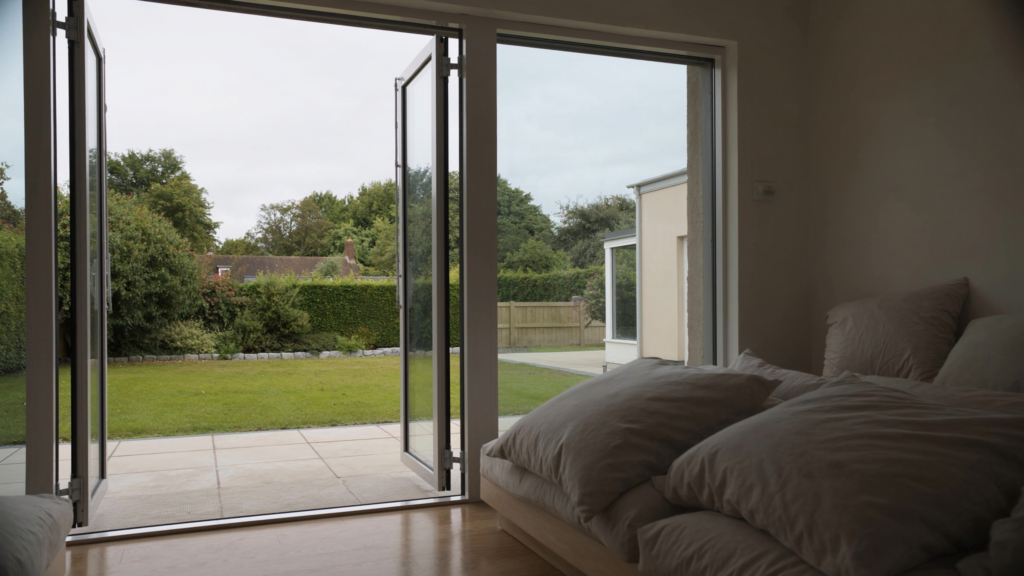
Tilt and turn windows look, at first glance, like ordinary double-glazed windows. The difference lies entirely in what happens when you turn the handle. The sash, the movable glass panel, can operate in two completely distinct ways, controlled by a single handle that clicks into different positions. In tilt mode, the top of the sash pivots inward by a few inches, creating a ventilation gap at the top while the bottom of the frame stays securely in place. In turn mode, the entire sash swings inward on a side hinge, opening like an internal door to provide maximum airflow and full access to both sides of the glass for cleaning.
This dual-action mechanism originated in German and Scandinavian building traditions, where airtight construction has been a priority for decades longer than in the UK. The engineering behind it is more sophisticated than a standard casement window, but the experience of using one is straightforward, the handle positions are logical and most people adapt to them within a day of living with the windows.
It is worth clarifying a common point of confusion. Tilt and turn windows are not the same as reversible windows (which rotate 180 degrees on a central pivot for cleaning) and they are not simply inward-opening casements. The dual mechanism, specifically the ability to independently tilt from the top or fully swing from the side, is what defines this window type and accounts for most of its practical benefits.
Practical tip, if you are visiting a showroom or requesting quotes, always ask the installer to demonstrate both tilt and turn modes with the actual hardware, so you can feel how the mechanism operates before committing.
How Tilt and Turn Windows Work in Practice
Understanding the three handle positions removes any mystery from daily use. With the handle pointing straight down, the window is locked shut, multi-point bolts engage around the full perimeter of the frame. Rotate the handle to the horizontal position and the window enters tilt mode, with the top of the sash tilting inward by typically 100 to 150 millimetres. Rotate the handle fully upward and the window disengages from the tilt mechanism and swings inward on its side hinges in turn mode, opening like a door.
In practice, tilt mode is the setting most households use most frequently. It allows background ventilation, air enters at the top of the window, where it mixes with warmer room air before reaching occupant level, reducing the sensation of a cold draught. Because the gap is at the top and faces inward, light rain does not enter directly even in most weather conditions, making tilt ventilation useful overnight in bedrooms without the security or weather concerns associated with leaving a window cracked open in the traditional sense.
Turn mode is used when you want to fully clean the exterior glass from inside, or when maximum ventilation is needed, after cooking, for instance, or during warmer months. The sash swings fully inward, so you need clear floor or wall space on the interior side. This is the main practical planning consideration for rooms where furniture placement is tight. A standard-sized tilt and turn window will typically need around 500 to 600 millimetres of clearance in front of it when fully open, which is worth factoring in when arranging a bedroom or kitchen.
Practical tip, before installation, take a tape measure to the interior wall below each proposed window and check that furniture, radiators, or kitchen units will not prevent the sash from opening fully inward.
The Energy Efficiency Benefits Worth Knowing About
Tilt and turn windows earn their reputation for energy performance through a combination of frame engineering and sealing quality. The frames themselves are typically manufactured with multi-chamber uPVC profiles, internal hollow sections that trap still air and reduce heat conduction, or with thermally broken aluminium, where a non-conducting barrier separates the inner and outer frame sections. Timber frames offer naturally good thermal properties when well-maintained. All three materials lend themselves to achieving strong U-values when combined with appropriate glazing.
Under UK Building Regulations Part L, replacement windows must meet a minimum standard, currently a whole-window U-value of no worse than 1.4 W/m²K, or a Window Energy Rating (WER) of C or better as assessed by the British Fenestration Rating Council (BFRC). Many tilt and turn windows on the UK market in 2026 achieve A or A+ ratings under the BFRC system, and triple-glazed versions can reach U-values below 0.8 W/m²K, comfortably exceeding the minimum requirement.
A distinctive energy advantage of tilt and turn windows is the multi-point perimeter seal. When locked, shootbolts engage at multiple points around the entire frame rather than just at a single central latch, as on many standard casement windows. This means the compression seal between the sash and frame is even and consistent all the way round, dramatically reducing draughts. According to the Energy Saving Trust, draughts through poorly sealed windows are a significant contributor to heat loss in older UK homes, and improving airtightness is one of the more cost-effective improvements a homeowner can make.
Based on Energy Saving Trust data, replacing single glazing with A-rated double glazing in a typical semi-detached home can produce meaningful annual heating bill savings, though the precise figure depends on property size, heating system, and existing insulation levels. Triple-glazed tilt and turn windows will push those savings further, particularly in north-facing rooms or exposed coastal and upland locations.
energy efficient windows guide for UK homes
Practical tip, ask your installer for the BFRC-certified WER rating document for the specific product you are being quoted. Any reputable supplier should be able to provide this without hesitation.
Safety and Security Advantages for Families
Child safety is one of the most compelling reasons UK families in flats and houses choose tilt and turn windows for upper-floor rooms. In tilt mode, the gap between the top of the sash and the frame is typically around 100 to 150 millimetres, a gap specifically calibrated during manufacture to allow air circulation while being too narrow for a small child to pass through. This built-in restriction means that in many situations, tilt and turn windows can provide safe overnight ventilation in children’s bedrooms without the need for additional window restrictors, though some parents and installers prefer to add childproof restrictors as a belt-and-braces measure. Always check with your installer that the tilt opening width of the specific product meets relevant safety guidance.
On security, the multi-point locking system is a genuine advantage over older single-latch casement windows. When a tilt and turn window is locked in the closed position, shootbolts engage at the top, bottom, and sides of the frame simultaneously, distributing resistance to forced entry around the entire perimeter. Many products on the UK market in 2026 are tested to PAS 24, the enhanced security performance standard referenced in Approved Document Q of the Building Regulations, and some achieve the higher Secured by Design accreditation endorsed by UK police forces.
The inward-opening design also removes the external hinge and stay assembly found on outward-opening casements. On older outward-opening windows, worn or accessible external hardware can represent a vulnerability. With tilt and turn windows, all moving parts and fixings are on the interior face, inaccessible from outside when the window is closed and locked.
Practical tip, when specifying tilt and turn windows for ground-floor rooms, ask for PAS 24-certified hardware and consider laminated glass as standard, since laminated glass holds together under impact and is considerably harder to break through quickly.
Where Tilt and Turn Windows Suit UK Homes Best
Tilt and turn windows shine in situations where outward-opening windows are impractical or prohibited. Flats and apartments are the clearest example, many leases and block management agreements require that windows do not open outward over communal areas, walkways, or public pavements. Tilt and turn windows solve this neatly by containing all opening movement within the interior of the property. They are also well-suited to rooms that overlook terraces, patios, or narrow side passages where an outward-swinging casement would create an obstruction.
Upper-floor windows are another strong application. Because turn mode allows both faces of the glass to be cleaned from inside, the cleaner holds the sash, tilts it forward, and wipes down both panes without going outside or using ladders, they significantly reduce the safety risks associated with cleaning hard-to-reach windows. The same logic applies to windows positioned above kitchen units, in stairwells, or in glazed extensions where external access for maintenance would be difficult or dangerous.
New builds and deep retrofits aiming for Passivhaus standards or very low EPC ratings favour tilt and turn windows for their combination of airtightness, U-value performance, and the ability to integrate with mechanical ventilation systems. The controlled tilt opening complements heat recovery ventilation set-ups rather than undermining them.
There are situations where tilt and turn windows are less well suited. Period and heritage properties, Victorian terraces, Edwardian semis, Georgian townhouses, typically feature windows that open outward as part of the original architectural character, and an inward-opening sash can look and feel incongruous. In listed buildings or conservation areas, planning or listed building consent requirements may restrict the type of window permitted regardless of performance benefits. Very small rooms, box rooms, or tight galley kitchens where there is genuinely no interior clearance may also be better served by a well-specified outward-opening casement.
windows in conservation areas and listed buildings guide
Practical tip, if your home is in a conservation area, contact your local planning authority before ordering tilt and turn windows, since permitted development rights for window replacement may be restricted and prior approval could be required.
Tilt and Turn Windows Versus Standard Casement Windows
Casement windows, the outward-opening, side-hinged type that dominates the vast majority of UK homes, are a reliable, well-understood product. They are easy to source, straightforward to install in virtually any property, and available at every price point. When well-specified with quality hardware and A-rated glazing, they perform excellently on energy efficiency. The question is not whether tilt and turn windows are categorically better than casements, but whether the additional features they offer are worth the additional investment for your specific home and circumstances.
Ventilation control is an area where tilt and turn windows offer more nuance. Standard casements typically rely on a trickle vent in the frame for background ventilation, and opening the window itself for anything greater, which either means a large gap or nothing. The tilt position on a tilt and turn window gives a middle option that most casements simply do not offer.
On cleaning, the advantage to tilt and turn is clear for upper-floor windows. On ground-floor windows accessible from outside, a casement is no more inconvenient to clean than any other type. On security, modern casement windows with multi-point locking are very capable, the gap between the two types is narrower than it once was. On cost, casements are generally less expensive, which is a legitimate factor when replacing all the windows in a property.
Aesthetically, casements are the more familiar choice for traditional UK homes. Tilt and turn windows have a more contemporary appearance, clean sightlines, minimal external furniture, that works well with modern architecture but can feel at odds with older building styles.
Practical tip, for a whole-house replacement project, consider using tilt and turn windows for upper-floor bedrooms and difficult-to-reach windows, while using well-specified casements on the ground floor where their outward opening is unproblematic and the cost saving is useful.
Comparing Tilt and Turn Windows and Casement Windows at a Glance
The table below offers a side-by-side reference for the two most commonly compared window types in the UK market in 2026. Use it as a starting point when discussing options with installers and requesting quotes.
| Feature | Tilt and Turn Window | Standard Casement Window |
|---|---|---|
| Typical 2026 supply and fit cost per standard window | £600 to £1,200 (uPVC); £900 to £1,800 (aluminium); £1,200 to £2,500 (timber) | £400 to £900 (uPVC); £600 to £1,400 (aluminium); £900 to £2,000 (timber) |
| Window Energy Rating achievable | A to A++ with appropriate specification | A to A++ with appropriate specification |
| Background ventilation method | Tilt mode, controlled inward gap at top of sash | Trickle vent in frame (typically) |
| Interior cleaning access | Full access to both panes from inside in turn mode | Interior face only; exterior requires outside access |
| Child safety in ventilation mode | High, tilt gap typically too narrow for a child to pass through | Lower, requires separate window restrictor for safety |
| Multi-point locking | Standard on most products | Available but not always standard on budget products |
| Suitable for flats and upper-floor use | Excellent, all movement is inward | Can be problematic where outward opening is restricted |
| Interior space needed when fully open | 500 to 600mm clearance in front of the window | None required inside |
| Frame materials available in UK market | uPVC, aluminium, timber, composite | uPVC, aluminium, timber, composite |
| Planning permission considerations | Check if conservation area or listed building applies | Check if conservation area or listed building applies |
Cost figures are indicative guide ranges for 2026 based on UK glazing industry installer pricing data. Actual quotes will vary by region, property type, exact window dimensions, and glazing specification. Always obtain a minimum of three written quotes.
What Tilt and Turn Windows Cost in the UK in 2026
Window pricing in the UK is notoriously variable, but the ranges in the comparison table above reflect what you should realistically expect to pay for supply and installation of a standard-sized tilt and turn window in 2026. To put those figures in context for a whole-house project, a typical three-bedroom semi-detached property with eight windows might expect to pay in the region of £5,000 to £9,500 for a full replacement in uPVC tilt and turn, rising to £8,000 to £16,000 for aluminium and considerably more for timber.
Several factors push costs upward or downward. Frame material is the most significant variable, uPVC remains the most affordable option and delivers excellent thermal performance; aluminium costs more but offers slimmer sightlines and a longer lifespan with minimal maintenance; timber is the premium choice aesthetically and performs well thermally, but requires periodic painting or treatment to prevent deterioration. Composite frames, which combine a timber interior with an aluminium exterior, sit at the upper end of the market and are worth considering for period properties where a timber look is important but low maintenance is also a priority.
Glazing specification also affects price meaningfully. Standard double-glazed units with a low-E coating and argon gas fill will get most homes to an A or A+ WER without difficulty. Triple glazing, three panes of glass with two cavities, adds 15 to 25 per cent to the cost of the glazed unit but can push U-values below 0.8 W/m²K, which is worthwhile for exposed properties, north-facing elevations, or homeowners who are also investing in a heat pump and want to maximise the efficiency of the whole system.
Glazing is standard-rated for VAT at 20%. The zero rate for energy-saving materials covers insulation, heat pumps and solar panels; HMRC names secondary and double glazing as excluded (VAT Notice 708/6). Eligibility criteria apply, and the rules are subject to change, always confirm current HMRC guidance directly or ask your installer to clarify the VAT position for your specific project before signing a contract.
When seeking quotes, look for installers who are members of the Glass and Glazing Federation (GGF) or registered with TrustMark, the UK Government-endorsed quality scheme for home improvement trades. GGF members are bound by the federation’s consumer code and deposit protection scheme, which provides important protection if a company runs into difficulty mid-installation.
how to find a trustworthy window installer in the UK
Practical tip, always ask installers to confirm in writing that their products meet current Building Regulations Part L, carry BFRC certification for the stated energy rating, and are covered by a minimum 10-year guarantee on frames and sealed units.
Grants and Funding That Could Help Cover the Cost
Window replacement is rarely covered by UK government grants as a standalone measure, but it can form part of a broader funded package in certain circumstances. Understanding what is and is not available in 2026 will help you make an informed decision about timing your project.
The ECO4 scheme, Energy Company Obligation 4, is funded by the major UK energy suppliers and delivered through approved installers. It targets low-income and vulnerable households, and can fund a range of home energy improvements including insulation, heating upgrades, and in some cases window replacements where the existing windows are single-glazed and part of a whole-house improvement package. ECO4 is not available for windows as a standalone installation; the glazing upgrade must be part of a broader set of measures identified through a whole-home assessment. To check eligibility, contact your energy supplier directly or use the Simple Energy Advice service on gov.uk, which can identify local ECO4-registered assessors.
The Great British Insulation Scheme (GBIS) is a separate strand of government-backed support, targeting homes with an Energy Performance Certificate (EPC) rating of D or below. Again, glazing improvements may be included as part of a joined-up package rather than as a standalone measure. Properties in lower Council Tax bands and those meeting income criteria receive a higher level of support. The scheme is administered through local delivery agents, your local council or the Simple Energy Advice service can point you towards who is operating the scheme in your area.
The Boiler Upgrade Scheme (BUS) provides grants of up to £7,500 towards the cost of installing an air source heat pump, and up to £7,500 for a ground source heat pump. Windows are not covered under BUS directly. However, there is an important indirect relationship, improving your windows before installing a heat pump reduces the overall heat load of the property, which means a smaller (less expensive) heat pump is required and the system runs more efficiently. If a heat pump is on your agenda, upgrading to high-performance tilt and turn windows beforehand is sound preparation that could actually reduce the size and cost of the heat pump installation.
Beyond national schemes, the UK Government’s Warm Homes Plan has been distributing funding to local authorities in 2026 to support home energy improvement in their areas. Some councils are offering their own grants or interest-free loans for window replacement as part of area-based schemes. The availability and terms vary considerably between councils, so checking your local authority’s housing or sustainability pages directly is the most reliable approach. The Simple Energy Advice service at simpleenergyadvice.org.uk (the UK Government-backed advice portal) consolidates information on both national and local support and is a sensible starting point for any homeowner considering a funded improvement.
ECO4 scheme explained for UK homeowners in 2026
Boiler Upgrade Scheme guide for UK homes
It is also worth noting that grant eligibility criteria, funding levels, and scheme availability change with some regularity. The information above reflects the position in 2026, but always verify current terms directly through gov.uk or official scheme operators before making financial decisions based on expected grant support.
Practical tip, before applying for any grant scheme, arrange an EPC assessment for your property if you do not have a current one. Knowing your EPC rating is essential for determining which schemes you are eligible for, and a current certificate will be required by most assessors and local authority grant administrators in any case.
Making the Final Decision for Your Home
Tilt and turn windows are a genuinely excellent product for the right home and the right application. For flat dwellers, for families with young children in upper-floor rooms, for anyone who has struggled with ladder-dependent window cleaning on a tall property, or for homeowners pushing for very low energy use, the additional cost over a standard casement window buys real, tangible benefits that you will notice every day. The mechanism is solid, German-engineered hardware from reputable manufacturers carries a track record spanning decades, and the energy performance credentials are among the best available in the UK market.
The honest caveat is that they are not universally the right choice. A well-specified, multi-point-locking, A-rated casement window installed by a reputable GGF-member company will serve most UK homes extremely well and at a lower cost. The decision comes down to your specific circumstances, the floor level, the room layout, the architectural character of the property, and your budget.
What is non-negotiable, whichever window type you choose, is the quality of specification and installation. A cheap, poorly fitted tilt and turn window will underperform a well-installed casement every time. Prioritise verified credentials, certified energy ratings, and a genuine guarantee over the headline price, and you will make a sound investment that improves your home’s comfort, security, and value for years to come.
| Property Type | Recommended Window Choice | Key Reason |
|---|---|---|
| Flat or apartment above ground floor | Tilt and turn strongly recommended | Inward opening avoids lease or management restrictions on outward-opening windows |
| Modern detached or semi-detached house | Either type suits well, consider tilt and turn for upper floors | Upper-floor cleaning access and child safety benefits are compelling |
| Period or Victorian terrace | Casement typically more appropriate | Outward-opening style consistent with original character; conservation area rules may apply |
| New build or Passivhaus retrofit | Tilt and turn recommended | Airtightness and U-value performance align with low-energy building standards |
| Room with very tight interior layout | Casement more practical | Tilt and turn requires 500 to 600mm interior clearance when fully open |
complete guide to window energy ratings and BFRC certification
Practical tip, use the table above as a quick reference when speaking to installers, and do not hesitate to ask any window company to explain why they are recommending a particular product for your specific property. A trustworthy installer will give you a clear, reasoned answer rather than defaulting to whatever they happen to stock.
Frequently Asked Questions
Installed costs typically range from £600 to £1,200 per window in the UK, depending on size, frame material, and glazing specification. uPVC frames sit at the lower end of that range, while aluminium and timber-effect finishes push costs higher. Getting at least three quotes from FENSA-registered installers is strongly recommended before committing.
Tilt and turn windows can achieve British Fenestration Rating Council A or A-plus ratings, broadly comparable with high-quality casement windows of equivalent specification. Their multi-point locking perimeter seal tends to reduce draughts more effectively than a basic casement, which contributes to lower heat loss. The key factor is the glazing unit itself — a high-performance argon-filled or triple-glazed unit makes a far greater difference than the mechanism type alone.
Eligibility depends on household income, current energy performance rating, and local authority criteria. The simplest starting point is to contact your energy supplier directly or use the GOV.UK eligibility checker.
The multi-point locking hardware and friction stays on tilt and turn windows benefit from a light application of uPVC or metal-appropriate lubricant once a year to keep the mechanism smooth. The main practical advantage is that both panes can be cleaned from inside the property without ladders, reducing ongoing maintenance effort considerably. Frame maintenance follows the same guidance as standard double glazing for the equivalent material.
Most like-for-like window replacements in England fall under permitted development, meaning no planning application is required provided the property is not a listed building and the replacement matches the existing style and appearance. Homes in designated conservation areas may need prior approval from the local planning authority before work begins. All replacement glazing must comply with Part L of the Building Regulations and be installed by a FENSA or Certass-registered contractor to self-certify compliance.