Rothesay, An Island Town With More Energy Potential Than You Might Think
Rothesay sits on the Isle of Bute, reached by CalMac ferry from Wemyss Bay, which already tells you something important about the town’s relationship with the mainland energy economy. This is a place shaped by Victorian prosperity, where wealthy Glaswegians once arrived by steamer for their summer holidays. That heritage left Rothesay with a beautiful, distinctive townscape, and a housing stock full of solid stone tenements, bay-windowed terraces, and solid semi-detached villas, many of them built between the 1870s and 1930s.
The good news is that stone-built homes hold heat well once they’re properly upgraded. The less good news is that most haven’t been upgraded yet, and the island setting adds a layer of complexity that this guide will help you navigate sensibly.
Rothesay’s island location means most homes here are off the mains gas network. If you’re heating with oil, LPG, or electric storage heaters, you’re almost certainly paying significantly more per unit of energy than mainland households on gas, and your energy bills are already feeling the squeeze. That actually makes eco improvements more financially compelling here than in many other Scottish towns.
Bute Council matters fall under Argyll and Bute Council, which handles all planning permissions, listed building consents, and conservation area applications for Rothesay. The town centre and seafront areas include conservation area designations, which means any external changes, including insulation cladding, solar panels visible from the street, or new windows, may need additional consent. We’ll come back to this when discussing specific upgrades. For the broader regional picture, see our Argyll and Bute eco homes overview.
How Energy Efficient Are Rothesay Homes, And What Does That Mean for Your Bills?
The average EPC rating in Rothesay is Band E, that’s below the Scottish average of Band D and well below the UK national target of Band C. In plain terms, Band E means your home is losing heat faster than it should, your heating system is working harder than it needs to, and you’re paying for it every month.
With an average annual gas (or equivalent fuel) usage of 14,400 kWh per year, well above the national median of around 12,000 kWh, a typical Rothesay household is spending roughly £1,800–£2,400 per year on heating alone, depending on whether they use oil, LPG, or electric heating. Homes on electric storage heaters can spend even more.
To put that in perspective, a comparable home in Largs on the mainland (where mains gas is available) might spend closer to £1,100–£1,400 per year on heating. The combination of off-gas fuel costs, older housing stock, and Bute’s exposed western climate is costing Rothesay homeowners real money every winter.
The upside is that Band E homes have the most to gain from upgrades. Moving from E to C, which is achievable for most terraced and semi-detached homes here, could cut your heating bills by 40–55%. That’s potentially £800–£1,300 back in your pocket each year, and it’s also the range where the best government grants kick in.
How Rothesay Compares at a Glance
| Location | Average EPC Band | Typical Annual Heating Cost | Improvement Potential |
|---|---|---|---|
| Rothesay | E | £1,800–£2,400 | High |
| Argyll and Bute average | D–E | £1,500–£2,000 | High |
| Scotland average | D | £1,200–£1,600 | Moderate |
| UK national average | D | £1,100–£1,500 | Moderate |
Solar Panels on Bute, Better Than You’d Expect, With a Few Caveats
People often dismiss solar for western Scotland, and it’s true that Rothesay isn’t Cornwall. But the town averages around 850–950 sunshine hours per year, and modern solar panels generate usable electricity even on overcast days. Summer output in particular can be surprisingly strong, Bute gets long summer days that partially compensate for the dull winters.
The real financial case for solar in Rothesay is stronger than the headline sunshine figures suggest, because you’re not on mains gas. If you’re heating with electricity or running an air source heat pump (more on those shortly), every unit of solar electricity you generate and use yourself is worth around 24–27p, roughly double what it would save a gas-heated household on the mainland. That changes the maths considerably.
There are some local factors to think about. The salt air off the Firth of Clyde means panels need more frequent cleaning than inland installations, plan for at least twice a year rather than once. Fixing systems need to be marine-grade rated to handle both the salt environment and the stronger wind loads that come with Bute’s exposed position. Many of Rothesay’s Victorian terraces have slate roofs, which can be worked with but require specialist fixings, make sure any installer you use has experience with traditional roofing materials.
If your home is in or near Rothesay’s conservation area, particularly around Guildford Square, the seafront, or the Victorian town centre, you’ll need to check with Argyll and Bute Council before installing panels visible from a public road. Rear-facing panels are usually much less problematic.
Estimated Solar Panel Costs and Savings for Rothesay Homes (2026)
| System Size | Typical Install Cost | Annual Generation (est.) | Annual Saving (off-grid fuel home) | Payback Period |
|---|---|---|---|---|
| 3 kW | £5,500–£6,500 | 2,200–2,500 kWh | £480–£580 | 10–13 years |
| 4 kW | £6,800–£8,000 | 2,900–3,300 kWh | £620–£750 | 9–12 years |
| 6 kW | £9,000–£11,000 | 4,200–4,800 kWh | £900–£1,100 | 9–11 years |
Adding a battery storage system (typically £3,000–£5,000 extra) makes a real difference in Rothesay specifically, it lets you store surplus summer generation for evenings and cloudy days, pushing self-consumption rates from around 35% up to 60–70%.
Heating Systems That Actually Suit Rothesay’s Climate and Housing
Because Rothesay is off the mains gas network, most homes here are already heating with oil, LPG, electric storage heaters, or a mix of fuels. That puts you in a different, and in some ways better, position than mainland towns for switching to modern low-carbon heating.
Air Source Heat Pumps
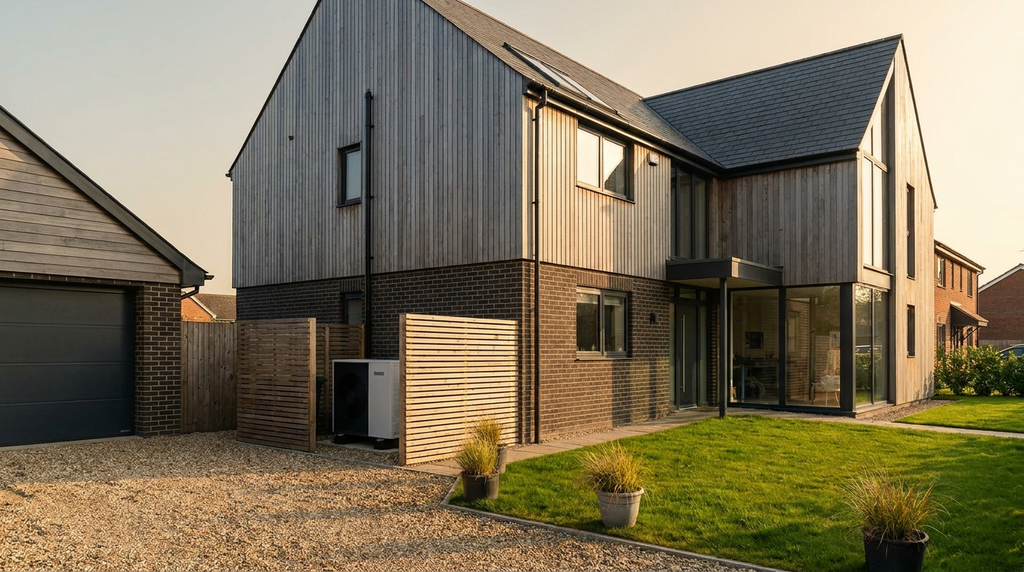
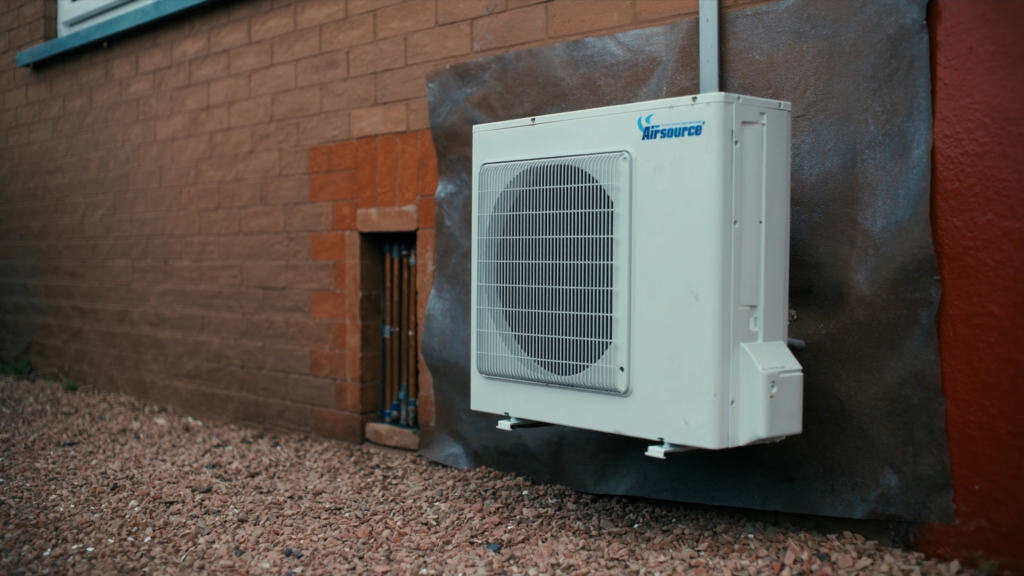
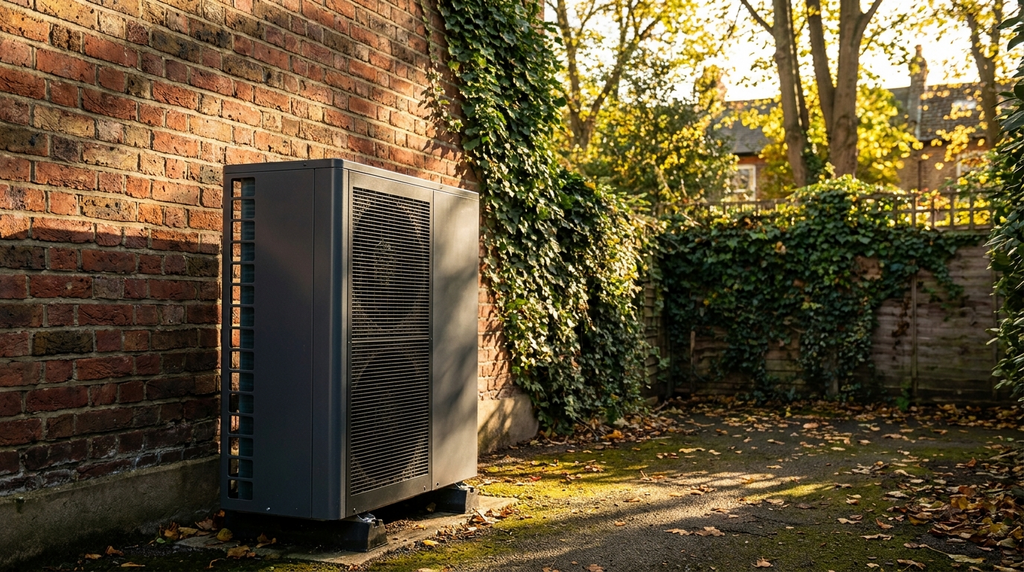
For most Rothesay terraced and semi-detached homes, an air source heat pump (ASHP) is the most practical low-carbon heating option. They work efficiently even in Bute’s cold, damp winters, modern units operate well down to -15°C, and they’re far easier to install than ground source systems in a town setting.
A well-sized ASHP in a properly insulated Rothesay home should produce around 3 units of heat for every 1 unit of electricity used, giving an effective running cost of roughly 8–10p per kWh of heat delivered, cheaper than oil, LPG, or electric storage heaters. For a typical Rothesay semi-detached, expect annual heating bills of around £900–£1,300 once you’ve also improved insulation.
Installation costs typically run £8,000–£14,000 before the Scottish Government’s Home Energy Scotland grant (up to £7,500 for heat pumps in 2026). The coastal location means specifying marine-grade external units, not all standard heat pump packages include this, so check.
Oil Boilers and LPG
If you’re on oil or LPG, a new high-efficiency condensing boiler can still make sense as a bridging measure, particularly if your current boiler is ageing and your home isn’t yet insulated well enough to get the best from a heat pump. Replacement oil boilers cost around £2,500–£4,000 installed. But be aware the Scottish Government’s trajectory is firmly towards phasing out fossil fuel boilers, so a heat pump remains the long-term direction of travel.
Ground Source Heat Pumps
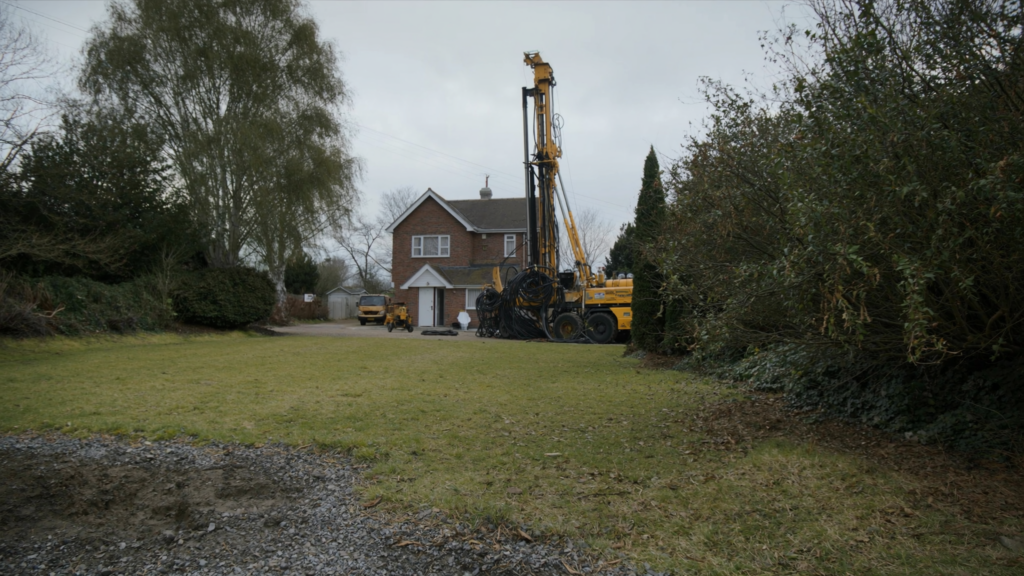
Ground source heat pumps are highly efficient but less practical for most Rothesay town properties, they require significant garden space for ground loops or a borehole, which rules them out for most terraced homes. If you have a larger plot on the outskirts of town, perhaps in the more rural parts of Bute to the north of Rothesay, they’re worth considering.
Where to Start With Insulation, The Rothesay Priority List
Rothesay’s older stone-built terraces and semis typically lose heat through the same weak points, but the priority order matters, and it’s shaped by your specific housing type and the coastal exposure here.
Loft Insulation, Do This First
If your loft is uninsulated or has the old 25mm quilt that builders used decades ago, topping up to 270mm of mineral wool is the cheapest and most impactful thing you can do. Cost is typically £300–£600 for a semi-detached, and annual savings can reach £250–£400 depending on your current fuel. Payback in well under two years. Most Rothesay terraces have accessible pitched roofs that make this straightforward.
Wall Insulation, The Trickier But Bigger Win
Rothesay’s stone walls are typically solid, there’s no cavity to fill. That means internal wall insulation (lining internal walls with insulated board) or external wall insulation (wrapping the outside in insulation and render) are your main options.
External wall insulation in Rothesay requires particularly solid, breathable render systems, the combination of driving rain from the west and salt-laden air off the Firth of Clyde means a standard continental render system won’t last well. Specify a render rated for high-exposure coastal locations. Cost typically runs £8,000–£15,000 for a semi-detached. Annual savings of £350–£550 are realistic. Conservation area properties will need Argyll and Bute Council consent for external changes.
Internal wall insulation is less disruptive to the external appearance and doesn’t need planning consent in most cases, though it does reduce your room size slightly. Cost is typically £5,000–£10,000.
Floor Insulation
Many Rothesay terraces sit on suspended timber floors, and cold air moving beneath them is a major source of heat loss that homeowners often overlook. Insulating beneath floorboards costs around £1,500–£3,500 and can save £100–£180 per year.
Windows and Doors
Upgrading to double or triple glazing costs £4,000–£9,000 for a typical semi, with annual savings of roughly £150–£250. In conservation areas, you may need to use slim-profile double glazing that matches the character of original windows, there are good options available, but costs are higher and you’ll need Argyll and Bute Council approval.
Grants and Funding Rothesay Residents Can Get in 2026
Scotland’s funding landscape is genuinely more generous than England’s, and Rothesay homeowners, particularly those in older, off-gas properties, are well placed to benefit.
Home Energy Scotland Loan and Grant
This is the scheme most Rothesay homeowners should explore first. Home Energy Scotland (funded by the Scottish Government) offers:
- Interest-free loans up to £15,000 for energy efficiency improvements
- Grants of up to £7,500 for heat pumps (no means-testing, available to most homeowners)
- An additional £7,500 rural uplift grant if your home is in a remote or island location, which Rothesay qualifies for as an island community
- Additional cashback grants for insulation measures
That rural uplift is significant, it means island homeowners like those in Rothesay can access up to £15,000 in grants for heat pump installation, before the loan element even kicks in. Call 0808 808 2282 or visit Home Energy Scotland’s website to start the process.
Warmer Homes Scotland
If you’re on a low income, receiving certain benefits, or have a household member with a qualifying health condition, Warmer Homes Scotland can fund insulation, heating upgrades, and sometimes solar panels, completely free of charge. Given that Rothesay has a significant proportion of older residents and a mix of income levels, this is worth checking even if you’re not sure you’d qualify.
ECO4 (Energy Company Obligation)
ECO4 applies across Scotland as well as England and Wales. Your energy supplier may be obligated to fund insulation or heating upgrades for your home if you meet income or EPC criteria. With a Band E rating, most Rothesay homes automatically meet the EPC threshold. Contact your supplier directly or go through Home Energy Scotland who can signpost you.
Heat pump funding in Scotland
The Boiler Upgrade Scheme does not operate in Scotland. It covers England and Wales only, so the £7,500 figure quoted on most UK-wide sites is not available here. Scottish homeowners apply instead through Home Energy Scotland, which offers grant and interest-free loan funding toward air source and ground source heat pumps, with an uplift for eligible rural and island households. You apply before work begins rather than through your installer. Current amounts and eligibility are on the Home Energy Scotland grants and loans page.