Helensburgh, A Victorian Seaside Town With Some Very Modern Energy Challenges
Helensburgh sits where the Firth of Clyde meets the foot of the Gare Loch, and it has one of the most distinctive housing stocks in western Scotland. The town was largely laid out in the 19th century as a planned seaside retreat for wealthy Glaswegians, which means an unusually high proportion of substantial Victorian and Edwardian stone villas and terraces, particularly up on the hillside streets above the town centre and along the seafront esplanade. If your home is on one of those upper streets, you’ll know the westerly wind has a particular bite to it.
More recent development sits on the flatter ground to the north and east, around areas like Helensburgh East and the estates off Kirktonhill Road and Drumfork, where you’ll find the semi-detached and detached homes from the 1950s through to the 1990s that make up much of the town’s housing stock today. These two very different housing eras, Victorian stone and 20th-century brick and render, present very different eco upgrade opportunities, and that’s exactly what this guide is here to help you navigate.
What makes energy efficiency particularly pressing in Helensburgh is that combination of altitude, exposure, and older building stock. Homes on the hillside above West Princes Street or Upper Colquhoun Street are catching prevailing Atlantic weather straight off the water. Heating bills here are 20 to 30% above the national average, and with the Scottish Government’s Heat in Buildings Strategy pushing all homes toward low-carbon heating by 2045, there’s never been a better moment to start making changes. This guide is written specifically for Helensburgh, not a generic template, so let’s get into the details that actually matter for your home.
For the wider county picture, see our eco homes guide for Argyll and Bute.
How Energy Efficient Are Helensburgh Homes, Honestly?
The average EPC rating in Helensburgh is Band D, which puts it right at the UK national average but slightly below the Scottish average, where a higher proportion of homes have had cavity wall insulation or district heating upgrades in recent years. Band D means your home is functional but leaking warmth, and money, in ways that are entirely fixable.
In practical terms, a Band D home in Helensburgh’s climate is likely costing you somewhere between £1,800 and £2,500 a year in energy bills, depending on home size and how high you keep the thermostat. The town’s average gas usage of 13,800 kWh per year is slightly above the UK median of around 12,000 kWh, which makes sense given the colder, wetter climate. Average electricity use sits at around 3,500 kWh per year.
Here’s what Band D actually looks like compared to other ratings, with estimated annual bill figures for a typical Helensburgh semi-detached home:
| EPC Band | What It Means | Estimated Annual Energy Bill |
|---|---|---|
| Band A / B | Highly efficient, modern insulation, low-carbon heating | £600 – £950 |
| Band C | Above average, good insulation, decent boiler | £1,000 – £1,400 |
| Band D (Helensburgh average) | Average, some gaps in insulation or older heating | £1,800 – £2,500 |
| Band E | Below average, significant heat loss | £2,600 – £3,400 |
| Band F / G | Poor, often older stone buildings, no insulation | £3,500+ |
The encouraging news is that moving from Band D to Band B is genuinely achievable for most Helensburgh homes over two to three years with a planned approach. That jump typically saves £800 to £1,400 a year, money that stays in your pocket rather than escaping through the roof and walls.
Solar Panels on Helensburgh Rooftops, Worth It Despite the Weather?
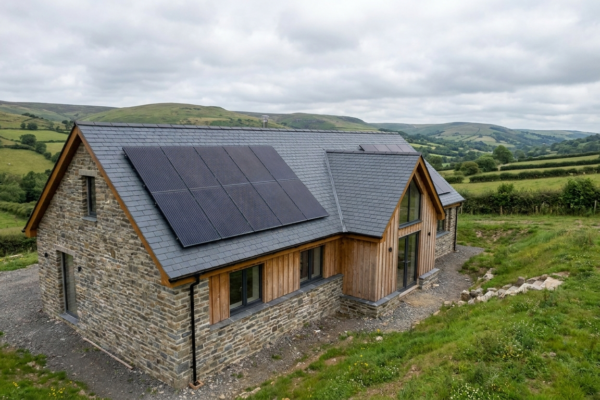
People often assume solar panels aren’t worth it this far north, but that’s not quite the full story. Helensburgh receives around 700 to 900 sunshine hours per year, less than the south of England, certainly, but solar panels generate electricity from daylight, not just direct sunshine. The long summer days at this latitude genuinely compensate for the short winter ones, and a well-sized system will still generate meaningfully through spring and autumn.
There are a few local factors worth knowing. If your home faces roughly south-southwest, common on the hillside streets above the town centre, you’re actually well positioned, as that orientation catches the afternoon Atlantic light. Roofs in Helensburgh’s Victorian stone villas are often quite steeply pitched, which helps with snow shedding (important given the occasional heavy snowfall at altitude) and can actually improve panel efficiency in summer. The higher rainfall does mean panels need cleaning two to three times a year rather than the once-a-year that might suffice further south.
If your home is in or near Helensburgh’s conservation area, which covers much of the original planned Victorian town grid, you may need to discuss panel placement with Argyll and Bute Council’s planning department before installation, particularly for listed buildings. For most homes outside the conservation area, solar panels are permitted development and don’t require planning permission.
Here’s what different system sizes look like for a typical Helensburgh home in 2026:
| System Size | Typical Install Cost | Annual Generation (Helensburgh) | Annual Bill Saving | Payback Period |
|---|---|---|---|---|
| 3 kW | £5,500 – £6,500 | 2,200 – 2,500 kWh | £420 – £520 | 11 – 14 years |
| 4 kW | £7,000 – £8,500 | 2,900 – 3,300 kWh | £550 – £680 | 11 – 14 years |
| 6 kW | £9,500 – £11,500 | 4,200 – 4,800 kWh | £780 – £950 | 11 – 14 years |
Adding a battery storage system (£3,500 – £5,500) makes a particularly good case in Helensburgh, where electricity export to the grid during the long summer evenings would otherwise go to waste. With a battery, you can shift that evening generation into overnight use and reduce your reliance on grid electricity considerably.
Installers covering Helensburgh typically come from Greenock (about 6km away, just across the Clyde) or from the Paisley area. Get at least three quotes, and make sure any installer is MCS certified, this is the certification you need to access the Smart Export Guarantee payments for electricity you send back to the grid.
Heating Choices That Actually Suit Helensburgh’s Climate
Helensburgh has more than 2,200 heating degree days per year, that’s the measure of how hard your heating system has to work, and it’s significantly higher than the UK average. This matters when you’re choosing between heating systems, because what works well in a mild southern English town may need to be sized and configured differently here.
Most homes in Helensburgh are currently on gas central heating, which remains a reliable and relatively low-cost option in the short term. But with gas boilers set to be phased out of new installations and the 2045 decarbonisation target approaching, it’s worth thinking about where you’re heading.
| Heating System | Install Cost | Annual Running Cost (Helensburgh) | Best Suited To |
|---|---|---|---|
| Gas boiler (replacement) | £2,500 – £4,500 | £900 – £1,300 | Homes planning upgrades within 5–8 years |
| Air source heat pump | £10,000 – £16,000 | £800 – £1,300 | Well-insulated semi-detached and detached homes |
| Ground source heat pump | £18,000 – £28,000 | £650 – £1,100 | Larger detached homes with garden space |
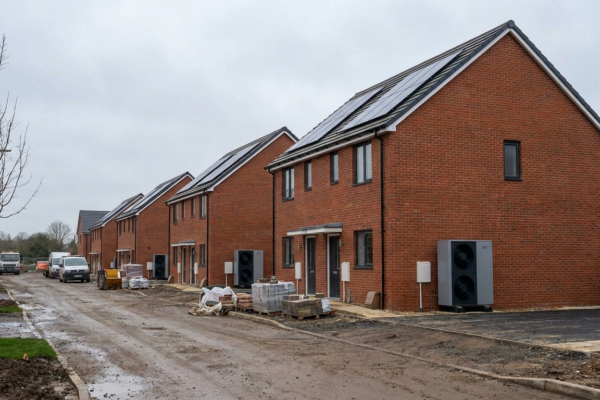
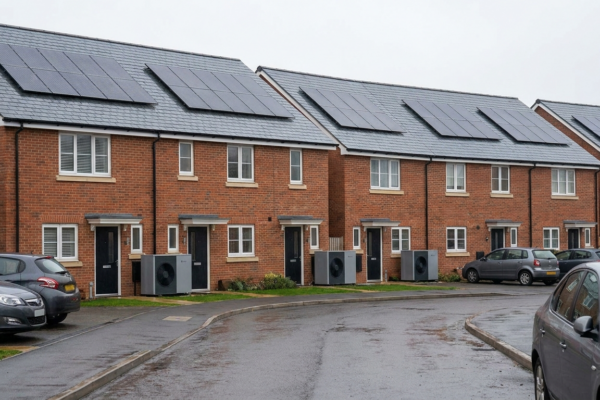
Air source heat pumps work well in Helensburgh’s climate provided your home is properly insulated first. Modern units perform efficiently down to -15°C, which is well below anything Helensburgh regularly experiences. The key thing is making sure your radiators are sized correctly, heat pumps run at lower flow temperatures than gas boilers, so oversized radiators or underfloor heating work better than small older radiators.
Ground source heat pumps are worth considering for the larger detached properties on Helensburgh’s hillside estates, where garden space often allows for horizontal ground loops. The ground temperature at depth stays more consistent than air temperature, which is an advantage in colder winters. The upfront cost is significant, but the running cost advantage over time is real.
One thing worth flagging for Helensburgh specifically, if you’re in a Victorian stone villa without cavity walls, insulate before you switch heating systems. Putting a heat pump into an uninsulated stone building is an expensive mistake. Get the building fabric right first.
Where to Start With Insulation in Helensburgh
This is where most Helensburgh homeowners should begin, because insulation is almost always the fastest payback and the foundation that makes every other upgrade work better. The priority order below is based on what saves the most money for the semi-detached and detached homes that dominate the town.
Loft Insulation
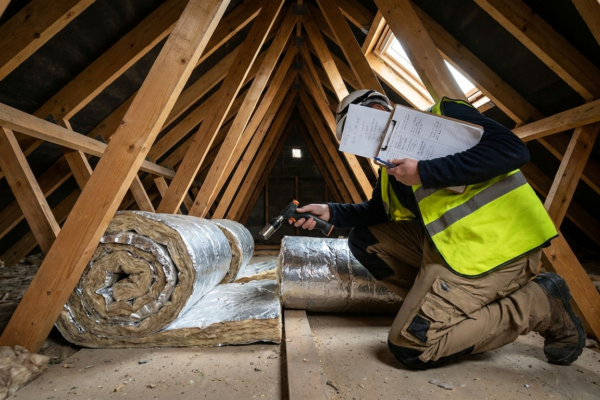
If you have an accessible loft and it’s either uninsulated or has the old 100mm depth, topping up to 270mm of mineral wool is the single best-value upgrade available. Cost is typically £350 – £700 for a semi-detached home, and annual savings in Helensburgh’s cold climate can reach £300 – £450, giving a payback of well under two years.
Cavity Wall Insulation
Most of Helensburgh’s post-1945 housing on estates like Drumfork and Helensburgh East will have cavity walls that can be filled with blown insulation. Cost is around £700 – £1,200 for a semi-detached home, with annual savings of £200 – £350. Given the high rainfall and westerly winds, make sure your installer uses water-resistant bead or bonded bead insulation rather than open-cell mineral wool, which can retain moisture on this exposed coastline.
Solid Wall Insulation (Victorian Stone Villas)
For the older stone properties in the town centre grid and hillside streets, solid wall insulation is more complex and expensive. External wall insulation costs around £8,000 – £15,000 for a semi-detached home but delivers annual savings of £400 – £700. Internal wall insulation is cheaper at £4,000 – £8,000 but reduces room size slightly. Either way, the render choice for external systems matters enormously in Helensburgh’s wet, windy climate, silicone-based renders handle driving rain far better than traditional sand-cement finishes.
Floor Insulation and Draught Proofing
Suspended timber floors are common in Helensburgh’s older homes, and draughts through floorboards and skirting are a real heat loss source. Insulating beneath the floorboards costs around £800 – £1,500 and saves around £80 – £150 a year. Draught proofing doors and windows is the cheapest upgrade of all, often under £200 if you DIY, and makes an immediate, noticeable difference on a windy night in Helensburgh.
Grants and Funding Helensburgh Homeowners Can Actually Get in 2026
Scotland has a genuinely better grant landscape than England for this stuff, and it’s worth knowing exactly what you can access.
Home Energy Scotland
Free, impartial advice over the phone from a government-backed service. They can also arrange interest-free loans up to £15,000 for energy efficiency improvements, insulation, heat pumps, solar panels, all eligible. Repayments are typically spread over 10 to 12 years, making monthly costs very manageable. Ring 0808 808 2282 or go through Energy Saving Trust Scotland. This is the first call any Helensburgh homeowner should make.
Warmer Homes Scotland
If you’re on a qualifying benefit, including Universal Credit, Pension Credit, Child Tax Credit, or certain disability benefits, you may be eligible for fully funded insulation, heating upgrades, or even a new heating system at no cost. Argyll and Bute Council works alongside this scheme and can help with referrals. Income thresholds and qualifying criteria apply, so it’s worth checking even if you’re not sure you qualify.
Heat pump funding in Scotland
The Boiler Upgrade Scheme does not operate in Scotland. It covers England and Wales only, so the £7,500 figure quoted on most UK-wide sites is not available here. Scottish homeowners apply instead through Home Energy Scotland, which offers grant and interest-free loan funding toward air source and ground source heat pumps, with an uplift for eligible rural and island households. You apply before work begins rather than through your installer. Current amounts and eligibility are on the Home Energy Scotland grants and loans page.
ECO4
The Energy Company Obligation scheme applies across Scotland and funds insulation and heating improvements for lower-income households. Eligibility is means-tested, and larger energy suppliers are required to fund a portion of their customer upgrades. Contact your energy supplier directly or go through Home Energy Scotland who can assess your eligibility across multiple schemes at once.