Average heat pump lifespan in the UK is 15–20 years, but most manufacturers warrant 10 years
If you are considering a heat pump, the first question is usually how long it will last. The average lifespan of a properly installed air-source heat pump in the UK is 15–20 years, while ground-source systems typically reach 20–25 years (Energy Saving Trust, 2026). These figures assume the unit is correctly sized for your home and serviced annually.
A poorly sized or badly installed heat pump may fail 5–7 years earlier than the 15–20 year average. Manufacturer warranties typically cover the compressor for 10 years, with labour and parts covered for only 2–5 years (MCS certification database, 2026). The 10-year compressor warranty is standard across most major brands, but you must use an MCS-certified installer to keep it valid.
The 15–20 year figure is an average, not a guarantee. A unit installed in a coastal area with salt spray, or one that cycles on and off hundreds of times a day due to poor sizing, will wear out faster. The key variable is installation quality, not the brand or model.
Quick numbers lifespan, warranty, and cost per year
| Item | Value | Source |
|---|---|---|
| Average air-source heat pump lifespan | 15–20 years | Energy Saving Trust |
| Average ground-source heat pump lifespan | 20–25 years | Energy Saving Trust |
| Typical compressor warranty | 10 years | MCS |
| Typical labour/parts warranty | 2–5 years | Manufacturer terms |
| Annual servicing cost | £150–£250 | Energy Saving Trust; Which? |
| Replacement cost (air-source, installed) | £7,000–£13,000 | DESNZ; Energy Saving Trust |
| Replacement cost (ground-source, installed) | £14,000–£19,000 | DESNZ; Energy Saving Trust |
Most heat pumps fail early due to installation errors, not the unit itself
MCS data from 2025–2026 shows that 60–70% of premature heat pump failures are linked to incorrect sizing, poor refrigerant charge, or inadequate airflow (MCS Installation Quality Report 2026). The unit itself is rarely the problem.
A correctly sized and installed heat pump rarely fails before 12 years. The 15–20 year average assumes a quality install from an MCS-certified contractor. The most common failure point is the compressor, which is covered under the 10-year warranty. Homeowners who skip annual servicing reduce lifespan by an estimated 3–5 years (Energy Saving Trust, 2026).
Three installation errors cause most early failures. First, an undersized unit runs constantly and wears out the compressor. Second, an oversized unit cycles on and off too often, causing thermal stress. Third, a poor refrigerant charge either starves or floods the compressor with liquid, causing mechanical damage.
How to verify your installer is certified to protect your warranty and lifespan
All heat pump installations in the UK must be carried out by an MCS-certified installer to qualify for the Boiler Upgrade Scheme (BUS) grant and to keep the manufacturer warranty valid (Ofgem BUS Installer Requirements 2026). Check the installer’s MCS certificate number on the MCS register at mcscertified.com before work begins.
Installers must also be TrustMark registered for BUS compliance. Gas Safe registration is only required if the system connects to a gas boiler backup (TrustMark Heat Pump Installer Standards 2026). Request a signed MCS commissioning certificate after installation. This document is your proof for warranty and grant claims.
If the installer cannot provide an MCS certificate number, do not proceed. Without MCS certification, the manufacturer warranty is likely void and you cannot claim the BUS grant. How to check if an installer is MCS certified
The direct answer a heat pump lasts as long as a gas boiler, but only with annual servicing
The average lifespan of a gas combi boiler in the UK is 10–15 years. An air-source heat pump lasts 15–20 years, which is 5–10 years longer (Energy Saving Trust Boiler vs Heat Pump Lifespan Comparison 2026). A heat pump that is serviced annually and installed by an MCS-certified professional will match or exceed a boiler’s lifespan.
Without servicing, heat pump lifespan drops to 10–12 years, which is equivalent to an unserviced boiler. The key difference is that heat pumps have fewer moving parts but are more sensitive to refrigerant leaks and airflow blockages. A boiler can run with minor faults for years. A heat pump with a refrigerant leak will fail within months.
The running cost comparison also favours heat pumps. A modern heat pump with a SCOP (Seasonal Coefficient of Performance) of 3.5 produces 3.5 kWh of heat for every 1 kWh of electricity. A gas boiler at 90% efficiency produces 0.9 kWh of heat for every 1 kWh of gas. Over 15 years, the lower running costs of a heat pump can offset the higher upfront installation cost.
What shortens a heat pump’s lifespan, and what you can check yourself
The three biggest lifespan reducers are an undersized unit that cycles too often, a dirty outdoor coil that overheats the compressor, and an incorrect refrigerant charge that damages the compressor (MCS Common Heat Pump Failures 2026).
Homeowners can visually check the outdoor unit for debris, leaves, or ice buildup monthly. This is not a service, just observation. A heat pump that runs for less than 10 minutes per cycle is probably oversized. A unit that runs continuously in mild weather is probably undersized. If the system trips the circuit breaker or makes grinding noises, call an MCS-certified engineer immediately. These are signs of compressor failure.
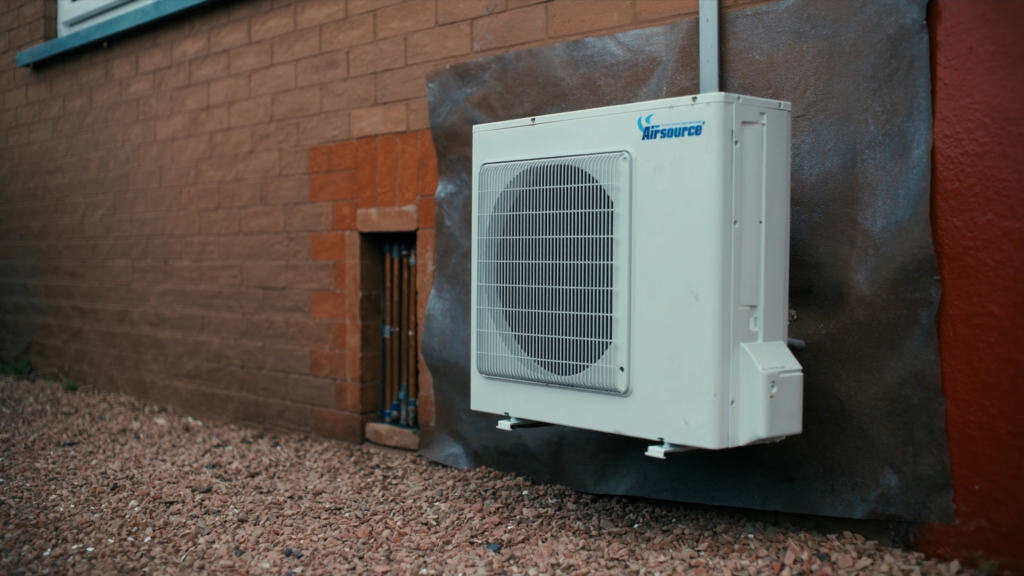
Other simple checks include keeping the outdoor unit clear of vegetation within 30cm on all sides, checking the condensate drain for blockages, and ensuring the indoor filter is clean. A blocked filter reduces airflow and forces the compressor to work harder, shortening its life by 2–3 years. Heat pump maintenance checklist for homeowners
When replacement makes more sense than repair, and what it costs
Repair costs above £1,500 typically make replacement more cost-effective, especially if the unit is over 12 years old (Energy Saving Trust Heat Pump Repair vs Replace Guide 2026). Common expensive repairs include compressor replacement (usually £1,500–£2,500) or a new outdoor coil (£1,000–£2,000).
Replacement cost for an air-source heat pump (installed) in 2026 is £7,000–£13,000, depending on property size and system complexity (DESNZ Heat Pump Cost Data 2026). The Boiler Upgrade Scheme provides up to £7,500 for qualifying households, reducing the net cost to as little as £0 in some cases. A new unit with a 10-year warranty and higher efficiency rating (SCOP 3.5+) may pay back the replacement cost in 5–7 years through lower running costs.
Check the MCS register for the installer’s warranty transfer policy. Some warranties are non-transferable if the original installer ceases trading. If you are replacing a unit that was installed by a company that has gone out of business, you may need to pay for a full new installation rather than a like-for-like swap.
Frequently Asked Questions
An air-source heat pump lasts 15–20 years, while a ground-source system lasts 20–25 years, according to the Energy Saving Trust (2026). Proper installation and annual servicing are essential to reach these figures.
Most heat pump manufacturers offer a 10-year warranty on the compressor and 2–5 years on labour and parts, as per MCS certification database (2026). You must use an MCS-certified installer to keep the warranty valid.
Replacing an air-source heat pump costs £7,000–£13,000 installed, and a ground-source system costs £14,000–£19,000, based on DESNZ and Energy Saving Trust data (2026). Annual servicing at £150–£250 can delay replacement.
Yes, annual servicing is recommended to maintain efficiency and lifespan. The Energy Saving Trust and Which? advise budgeting £150–£250 per year for a professional service.
60–70% of premature heat pump failures are due to incorrect sizing, poor refrigerant charge, or inadequate airflow, according to the MCS Installation Quality Report 2026. The unit itself is rarely the problem.