Weather compensation curves adjust heat pump output based on outdoor temperature
A weather compensation curve is a setting programmed into your heat pump controller. It tells the heat pump how hot the water circulating through your radiators or underfloor heating needs to be at different outdoor temperatures. The goal is to match the heat output to the amount of heat your home is losing at that moment.
When it is colder outside, your home loses heat faster, so the heating water needs to be hotter. When it is milder outside, the flow temperature can be lower. This matching improves efficiency and comfort because the system runs at the lowest possible temperature to keep your home warm. The curve is usually defined by two or three points, for example the flow temperature required when it is -3°C outside and the flow temperature when it is 15°C outside (Energy Saving Trust, 2026).
Quick numbers – typical weather compensation settings for UK homes in 2026
The table below shows typical flow temperatures for a well-insulated and a poorly insulated UK home at different outdoor temperatures. It also shows the estimated improvement in Coefficient of Performance (COP) compared to running the heat pump at a fixed 55°C flow temperature. COP measures how many units of heat you get for each unit of electricity used.
| Outdoor temperature (°C) | Typical flow temperature – well-insulated home (°C) | Typical flow temperature – poorly insulated home (°C) | Estimated COP improvement vs. fixed 55°C |
|---|---|---|---|
| -3 | 40 | 55 | 0% (no improvement at design point) |
| 2 | 35 | 48 | 15–20% |
| 7 | 30 | 40 | 30–40% |
| 12 | 25 | 33 | 40–50% |
| 15 | 22 | 28 | 50–60% |
These figures are based on data from DESNZ and MCS installation standards (DESNZ, 2026; MCS, 2026). The actual COP improvement depends on your specific system and property.
The direct answer to how a weather compensation curve works in a UK heat pump system
The curve is a graph that maps outdoor air temperature to the target flow temperature of the heating water. This graph is programmed into the heat pump controller. As the outdoor temperature rises, the flow temperature lowers. This reduces the work the compressor has to do, which increases the COP.
Your installer sets the curve based on a heat loss calculation for your property. This calculation can be room-by-room or whole-house. The correct curve ensures the heat pump runs efficiently across the full heating season (Ofgem, 2026; MCS 023 standard, 2026).
Who qualifies for a weather compensation curve
Weather compensation is a mandatory or highly recommended feature for heat pump installations to be eligible for the Boiler Upgrade Scheme (BUS) in 2026. Properties must have a valid, MCS-compliant heat loss calculation to determine the correct curve. Homes without this calculation may not qualify for BUS.
The key requirements are: the heat pump must be MCS-certified, the installer must be MCS-accredited, and the weather compensation curve must be set as part of the commissioning report. Only heat pumps qualify – gas boilers or hybrid systems do not (GOV.UK, 2026; MCS 001, 2026).
Boiler Upgrade Scheme eligibility 2026
How to verify your installer has set the correct weather compensation curve
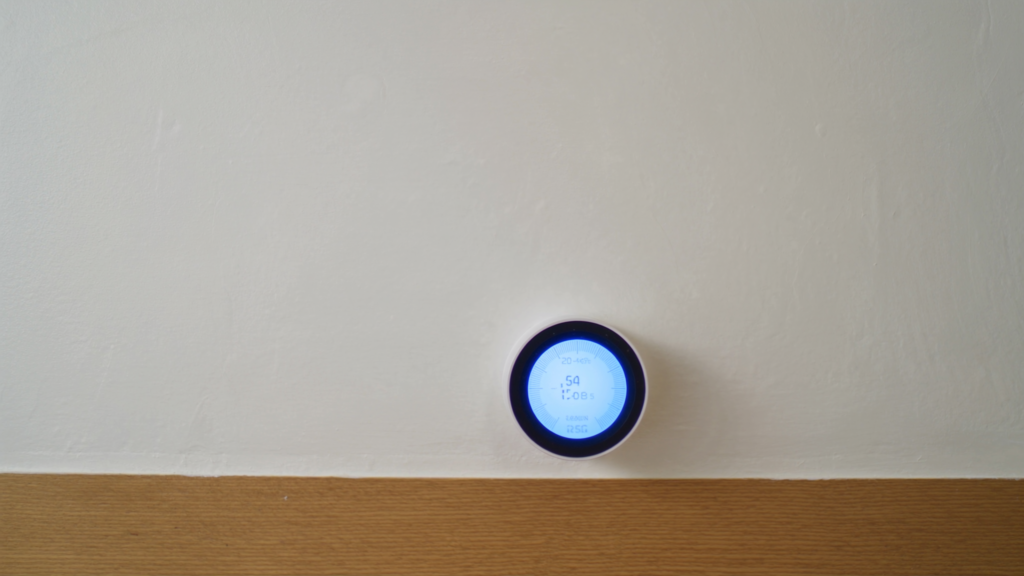
You can check the heating controller display for a setting labelled “weather curve”, “compensation”, “WC”, or “outdoor sensor”. The installer must provide a commissioning report that includes the curve points and the heat loss calculation used. Ask for a written explanation of the curve settings and a demonstration of how to adjust them, if the manufacturer allows it.
MCS-certified installers are audited to ensure curves are set correctly. You can request an audit reference from your installer (MCS Commissioning Checklist, 2026; TrustMark, 2026).
The efficiency benefit of a properly set weather compensation curve
A well-tuned weather compensation curve can improve seasonal COP by 15–25% compared to a fixed high flow temperature such as 55°C. For example, at 7°C outdoor temperature, a curve might set the flow temperature to 35°C, giving a COP of around 3.5. A fixed 55°C flow temperature would give a COP of around 2.5 – a 40% efficiency gain at that moment.
The average UK home with a heat pump sees a seasonal COP of 3.0 to 3.5 with weather compensation, compared to 2.5 to 3.0 without it (DESNZ, 2026; Energy Saving Trust, 2026).
The role of the outdoor temperature sensor in weather compensation curves
A weather compensation curve requires an outdoor temperature sensor. This sensor is usually supplied with the heat pump and mounted on a north-facing wall, out of direct sunlight. The sensor feeds real-time outdoor temperature data to the controller, which then adjusts the flow temperature according to the programmed curve.
If the sensor is faulty, shaded by an overhang, or incorrectly placed, the curve will not work. The system may then default to a fixed flow temperature, losing the efficiency benefit (MCS 023, 2026; manufacturer manuals for Vaillant, Daikin, and Mitsubishi Electric).
How to confirm your property’s heat loss determines the correct curve
The curve is not one-size-fits-all. It depends on your property’s heat loss at the design outdoor temperature, which is typically -3°C for most of the UK, as per MCS standards. A room-by-room heat loss calculation that is MCS-compliant is the only way to determine the correct flow temperature at this design point. From that point, the curve is derived.
You can request a copy of the heat loss calculation from your installer. If it is missing, the curve may be incorrect, and your system may not run efficiently (MCS 001, 2026; CIBSE Guide A, 2026).
Heat loss calculation for heat pumps
Frequently Asked Questions
A weather compensation curve is a controller setting that tells your heat pump the target flow temperature based on outdoor temperature. According to the Energy Saving Trust, it adjusts output so the system runs at the lowest efficient temperature to match heat loss.
By lowering flow temperatures when it is mild outside, the heat pump operates at a higher coefficient of performance (COP). DESNZ data shows COP improvements of 50–60% at 15°C outdoor compared to running at a fixed 55°C flow.
For a well-insulated home, typical flow is 40°C at -3°C outdoor and 22°C at 15°C outdoor. For a poorly insulated home, it is 55°C at -3°C and 33°C at 15°C, based on MCS installation standards.
Yes, weather compensation is recommended for optimal efficiency. Without it, the heat pump may run at a fixed high flow temperature, reducing COP and increasing running costs. Check with your installer for proper setup.
Access your heat pump controller menu and enter the flow temperature targets for at least two outdoor temperatures, typically -3°C and 15°C. Consult your heat pump manual or an MCS-certified installer for specific settings.
Yes, improving COP reduces electricity consumption. For a typical UK home, a 30–40% COP improvement at 7°C outdoor can lower annual heating costs by hundreds of pounds, according to DESNZ estimates.