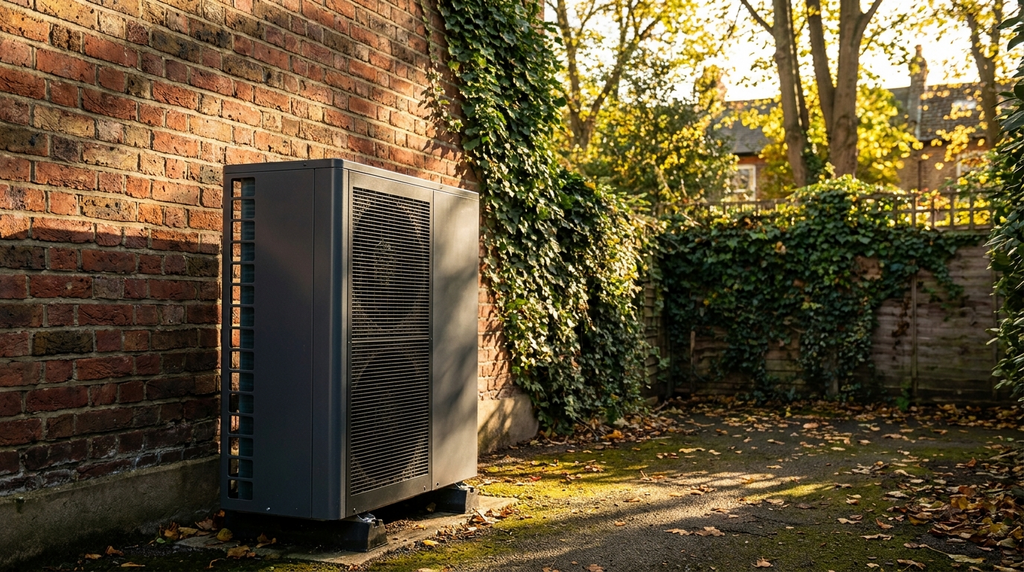
Home Energy Scotland grants offer up to £7,500 more than the average GB grant.
If you live in Scotland and are looking at upgrading your home’s heating or insulation, you may have heard about the Home Energy Scotland (HES) grant and loan scheme. The funding available in Scotland is significantly higher than the standard support offered elsewhere in Great Britain.
Home Energy Scotland grants offer up to £15,000 for heat pumps in 2026, double the GB average of £7,500. The amount depends on your household net income, with higher grants for those under £40,000 per year.
- HES grants up to £15,000 for heat pumps, double GB average.
- Households with net income under £40,000 qualify for highest grants.
- Income assessment uses net income after tax and NI, not gross.
- Only owner-occupiers in Scotland can apply for HES grants.
- Apply before starting any work to keep your funding secure.
- Home Energy Scotland grants offer up to £7,500 more than the average GB grant.
- Your household income determines the grant amount you receive.
- You must own your home and live in Scotland to apply.
- Quick numbers grant and loan amounts by measure for 2026.
- The direct answer you qualify for a grant if your household income is below £40,000 and you own your home.
- You must use an MCS-certified installer to keep your grant or loan valid.
- You must apply for the grant before any work starts.
The average GB grant for a heat pump from the Boiler Upgrade Scheme is £7,500 in 2026 (GOV.UK, 2026). In Scotland, a single HES grant for a heat pump can reach £15,000 (Home Energy Scotland, 2026). This means Scottish homeowners can access up to double the funding for the same type of installation.
The higher grant levels reflect the Scottish Government’s approach to fuel poverty and net-zero targets. The rest of this article explains who qualifies, how much you can get, and the steps you must follow to keep your funding secure.
Your household income determines the grant amount you receive.
HES grants are income-assessed. This means the amount you receive depends on your total household net income, not just your salary. Households with a net income under £40,000 per year qualify for the highest grant levels – for example, up to £15,000 for a heat pump.
Households with income above £40,000 may only qualify for a loan, not a grant, or a reduced grant amount. The income threshold applies to total household net income from all sources – employment, self-employment, benefits, and pensions (Home Energy Scotland, 2026).
If your income is close to the £40,000 line, it is worth checking whether you can include all deductions and allowances. The assessment uses net income after tax and National Insurance, not your gross salary.
You must own your home and live in Scotland to apply.
Only owner-occupiers in Scotland are eligible for HES grants. Private tenants and social housing tenants are excluded from the scheme. The property must be your primary residence – second homes and holiday lets do not qualify.
The property must also be built before a specific date. For full grants, the property typically needs to be built before 2011, though you should check the current HES criteria for 2026 (Home Energy Scotland, 2026). Newer homes may qualify for reduced support or loans only.
You do not need to have lived in the property for a minimum period, but you must be the legal owner at the time of application.
Quick numbers grant and loan amounts by measure for 2026.
| Measure | Maximum Grant (income under £40k) | Maximum Loan (income over £40k) | Typical Grant % of cost |
|---|---|---|---|
| Air source heat pump | £15,000 | £7,500 (interest-free) | Up to 75% of cost |
| Ground source heat pump | £15,000 | £7,500 (interest-free) | Up to 75% of cost |
| Solar PV (panels) | £4,500 | £4,500 (interest-free) | Up to 60% of cost |
| Solid wall insulation (internal or external) | £12,500 | £6,000 (interest-free) | Up to 75% of cost |
| Cavity wall insulation | £1,500 | £1,500 (interest-free) | Up to 80% of cost |
| Loft insulation | £1,500 | £1,500 (interest-free) | Up to 80% of cost |
Note: Loan amounts are interest-free for 5 years. Grant amounts do not need to be repaid (Home Energy Scotland, 2026).
The direct answer you qualify for a grant if your household income is below £40,000 and you own your home.
This is the single most important eligibility rule. No exceptions for income above £40,000. If your income is above £40,000, you still qualify for an interest-free loan for the same measures (Home Energy Scotland, 2026).
You must also live in Scotland and own the property you are applying for. If you meet these three conditions – income below £40,000, owner-occupier, living in Scotland – you are eligible for the full grant amounts listed in the table above.
If your income is above £40,000, you can still get an interest-free loan of up to £7,500 for a heat pump or £4,500 for solar panels. The loan must be repaid over five years with no interest.
You must use an MCS-certified installer to keep your grant or loan valid.
All work must be carried out by an installer registered with the Microgeneration Certification Scheme (MCS) for heat pumps and solar PV. For insulation measures (cavity, loft, solid wall), the installer must be registered with TrustMark and the relevant Competent Person Scheme – for example, FENSA for windows or NICEIC or NAPIT for electrical work (MCS, 2026; TrustMark, 2026).
You can verify an installer’s MCS registration on the MCS website or via the HES installer directory. If you use an uncertified installer, HES will reject your grant or loan application and you will not receive any funding (Home Energy Scotland, 2026).
It is your responsibility to check the installer’s certification before any work begins. The installer should be able to provide their MCS certificate number and TrustMark registration on request.
You must apply for the grant before any work starts.
HES grants and loans are pre-approval only. You cannot apply after the installation is complete. The application process involves a free home energy assessment – carried out by phone or virtually – to confirm your home’s suitability and the measures you need (Home Energy Scotland, 2026).
You must receive a formal offer letter from HES before instructing an installer. Breaking this rule voids the grant. If you sign a contract or pay a deposit before receiving the offer letter, you will not be eligible for any funding.
The assessment will check your property’s existing insulation, heating system, and construction type. How to prepare for a Home Energy Scotland assessment The assessor will recommend the most suitable measures and provide a written report. You can then use this report to apply for the specific grant or loan.
Once you receive the offer letter, you have a set period – typically 12 months – to complete the installation and submit the final paperwork. If you need more time, you can request an extension before the deadline expires.
Frequently Asked Questions
The Home Energy Scotland (HES) grant is income-assessed funding for owner-occupiers in Scotland. It covers home energy upgrades like heat pumps and insulation, with grants up to £15,000 in 2026 (Home Energy Scotland).
The HES grant for a heat pump can reach up to £15,000 in 2026, based on your household net income. This is double the £7,500 available from the Boiler Upgrade Scheme in England and Wales (Home Energy Scotland).
You must own your home and live in Scotland as your primary residence. Your total household net income must be under £40,000 per year to qualify for the highest grant levels (Home Energy Scotland).
Apply directly through Home Energy Scotland before starting any work. They will assess your income and property to determine the grant amount you can receive (Home Energy Scotland).
No, only owner-occupiers in Scotland are eligible for HES grants. Private tenants and social housing tenants are excluded from the scheme (Home Energy Scotland).