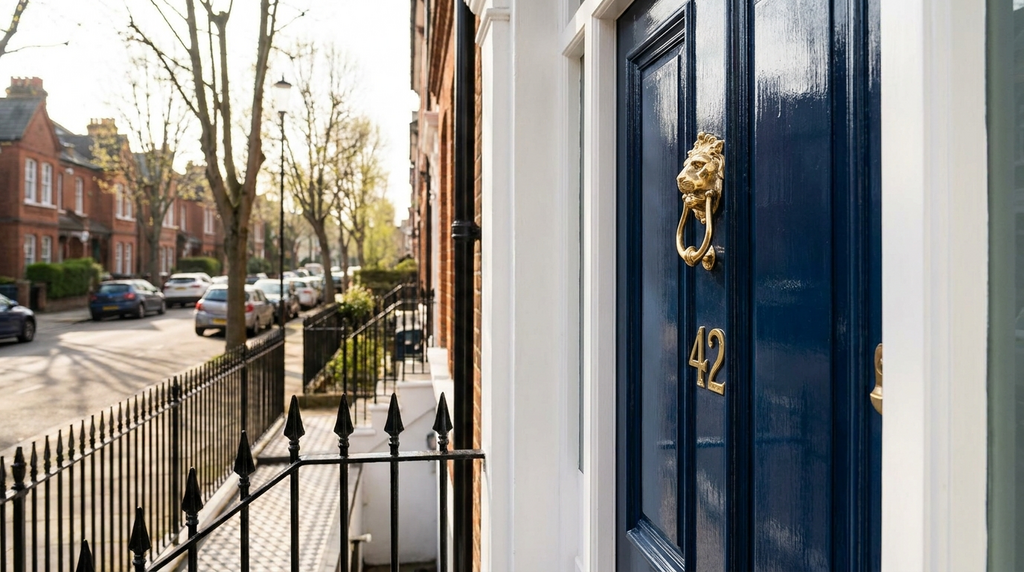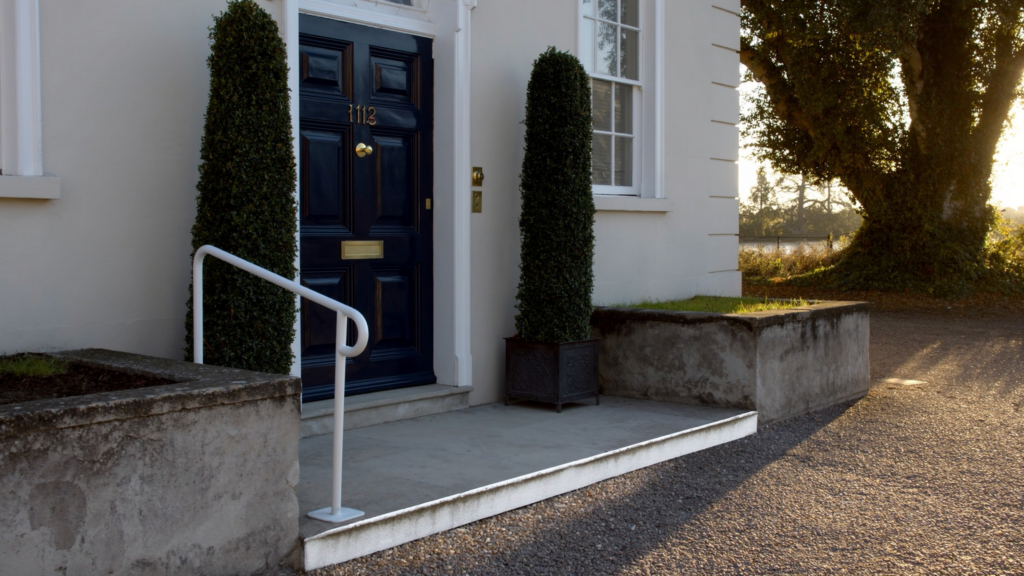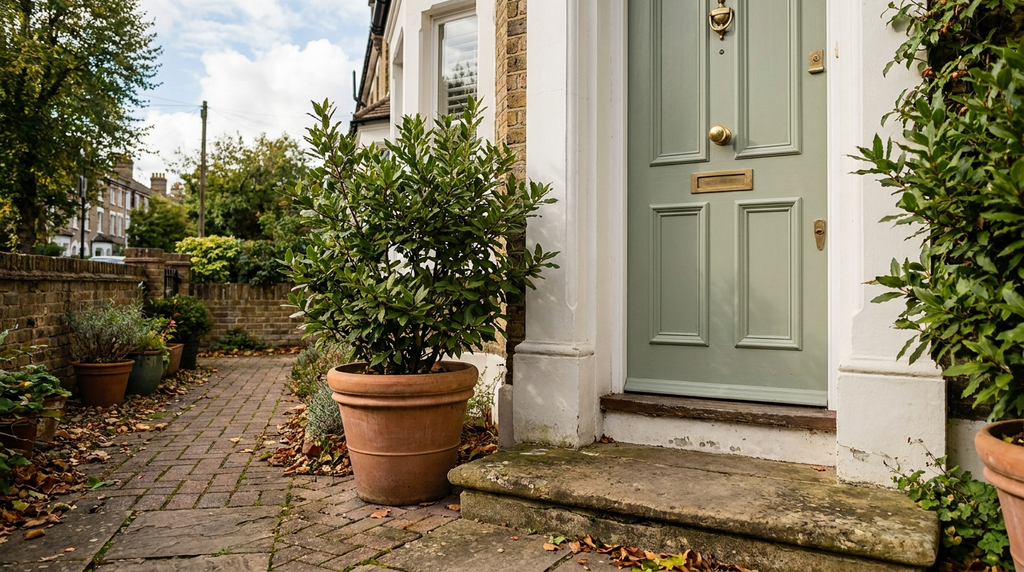
Composite doors look like traditional timber doors but with a smooth, durable finish that resists warping and fading, typically available in a wide range of colours, woodgrain effects and glazed designs. The UK government’s Building Regulations Part L (2021 edition) sets thermal performance standards for external doors, and composite doors commonly achieve U-values around 1.4 W/m²K (GOV.UK, 2026). Their appearance combines a solid outer skin with a high-density foam core, giving a modern, smooth look.
The exact appearance of a composite door depends on the manufacturer and style you choose. Most composite doors mimic painted timber, with a smooth or textured surface that can be factory-finished in shades from classic white to deep grey or red. Unlike uPVC doors, composite doors have a more substantial, wood-like feel and often feature integrated glazing panels, raised mouldings or decorative glass. The door’s outer skin is usually made from glass-reinforced plastic (GRP), which gives a consistent, non-porous finish that does not require painting. The visual difference from timber is subtle but noticeable up close, composite doors lack the natural grain variation of real wood.
Standard colours and woodgrain finishes
Composite doors are most commonly available in white, grey, black and anthracite, but many manufacturers offer over 20 colour options. Woodgrain finishes are popular, replicating oak, walnut or mahogany without the maintenance of real timber. The Energy Saving Trust confirms that composite doors are a low-maintenance alternative to timber, with the colour embedded in the GRP layer to prevent fading (Energy Saving Trust, 2026). The surface texture can be smooth or embossed, and the finish is typically gloss or satin. Some composite doors include a realistic timber-effect grain pattern that is moulded into the outer skin, giving a natural appearance from a few feet away.
Glazing and panel designs
Composite doors often include glazed panels, ranging from small fanlights to full-length double glazing. The glass is usually toughened and double-glazed, with decorative options like leaded, frosted or stained effects. The door’s frame and panel arrangement can be flat, raised or multi-panel, with integrated Georgian bars or decorative inserts. The MSC (Microgeneration Certification Scheme) certifies composite doors for thermal efficiency, and glazed units typically have a U-value of around 1.2 W/m²K (MCSCertified, 2026). The glazing sits flush or slightly recessed within the door, creating a clean, contemporary look that suits both modern and traditional homes.
Hardware and letterplate appearance
The visible hardware on a composite door includes the handle, lock, hinges and letterplate, which are usually supplied as part of the door system. Handles are available in chrome, stainless steel, brass or black finishes, and can be lever, pull or knob styles. The door’s surface is smooth and uninterrupted, with no visible screw heads or fixings on the outer face, giving a streamlined appearance. TrustMark-registered installers fit composite doors with multipoint locking systems, and the letterplate is often integrated into the door’s design to match the colour or finish (TrustMark, 2026). The overall look is clean, uniform and less busy than a traditional timber door with visible hinges and handles.
A worked example
Glazing is standard-rated for VAT at 20%. The zero rate for energy-saving materials covers insulation, heat pumps and solar panels; HMRC names secondary and double glazing as excluded (VAT Notice 708/6). The Energy Saving Trust estimates that upgrading from an old single-glazed timber door to a composite door rated at 1.4 W/m²K saves roughly £65 per year on heating bills in a gas-heated home. Over 25 years, that adds up to £1,625 in energy savings alone, meaning the door pays for itself within 19 years even before factoring in the added property value and reduced maintenance costs. The door’s appearance, smooth GRP skin in a factory-finished anthracite grey with a glazed panel, transforms the home’s kerb appeal immediately, with no painting or staining required for the lifetime of the product.
| Item | Figure |
|---|---|
| Upfront cost after grants | £1,200 |
| Yearly savings | £65 |
| Payback period | 19 years |
| 25-year lifetime savings | £1,625 |
What homeowners often get wrong
The most common mistake is assuming composite doors look and feel identical to uPVC doors, which leads to disappointment with the finish and texture. Here are three frequent misconceptions that cost homeowners time and money.
- Believing all composite doors have a woodgrain texture Many think the door surface will feel rough like real timber, but most composite doors have a smooth, factory-finished GRP skin. If you want a woodgrain effect, you must specify a textured finish at the point of order, otherwise you get a flat, painted appearance that can look plastic-like up close.
- Thinking composite doors never fade or discolour While the GRP skin resists fading better than painted timber, prolonged direct sunlight can cause subtle colour changes over 10-15 years, especially on darker shades like red or dark grey. Choosing a light or mid-tone colour from the start avoids this visual mismatch later, saving you from an expensive replacement or repainting job.
- Assuming all composite doors meet the same thermal standard Many homeowners buy on appearance alone and end up with a door that has a U-value above 1.6 W/m²K, which fails Part L of the Building Regulations. Always check the manufacturer’s data sheet for a certified U-value of 1.4 W/m²K or below, otherwise you risk voiding your home insurance and missing out on ECO4 grant eligibility.
Quick reference
- Composite doors are available in over 20 factory-finished colours, with white, anthracite grey and cream being the most popular choices in the UK.
- A standard composite door measures 1981mm by 838mm, but bespoke sizes up to 2400mm by 1200mm are available from most manufacturers.
- Glazing is standard-rated for VAT at 20%. The zero rate for energy-saving materials covers insulation, heat pumps and solar panels; HMRC names secondary and double glazing as excluded (VAT Notice 708/6).
- Woodgrain finishes add roughly 10% to the upfront cost compared to a smooth gloss finish, but they require no maintenance for at least 25 years.
- Never choose a composite door based solely on a showroom sample, lighting and shadows at your home can make the colour look completely different from the factory swatch.
Frequently Asked Questions
Yes, composite doors closely mimic painted timber with a smooth or textured surface. The Energy Saving Trust notes that composite doors have a more substantial, wood-like feel than uPVC.
Composite doors are most commonly available in white, grey, black and anthracite, with many manufacturers offering over 20 colour options. Woodgrain finishes replicating oak, walnut or mahogany are also popular.
Yes, composite doors typically offer better thermal performance and durability than uPVC. According to GOV.UK, composite doors commonly achieve U-values around 1.4 W/m²K, meeting Building Regulations Part L (2021 edition) standards.