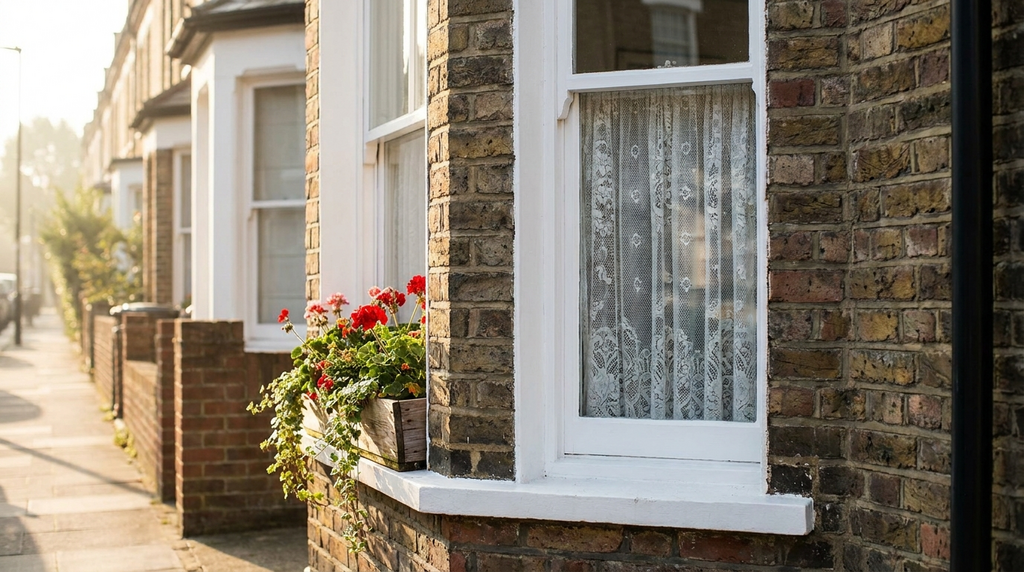
The average UK home near a busy road is exposed to traffic noise levels that would have been considered unacceptable in a commercial office environment just a decade ago. According to noise mapping data published by the Department for Environment, Food and Rural Affairs, millions of properties across England are regularly exposed to road traffic noise exceeding 55 decibels during the day, a level that research consistently links to sleep disruption, raised stress hormones, and reduced quality of life. For homeowners weighing up whether to upgrade their windows, the question is rarely just about draughts or heating bills. It is about whether you can sleep properly on a Tuesday night with a bus route outside your bedroom window.
Triple glazing does not automatically reduce noise more than double glazing. According to DEFRA noise mapping guidance, acoustic performance depends primarily on glass specification, including asymmetric pane thicknesses, laminated glass layers, and cavity width, rather than the number of panes. A purpose-built acoustic double glazed unit rated Rw 40dB or above will outperform a standard triple glazed window for noise reduction in most UK homes.
- Triple glazing does not automatically outperform double glazing for noise reduction — the specification of glass thickness and air gap width matters far more than the number of panes
- Look for an Rw (weighted sound reduction) rating of at least 35dB for homes near busy roads; standard double glazing typically achieves only 28-32dB
- Asymmetric glass panes — where the two sheets of glass are different thicknesses — break up sound resonance more effectively than matched panes of equal thickness
- Wider air or gas-filled gaps between panes generally improve acoustic performance, so ask your glazing supplier for the actual gap measurements rather than just the total unit thickness
- Laminated glass is one of the most effective upgrades for noise reduction because the interlayer absorbs sound vibration; it can be specified in either double or triple glazed units
- If you live near an airport, railway, or major road, request acoustic glazing units specifically rather than standard thermal glazing, as these are optimised for different performance goals
- Replacing glazing alone will not solve noise problems if your window frames have gaps, worn seals, or trickle vents — the entire window assembly must be airtight to achieve the rated acoustic performance
- Why Outside Noise Is a Growing Problem for UK Homeowners
- How Sound Travels Through Glass and Why It Matters
- What Double Glazing Actually Does for Noise Reduction
- What Triple Glazing Actually Does for Noise Reduction
- Acoustic Glass and How It Compares to Standard Glazing
- Secondary Glazing as a Noise Reduction Option Worth Considering
- Comparing Your Options Side by Side
- What UK Grants and Schemes Are Available in 2026
- Practical Things to Check Before You Buy
- The Key Takeaway on Double Versus Triple Glazing for Noise
This guide sets out to answer one of the most commonly misunderstood questions in home improvement: does triple glazing actually make your home significantly quieter than double glazing? The honest answer, as you will discover, is that it depends almost entirely on how the glazing is specified, not simply how many panes of glass are involved.
Why Outside Noise Is a Growing Problem for UK Homeowners
Urban density across the UK continues to increase, and with it the ambient noise experienced by homeowners in towns, cities, and suburban areas. Road traffic remains the dominant source of noise complaint in England, but aircraft flight paths, rail lines, construction activity, and the general intensification of residential streets all contribute to a picture that DEFRA’s noise mapping data consistently confirms: a substantial proportion of the English population is living with noise exposure that exceeds the levels considered acceptable for health and wellbeing.
The World Health Organisation recommends that indoor noise levels should remain below 35 decibels for restful sleep. To put that in context, a quiet library sits at around 40 decibels, and normal conversation registers at roughly 60 decibels. If you live on a road where passing vehicles regularly generate 70 to 80 decibels of noise outside your window, even a well-performing window system has significant work to do before your bedroom reaches that 35-decibel threshold.
The problem is compounded by the age of much of the UK’s housing stock. A large number of properties still have older double-glazed units installed before acoustic performance became a standard consideration in window specifications. These windows may look modern and perform reasonably well thermally, but their noise reduction credentials are often modest at best. Single-glazed sash windows in period properties, common across Victorian terraces, offer almost no meaningful acoustic barrier.
Understanding what your windows are actually capable of, and what realistic upgrading options exist, is the starting point for making a sensible decision.
Practical tip, check DEFRA’s free online noise mapping tool before spending a penny on quotes. Knowing your actual measured noise exposure level will help you decide how much to invest and what performance target to aim for.
How Sound Travels Through Glass and Why It Matters
Sound moves as a wave of pressure through air, and when those waves reach a solid surface such as a window pane, they cause it to vibrate. Those vibrations then transmit through the glass and radiate as sound on the other side. The better a window resists those vibrations, the less sound gets through. In principle this sounds straightforward. In practice, the physics of glass and sound interact in ways that make simple assumptions about “more glass equals less noise” unreliable.
The industry-standard measure for how well a window reduces noise is the Sound Reduction Index, commonly written as Rw. This is a single-number rating measured in decibels, derived from standardised laboratory testing across a range of frequencies. Higher Rw numbers mean better noise reduction. A difference of around 10 dB in Rw translates to a perceived halving of noise loudness to the human ear, which gives you a sense of how meaningful these figures are in practice.
A standard single-glazed window typically achieves somewhere between 25 and 27 dB Rw. That is the baseline most homeowners in older properties are starting from. From there, different glazing options offer varying degrees of improvement, but the relationship between number of panes and acoustic performance is not linear, and this is where things get genuinely interesting.
There is a phenomenon in acoustics known as the coincidence dip. Glass of uniform thickness tends to amplify rather than block sound at specific frequencies that match its natural resonant frequency. For a standard 4 mm pane of float glass, this falls in the frequency range of normal speech and traffic noise, precisely the sounds most homeowners want to reduce. This is why simply stacking more identical panes of glass does not reliably solve a noise problem. The glass specification itself matters enormously.
Practical tip, when talking to window suppliers, ask specifically about the Rw rating. Marketing phrases like “acoustic performance” or “noise-reducing glass” without a specific dB figure attached tell you almost nothing useful.
What Double Glazing Actually Does for Noise Reduction
A standard double-glazed unit consists of two panes of glass separated by a sealed cavity, typically between 12 and 20 mm wide, filled with either air or an inert gas such as argon. The primary purpose of this design is thermal insulation, trapping heat inside the home and reducing condensation. Noise reduction is often listed as a secondary benefit, but the reality requires some unpacking.
When both panes are of equal thickness, a common specification such as 4 mm glass on each side, the unit’s noise reduction performance is typically in the range of 28 to 32 dB Rw. That is a modest improvement over single glazing, but it is unlikely to transform the experience of living on a busy road. The reason relates back to the coincidence dip: when both panes share the same resonant frequency, the unit amplifies the same problematic sound frequencies rather than cancelling them out.
Manufacturers can address this meaningfully by using panes of different thicknesses. A unit combining a 4 mm outer pane with a 6 mm inner pane, for instance, shifts the coincidence frequencies apart so they no longer overlap, disrupting the amplification effect. This relatively simple specification change can raise the Rw rating noticeably compared with an equal-thickness unit of the same overall dimensions.
Cavity width also plays an important role. Laboratory research consistently shows that larger air gaps between panes provide better acoustic separation. Ideally, a cavity of 150 mm or more produces dramatically better results for noise. Standard double-glazed sealed units rarely exceed 20 mm cavities due to manufacturing and frame constraints, which limits how far standard double glazing can be pushed acoustically without switching to a fundamentally different approach such as secondary glazing.
Practical tip, if you are replacing double glazing primarily for noise reasons, specify asymmetric pane thicknesses (such as 4 mm and 6 mm) rather than the standard equal-thickness configuration. Many suppliers will not mention this unless you ask.
What Triple Glazing Actually Does for Noise Reduction
Triple glazing uses three panes of glass with two sealed cavities. It has become increasingly popular in the UK market as homeowners seek better thermal performance and as the building industry prepares for tightening energy standards. The noise reduction argument for triple glazing is frequently made in marketing materials, but it deserves careful scrutiny before homeowners spend significantly more on the basis of it.
Adding a third pane of identical thickness to an already-double-glazed configuration does not automatically produce a meaningful noise reduction improvement. A standard triple-glazed unit using three panes of equal thickness can achieve somewhere in the region of 32 to 35 dB Rw, a figure that represents only a marginal acoustic gain over well-specified double glazing. The physics reason for this is the same as before: identical glass resonates at the same frequencies, and the addition of a third identical pane does not address the fundamental coincidence dip problem.
Where triple glazing genuinely earns its acoustic credentials is when it has been specifically engineered for noise reduction, using panes of varied thicknesses, incorporating laminated glass layers into the specification, and optimising cavity widths asymmetrically. In these configurations, triple glazing can achieve substantially higher Rw ratings and perform meaningfully better than standard double glazing.
The important practical point for UK homeowners is this: most triple glazing sold in the UK is designed and marketed primarily as a thermal upgrade. Unless a product carries a specific Rw rating that demonstrates acoustic performance, you should not assume that paying triple-glazing prices automatically delivers triple-glazing quiet. Always ask the supplier for the specific Rw figure for the exact unit configuration you are purchasing.
Practical tip, before committing to triple glazing for noise reasons, ask the supplier to show you the Rw test data for that specific product. If they cannot provide it, consider looking at acoustic double glazing instead, which may offer better noise reduction at a lower price.
Acoustic Glass and How It Compares to Standard Glazing
Acoustic glass, more precisely, acoustic laminated glass, is a specialist product designed from the ground up to reduce noise transmission. It is used in airports, recording studios, motorway-adjacent properties, and homes near flight paths. Understanding how it works explains why it outperforms standard glazing of any configuration for noise purposes.
Acoustic laminated glass works by bonding a thin polyvinyl butyral (PVB) interlayer between two panes of glass under heat and pressure. The PVB layer has viscoelastic properties, it absorbs and dissipates vibrations rather than transmitting them cleanly through the glass. When sound waves hit the outer pane, the energy that would ordinarily pass straight through is partially absorbed by the interlayer before it can radiate from the inner pane. Standard float glass, regardless of how many panes are used, cannot replicate this dampening effect.
Products such as Pilkington Optiphon and Saint-Gobain SGG STADIP Silence represent established acoustic laminated glass options available in the UK market. When incorporated into a double-glazed unit with appropriate pane thicknesses and cavity dimensions, these products can achieve Rw ratings in the range of 40 to 45 dB or higher depending on the specific configuration. That is a genuinely transformative improvement over standard double or triple glazing for homeowners living with significant noise exposure.
Importantly, acoustic glass is not limited to double-glazed applications. It can be specified within triple-glazed frames as well, giving homeowners the option to combine maximum thermal and acoustic performance. The practical takeaway here is that the glass specification, specifically whether acoustic laminated glass is included, matters far more to noise reduction outcomes than the number of cavities in the unit.
Practical tip, if your property faces a busy road, flight path, or rail line, ask suppliers specifically about units incorporating acoustic laminated glass rather than simply requesting “triple glazing.” The difference in real-world performance can be substantial.
Secondary Glazing as a Noise Reduction Option Worth Considering
Secondary glazing is frequently overlooked in conversations about noise reduction because it is not as visually clean as a replacement window installation and because it sounds, superficially, like a less modern solution. In practice, it is one of the most acoustically effective interventions available to UK homeowners, and in certain circumstances it is the only practical option.
Secondary glazing involves fitting a separate internal panel or frame directly behind the existing window, effectively creating a second window on the room side. The important acoustic advantage comes from the air gap this creates, typically between 100 and 200 mm, which is dramatically larger than the cavities achievable within a sealed double or triple-glazed unit. Large air gaps are highly effective at decoupling the sound transmission between the inner and outer glazing layers, and well-specified secondary glazing systems can achieve Rw ratings of 45 dB or higher, with some specialist installations reaching 50 dB.
For homeowners in listed buildings or conservation areas, secondary glazing is often the only approved option. Planning authorities across the UK regularly refuse consent for replacing original timber sash windows in historically sensitive areas, even where the acoustic or thermal case for doing so is compelling. Secondary glazing fitted on the internal face of the existing window requires no planning permission in most circumstances and can be removed without damaging the original window. This makes it an important option for a significant proportion of the UK’s older housing stock.
The honest drawbacks are worth acknowledging. Secondary glazing adds depth to the window reveal, which can create a slightly institutional appearance that not all homeowners will be comfortable with. Opening the window for ventilation requires operating two sets of frames. And in properties with very shallow reveals, fitting secondary glazing may not be physically practical. These are genuine trade-offs to weigh against the acoustic performance gains.
Practical tip, if you live in a listed building or conservation area and are struggling with noise, contact a specialist secondary glazing supplier before assuming nothing can be done. Many companies offer bespoke systems designed specifically for period properties.
secondary glazing installation guide for period properties
Comparing Your Options Side by Side
The table below brings together the key metrics for each glazing option to help you compare them on a like-for-like basis. These figures represent typical performance ranges and indicative 2026 installed costs for a standard casement window in a UK property. Costs will vary based on window size, frame material (uPVC, timber, or aluminium), and regional labour rates.
| Window type | Typical Rw rating (dB) | Primary purpose | Approximate 2026 installed cost per window | Best suited for |
|---|---|---|---|---|
| Standard single glazing (existing baseline) | 25–27 dB | Neither thermal nor acoustic | Existing, no new cost | Quiet rural locations only |
| Standard double glazing (equal pane thickness) | 28–32 dB | Thermal insulation | £300–£600 | Moderate noise environments, primarily thermal upgrade |
| Enhanced double glazing (varied pane thickness or wider cavity) | 33–38 dB | Thermal and improved acoustic | £400–£750 | Suburban roads, moderate traffic noise |
| Standard triple glazing (equal pane thickness) | 32–35 dB | Thermal insulation | £500–£900 | Cold climates, thermal priority, not primarily acoustic |
| Acoustic double glazing (with laminated PVB glass) | 40–45 dB | Acoustic performance | £550–£950 | Busy roads, flight paths, rail lines |
| Acoustic triple glazing (laminated glass, varied thickness) | 42–48 dB | Thermal and acoustic | £700–£1,200 | Maximum noise and thermal performance combined |
| Secondary glazing (fitted over existing window) | 45–50 dB | Acoustic performance | £300–£700 | Listed buildings, conservation areas, high noise exposure |
It is worth emphasising that Rw ratings vary significantly depending on the specific product configuration, the quality of the frame and installation, and site conditions. The figures above represent typical performance ranges, not guarantees. When obtaining quotes, ask every supplier to confirm the specific Rw rating for the unit they are proposing, not a generalised range, but the tested figure for that exact product. Installation quality is also a major factor: even a well-specified acoustic window will underperform if frame seals are inadequate or trickle vents are left open, since sound finds the path of least resistance through any assembly.
how to read an EPC and understand window energy ratings
Practical tip, use this table as a conversation guide when meeting suppliers. If a salesperson cannot tell you the Rw rating of the window they are recommending, that is a meaningful signal about how seriously they take acoustic performance.
What UK Grants and Schemes Are Available in 2026
It is important to be straightforward with homeowners here: there is no dedicated government grant scheme for noise-reduction glazing as such. However, homeowners pursuing glazing upgrades for energy efficiency purposes, with noise reduction as a secondary benefit, may qualify for support through existing schemes, and it is worth understanding what is available before committing to any significant expenditure.
The ECO4 scheme (Energy Company Obligation 4) is administered through energy suppliers and is targeted at lower-income and vulnerable households. Under ECO4, window upgrades can be funded as part of a wider package of energy efficiency improvements where a property meets the scheme’s eligibility criteria. The scheme is means-tested and is not available to all homeowners, but for those who qualify it can fund significant improvements at no direct cost. The Energy Saving Trust website provides an eligibility checking tool and is the most reliable starting point for understanding whether a household qualifies.
The Great British Insulation Scheme (GBIS) supports single energy efficiency measures, including window upgrades, in homes with lower Energy Performance Certificate ratings, typically EPC band D or below. The Great British Insulation Scheme closed on 31 March 2026. It funded insulation measures only and never covered windows or glazing. As with ECO4, eligibility is subject to criteria that the government updates periodically, so checking gov.uk directly for current requirements is advisable before making assumptions.
The Boiler Upgrade Scheme (BUS) provides grants for replacing fossil fuel boilers with heat pumps and is not directly relevant to glazing. However, it appears frequently in conversations about home improvement because many homeowners encounter it when researching broader retrofit projects. Where a property is being retrofitted with a heat pump, meeting the fabric efficiency standards required often involves window upgrades as part of the overall package, so glazing improvements may be bundled into wider retrofit plans that include BUS funding for the heat pump element.
One financial benefit that applies to all homeowners is worth highlighting clearly. VAT on energy-saving materials, including qualifying glazing installations, is currently set at 0% in Great Britain under rules confirmed through to 2027. Glazing is standard-rated for VAT at 20%. The zero rate for energy-saving materials covers insulation, heat pumps and solar panels; HMRC names secondary and double glazing as excluded (VAT Notice 708/6).
Even if you do not qualify for the full schemes, the information you gather will help you understand your options and negotiate more effectively.
Practical Things to Check Before You Buy
Buying glazing for noise reduction is not like buying a tumble dryer. The performance of the finished installation depends on the interaction between the glass specification, the frame, the seals, the installation quality, and the surrounding building fabric. Getting any of these elements wrong can undermine even an excellent product, which is why the steps you take before signing a contract matter as much as the product you choose.
The first step is understanding your actual noise exposure. DEFRA’s free online noise mapping tool allows homeowners to look up their property’s estimated exposure to road traffic, rail, and aircraft noise using postcode search. This does not replace a professional noise survey, but it gives you a meaningful starting point. If your property is in an area where the mapping shows exposure consistently above 60 to 65 decibels, you should be targeting glazing with Rw ratings above 40 dB and considering secondary glazing or acoustic laminated glass as a minimum specification.
When evaluating products, ask suppliers for test data to British Standard BS EN ISO 10140, which is the current European laboratory testing standard for acoustic performance of building elements including windows. For guidance on acceptable indoor noise levels, BS 8233 provides the relevant UK framework. These standards give you a reference point to check whether a supplier’s claimed Rw figures are based on proper laboratory testing or are simply marketing estimates.
Installation quality deserves particular emphasis. The weakest point in any window assembly dictates the overall noise reduction achieved. A window with an Rw rating of 42 dB installed with poorly fitted frame seals or with a trickle vent left in the open position will not deliver anything close to its rated performance. Ensure that any installer is aware that acoustic performance is a priority, that all frame-to-reveal interfaces are properly sealed with acoustic mastic, and that trickle vents, where fitted, are of a type that can be closed when noise is a concern.
Planning permission is not usually required for replacing like-for-like windows in most UK properties, though there are important exceptions. Properties in conservation areas, Article 4 Direction areas, or those that are listed require consent before windows are altered or replaced. Secondary glazing fitted internally generally avoids this restriction, which is one of the reasons it is a practical solution for so many period properties. If you are in any doubt about your property’s planning status, check with your local authority planning department before commissioning work.
planning permission rules for window replacement in conservation areas
how to find a TrustMark-registered window installer near you
Finally, seek out installers registered with relevant quality schemes. TrustMark-registered tradespeople have been vetted against government-endorsed standards for both technical competence and consumer protection. For glazing specifically, the Glass and Glazing Federation (GGF) provides a member directory of companies working to established industry standards. Where acoustic performance is your primary concern, asking whether the company has experience specifically with noise-reduction installations, rather than general domestic glazing, is a reasonable and useful question to ask at the quoting stage.
Practical tip, always ask your installer to confirm in writing the specific Rw rating of the product being fitted, the testing standard it was measured against, and how the installation will be sealed to maintain acoustic performance. This protects you if performance falls short after installation and gives you a basis for any remedial discussions.
The Key Takeaway on Double Versus Triple Glazing for Noise
After working through the evidence, the central conclusion is this: the number of glass panes in a window unit is far less important to noise reduction than the specification of those panes. Standard triple glazing typically offers only a marginal acoustic improvement over well-specified double glazing, and either can be outperformed significantly by acoustic laminated glass incorporated within a double-glazed frame, or by secondary glazing fitted over an existing window entirely.
For homeowners on moderately busy roads, enhanced double glazing with asymmetric pane thicknesses and acoustic laminated glass will deliver a meaningful and cost-effective improvement. For properties in high-noise environments, adjacent to motorways, under flight paths, or beside busy rail lines, secondary glazing or fully acoustic-specified triple glazing with laminated layers represents the most reliable route to achieving indoor noise levels approaching the World Health Organisation’s 35-decibel benchmark for sleep.
The most important thing any homeowner can do before spending money is to gather real data: check DEFRA’s noise mapping, ask every supplier for specific Rw figures backed by test data, and use a TrustMark-registered installer who takes the acoustic sealing of the installation as seriously as the glass specification itself. The right information at the outset will save you from spending a significant sum on an upgrade that does not deliver the quiet home you are paying for.
Frequently Asked Questions
Not necessarily. Standard triple glazing can actually perform worse for noise than a well-specified acoustic double glazed unit because the extra pane can create additional resonance at certain frequencies. What determines noise reduction is the combination of glass thickness, asymmetric pane sizing, and gap width rather than the number of panes alone.
Acoustic double glazed windows typically cost between £500 and £900 per window installed, compared to around £300 to £600 for standard double glazing of the same size. The additional cost reflects specialist laminated glass and wider frame cavities. Prices vary by region and supplier, so obtaining at least three quotes is advisable.
A standard double glazed window achieves roughly 28 to 32dB of sound reduction, while a purpose-built acoustic unit can reach 40 to 45dB. The World Health Organisation recommends indoor bedroom noise levels below 35dB for restful sleep, so homes exposed to road noise above 65dB outdoors generally require acoustic-rated glazing to meet that threshold.
Rw stands for weighted sound reduction index and is the standard European measurement for how much airborne sound a window reduces, expressed in decibels. A higher Rw number means greater noise reduction — a window rated Rw 42dB will block noticeably more sound than one rated Rw 30dB. Always ask glazing suppliers for the Rw certificate for the specific unit being quoted, not an estimated figure.
If your existing double glazing is more than 15 years old or uses standard 4mm matched panes with a narrow cavity, upgrading to acoustic units is likely to deliver a meaningful improvement. Secondary glazing — an additional pane fitted inside the existing window — is a lower-cost alternative starting from around £200 per window and can achieve sound reduction improvements of up to 45dB when installed correctly.