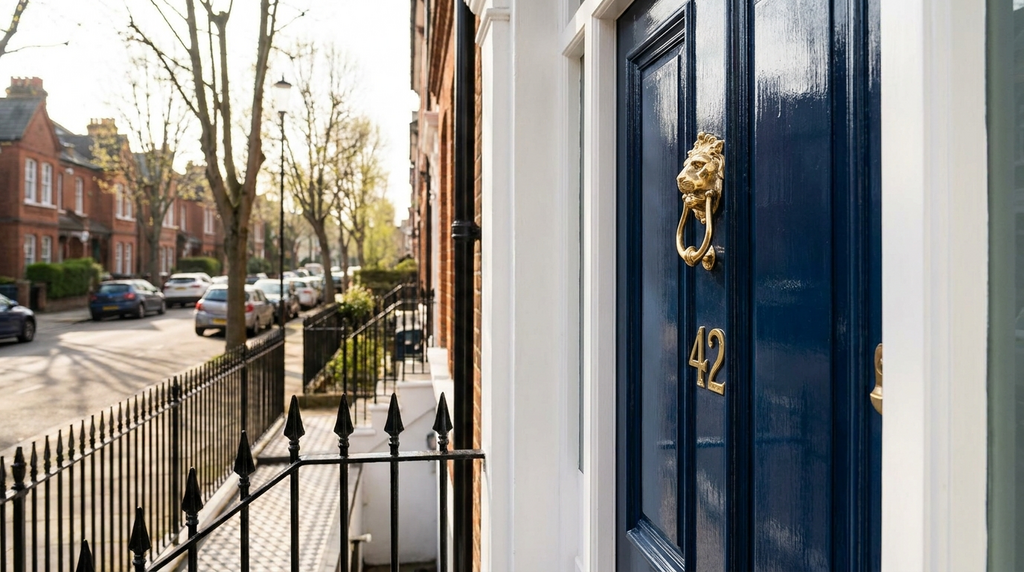
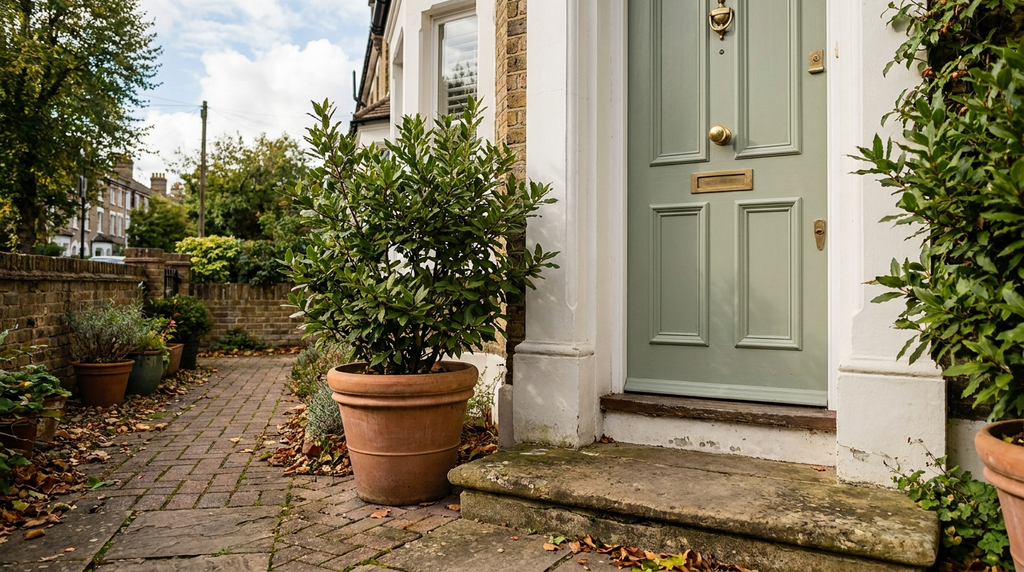
10 front door styles for UK homes in 2026
Your front door is the first thing people see and a major factor in your home’s energy efficiency and security. In 2026, the range of styles, materials and performance ratings can feel overwhelming, so knowing which one suits your property and budget is essential.
The most important front door style for UK homes in 2026 is a composite door with a multi-point locking system and high thermal efficiency. Composite doors now dominate the market because they combine security, low maintenance, and an average U-value of 1.2 W/m²K, saving a typical semi-detached house around £80–£100 per year on heating (Energy Saving Trust, 2026).
What matters when you choose a front door style for a UK home in 2026 is prioritising thermal performance and security over appearance alone. The door’s U-value (how well it retains heat) directly affects your energy bills, while a PAS 24 or Secured by Design certification gives you proven resistance against forced entry. Also check the material’s maintenance needs – composite and aluminium require little upkeep, whereas solid timber needs regular painting or staining.
| Style | Typical U-value (W/m²K) | Average cost (supply & fit, GBP) | Security rating (if applicable) |
|---|---|---|---|
| Composite | 1.2 | 1,200–1,800 | PAS 24 |
| uPVC | 1.4 | 600–1,100 | PAS 24 |
| Aluminium | 1.0 | 1,500–2,500 | PAS 24 |
| Solid timber | 1.8–2.2 | 1,000–2,500 | Depends on lock |
| Steel | 1.1 | 1,300–2,000 | PAS 24 |
| Oak framed | 1.6–2.0 | 1,800–3,500 | Depends on lock |
| GRP (glass-reinforced plastic) | 1.2 | 1,100–1,700 | PAS 24 |
| Victorian panelled | 1.5–2.0 | 700–1,500 | Depends on lock |
| Edwardian glazed | 1.5–2.0 | 900–1,800 | Depends on lock |
| Cottage/stable | 1.6–2.2 | 1,200–2,200 | Depends on lock |
1. Composite offers best all-round value
Composite doors are the strongest all-rounder for UK homes in 2026. They combine a timber core, GRP skin and insulating foam to deliver an average U-value of 1.2 W/m²K, which can save a typical semi-detached house £80–£100 per year on heating compared to an old timber door (Energy Saving Trust, 2026). Most composite doors come with multi-point locking as standard, meeting PAS 24 security requirements (Secured by Design, 2026). They require no painting and resist warping. That makes them a low-maintenance choice for any property type.
- Average U-value of 1.2 W/m²K, saving £80–£100 yearly on heating.
- Multi-point locking system meets PAS 24 security standard.
- Costs £1,200–£1,800 supply and fit, with no painting needed.
2. Aluminium is most thermally efficient
If thermal performance is your top priority, aluminium doors lead the market in 2026. They can reach U-values as low as 1.0 W/m²K, outperforming most other materials (Ofgem, 2026). Aluminium is lightweight, corrosion-resistant, and requires no painting for 20–30 years. Most aluminium doors are PAS 24 certified and suit modern or contemporary homes. The main drawback is cost, with supply and fit ranging from £1,500 to £2,500.
- U-value as low as 1.0 W/m²K, the best of any common door material.
- No repainting needed for 20–30 years, corrosion-resistant.
- Costs £1,500–£2,500 supply and fit, typically PAS 24 certified.
3. uPVC remains the budget-friendly choice
For homeowners on a tighter budget, uPVC doors remain the most affordable option that still meets modern security standards. A uPVC door costs £600–£1,100 supply and fit. That makes it the cheapest option that still meets PAS 24 security (FENSA, 2026). Its U-value of around 1.4 W/m²K is acceptable, though the material degrades slightly over 10–15 years and can become brittle in cold weather. uPVC doors are available in many colours and styles, including timber-effect finishes.
- Costs £600–£1,100 supply and fit, the lowest price point.
- U-value around 1.4 W/m²K, meets PAS 24 security standard.
- Requires minimal maintenance but can fade or warp after 10–15 years.
4. Steel is strongest for security
Steel doors offer the highest level of forced-entry resistance among standard door styles. They typically meet PAS 24 and often achieve Secured by Design accreditation (Secured by Design, 2026). Steel doors have a U-value of about 1.1 W/m²K, making them thermally efficient, but they can dent if struck hard and require repainting every 5–10 years to prevent rust. Supply and fit costs range from £1,300 to £2,000.
- PAS 24 and often Secured by Design accredited for maximum security.
- U-value around 1.1 W/m²K, similar to aluminium.
- Costs £1,300–£2,000 supply and fit; repainting needed every 5–10 years.
5. Solid timber suits period properties
Solid timber doors are a natural fit for Victorian, Edwardian and Georgian homes where authenticity matters. However, they have U-values between 1.8–2.2 W/m²K, making them less thermally efficient unless upgraded with a thermal core (Energy Saving Trust, 2026). They require sanding and repainting every 3–5 years to prevent rot and warping. A solid timber door costs £1,000–£2,500 supply and fit, and security depends entirely on the lock fitted.
- U-values of 1.8–2.2 W/m²K, poor thermal performance without core upgrade.
- Needs sanding and repainting every 3–5 years to stay weathertight.
- Costs £1,000–£2,500 supply and fit; security depends on lock choice.
6. GRP mimics wood without upkeep
Glass-reinforced plastic (GRP) doors offer the look of timber without the maintenance. They achieve a U-value of around 1.2 W/m²K, similar to composite, and are resistant to warping and fading (MCS, 2026). GRP doors can be moulded to look like oak or painted timber, and most are PAS 24 certified. They cost £1,100–£1,700 supply and fit. That makes them a mid-range option that balances appearance and performance.
- U-value around 1.2 W/m²K, comparable to composite doors.
- Resists warping, fading and rot; no painting needed.
- Costs £1,100–£1,700 supply and fit, typically PAS 24 certified.
7. Victorian panelled preserves character
Victorian six-panel doors are a classic choice for pre-1900 terraces and semi-detached homes. Many original timber versions are uninsulated, so upgrading to a composite version retains the look with better thermal performance. Expect to pay £700–£1,500 for a timber version, or £1,200–£1,800 for a composite replica. Security on timber versions depends on the lock, whereas composite replicas usually meet PAS 24.
- Six-panel design suits period properties; composite replicas offer better U-values.
- Timber costs £700–£1,500; composite replica costs £1,200–£1,800.
- Security varies; composite versions typically meet PAS 24.
8. Edwardian glazed adds light
Edwardian doors often feature a large glazed panel, which can improve hallway daylight but reduces thermal efficiency unless double-glazed (FENSA, 2026). A double-glazed Edwardian-style door costs £900–£1,800 supply and fit, with U-values around 1.5–2.0 W/m²K. The glazed section can be a weak point for security, so check that the glass is laminated or toughened and that the door has a multi-point lock.
- Large glazed panel improves natural light but lowers thermal efficiency.
- Costs £900–£1,800 supply and fit; U-values 1.5–2.0 W/m²K.
- Check for laminated or toughened glass and multi-point lock.
9. Cottage or stable style suits rural homes
Cottage doors are typically half-glazed or stable-style, with a split design that allows the top to open independently. They are best sourced with a thermal core to avoid high heat loss (Energy Saving Trust, 2026). Prices range from £1,200–£2,200, and timber versions need annual treatment to stay weathertight. Composite or GRP versions offer lower maintenance and better U-values.
- Stable-style split design suits rural and character homes.
- Costs £1,200–£2,200; timber versions need annual treatment.
- Composite or GRP versions offer better U-values and less upkeep.
10. Oak framed is premium and traditional
Oak framed doors are often bespoke, costing £1,800–£3,500, and have U-values of 1.6–2.0 W/m²K unless fitted with a double-glazed insert. They require regular oiling or varnishing and are not usually PAS 24 certified unless specified at order. These doors suit listed buildings and high-end renovations where appearance justifies the cost and maintenance.
- Bespoke design; costs £1,800–£3,500 supply and fit.
- U-values 1.6–2.0 W/m²K; double-glazed inserts improve performance.
- Requires regular oiling or varnishing; PAS 24 certification must be specified.
Your choice should balance thermal performance, security and maintenance with the style of your home. For most UK homes in 2026, a composite door offers the best combination of energy savings, security and low upkeep. How to choose the right door material for your home Understanding U-values for doors and windows
Frequently Asked Questions
Composite doors are the best all-rounder for UK homes, with an average U-value of 1.2 W/m²K and PAS 24 security certification. The Energy Saving Trust estimates they save a typical semi-detached house £80-100 per year on heating.
A composite front door supply and fit costs £1,200 to £1,800 in 2026. Prices vary by style, glazing and hardware options, but this range covers most standard installations.
A good front door U-value is 1.2 W/m²K or lower for energy efficiency. Aluminium doors achieve 1.0 W/m²K, while solid timber can be 1.8-2.2 W/m²K according to industry standards.
Yes, composite doors outperform uPVC in thermal efficiency and security, with a U-value of 1.2 versus 1.4 W/m²K. Composite also has a solid timber core and GRP skin for greater durability, per MCS data.
Composite, aluminium, steel and GRP doors with PAS 24 certification offer the highest security. Multi-point locking systems are standard on these styles. This provides proven resistance against forced entry.