What matters when you choose
Your choice of window glass should balance three factors: thermal efficiency (measured by U-value), cost, and specific needs like noise reduction or security. The UK Building Regulations require replacement windows to meet a minimum U-value of 1.6 W/m²K for new installations, so any option below this threshold will improve your home’s energy rating. Always check for FENSA or CERTASS certification when installing to guarantee compliance and warranty protection.
| Glass Option | Typical U-Value (W/m²K) | Estimated Cost per m² (GBP) | Primary Benefit |
|---|---|---|---|
| Single glazing | 5.0–5.8 | N/A (replacement only) | Lowest upfront cost |
| Double glazing (low-E, air fill) | 1.2–1.6 | £150–£250 | Best value for energy savings |
| Triple glazing (low-E, argon fill) | 0.7–1.0 | £250–£400 | Highest thermal performance |
| Secondary glazing | 1.8–2.5 | £100–£200 | Noise reduction without full replacement |
| Laminated glass | 4.0–5.0 (single) | £100–£200 | Security and safety |
| Self-cleaning glass | 1.2–1.6 (double) | £200–£350 | Reduced maintenance |
| Solar control glass | 1.2–1.6 (double) | £200–£350 | Reduces summer overheating |
| Acoustic glass | 1.0–1.4 (double) | £200–£400 | Noise reduction up to 40 dB |
| Low-iron glass | 1.2–1.6 (double) | £200–£350 | Clearer view, no green tint |
| Smart glass | 1.0–1.4 (double) | £400–£800 | Switchable privacy and shading |
1. Double glazing with low-E coating
Low-E (low-emissivity) coating is a microscopically thin metallic layer applied to one pane of a double-glazed unit. It reflects infrared heat back into the room while letting sunlight pass through, reducing heat loss by up to 30% compared to standard double glazing (Energy Saving Trust, 2026). This is the most common window glass option for UK homes because it combines proven performance with a moderate cost. Most new double-glazed units now include low-E coating as standard, but you should confirm this with your installer.
- Typical U-value: 1.2–1.6 W/m²K
- Cost: £150–£250 per m² installed
- Reduces heat loss by up to 30% vs standard double glazing
2. Triple glazing with argon gas fill
Triple glazing uses three panes of glass with two sealed cavities, usually filled with argon gas. The gas is denser than air, which slows heat transfer and lowers the U-value to around 0.7 W/m²K (GOV.UK Building Regulations, 2026). This makes it the best performing window glass option for thermal efficiency, cutting heat loss by up to 50% compared to single glazing. Triple glazing is heavier than double glazing, so your window frames must be strong enough to support the extra weight.
- Typical U-value: 0.7–1.0 W/m²K
- Cost: £250–£400 per m² installed
- Reduces heat loss by up to 50% vs single glazing
3. Secondary glazing for listed buildings
Secondary glazing adds a separate pane of glass inside your existing window frame, creating an insulating air gap. This is the preferred window glass option for listed buildings and conservation areas where replacing the original windows is not allowed (Energy Saving Trust, 2026). Secondary glazing improves thermal performance and reduces noise without altering the building’s exterior appearance. It can be removed easily for cleaning or maintenance.
- Typical U-value: 1.8–2.5 W/m²K
- Cost: £100–£200 per m² installed
- Permitted in listed buildings without planning consent
4. Laminated glass for security
Laminated glass consists of two glass layers bonded together with a tough plastic interlayer, usually polyvinyl butyral (PVB). If the glass breaks, the interlayer holds the fragments in place. That makes it very difficult to force entry (Secured by Design, 2026). This window glass option is often used for ground-floor windows, patio doors, and skylights where security is a priority. Laminated glass also blocks 99% of UV radiation, protecting furniture and flooring from fading.
- Typical U-value: 4.0–5.0 W/m²K (single) or 1.2–1.6 (double unit)
- Cost: £100–£200 per m² (single) or £200–£350 (double unit)
- Resists forced entry and holds together if broken
5. Self-cleaning glass with titanium dioxide
Self-cleaning glass has a photocatalytic coating of titanium dioxide that reacts with sunlight to break down organic dirt. Rain then washes the loosened dirt away, leaving the glass cleaner for longer (TrustMark, 2026). This window glass option is particularly useful for windows that are hard to reach, such as conservatory roofs or upper-floor windows. The coating lasts for the lifetime of the glass unit and requires no special cleaning products.
- Typical U-value: 1.2–1.6 W/m²K (as part of a double-glazed unit)
- Cost: £200–£350 per m² installed
- Reduces cleaning frequency by breaking down dirt with sunlight
6. Solar control glass for south-facing rooms
Solar control glass has a special coating or tint that reduces the amount of solar heat entering your home. This helps keep south-facing rooms cooler in summer and reduces the need for air conditioning (Energy Saving Trust, 2026). Solar control glass still lets in natural light. That makes it a good window glass option for conservatories, sunrooms, and large south-facing windows. It can be combined with low-E coating for year-round energy savings.
- Typical U-value: 1.2–1.6 W/m²K (as part of a double-glazed unit)
- Cost: £200–£350 per m² installed
- Reduces solar heat gain by up to 70% in summer
7. Acoustic glass for noise reduction
Acoustic glass uses a thicker pane combined with a special acoustic interlayer to dampen sound vibrations. It can reduce noise transmission by up to 40 decibels, which is roughly the difference between a busy road and a quiet room (FENSA, 2026). This window glass option is ideal for homes near motorways, airports, or railway lines. For best results, acoustic glass should be installed with a wider air gap and in well-sealed frames.
- Typical U-value: 1.0–1.4 W/m²K (as part of a double-glazed unit)
- Cost: £200–£400 per m² installed
- Reduces noise by up to 40 dB compared to standard double glazing
8. Low-iron glass for maximum clarity
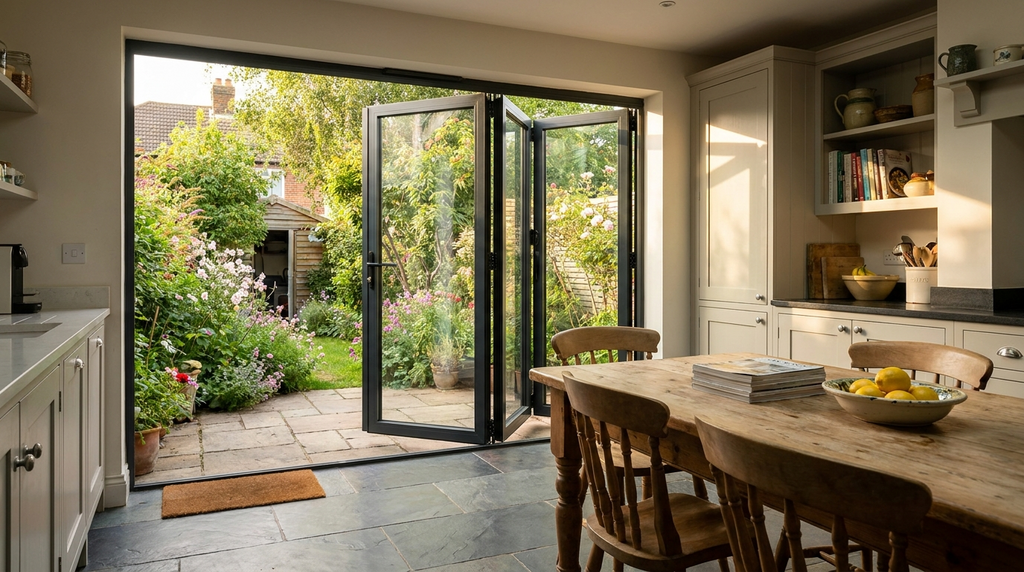
Standard float glass has a slight green tint due to iron oxide content. Low-iron glass reduces this iron content, resulting in a much clearer, colour-neutral appearance (Energy Saving Trust, 2026). This window glass option is popular for large picture windows, bi-fold doors, and conservatories where you want an unobstructed view. Low-iron glass can be combined with low-E coating or used in double or triple glazing.
- Typical U-value: 1.2–1.6 W/m²K (as part of a double-glazed unit)
- Cost: £200–£350 per m² installed
- Eliminates the green tint of standard glass
9. Heat mirror glass for ultra-thin frames
Heat mirror glass uses a suspended low-E film between two panes of glass, creating two insulating cavities in a slim profile. This achieves a U-value as low as 0.5 W/m²K, comparable to triple glazing, but in a frame that is only slightly thicker than standard double glazing (MCS, 2026). Heat mirror glass is a good window glass option for renovation projects where you want high thermal performance without bulky frames.
- Typical U-value: 0.5–0.8 W/m²K
- Cost: £300–£500 per m² installed
- Thin profile with thermal performance matching triple glazing
10. Smart glass with switchable tint
Smart glass changes its opacity when an electric current is applied, switching from clear to frosted in seconds. This gives you instant privacy and solar control without needing blinds or curtains (TrustMark, 2026). Smart glass is the most advanced window glass option, but it comes at a high cost and requires electrical wiring to each unit. It is best suited for bathroom windows, roof lights, or rooms where privacy is a priority.
- Typical U-value: 1.0–1.4 W/m²K (as part of a double-glazed unit)
- Cost: £400–£800 per m² installed
- Switches from clear to frosted with an electric current
Choosing the right window glass option depends on your budget, your home’s location, and what you want to achieve. For most UK homeowners, double glazing with low-E coating remains the best all-round choice for energy savings and value. how to compare window quotes understanding U-values for windows FENSA certified installer checklist
Frequently Asked Questions
The best U-value is below 1.0 W/m²K, achieved by triple glazing with argon fill. UK Building Regulations require at least 1.6 W/m²K for new windows, per GOV.UK standards.
Triple glazing costs £250-£400 per m² installed. The Energy Saving Trust notes this offers the highest thermal performance but costs more than double glazing.
Low-E coating is a metallic layer that reflects heat back into the room. According to the Energy Saving Trust, it reduces heat loss by up to 30% compared to standard double glazing.
Yes, acoustic glass can reduce noise by up to 40 dB. It costs £200-£400 per m² and is ideal for homes near busy roads, as advised by FENSA.
Smart glass switches between transparent and opaque for privacy or shading. It costs £400-£800 per m² and is typically used in modern or high-end homes.