A traditional cottage front door costs roughly £1,200–£2,800 installed, while a modern copy can be £900–£1,600, the difference is in the timber and the joinery method, not just the look.
If you are replacing a front door on a period home, the first question is whether to buy a handmade solid-timber door or a factory-made “cottage-style” copy. The price gap is real, but it reflects different materials and construction techniques, not just a premium for the traditional look.
Cottage front doors cost £900-£2,800 installed in 2026. Solid timber runs £1,200-£2,800, while composite or engineered wood versions cost £900-£1,600. The total cost of ownership can be similar over 20 years due to higher maintenance needs for timber.
- Solid timber cottage doors cost £1,200-£2,800 installed.
- Composite cottage-style doors cost £900-£1,600 installed.
- Solid timber needs repainting every 2-5 years.
- Composite doors may need no maintenance for a decade.
- U-value below 1.4 W/m²K qualifies for GB Insulation Scheme.
- A traditional cottage front door costs roughly £1,200–£2,800 installed, while a modern copy can be £900–£1,600, the difference is in the timber and the joinery method, not just the look.
- The Great British Insulation Scheme closed on 31 March 2026. It funded insulation measures only and never covered windows or glazing.
- Quick numbers, cottage front door styles, materials, and costs
- The direct answer for "cottage front doors", a cottage front door is a timber or timber-effect door with a panelled or ledged-and-braced design, typically painted in a heritage colour
- The main styles, four-panel, six-panel, and ledged-and-braced, differ primarily in the number of panels and the door’s structural design
- To verify a cottage front door installer, check for MCS certification if the door includes integrated glazing, or TrustMark registration for the installation
- The two main timber choices, oak and pine, differ in cost, durability, and the paint finish they require
A solid-oak, hand-made cottage door installed costs roughly £1,200–£2,800, while an engineered-wood or composite “cottage-style” door costs £900–£1,600 installed, according to the Checkatrade 2026 UK trade pricing guide (Checkatrade, 2026). The price gap narrows over time because solid timber needs repainting or re-staining every 2–5 years, whereas a composite door with a factory finish may need no maintenance for a decade. If you factor in the cost of paint, labour, and scaffolding access over a 20-year period, the total cost of ownership for a solid-timber door can be similar to or higher than a composite door, depending on the paint system used.
The two main material categories are solid timber (oak, pine, or cedar) and engineered wood or composite. Solid timber is typically joined with mortise-and-tenon joints and can be sanded and refinished multiple times. Engineered wood uses a timber core with a veneer, and composite doors use a glass-reinforced plastic (GRP) skin over an insulated core. Neither engineered wood nor composite can be sanded and repainted as many times as solid timber, but they are less prone to warping and require less maintenance.
The Great British Insulation Scheme closed on 31 March 2026. It funded insulation measures only and never covered windows or glazing.
Any new external door you install, including a cottage style, must meet current Building Regulations Part L (England). The minimum U-value for a door is 1.8 W/m²K or lower, as set out in the Building Regulations Approved Document L (2021 edition, as amended 2025) (GOV.UK, 2025). A U-value measures how much heat passes through the door, the lower the number, the better the insulation.
The Great British Insulation Scheme closed on 31 March 2026. It funded insulation measures only and never covered windows or glazing. The Great British Insulation Scheme closed on 31 March 2026. It funded insulation measures only and never covered windows or glazing. The scheme is administered by energy suppliers, and eligibility depends on the property’s Energy Performance Certificate (EPC) rating and the household’s income or benefits status (GOV.UK, 2026). You should check with your energy supplier whether a door replacement alone qualifies or whether it must be part of a larger package of measures.
Quick numbers, cottage front door styles, materials, and costs
| Material | Typical price (supply only) | Typical U-value (W/m²K) | Maintenance frequency | Typical lifespan (years) |
|---|---|---|---|---|
| Solid oak | £800–£1,800 | 1.6–2.2 | Every 2–3 years (stain/paint) | 40–60 |
| Solid pine | £500–£1,200 | 1.8–2.5 | Every 3–5 years (paint) | 20–30 |
| Engineered wood | £400–£900 | 1.2–1.8 | Every 5–7 years (paint) | 25–40 |
| Composite (GRP) | £600–£1,500 | 1.0–1.4 | None (factory finish) | 25–35 |
| Steel (insulated) | £700–£1,400 | 0.8–1.2 | None (factory finish) | 30–50 |
U-values are based on British Fenestration Rating Council (BFRC) data for 2026 (BFRC, 2026). Lifespan estimates come from the Timber Trade Federation (TTF) technical guidance (TTF, 2026). Note that solid timber doors can last longer if properly maintained, but the lifespan figures assume regular repainting or re-staining.
The direct answer for “cottage front doors”, a cottage front door is a timber or timber-effect door with a panelled or ledged-and-braced design, typically painted in a heritage colour
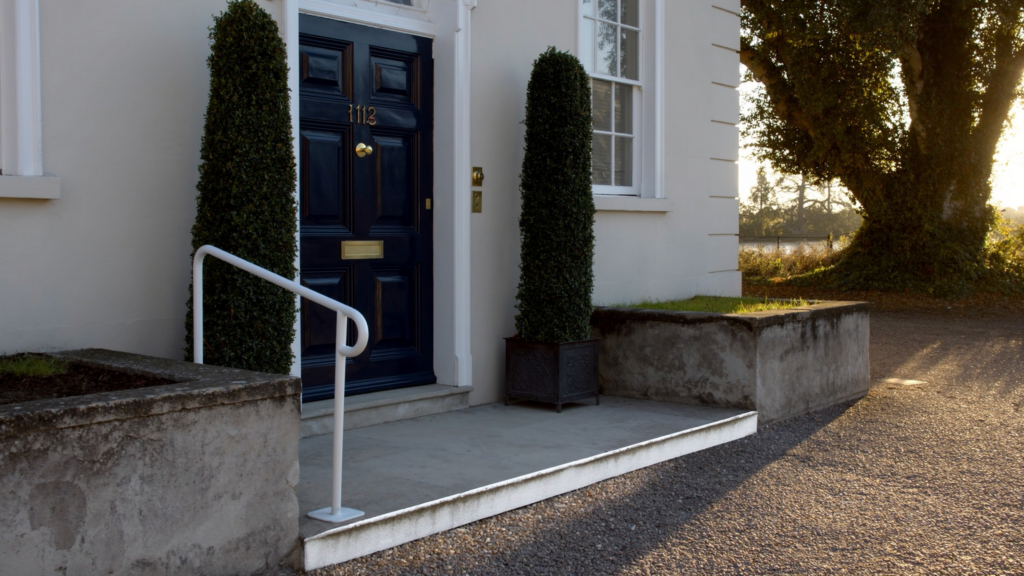
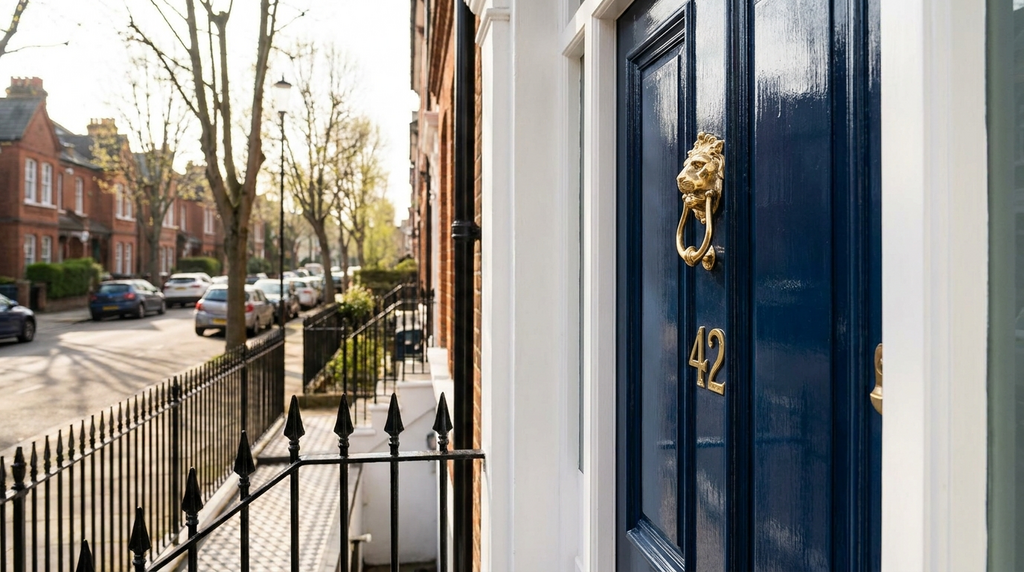
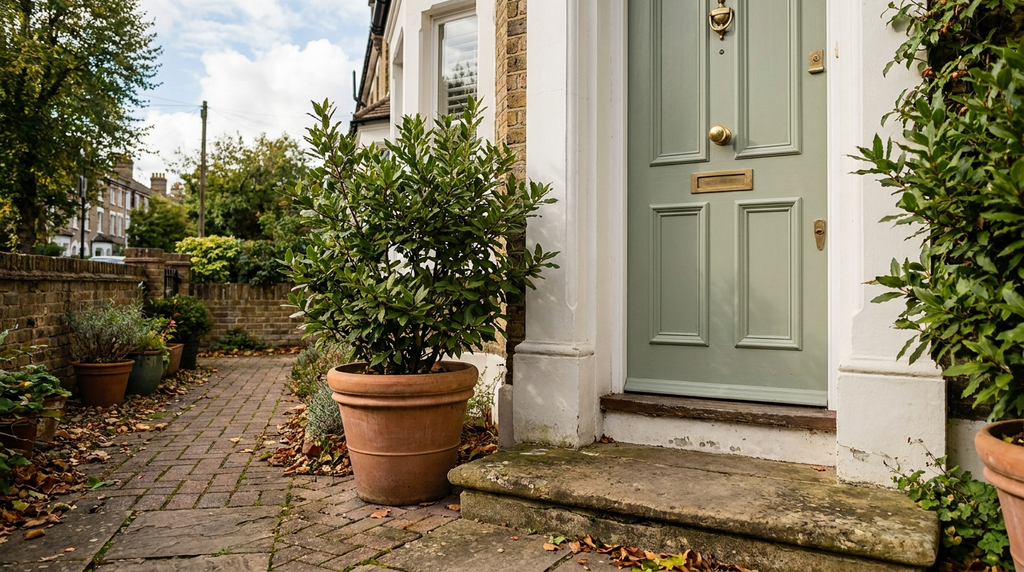
A cottage front door is built to match the proportions and detailing of a period cottage, typically Victorian, Edwardian, or interwar. It can be made in solid timber, engineered wood, or composite, but the defining features are the panel arrangement and the paint colour.
The most common styles are four-panel (raised and fielded), six-panel, and ledged-and-braced (with vertical boards and diagonal bracing). The “cottage” look is defined by the door’s proportions, narrower and taller than a standard modern door, and the use of a traditional paint colour such as Farrow & Ball’s “Off-Black” or “Hague Blue”.
If you are buying a cottage-style door for a modern home, the same visual effect can be achieved with a composite door that mimics the panel design. However, if you are replacing a door on a listed building or in a conservation area, you may be required to use a solid-timber door that matches the original design.
The main styles, four-panel, six-panel, and ledged-and-braced, differ primarily in the number of panels and the door’s structural design
The four-panel style has two long panels at the top and two short panels at the bottom. It is the most common design for Victorian and Edwardian cottages and is widely available in both solid timber and composite. The panels are typically raised and fielded, meaning they are raised above the surrounding frame with a chamfered edge.
The six-panel style has three rows of two panels. It is more decorative and is often found on larger or later period cottages, such as those built in the early 20th century. The extra panels add visual interest but also increase the cost because more joinery is involved.
The ledged-and-braced style is the simplest and most rustic. It consists of vertical boards held together by a horizontal ledge at the top and bottom, with a diagonal brace to prevent sagging. This style is typical of older or rural cottages and is the hardest to replicate in composite because the visible joinery is difficult to mould convincingly. If you want a ledged-and-braced door, you will almost certainly need a solid-timber version.
All three styles are available in solid timber or as a composite replica, but the ledged-and-braced is the least common in composite because of the visible joinery. How to choose the right front door style for your period home
To verify a cottage front door installer, check for MCS certification if the door includes integrated glazing, or TrustMark registration for the installation
If your cottage door includes integrated glazing that contributes to the home’s overall energy rating, the installer should be certified under the Microgeneration Certification Scheme (MCS). MCS certification is relevant only when the door is part of a wider energy-efficiency measure, such as a door with a high-performance glazed panel that helps meet Part L requirements (MCS, 2026). For most standard cottage door installations, this is not required.
For a standard cottage door installation, the key certification is TrustMark registration. TrustMark is a government-endorsed quality scheme that ensures the installer follows the Competent Person Scheme for Building Regulations compliance. This means the installer can self-certify that the door meets Part L and other relevant regulations without requiring a separate building control inspection (TrustMark, 2026).
If the property is a listed building or in a conservation area, the installer must also be familiar with local authority planning rules. This is not a certification but a legal requirement. You should check with your local planning authority before ordering the door, as they may require a specific design or material. Listed building consent for front door replacement
The two main timber choices, oak and pine, differ in cost, durability, and the paint finish they require
Oak is naturally durable and rot-resistant because of its high tannin content. It is typically left with a clear stain or oil finish to show the grain, and it costs £800–£1,800 supply only (Checkatrade, 2026). Oak doors can last 40–60 years if maintained, but they require re-oiling or re-staining every 2–3 years to prevent the wood from drying out and cracking.
Pine is softer and cheaper, costing £500–£1,200 supply only. It must be painted or stained to protect against moisture, and it requires repainting every 3–5 years. Pine is more prone to dents and scratches than oak, but it is a traditional material for cottage doors and can be painted in a heritage colour to match the period look.
Engineered-wood doors use a timber core with a veneer of oak or other hardwood. They cost £400–£900 supply only and offer a middle ground in durability. However, they cannot be sanded and repainted as many times as solid timber because the veneer is thin, typically 2–4 mm, and repeated sanding will expose the core. If you plan to repaint the door every few years, solid timber is a better long-term investment.
Frequently Asked Questions
A solid timber cottage front door costs £1,200-£2,800 installed, while a composite or engineered wood version costs £900-£1,600, according to Checkatrade's 2026 pricing guide.
Solid timber (oak, pine, or cedar) offers traditional joinery and refinishing potential, while composite GRP doors are more durable and need less maintenance. The best choice depends on your budget and how much upkeep you want.
Yes, any new external door must meet Building Regulations Part L (England), which requires a U-value of 1.8 W/m²K or lower, as set out in the 2021 edition of Approved Document L.
A solid timber cottage door can last 20-30 years or more if maintained properly, with repainting or re-staining every 2-5 years to protect against weather damage.