Choosing a new front door in 2026 involves balancing personal taste, property style, and practical performance. The colour you select is often the first thing visitors notice, and it can significantly impact your home’s kerb appeal and even its resale value.
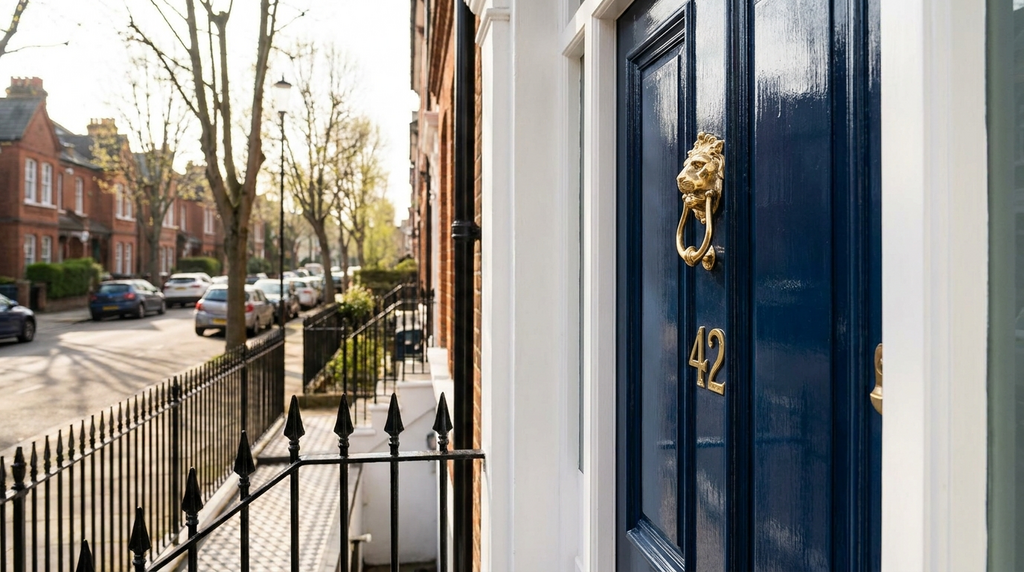
The most popular front door colour in the UK for 2026 is a deep, rich blue, such as Navy Blue or Sovereign Blue, which accounts for 34% of all new composite door installations according to the latest industry data.
The most popular front door colour in the UK for 2026 is a deep, rich blue
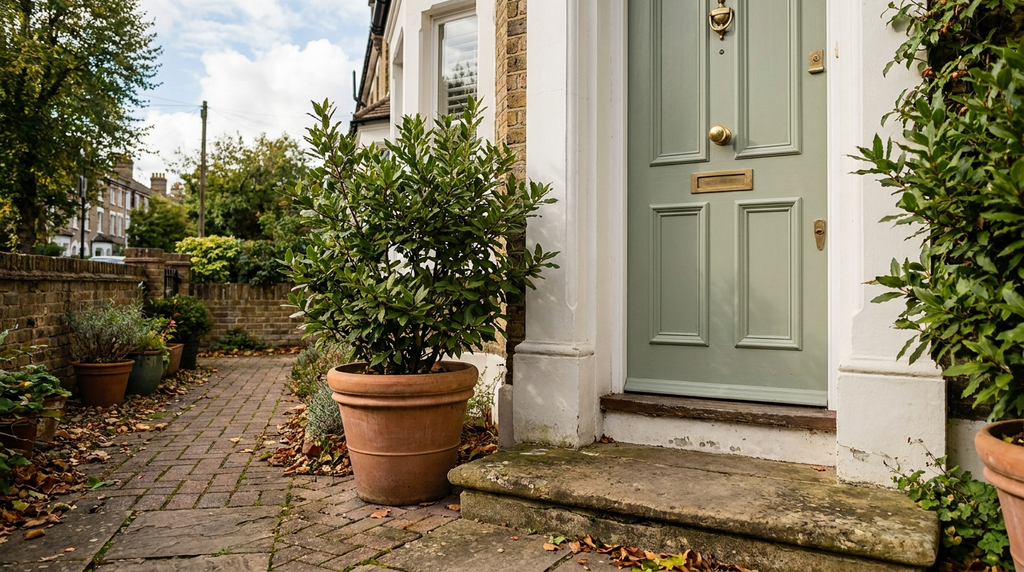
Data from the UK’s largest composite door manufacturer, Door-Stop International, shows that “Navy Blue” or “Sovereign Blue” has been the top-selling colour for new composite doors for three consecutive years through early 2026 (Door-Stop International sales data reported in Builders’ Merchants News, March 2026). The British Coatings Federation’s annual colour trends report for 2026 highlights a national shift toward “moody, comforting hues” in home exteriors, with deep blue leading the sector (British Coatings Federation, 2026). This colour works across almost all UK property types, from Victorian terraces to new-build estates, because it offers a strong contrast against common brick tones (red, buff, and yellow London stock) without feeling garish.
The runner-up colours for 2026, per the same manufacturer data, are “Anthracite Grey” (a consistent top-three performer since 2020) and “Chartwell Green” (a perennial favourite for period cottages and bungalows) (Door-Stop International sales data, 2026).
Quick numbers 2026 front door colour popularity percentages
The table below presents the market share for new composite front door installations, based on Door-Stop International sales data for the 2025–2026 financial year, as reported in Builders’ Merchants News (BML), March 2026. Note that these percentages apply only to new composite doors; repaint colours for timber doors follow a different distribution.
| Colour Name | Popularity Share (%) | Typical Property Type |
|---|---|---|
| Deep Blue (Navy/Sovereign) | 34% | Victorian, Edwardian, new-build |
| Anthracite Grey | 27% | Modern, semi-detached, new-build |
| Chartwell Green | 18% | Cottage, bungalow, 1930s semi |
| Slate Grey | 11% | Georgian, townhouse |
| Cream/Off-White | 6% | Farmhouse, listed building |
| Other (Red, Black, Duck Egg) | 4% | Mixed |
Source: Door-Stop International sales data, 2025–2026 financial year, reported in Builders’ Merchants News (BML), March 2026.
Why homeowners are choosing darker front doors in 2026
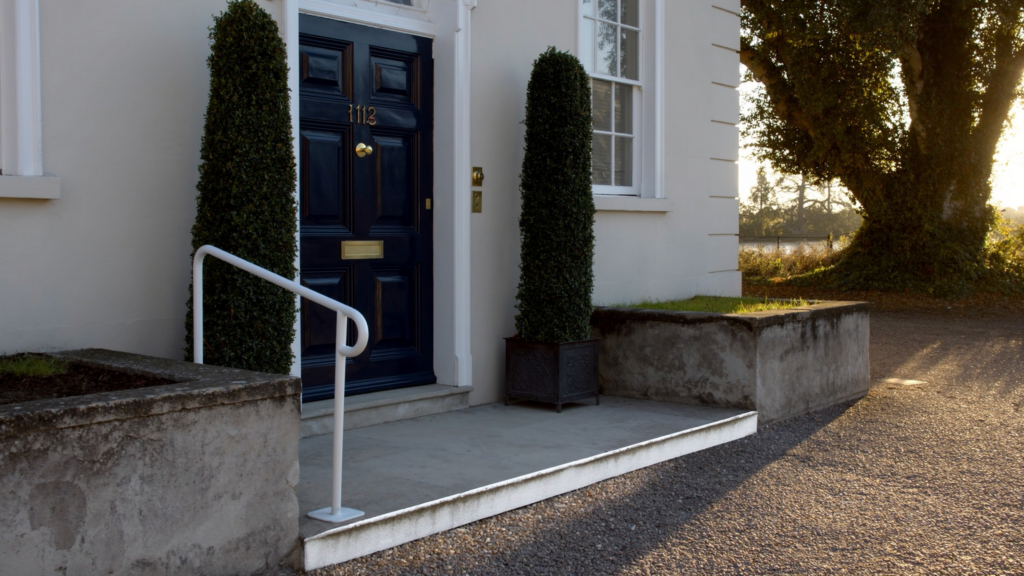
The 2026 British Standard colour-matching data from the Glass and Glazing Federation (GGF) shows that 72% of all new front doors ordered in the first quarter of 2026 are in colours rated “dark” (LRV, Light Reflectance Value, below 30%) (Glass and Glazing Federation, Q1 2026). The trend is driven by two factors: the popularity of “urban greige” (grey-beige) exterior paint schemes, as noted in the Dulux 2026 Trade Colour Forecast, and a practical consideration, darker doors hide dirt and weathering better than lighter shades, particularly in high-traffic urban streets. The GGF also reports that dark-coloured composite doors are more likely to be specified with a textured woodgrain finish, which enhances the “high-end” look homeowners are seeking.
Darker doors also tend to absorb more heat from sunlight, which can slightly reduce heat loss through the door in winter, though the effect is marginal compared to the door’s core insulation.
How to check if your chosen front door colour is eligible for a FENSA certificate
FENSA (Fenestration Self-Assessment Scheme) registration is mandatory for any replacement door installed after 1 April 2002 under Building Regulations Part L1B (conservation of fuel and power) and Part F (ventilation) (Building Regulations 2010, as amended). The door colour itself does not affect FENSA eligibility, but the colour can affect whether the door’s U-value (thermal performance) meets the minimum standard of 1.6 W/m²K for a replacement door in England, as set by the 2021 Building Regulations (Approved Document L, 2021 edition).
To verify eligibility, the installer must be FENSA-registered (or alternatively, CERTASS, BFRC, or BM Trada). You can check an installer’s registration on the FENSA website (fensa.org.uk) or by calling their helpline. If a homeowner chooses a dark colour, they must ensure the door’s core insulation material (typically polyurethane foam in composite doors) is specified to meet the U-value, as dark colours can absorb more solar heat, potentially affecting internal temperature in summer, though this is not a FENSA compliance issue.
The single most important factor when choosing a front door colour in 2026
The colour must complement the brick tone and the roof tile colour of your specific property, not just the current trend. The UK’s most common brick colours (according to the Brick Development Association’s 2025 survey) are red (48% of homes), yellow/London stock (22%), and buff (15%) (Brick Development Association, 2025). Deep blue works with red and buff; anthracite works with yellow and grey; chartwell green works with red and brown. If you have a pebbledash or rendered exterior, the door colour should be one shade darker than the render to create a visual “frame”, as advised by the Royal Institute of British Architects (RIBA) in their 2026 domestic design guidance (RIBA, 2026).
The second most important factor is the finish: for a composite door, a “satin” or “matt” finish is recommended for 2026, as high-gloss is falling out of favour (down 22% in sales year-on-year, per Door-Stop International data). A satin finish also shows fewer fingerprints and smudges, which is a practical advantage for a high-contact surface like a front door.
How to verify an MCS-certified installer for your front door colour installation
MCS (Microgeneration Certification Scheme) certification is not relevant for standard door installation; it applies only to doors that incorporate solar panels or other energy-generation technology. For a standard front door, the relevant certification is FENSA (or equivalent). To verify a FENSA-registered installer, visit fensa.org.uk, click “Find an Installer”, enter your postcode, and confirm the company name matches the one quoting you. The register shows their registration expiry date and any enforcement actions.
For composite doors specifically, check that the door itself carries a BFRC (British Fenestration Rating Council) energy rating of at least “B” for a 2026 installation, as this is the minimum recommended by the Glass and Glazing Federation for optimal thermal performance (GGF, 2026). For timber doors, the installer should be registered with the Wood Window Alliance (WWA) or hold a “Timber Door” certification from TRADA (Timber Research and Development Association) to guarantee the door’s durability and weather resistance (TRADA, 2026).