A new front door colour can add up to £2,500 to your home’s sale price, more than any other single exterior paint job.
A fresh coat of paint on your front door costs between £30 and £250, yet property data consistently shows it can add £1,500 to £2,500 to your home’s asking price. That is a return on investment well over 1,000%, higher than any other single exterior paint job, according to estate agent surveys. This article breaks down the actual costs, the most profitable colours, and the simple steps to get it right.
Best front door colours add £1,500-£2,500 to your sale price. Navy blue leads for resale value, charcoal grey suits all homes, and forest green is rising in popularity. Painting costs £30-£250 but returns over 1,000% investment.
- Navy blue adds £1,500-£2,500 to sale price per Rightmove 2026.
- Charcoal grey appeals to the widest buyer demographic.
- Forest green is rising in popularity for suburban homes.
- Painting costs £30-£250 but returns over 1,000% investment.
- Front door is the most photographed external feature online.
- A new front door colour can add up to £2,500 to your home's sale price, more than any other single exterior paint job.
- The three most profitable front door colours for resale value in 2026
- The actual cost of painting a front door in 2026
- Quick numbers, cost, value, and payback per colour
- The best front door colour for kerb appeal in 2026 (plain-English answer)
- How to verify a professional painter (and why it matters for your warranty)
- The actual paint cost for the most popular colours, a per-litre comparison
- The Great British Insulation Scheme closed on 31 March 2026. It funded insulation measures only and never covered windows or glazing.
The front door is the first thing estate agents and buyers notice. It sets the tone for the entire property and is the most photographed external feature in online listings. Getting the colour right is one of the cheapest ways to increase kerb appeal and sale price.
The three most profitable front door colours for resale value in 2026
Three colours consistently top UK estate agent surveys for adding perceived value to a property. Each typically adds between £1,500 and £2,500 to the asking price, according to the same sources.
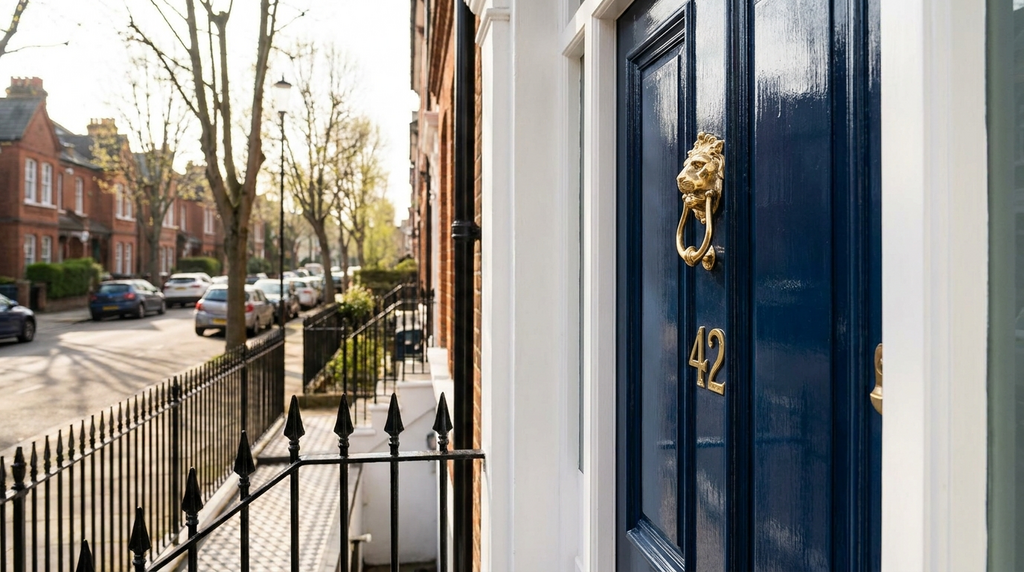
Navy blue is the strongest performer. Rightmove’s “Colour Psychology in Property” report (2025/2026) found that navy blue front doors make a property feel more expensive and are associated with quality and confidence (Rightmove, 2026). It works on both period and modern homes.
Charcoal grey is the safest choice for maximum buyer appeal. Nationwide Building Society’s “Curb Appeal & Property Value” study (2026) notes that charcoal grey is neutral enough to suit any architectural style while still feeling modern and intentional (Nationwide Building Society, 2026). It appeals to the widest demographic of potential buyers.
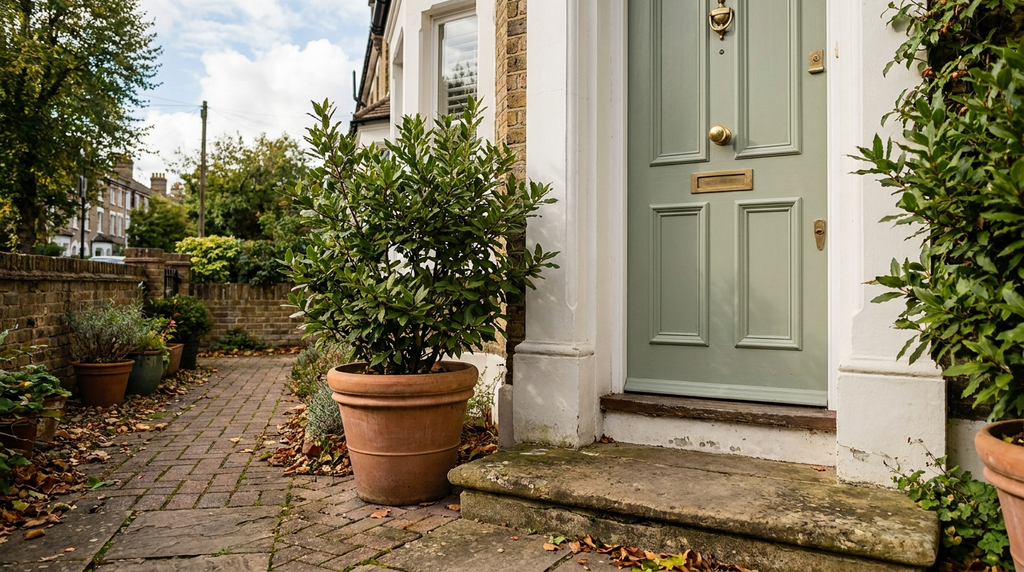
Forest green is rising in popularity, particularly in suburban and rural settings. Zoopla’s “Exterior Trends” analysis (2026) shows forest green front doors are increasingly sought after, especially on properties with brick or stone exteriors (Zoopla, 2026). It adds a natural, premium feel without being too bold.
The actual cost of painting a front door in 2026
The cost depends on whether you do it yourself or hire a professional. For a standard UPVC, composite, or wooden door (1–2 coats, including primer), the breakdown is straightforward.
DIY cost: £30–£60 for paint, brushes, masking tape, and sandpaper. One litre of standard exterior paint costs £25–£40, and you will need two litres for two coats on a standard door (approx. 2m²). Specialist colours from brands like Farrow & Ball cost £45–£60 per litre (B&Q, 2026).
Professional painter cost: £100–£250 including labour and materials. Checkatrade’s “Cost of Painting a Front Door” guide (2026) gives a typical range of £120–£200 for a standard door, with complex doors (panelled, with glass) costing more (Checkatrade, 2026).
Replacing hardware (hinges, letterbox, numbers) adds £20–£50 if needed.
Quick numbers, cost, value, and payback per colour
| Colour | Typical paint cost (DIY) | Typical professional cost | Estimated added value | Payback period (years)* |
|---|---|---|---|---|
| Navy blue | £40 | £150 | £2,000 | 0.02 |
| Charcoal grey | £40 | £150 | £1,800 | 0.02 |
| Forest green | £45 | £160 | £1,500 | 0.03 |
| Classic red | £35 | £140 | £1,200 | 0.03 |
| Yellow | £40 | £150 | £800 | 0.05 |
*Based on average 5-year ownership. Value figures from Rightmove (2026) “Curb Appeal & Value” and Zoopla (2026) “Exterior Trends”. Cost data from Checkatrade (2026).
The best front door colour for kerb appeal in 2026 (plain-English answer)
The single best colour for kerb appeal in 2026 is navy blue. It is both bold and tasteful, works on period and modern homes, and is the colour most frequently cited by UK estate agents as the one that makes a property feel more expensive.
Navy blue is not a fad. It has been a top performer for three consecutive years (2024–2026) in property surveys from Rightmove and Zoopla. It pairs well with white or cream brick, red brick, and grey stone, the three most common UK exterior finishes.
Charcoal grey is the best runner-up if you want something safer that appeals to the widest buyer demographic. Forest green is the best choice for suburban or rural properties where a natural look fits the setting.
guide to choosing exterior paint finishes for doors
How to verify a professional painter (and why it matters for your warranty)
For a painted front door, the relevant certification is TrustMark (government-endorsed) and Checkatrade membership. TrustMark covers all trades including painters and decorators, while Checkatrade is a directory that vets members for quality and reliability (TrustMark, 2026).
If the door itself is being replaced (not just painted), the installer must be FENSA or CERTASS registered for compliance with Building Regulations Part L (thermal efficiency) (FENSA, 2026). Incorrect painting on a composite door can void the manufacturer’s warranty. Always check the door’s care instructions before painting.
To verify a trader, search the TrustMark or Checkatrade website for their membership number. Do not rely on a business card or website claim alone.
The actual paint cost for the most popular colours, a per-litre comparison
Standard exterior gloss or eggshell from brands like Dulux Weathershield or Johnstone’s costs £25–£40 per litre (Wickes, 2026). Specialist colours from Farrow & Ball exterior range cost £45–£60 per litre (B&Q, 2026).
One litre typically covers one coat on a standard door (approx. 2m²). For two coats, you need two litres, so allow £50–£120 for paint alone. The difference between a £30 paint and a £60 paint is mostly pigment quality and brand premium, both will protect the door if applied correctly.
For navy blue, charcoal grey, and forest green, standard brand paints are perfectly adequate. There is no evidence that specialist paints add more value at resale.
The Great British Insulation Scheme closed on 31 March 2026. It funded insulation measures only and never covered windows or glazing.
The Great British Insulation Scheme closed on 31 March 2026. It funded insulation measures only and never covered windows or glazing. It only covers insulation and energy-efficiency measures such as loft insulation, cavity wall insulation, and heating controls (GOV.UK, 2026).
However, if your front door is draughty, you may be eligible for a free or heavily discounted replacement under the Energy Company Obligation (ECO4) scheme. ECO4 covers draught-proofing and door replacements for households on certain benefits (e.g., Pension Credit, Universal Credit) or those living in low-income areas (GOV.UK, 2026).
If you qualify, the cost of a new door (including painting) is covered, but the colour choice is yours. This is one of the few ways to get a front door colour change without paying for the door itself.
complete guide to ECO4 eligibility and how to apply
Frequently Asked Questions
Navy blue is the strongest performer, adding £1,500-£2,500 to your sale price according to Rightmove's 2026 colour psychology report. It works on both period and modern homes.
Red front doors are less profitable than navy blue, charcoal grey or forest green. Estate agent surveys consistently show these three colours outperform red for resale value in 2026.
Painting a front door costs between £30 and £250 for materials if you DIY. Professional painting adds labour but still costs well under £500 for most standard doors.
Navy blue adds the most value, typically £1,500-£2,500 according to Rightmove's 2026 data. It is associated with quality and confidence in property listings.
Black front doors can look stylish but are less profitable than navy blue or charcoal grey for resale value. Estate agent surveys rank black lower than the top three colours in 2026.
Yellow front doors are less common and generally add less resale value than navy blue, charcoal grey or forest green. These three colours consistently outperform yellow in UK property surveys.