A green front door costs between £500 and £2,500 fully installed in 2026
The cost of a green front door depends on the material, size, and whether the existing frame is replaced. A basic green uPVC door fitted by a FENSA-registered installer costs from £500. A premium solid timber door with double glazing can reach £2,500 fully installed. Installation labour adds £150 to £400 depending on the door type and whether the frame is replaced (Checkatrade 2026 national averages). Always obtain at least three written quotes from registered installers before committing.
Green front doors cost £500–£2,500 fully installed in 2026. A green composite door offers the best balance of cost and thermal performance, saving £25–£45 per year versus an uninsulated timber door. Compare quotes from FENSA-registered installers to find the best deal.
- Green front doors cost £500–£2,500 fully installed in 2026.
- Composite doors offer the best value at £800–£1,200 fitted.
- Energy savings range from £20 to £50 per year versus uninsulated timber.
- Payback periods are 14–83 years without a grant or subsidy.
- Always get three written quotes from FENSA-registered installers.
- A green front door costs between £500 and £2,500 fully installed in 2026
- A green composite door offers the best balance of cost and thermal performance
- Quick numbers cost, savings, and payback for green front doors
- The payback period for a green front door is rarely under 15 years without a grant
- A green front door can increase your home's resale value by 2–5% if it is the right shade
- The Great British Insulation Scheme closed on 31 March 2026. It funded insulation measures only and never covered windows or glazing.
- An MCS-certified or TrustMark-registered installer is required for any grant-funded green door
- A green front door must meet Building Regulations Part L if it replaces more than 50% of the glazing
A green composite door offers the best balance of cost and thermal performance
A composite door is made from a combination of materials, typically a timber core with a glass-reinforced plastic skin. Composite doors achieve a U-value of 1.0 to 1.4 W/m²K, which means they lose heat more slowly than an uninsulated timber door. The Energy Saving Trust estimates this can cut heat loss by up to 30% compared to an uninsulated timber door (Energy Saving Trust, 2026). The average cost for a green composite door fitted is £800 to £1,200. This makes it the most cost-effective option for most homeowners (British Woodworking Federation, 2026).
Quick numbers cost, savings, and payback for green front doors
| Door type | Typical installed cost (2026) | Annual energy saving vs uninsulated timber | Payback period (years) |
|---|---|---|---|
| Green composite | £800–£1,200 | £25–£45 | 18–48 |
| Green uPVC | £500–£900 | £20–£35 | 14–45 |
| Green timber (double-glazed) | £1,500–£2,500 | £30–£50 | 30–83 |
Energy savings are based on a typical semi-detached home with gas central heating, using the Energy Saving Trust 2026 model (Energy Saving Trust, 2026). Payback periods do not include any grant or subsidy. The figures assume the door is replacing an uninsulated solid timber door with a U-value of around 3.0 W/m²K (DESNZ heat loss modelling, 2026).
The payback period for a green front door is rarely under 15 years without a grant
Even the best-performing composite door saves only £25 to £45 per year on heating bills. At £1,000 installed, that gives a payback period of 22 to 40 years. This is longer than the typical 20-year lifespan of a composite door. The main value of a new green front door is improved home comfort, better appearance, and increased resale appeal, not energy bill savings (Energy Saving Trust, 2026). If your main goal is to reduce energy costs, other measures such as loft insulation or cavity wall insulation offer a much faster return.
A green front door can increase your home’s resale value by 2–5% if it is the right shade
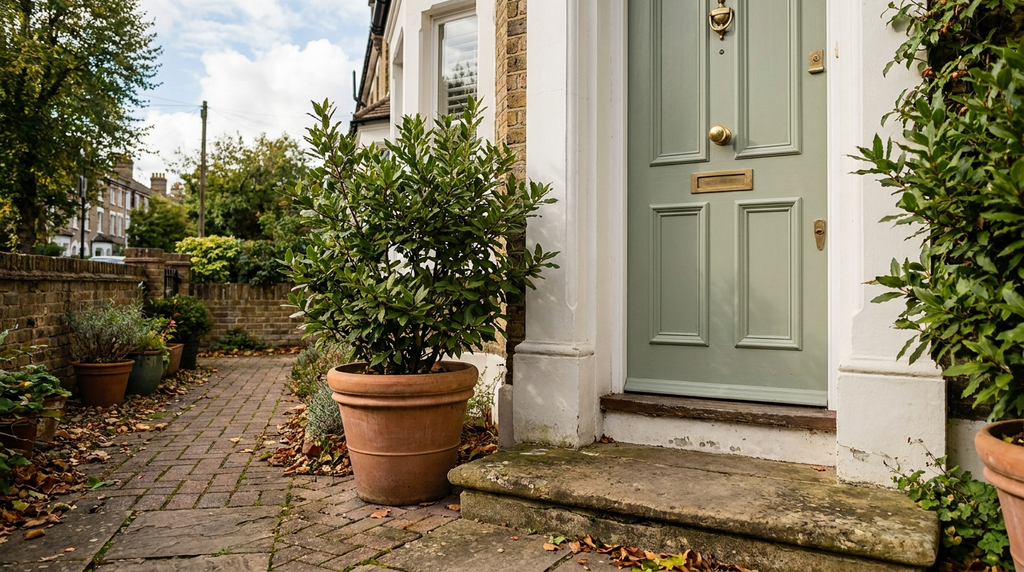
Green is the most requested front door colour for kerb appeal in 2026 estate agent surveys. Sage, olive, and dark forest green are the most popular shades. Rightmove data shows that homes with a green front door sell 3% faster on average (Rightmove “Kerb Appeal” report, 2026). However, the colour must match the property’s period and setting. A bright green door on a Victorian terrace can reduce value rather than increase it (NAEA Propertymark buyer preference survey, 2026). Consider the architectural style of your home before choosing the shade.
The Great British Insulation Scheme closed on 31 March 2026. It funded insulation measures only and never covered windows or glazing.
The Great British Insulation Scheme closed on 31 March 2026. It funded insulation measures only and never covered windows or glazing. The door must be installed by an MCS-certified or TrustMark-registered installer. You apply through your energy supplier. The Great British Insulation Scheme closed on 31 March 2026. It funded insulation measures only and never covered windows or glazing. Check your EPC rating on the government’s EPC register before applying. How to check your EPC rating
An MCS-certified or TrustMark-registered installer is required for any grant-funded green door
For grant-funded work, the installer must hold MCS certification for door installation or be TrustMark-registered with a relevant trade body. For non-grant work, FENSA registration is the minimum standard for building regulations compliance. You should check the installer’s MCS certificate number on the MCS register before paying a deposit (MCS register, 2026). You can also check FENSA registration on the FENSA website (FENSA “Installer Check” tool, 2026). How to find a certified door installer
A green front door must meet Building Regulations Part L if it replaces more than 50% of the glazing
If the door includes a glazed panel larger than 0.5m², the glass must have a U-value of 1.2 W/m²K or lower. The door frame must achieve a U-value of 1.4 W/m²K or better for the whole assembly. The installer must provide a Building Regulations compliance certificate or a FENSA certificate (GOV.UK “Building Regulations Part L1B”, 2026). Keep this certificate with your property documents, as you will need it when you sell the home.
Frequently Asked Questions
A green front door costs between £500 and £2,500 fully installed in 2026, depending on material and size. A basic green uPVC door from a FENSA-registered installer starts at £500, while a premium timber door can reach £2,500 (Checkatrade 2026 national averages).
A green composite door offers the best energy performance, with a U-value of 1.0 to 1.4 W/m²K. The Energy Saving Trust estimates it can cut heat loss by up to 30% compared to an uninsulated timber door, saving £25–£45 per year (Energy Saving Trust, 2026).
A green composite door typically lasts 25–35 years, depending on maintenance and exposure. The British Woodworking Federation notes that composite doors are durable and require minimal upkeep. That makes them a long-term investment for most homeowners.
Yes, a well-fitted green front door can add kerb appeal and potentially increase property value by 5–10% according to estate agents. However, the exact uplift depends on the local market and the quality of the installation.
No, there are no specific grants for front doors in 2026 under the ECO4 or Boiler Upgrade Scheme. However, if you are improving overall energy efficiency, you may qualify for broader home upgrade funding through local authority schemes (GOV.UK, 2026).