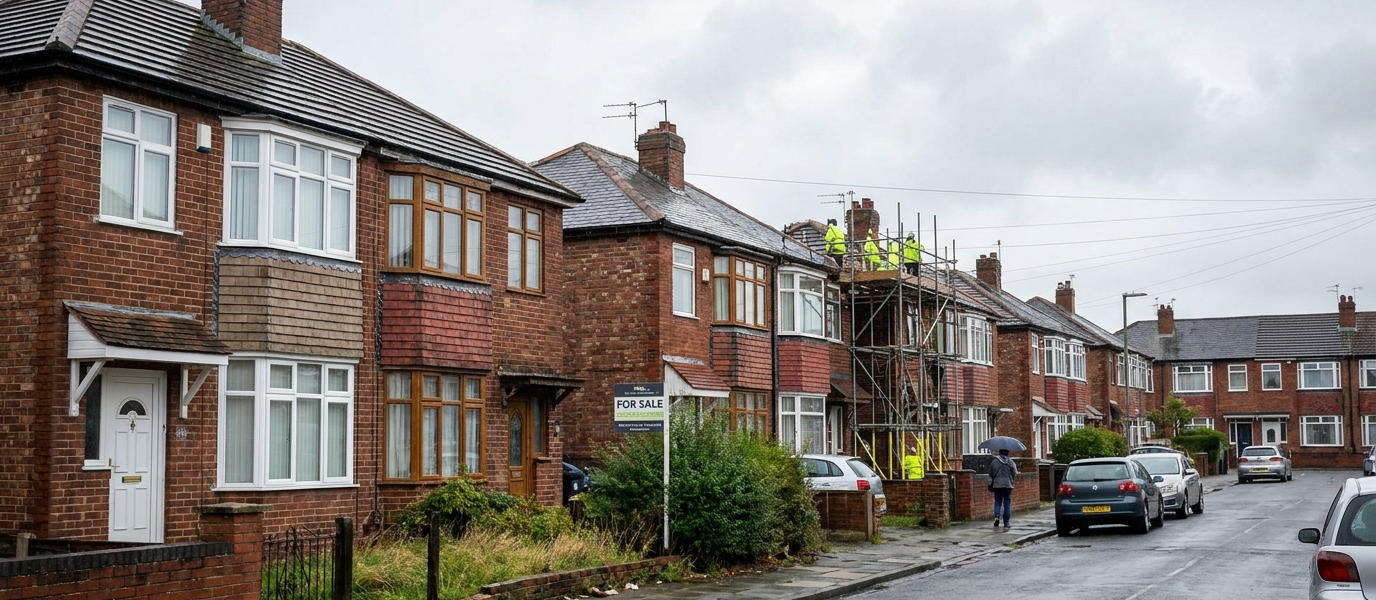
The latest data from Property118 shows that 55% of homes in England and Wales are rated D or below on their Energy Performance Certificate. That means more than 13 million properties fall short of the government’s 2035 target of EPC C. For the average homeowner, this is a policy concern and a direct hit on the monthly budget.
As reported by Property118, the scale of the retrofit challenge is enormous. But the real story for homeowners is how these ratings translate into higher energy bills – and what can be done about it now.
Who qualifies – and who doesn’t
The 2035 target applies to all homes in England and Wales, but the stick is aimed mostly at landlords. From 2028, new tenancies in the private rented sector will require an EPC rating of C. Owner-occupiers face no legal deadline yet – but the market is moving anyway. Mortgage lenders, including Nationwide and Barclays, now offer lower rates for homes rated A or B. Estate agents report that buyers increasingly walk away from D-rated properties.
The catch is that the worst-performing homes are often the hardest to improve. Solid-wall Victorian terraces and off-gas-grid rural cottages make up a large share of the D-to-G bracket. Insulating solid walls can cost £8,000–£15,000, and heat pump installations run £7,000–£13,000 before the Boiler Upgrade Scheme grant of £7,500. For many households, the upfront cost is prohibitive even with the subsidy.
What it costs a typical 3-bed semi
Energy Saving Trust data shows that a typical 3-bed semi rated EPC D uses about 13,500 kWh of gas and 3,200 kWh of electricity a year. At current price cap rates – 24.5p per kWh for electricity and 6.24p for gas – that works out at roughly £1,620 a year. The same home upgraded to a C rating would use around 11,000 kWh of gas and 2,800 kWh of electricity, bringing the bill down to about £1,290. That’s a saving of £330 a year – every year.
But the gap widens further down the scale. An E-rated home could be spending £2,000 or more annually. The government’s own figures suggest the average D-rated household pays £340 more than a C-rated one. Over a decade, that’s £3,400 lost to inefficiency.
Grants that exist – and the one that doesn’t
The Great British Insulation Scheme closed on 31 March 2026. It funded insulation measures only and never covered windows or glazing. ECO4, the main energy company obligation, goes further, funding whole-house upgrades including insulation, boiler repairs, and first-time central heating for low-income households. Both schemes are free for eligible households.
Yet the take-up has been slow. Ofgem data shows that fewer than 50,000 homes had been upgraded through the insulation scheme by mid-2024. The target was 300,000. Part of the problem is awareness – many homeowners simply don’t know they qualify. Another is installer capacity: there are not enough trained fitters to meet demand.
What this misses is a simple truth: the cheapest energy is the energy you don’t use. For most households, the quickest win is loft insulation, which costs £300–£500 installed and can pay back in two to three years. Draught-proofing costs as little as £50 and can save £60 a year. These are not headline-grabbing measures, but they work.
Households on standard variable tariffs should check their EPC rating on gov.uk. If it’s D or below, the next step is to contact the Energy Saving Trust or your local authority for grant eligibility. The Great British Insulation Scheme is open now. Applications for ECO4 run until March 2026. The 2035 target may feel distant, but the savings start the day the insulation goes in.
Frequently Asked Questions
The UK government's 2035 target requires all homes in England and Wales to achieve an EPC rating of C or above. Currently, 55% of homes are rated D or below, meaning over 13 million properties need upgrades to meet this standard.
Upgrading a typical 3-bed semi from EPC D to C can save around £330 a year, reducing annual bills from about £1,620 to £1,290 based on current price cap rates. Over a decade, that's £3,300 saved.
ECO4 provides whole-house upgrades for low-income households, including insulation and boiler repairs. Both are free for eligible households.
Insulating solid walls, common in Victorian terraces, typically costs between £8,000 and £15,000. While expensive, the Boiler Upgrade Scheme offers a £7,500 grant for heat pumps, which can help offset costs for overall energy efficiency upgrades.
Owner-occupiers face no legal deadline to upgrade to EPC C, but the market is moving: mortgage lenders like Nationwide and Barclays offer lower rates for A or B-rated homes, and buyers often avoid D-rated properties. From 2028, new tenancies in the private rented sector will require EPC C.




