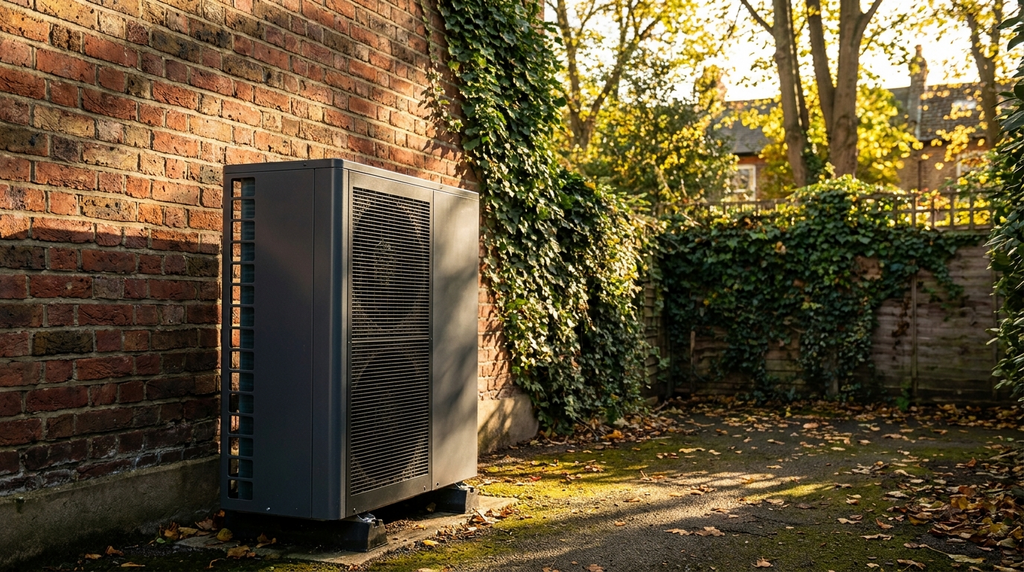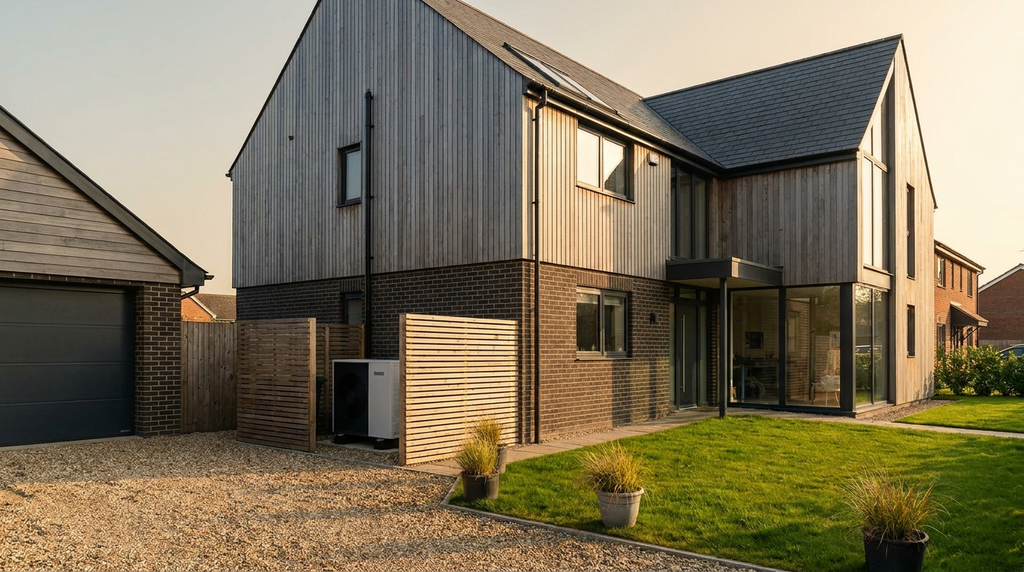
The lifetime carbon saving of a heat pump in a UK new-build is roughly equivalent to taking a petrol car off the road for six years, based on 2026 grid carbon intensity figures.
If you are building or buying a new home in 2026, you may be weighing up the carbon impact of your heating system. A gas boiler in a new-build emits around 2.1 tonnes of CO₂ per year from heating and hot water, according to DESNZ conversion factors (DESNZ, 2026).
A modern heat pump with a Seasonal Coefficient of Performance (SCOP) of 3.5 or higher reduces that to roughly 0.6 tonnes CO₂ per year, given the 2026 grid mix. The 1.5-tonne annual saving over a 15-year product life equals 22.5 tonnes CO₂, roughly the same as taking a petrol car off the road for six years (Energy Saving Trust, 2026).
Quick numbers, heat pump performance in a 2026 new-build
| Metric | Typical 2026 new-build value | Source |
|---|---|---|
| System SCOP | 3.5 – 4.5 | EST, 2026 |
| Annual space-heating demand (kWh) | 4,000 – 6,000 | SAP 10.2 / Future Homes Standard 2025 compliance data |
| Annual hot-water demand (kWh) | 2,000 – 2,500 | BRE, 2026 |
| Typical heat pump size (kW output) | 5 – 8 | MCS installer sizing data, 2026 |
| Upfront cost premium vs gas boiler | £3,000 – £5,000 | EST, 2026 |
Why a new-build is uniquely suited to a heat pump
A UK new-build in 2026 is built to the Future Homes Standard, which mandates high fabric efficiency. Wall U-values must be 0.18 W/m²K or lower, and window U-values 1.2 W/m²K or lower (DESNZ, 2026). This makes low-temperature heat pumps the optimal heating system because they can run at design flow temperatures of 35–45°C, compared to 55–65°C in a retrofit. Lower flow temperatures directly boost SCOP.
Underfloor heating or large radiators are standard in new-builds, so you do not need costly emitter upgrades. A new-build’s airtightness, typically 3–5 m³/h/m² at 50 Pa, prevents heat loss that would force a heat pump to run inefficiently. These factors mean a heat pump in a new-build reliably achieves a SCOP above 3.5, whereas a retrofit may struggle to reach 3.0.
The eligibility test, who qualifies for a heat pump grant in a new-build
The Boiler Upgrade Scheme (BUS) offers a £7,500 grant for heat pumps, but new-builds are excluded (GOV.UK, 2026). To qualify, the property must have been occupied before the application date. A new-build that has never been occupied is ineligible.
The only exception is a self-build home. If you build your own home and occupy it as your main residence within 12 months of completion, you can apply for the BUS grant (Ofgem, 2026). If you are buying a new-build from a developer, the developer may include a heat pump as standard. You do not need to apply for a grant yourself.
The best heat pump for a UK new-build in 2026
The best heat pump for a UK new-build in 2026 is a monobloc air-source heat pump with a SCOP of at least 4.0 and a R290 (propane) refrigerant. This combination offers high efficiency, low global warming potential, and simple installation (MCS, 2026).
Models from Mitsubishi Electric (Ecodan), Vaillant (aroTHERM plus), and Daikin (Altherma 3) consistently achieve SCOP 4.0–4.5 in new-build SAP calculations (EST, 2026). A ground-source heat pump is technically better, with a SCOP of 4.5–5.0, but the £12,000–£18,000 upfront cost is rarely justified in a new-build where a monobloc air-source unit costs £7,000–£10,000 installed. The specific model must be on the MCS product database and meet the Future Homes Standard’s minimum SCOP of 3.5.
compare heat pump running costs vs gas boiler in a new-build
How to verify your installer, MCS, TrustMark, and Gas Safe Register
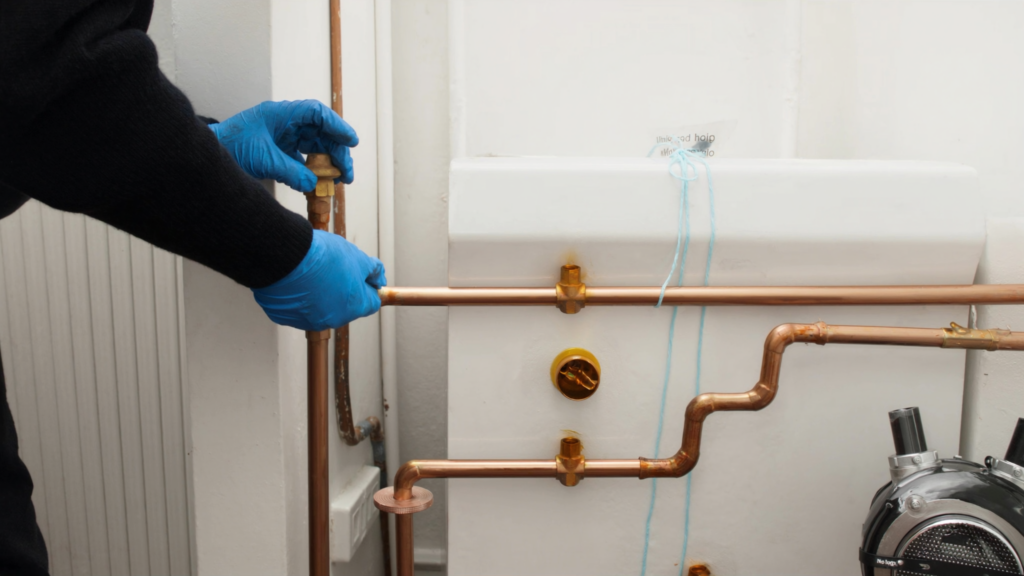
The installer must be MCS-certified to carry out a heat pump installation that complies with building regulations and to enable any warranty (MCS, 2026). Check the MCS “Find an Installer” tool for the company name and certification number. The certification must be current, as it is renewed annually.
The installer should also hold TrustMark accreditation, which covers consumer protection and standards (TrustMark, 2026). If the installer is replacing a gas boiler, they must be Gas Safe registered to disconnect the gas supply safely, even though the heat pump itself does not require gas (Gas Safe Register, 2026). Ask for an MCS certificate after installation. This is required for any future warranty claim and for SAP compliance reporting.
What the Future Homes Standard means for your heat pump choice
From 2026, all new-builds must achieve a 75% reduction in carbon emissions compared to the 2013 Part L baseline (DESNZ, 2026). This effectively mandates a heat pump or district heating. The Standard sets a minimum SCOP of 3.5 for heat pumps in new-builds. Any model below that cannot be used for compliance.
The Standard also requires a heat pump to be sized using the “whole-house” methodology (MIS 3005), not a rule-of-thumb calculation (BRE, 2026). If you are designing a new-build, the heat pump must be modelled in SAP 10.2 from the start. Retrofitting a heat pump into a new-build designed for a gas boiler is technically possible but inefficient, because the fabric and emitter system are not optimised for low-temperature operation.
understand SAP 10.2 heat pump requirements for new-build compliance
Frequently Asked Questions
A heat pump for a new-build costs £3,000 to £5,000 more than a gas boiler, according to the Energy Saving Trust (2026). The total installed cost typically ranges from £7,000 to £13,000 before grants.
A 5-8 kW heat pump is typical for a UK new-build, based on MCS installer sizing data (2026). Your exact size depends on the home's heat loss calculation under the Future Homes Standard.
Yes, a heat pump is worth it in a new-build due to high fabric efficiency and low flow temperatures. The Energy Saving Trust estimates a lifetime carbon saving of 22.5 tonnes CO₂ over 15 years.
A heat pump can save £100-£200 per year on energy bills compared to a gas boiler in a new-build, according to EST (2026). Actual savings depend on your tariff and usage.
Top brands for new-builds include Mitsubishi Electric, Daikin, and Vaillant, all MCS-certified. The best choice depends on your installer's recommendation and warranty terms.
No, heat pumps in new-builds are permitted development under permitted development rights (GOV.UK, 2026). Check local conditions if your home is in a conservation area.