District heat networks save the average UK household £150–£300 per year versus gas boilers
If you live in a flat or a new-build estate, you may have the option to connect to a district heat network rather than install your own heating system. These networks supply heat from a central source to multiple buildings via insulated pipes.
The Department for Energy Security and Net Zero (DESNZ) reports that households on a district heat network save £150–£300 per year compared with a gas boiler (DESNZ, 2026). However, actual savings depend on your network’s tariff, your property size, and local gas prices.
Connection fees and standing charges can reduce or reverse these savings in some cases. Always check the annual statement from your network operator, which must show your heat tariff and any fixed charges.
Heat pumps cost £7,000–£13,000 installed
An air-source heat pump costs between £7,000 and £13,000 to install, according to the Energy Saving Trust (Energy Saving Trust, 2026). The Boiler Upgrade Scheme (BUS) provides a £7,500 grant that is deducted from the invoice at the point of sale, not claimed afterward (GOV.UK, 2026).
Ground-source heat pumps cost more, typically £14,000–£19,000, but receive the same £7,500 grant. The net cost after grant is therefore £6,500–£11,500 for air-source and £6,500–£11,500 for ground-source, assuming full grant eligibility.
To qualify, you must replace an existing fossil-fuel heating system, and the installer must be MCS-certified. The grant is available for owner-occupiers and self-builders in England and Wales.
Quick numbers comparing district heat networks and heat pumps for a typical UK home
The table below compares key figures for a typical 3-bed semi-detached home, based on DESNZ and Energy Saving Trust data.
| Metric | District heat network | Heat pump (air-source) | Heat pump (ground-source) |
|---|---|---|---|
| Connection / installation cost | £0–£5,000 (connection fee) | £7,000–£13,000 | £14,000–£19,000 |
| Annual running cost (vs. gas boiler) | £150–£300 lower | Similar to gas, varies with tariff | 10–20% lower than gas |
| Annual carbon saving (kg CO2) | 500–1,500 (varies by heat source) | 1,000–2,000 | 1,500–2,500 |
| Lifespan (years) | 25–40 (network pipes) | 15–20 | 20–25 |
| Grant / support available | None (local schemes may exist) | £7,500 BUS grant | £7,500 BUS grant |
Carbon savings for district networks depend on whether the central plant uses gas CHP, biomass, or waste heat. Heat pump savings assume grid electricity with an average carbon intensity of 0.2 kg CO2/kWh (DESNZ, 2026). Lifespan data comes from the Energy Saving Trust (Energy Saving Trust, 2026).
District heat networks are most viable in urban areas with existing pipe infrastructure
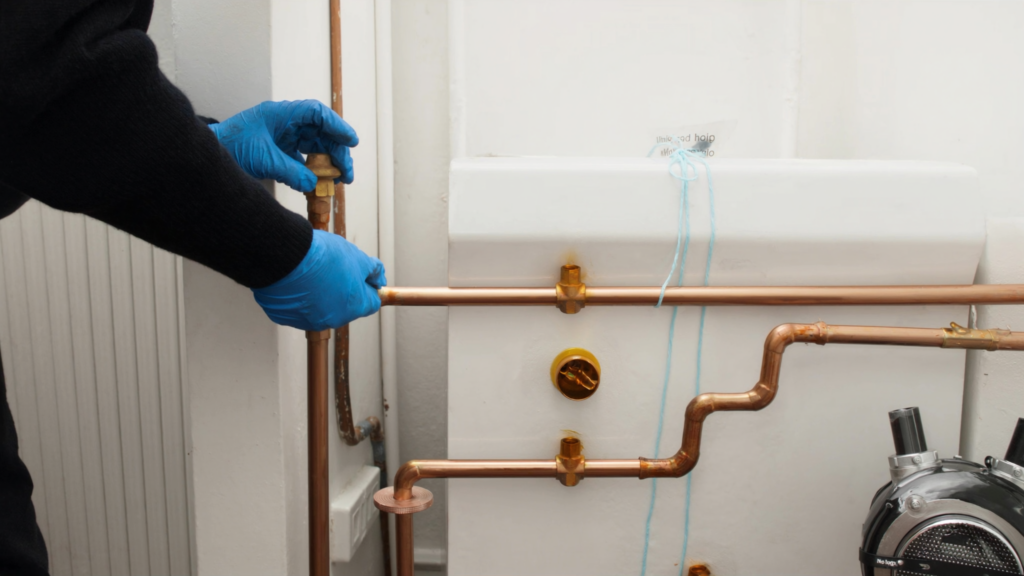
District heat networks rely on a central energy centre, often a combined heat and power (CHP) plant or a waste-heat source, connected via buried pipes to individual buildings. This infrastructure makes them most viable in dense urban areas where many homes can be served by a single network.
New-build developments and regeneration zones are the primary locations for district networks. Retrofitting a standalone home is rarely feasible unless a network extension is already planned and funded by the local authority or a developer.
If you live in a flat or a terraced house in a city centre, you may be able to connect to an existing network. Check with your local council or the Heat Trust (Heat Trust, 2026) for networks in your area.
Heat pumps work in any property with adequate insulation and outdoor space
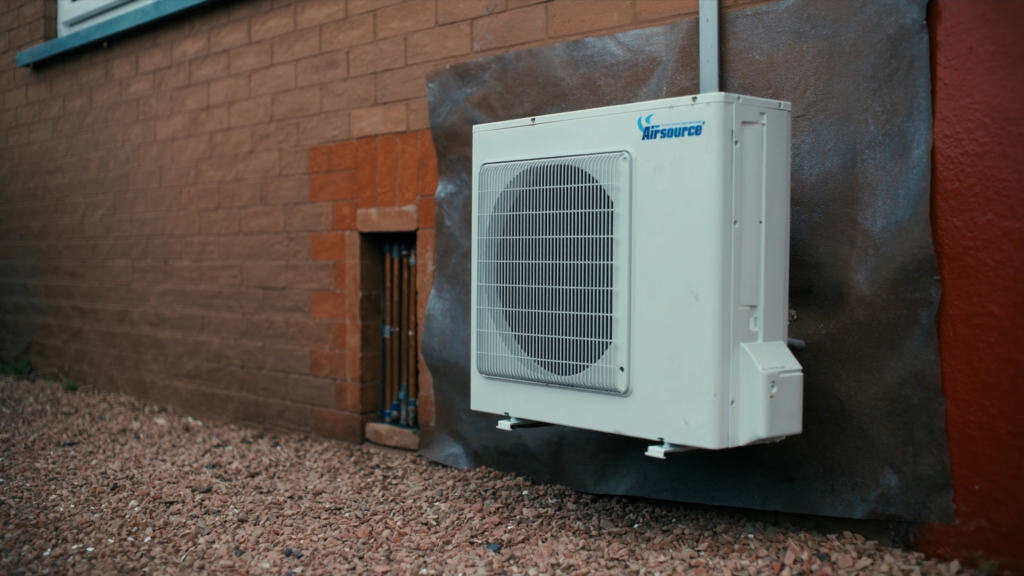
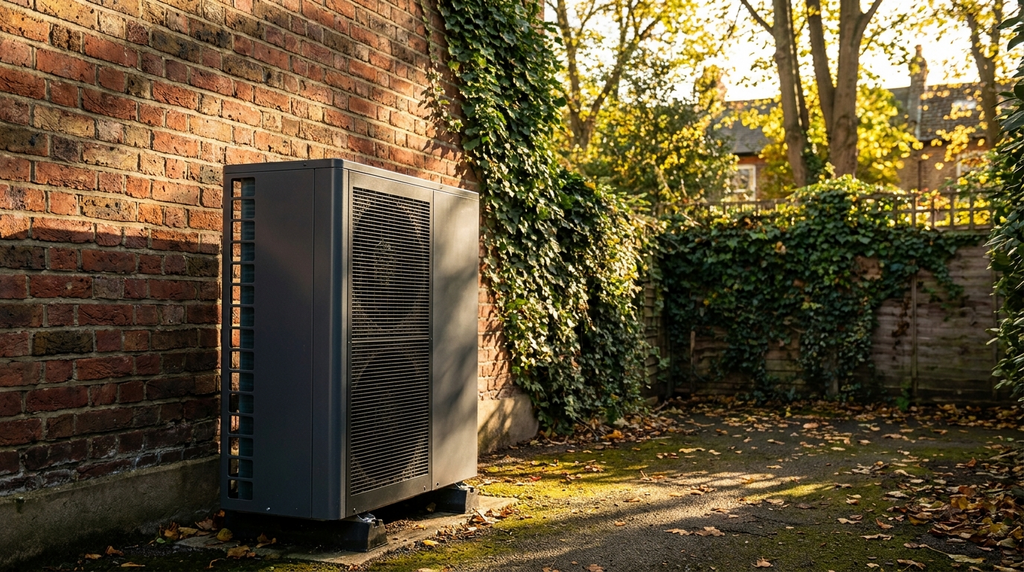
An air-source heat pump needs an outdoor unit with clearance of about 1 metre from walls and a hot water cylinder inside. Ground-source heat pumps require garden space for a ground loop (horizontal trench) or a borehole (vertical).
The Energy Saving Trust recommends minimum insulation levels before installing a heat pump: loft insulation to 270mm and cavity wall fill (Energy Saving Trust, 2026). Without adequate insulation, the heat pump will run inefficiently and may not keep your home warm.
If you lack outdoor space for a ground-source system, an air-source heat pump is the more practical option. For flats, a communal heat pump or a district network may be the only viable choice.
The direct answer can you connect a heat pump to a district heat network?
No, you cannot connect a heat pump to a district heat network. They are separate systems that serve the same purpose: providing heat to your home. A heat pump replaces the heat exchanger that connects your home to a district network, or vice versa.
Some hybrid setups exist where a heat pump acts as the primary heat source and the district network provides backup during peak demand, but these are rare and require specialist design by a heating engineer. For most homeowners, the choice is binary: connect to the network or install your own heat pump.
If you are considering a new home, check whether a district network is planned. If you already have a network connection, you cannot switch to a heat pump without disconnecting and paying any exit fees.
Eligibility and certification MCS for heat pumps
To claim the £7,500 BUS grant for a heat pump, your installer must be certified under the Microgeneration Certification Scheme (MCS) (MCS, 2026). You can find an MCS-certified installer via the GOV.UK “Find an MCS-certified installer” page (GOV.UK, 2026).
District heat networks have no single certification scheme. For consumer protection, check whether the network operator is a member of the Heat Trust, which sets standards for billing, complaints, and performance (Heat Trust, 2026). Some local councils also operate their own accreditation schemes for district networks in their area.
If you are considering a heat pump, ensure the installer provides an MCS certificate and a detailed quote. For district networks, request a copy of the Heat Trust membership or ask your council for details.
Running costs vary widely, district networks are regulated
District network tariffs are set locally and reviewed annually. The Heat Trust requires operators to publish their tariffs and explain any changes (Heat Trust, 2026). Ofgem’s price cap does not apply to heat networks, but the government plans to introduce a heat network price cap by 2026.
Heat pump running costs depend entirely on your electricity tariff. The average electricity price under the Ofgem price cap is 24.5p/kWh (as of January 2026) (Ofgem, 2026). However, using a time-of-use tariff such as Economy 7 or Octopus Agile can lower the cost per kWh for heat pump operation, especially if you run the pump overnight.
For a typical home, a heat pump with a Seasonal Coefficient of Performance (SCOP) of 3.0 will cost roughly the same to run as a gas boiler at current prices. District network costs can be lower or higher depending on local tariffs, so always compare the annual statement from your network operator with your current gas bill. Read our guide to heat pump running costs vs gas boilers
Frequently Asked Questions
The Department for Energy Security and Net Zero (DESNZ) reports savings of £150–£300 per year compared with a gas boiler. Actual savings depend on your network's tariff and property size.
After the £7,500 Boiler Upgrade Scheme grant, an air-source heat pump costs £6,500–£11,500 and a ground-source heat pump costs £6,500–£11,500, according to the Energy Saving Trust.
Yes, if you are an owner-occupier or self-builder in England or Wales and replace an existing fossil-fuel heating system with an MCS-certified installer. Check GOV.UK for eligibility details.
A district heat network supplies heat from a central source to multiple buildings via pipes, while a heat pump is an individual system installed in your home. District networks typically have lower upfront costs but ongoing tariffs.
Yes, according to DESNZ, households on a district heat network save £150–£300 per year compared with a gas boiler. However, connection fees and standing charges can reduce savings.