How a Smart Thermostat Differs from a Standard Thermostat for Heat Pumps
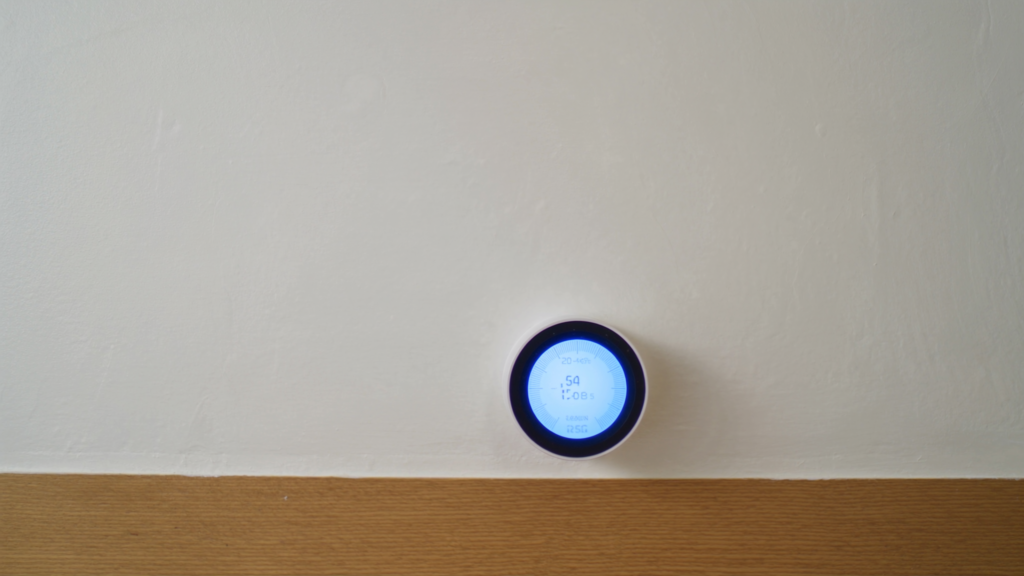
A smart thermostat can reduce a heat pump’s annual running costs by up to £200–£300 compared to a basic timer or manual control, according to the Energy Saving Trust (EST) (Energy Saving Trust, 2026). Standard thermostats use simple on/off control, which forces a heat pump to cycle frequently and lose efficiency. Smart thermostats use weather compensation, learning algorithms, or room-by-room zoning to modulate the heat pump’s output gradually.
Heat pumps are most efficient when they run at a low, steady output. Smart thermostats are built to enable this, whereas standard thermostats are not. The UK’s heat pump grant, the Boiler Upgrade Scheme, does not require a smart thermostat, but many MCS-certified installers recommend one as a best-practice efficiency measure (GOV.UK, Boiler Upgrade Scheme, 2026).
The Running Cost Saving You Can Expect with a Smart Thermostat
EST estimates that smart heating controls can cut heat pump running costs by 10–20%, translating to roughly £100–£300 per year for a typical 3-bedroom home (Energy Saving Trust, 2026). The savings depend on your home’s insulation, the heat pump’s efficiency, measured as its seasonal coefficient of performance (SCOP), and how well the thermostat learns your schedule.
Weather-compensating controls reduce the flow temperature when it is milder outside. This directly improves the heat pump’s coefficient of performance (CoP), which is the ratio of heat output to electricity input. The Department for Energy Security and Net Zero (DESNZ) publishes heat pump performance data showing that lower flow temperatures consistently deliver higher CoP values (DESNZ, 2026).
Quick Numbers, Smart Thermostat Costs and Savings at a Glance
| Item | Value |
|---|---|
| Typical thermostat unit cost (including installation) | £150–£400 |
| Annual running cost saving | £100–£300 |
| Payback period | 1–3 years |
| Heat pump SCOP improvement | 0.1–0.3 points (e.g., from 3.2 to 3.5) |
| UK homes with heat pumps (2026) | ~300,000 (MCS register estimate) |
| Homes using smart controls with heat pump | ~60% of new installations (industry estimate) |
Sources: EST savings figures (Energy Saving Trust, 2026); MCS register for installation numbers (MCS, 2026); industry estimates from the Heat Pump Association (HPA) market report.
The Best Smart Thermostat Features for a Heat Pump in the UK
Weather compensation automatically adjusts flow temperature based on outdoor temperature. This is the single most important feature for heat pump efficiency (Energy Saving Trust, 2026). Learning schedule means the thermostat learns when you are home and adjusts heating times, avoiding unnecessary running. Zoning capability controls individual rooms or zones, preventing overheating in unused spaces. Heat pumps work best with fewer zones than gas boilers.
OpenTherm or Modbus compatibility allows the thermostat to talk directly to the heat pump’s inverter, enabling modulation. What is OpenTherm and why it matters for heat pumps. App control and smart-home integration are useful for remote adjustments but are not essential for efficiency gains. Always check manufacturer specifications for heat pump compatibility before purchasing.
Which Smart Thermostat Works with Your Heat Pump, Compatibility Check
Not all smart thermostats are compatible with heat pumps. Always check the manufacturer’s compatibility list before buying. Heat pumps from Mitsubishi, Daikin, Vaillant, and Samsung each have their own proprietary controls or approved third-party options. OpenTherm is the most widely supported protocol in UK heat pumps, but some models require a specific interface module, such as Mitsubishi’s MELCloud or Daikin’s D-Smart (MCS installer standards, 2026).
If you already have a heat pump, contact the installer or manufacturer for a list of compatible smart thermostats before buying. Heat pump compatibility guide for UK homes. Manufacturer technical datasheets from Mitsubishi Electric, Daikin, Vaillant, and Samsung provide detailed compatibility lists.
Eligibility, Certification, and How to Verify an Installer
For the Boiler Upgrade Scheme grant, which is £7,500 in 2026, your heat pump installation must be MCS-certified. The smart thermostat does not need separate certification, but the installer must be MCS-registered (GOV.UK, 2026). Smart thermostat installation should be carried out by a qualified heating engineer. For heat pump work, look for MCS or NICEIC/NAPIT registration. Gas Safe registration is required for gas systems but not for heat pumps alone.
TrustMark is a government-endorsed quality mark for tradespeople. Check if your installer holds TrustMark accreditation (TrustMark, 2026). Always request a written quote that specifies the smart thermostat make, model, and warranty before installation.
Smart Thermostat Heat Pump, The Direct Answer for UK Homeowners
A smart thermostat for a heat pump is a control system that uses weather compensation and learning algorithms to modulate the heat pump’s output, keeping it running efficiently at low, steady power rather than cycling on and off. This reduces annual running costs by £100–£300 and improves the heat pump’s SCOP by up to 0.3 points, compared to a basic timer or manual thermostat (Energy Saving Trust, 2026).
Frequently Asked Questions
A smart thermostat can save £100-£300 per year on heat pump running costs, according to the Energy Saving Trust. Savings depend on your home's insulation and heat pump efficiency.
Yes, a smart thermostat is worth it for most heat pump owners. The Energy Saving Trust estimates a payback period of 1-3 years, and it improves efficiency by enabling weather compensation.
No, you do not need a smart thermostat for a heat pump. The Boiler Upgrade Scheme does not require one, but MCS-certified installers often recommend it as a best practice for efficiency.
A smart thermostat uses weather compensation or learning algorithms to modulate the heat pump's output gradually. This avoids frequent on/off cycling, which improves the heat pump's CoP and reduces energy use.
The best smart thermostat for a heat pump in the UK depends on your system. Models with weather compensation, such as those from Hive, Nest, or Tado, are commonly recommended by MCS installers.