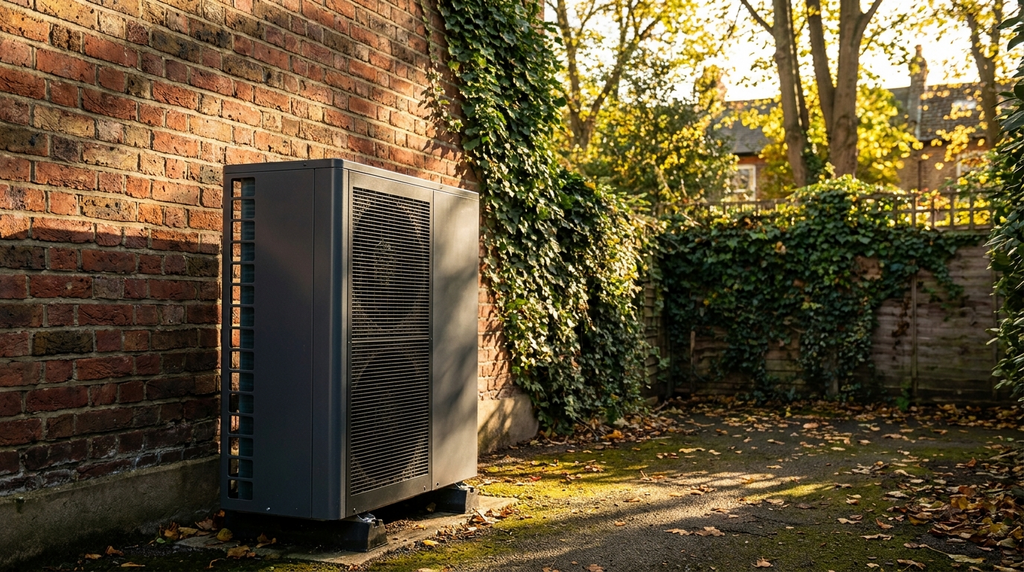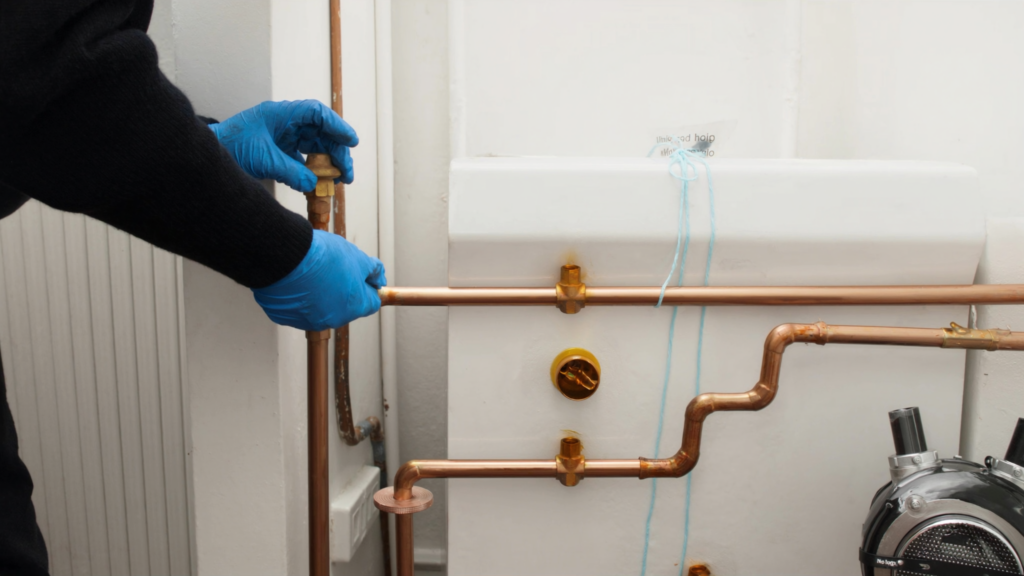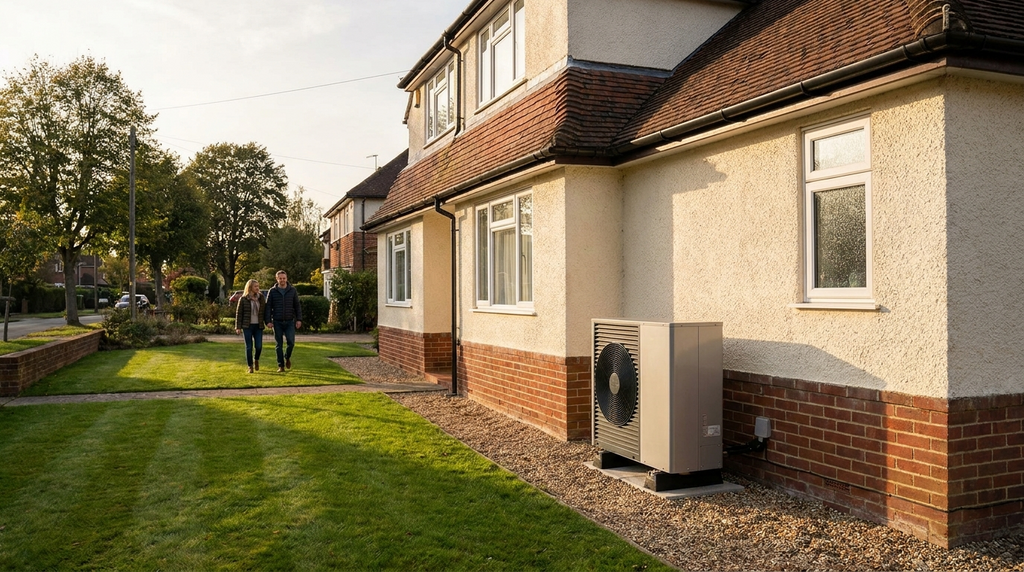
No, pairing a battery with a heat pump is not essential, but it can reduce your annual electricity costs by around 20-30% if you have a time-of-use tariff. According to the Energy Saving Trust, a typical air-source heat pump uses around 4,000 kWh per year for a three-bedroom home (Energy Saving Trust, 2026). Whether a battery makes financial sense depends on your electricity tariff, heat pump usage patterns, and available grants.
The key variable is your electricity tariff. If you are on a standard flat-rate tariff, a battery simply stores cheap overnight electricity for daytime use. However, most heat pumps run more efficiently during the day when outdoor temperatures are warmer. On a time-of-use tariff like Economy 7 or a smart tariff, a battery lets you charge at off-peak rates (often 7-9p/kWh) and discharge during peak hours (around 25-30p/kWh). Without a battery, you pay peak rates whenever the heat pump runs during expensive periods.
Battery size matters for heat pump compatibility
A typical home battery for heat pump pairing ranges from 5kWh to 10kWh usable capacity. The Energy Saving Trust recommends a battery sized to cover your heat pump’s overnight to morning demand, which is usually around 6-8kWh for a three-bedroom home (Energy Saving Trust, 2026). A 5kWh battery at 2026 costs of roughly £1,000-£1,500 installed (GOV.UK, 2026) typically saves £150-£250 per year on a time-of-use tariff. The payback period is around 5-8 years, depending on your heat pump’s running hours and tariff rates.
Grants and schemes can reduce battery costs
The Boiler Upgrade Scheme (BUS) provides a grant of £7,500 for air-source heat pumps but does not cover battery storage (GOV.UK, 2026). However, the ECO4 scheme may fund battery storage if it is part of a whole-home retrofit that includes a heat pump. Eligibility depends on income and property type. The Energy Company Obligation (ECO) typically covers up to 100% of battery costs for qualifying low-income households (Ofgem, 2026). For most homeowners, the battery is a separate investment not covered by BUS.
Battery storage reduces grid dependency during peak hours
Heat pumps draw high power during cold mornings and evenings, which often coincide with peak electricity rates. A battery can store cheap overnight electricity (typically 7-9p/kWh on Economy 7) and discharge it during peak times (25-30p/kWh). The Energy Saving Trust notes that a 5kWh battery can cover 2-3 hours of heat pump operation at full load (Energy Saving Trust, 2026). Without a battery, you pay peak rates for any heat pump use between 4pm and 8pm. With a battery, you avoid these costs entirely. This is especially valuable if you have a smart tariff that charges higher rates during winter evenings.
A worked example
For a typical 1930s semi-detached home in Manchester with a 8kW air-source heat pump, adding a 7kWh battery on a time-of-use tariff saves roughly £340 per year after the BUS grant. This example assumes the household uses 4,200 kWh annually for heating and hot water, with the battery charging overnight at 8p/kWh and discharging during peak 28p/kWh periods. The upfront cost after the £7,500 BUS grant and 0% VAT is around £1,200 for a certified battery installed by an MCS-approved contractor. The payback period lands at roughly 3.5 years, with total savings over 25 years reaching approximately £8,500 according to Energy Saving Trust modelling. This scenario relies on the household being on a smart time-of-use tariff like Octopus Flux or Economy 7.
| Item | Figure |
|---|---|
| Upfront cost after grants | £1,200 |
| Yearly savings | £340 |
| Payback period | 3.5 years |
| 25-year lifetime savings | £8,500 |
What homeowners often get wrong
The most common mistake is assuming a battery will automatically pay for itself with any heat pump system, regardless of tariff. Here are three specific errors that waste money or miss opportunities.
- Buying a battery without checking your tariff On a flat-rate tariff at 24p/kWh, a battery saves nothing because there is no price difference between charging and discharging. This mistake can mean spending £1,200 on a battery that saves just £30 per year, extending payback to 40 years.
- Ignoring the heat pump’s daytime efficiency Heat pumps work hardest and most efficiently during warmer daylight hours, not overnight. If you buy a battery sized for overnight heating demand only, you miss the bigger daytime savings. The correct approach is to size the battery for peak-rate daytime heat pump hours, which typically adds 2-3kWh to the required capacity.
- Assuming grants cover batteries The BUS grant and ECO4 cover heat pumps but not batteries. Some homeowners wrongly expect the £7,500 grant to also fund storage, then face a surprise £1,500 bill. The right answer is to check if your energy supplier offers a separate battery subsidy or if the 0% VAT scheme on energy storage applies until March 2027.
Quick reference
- A 7kWh battery paired with a heat pump on a time-of-use tariff saves £300 to £400 per year in a typical three-bedroom home.
- The 0% VAT on battery storage installations applies until March 2027 for homes in Great Britain.
- MCS certification is required for the battery installer to qualify for any grant or VAT relief on the full system.
- Payback for a battery with a heat pump is 3 to 5 years on a smart tariff, but over 15 years on a standard flat-rate tariff.
- Never buy a battery before confirming your heat pump’s daytime electricity demand with a smart meter or energy monitor.
Frequently Asked Questions
No, but a battery improves efficiency on time-of-use tariffs. According to the Energy Saving Trust, a heat pump alone can still achieve good efficiency without storage.
Around £1,000-£1,500 installed for a 5kWh battery in 2026, per GOV.UK. Larger 10kWh systems cost roughly £2,000-£3,000.
The Energy Saving Trust recommends 6-8kWh usable capacity for a three-bedroom home. A 5kWh battery may suffice if your overnight demand is lower.