The Typical Ground Source Heat Pump Borehole Cost in the UK Is £12,000 to £18,000
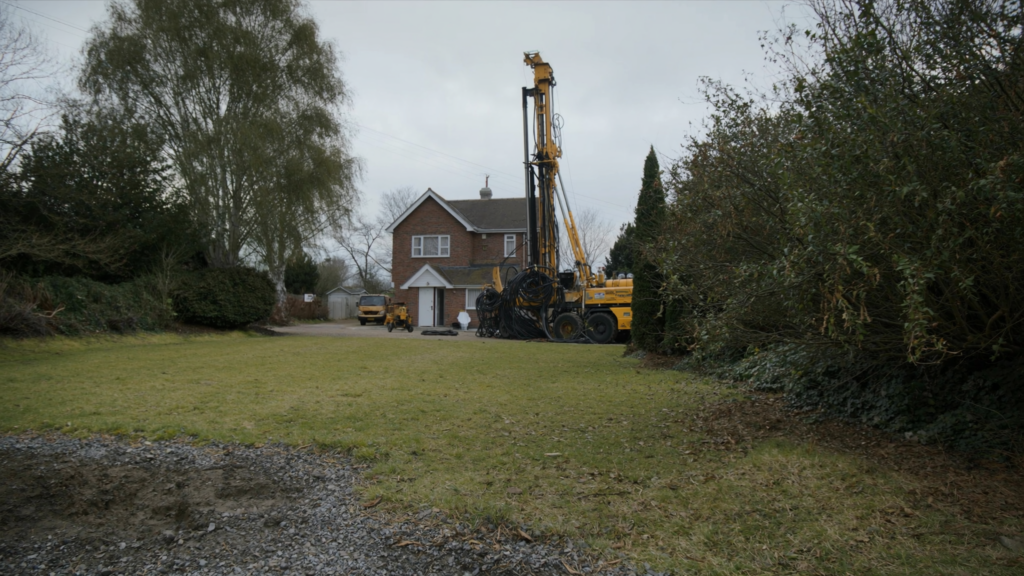
The cost of drilling a borehole for a ground source heat pump (GSHP) is the largest single expense in the installation. A ground source heat pump borehole is a deep vertical hole drilled into the ground to house a loop of pipe that absorbs heat from the earth. The drilling cost is separate from the heat pump unit and the internal pipework that connects the system to your home.
In 2026, the average cost for drilling a single borehole is between £12,000 and £18,000. This figure covers drilling, casing, and grouting for a typical 100–150 metre vertical borehole (GSHPA 2026 member pricing data). The total system cost, including the borehole, heat pump unit, and full installation, typically ranges from £24,000 to £38,000 for a 6–12 kW system (Energy Saving Trust, 2026).
Quick Numbers What Drives the Borehole Drilling Price
The cost per metre varies significantly based on ground conditions and site access. The table below shows typical cost ranges from industry data.
| Factor | Average cost per metre | Typical total for a 100m borehole | Percentage of total system cost |
|---|---|---|---|
| Clay, sand, or loam geology | £80–£100 | £8,000–£10,000 | 30–40% |
| Chalk or soft limestone | £90–£120 | £9,000–£12,000 | 35–45% |
| Hard rock (granite, sandstone) | £120–£150 | £12,000–£15,000 | 40–50% |
| Restricted access or sloping site | £100–£160 | £10,000–£16,000 | 35–55% |
These figures come from the GSHPA 2026 cost per metre survey and the British Drilling Association geology cost index (BDA, 2026). A thermal response test, which costs £1,000–£2,000, is usually added to confirm the ground’s heat conductivity before drilling begins.
The Direct Answer How Much Does a Ground Source Heat Pump Borehole Cost in the UK in 2026?
A single vertical borehole for a GSHP costs between £12,000 and £18,000 for a 100–150 metre depth, including drilling, casing, grouting, and a thermal response test. This is the figure most homeowners search for: the borehole drilling cost alone, not the full system.
The final cost depends on geology, depth, and site access, not on the heat pump brand you choose. The Energy Saving Trust 2026 cost guide lists median borehole drilling prices at £14,500 for a typical installation (Energy Saving Trust, 2026). MCS installer cost database records show median prices in the same range for 2026 (MCS, 2026).
How Geology and Depth Affect Your Borehole Drilling Bill
Softer ground, such as clay, sand, or loam, costs £80–£100 per metre to drill. Harder rock, including granite and limestone, costs £120–£150 per metre (BDA 2026 geology cost bands).
Deeper boreholes, between 150 and 200 metres, are needed for homes with higher heat demand or where the ground has poor thermal conductivity. Adding 50 metres of depth can increase the borehole cost by £4,000–£10,000. A thermal response test, costing £1,000–£2,000, is essential to confirm the ground’s thermal conductivity before drilling. Skipping this test risks under- or over-sizing the borehole, which can reduce system efficiency (GSHPA thermal response test guidance).
What the Boiler Upgrade Scheme Covers for Borehole Drilling
The Boiler Upgrade Scheme (BUS) provides a £7,500 grant for a ground source heat pump. This grant can be applied to the borehole drilling cost. The key point is that the grant covers the total system cost, not just the heat pump unit. So it effectively reduces your borehole drilling bill by up to £7,500.
To qualify, the installer must be MCS-certified and the system must meet minimum efficiency standards. The grant is deducted from the total installation cost by the installer, not paid to you directly (GOV.UK Boiler Upgrade Scheme, 2026). Ofgem data shows that most GSHP applications in 2026 received the full £7,500 grant (Ofgem BUS application data, 2026).
How to Verify Your Borehole Drilling Installer Is Certified
For borehole drilling, the installer must hold MCS certification for GSHP installation under the MCS 022 standard. The drilling contractor should also be a member of the GSHPA or the British Drilling Association. TrustMark registration is required for government grant eligibility.
You can verify the installer’s MCS certificate on the MCS website at mcs-certified.com. Check their GSHPA membership on the GSHPA website. These checks ensure the installer follows industry standards for borehole depth, grouting, and environmental protection (MCS Installer Standards, 2026; TrustMark scheme rules, 2026; GSHPA code of conduct).
How to choose a certified heat pump installer
The Trade-Off Vertical Borehole vs. Horizontal Ground Loop
Vertical boreholes cost £12,000–£18,000 but require less land, typically a 5m x 5m area, and cause minimal ground disruption. Horizontal ground loops cost £3,000–£8,000 but need 600–1,200 square metres of land, which means a large garden, and disturb the soil across a wide area.
Vertical boreholes are more efficient because the ground temperature is higher and more stable at depth. They also have a longer lifespan, with the borehole itself lasting 50 years or more. Horizontal loops have a shorter lifespan and lower efficiency, though they are cheaper to install (Energy Saving Trust, 2026; GSHPA comparison data, 2026).
What the Running Cost Savings Look Like After Drilling
A GSHP with a borehole can reduce heating bills by 25–50% compared to a gas boiler. For a typical 4-bedroom home, this means saving £500–£1,000 per year (DESNZ Heat Pump Running Cost Analysis, 2026).
The payback period for the borehole drilling cost alone, after the £7,500 BUS grant, is roughly 8–15 years. This depends on your existing heating system and energy prices. Homes replacing electric heating or oil boilers see the fastest payback, while those switching from gas see longer payback periods (Energy Saving Trust, 2026).
Ground source heat pump running costs explained