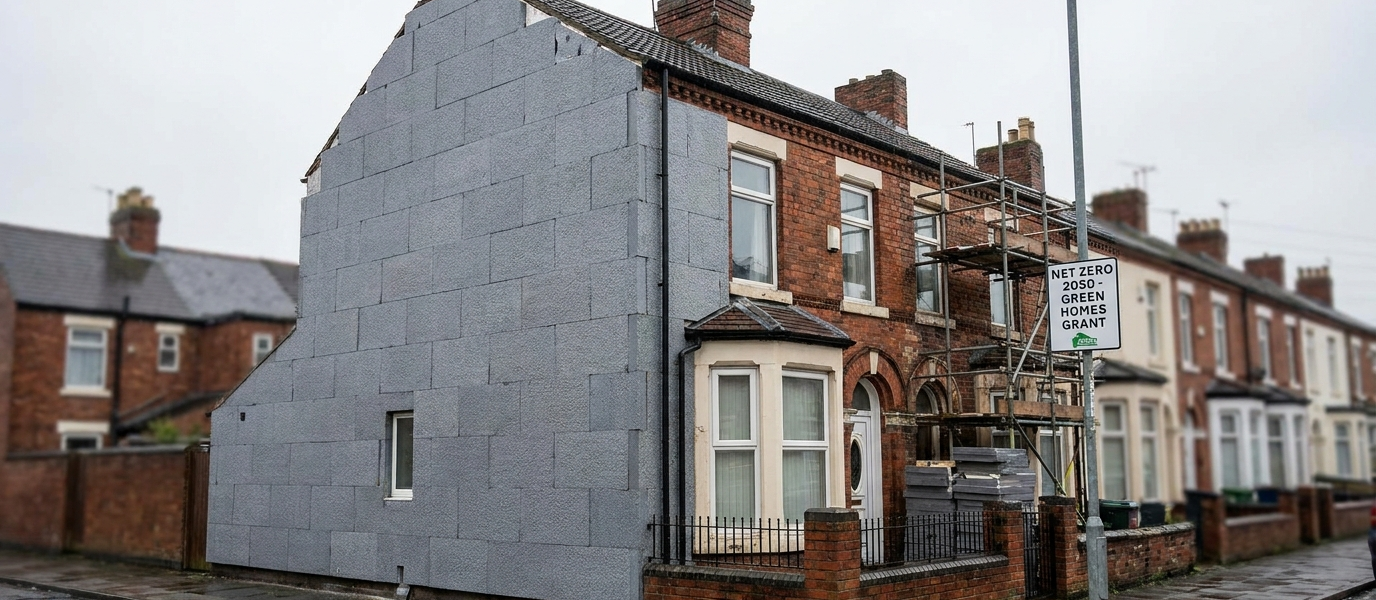
Rachel Reeves is facing a direct warning from the UK’s statutory climate adviser: cutting home insulation funding will blow a hole through the government’s own 2030 carbon targets. The Climate Change Committee (CCC) told the Treasury that reducing the budget for household energy efficiency from £3.2bn to £1.6bn over the next two years would leave 1.8 million homes still poorly insulated by the end of the decade. That is not a rounding error. It is a policy choice that locks in higher bills for millions of households.
As The Guardian reported, the CCC’s analysis shows the current trajectory for home insulation is already behind schedule. The cut would widen that gap to the point where the UK’s Nationally Determined Contribution under the Paris Agreement becomes unachievable. For homeowners, this is not an abstract climate statistic. It is the difference between a £200 annual saving on gas bills and nothing.
What a cut means for a typical 3-bed semi
Energy Saving Trust figures show that top-up loft insulation to 270mm costs around £300 for a standard semi-detached home and saves roughly £35 a year. Cavity wall insulation costs about £700 and saves £135 annually. Combined, that is £170 a year off the gas bill, about 8% of the typical dual-fuel bill at the current price cap. The Great British Insulation Scheme closed on 31 March 2026. It funded insulation measures only and never covered windows or glazing. If the budget halves, the waiting list will stretch into years, not months.
Ofgem data from 2023 showed that 4.6 million homes in England still have uninsulated cavity walls. A further 2.1 million lofts lack the recommended 270mm of insulation. Every year those homes remain untreated, the occupier burns through roughly £1,200 in extra gas at current prices. The Treasury’s own impact assessment, seen by the CCC, confirms that the cut would increase fuel poverty by an estimated 200,000 households.
The EPC rating trap
Since the government scrapped the previous target to require EPC C by 2030 for all rented homes, landlords have less incentive to insulate. But the EPC system still matters for sales and mortgages. A home rated EPC D or below costs around £2,000 more to heat per year than an EPC C home, according to the Department for Energy Security and Net Zero. Insulation is the cheapest single upgrade to move from D to C. Without grant funding, the upfront cost falls entirely on the homeowner, and many cannot afford the £1,000-plus outlay.
But the CCC’s warning highlights a deeper problem. The UK’s housing stock is among the leakiest in Europe. The average home loses heat three times faster than a Swedish one. Insulation is not a nice-to-have. It is the prerequisite for every other low-carbon technology. A heat pump installed in a draughty house runs inefficiently, pushing up running costs and shortening the unit’s lifespan. Solar panels on an uninsulated roof still generate electricity, but the heat you do not need to generate in the first place is always the cheapest kilowatt-hour.
What homeowners can do now
The Great British Insulation Scheme is still open. Eligibility depends on the property’s current EPC rating and council tax band. Households in bands A-D in England and Wales can apply for fully funded loft and cavity wall insulation. The scheme runs until March 2026, but if the budget is cut, the fund may be exhausted earlier. Homeowners should check eligibility on the gov.uk website now, not later.
For those who miss the window, the Energy Company Obligation (ECO4) remains available for low-income households and those receiving certain benefits. ECO4 covers full heating system upgrades alongside insulation, but the application process is slower and requires an installer assessment. The independent charity National Energy Action offers a free helpline (0800 304 7159) to check which scheme applies.
The Treasury has not confirmed the final budget figure for home insulation in the upcoming spending review. The CCC’s intervention is a public warning, but the decision rests with Reeves. Homeowners should not wait for the outcome. Apply now, insulate before winter, and lock in the savings while the grants still exist.
Frequently Asked Questions
Cavity wall insulation typically costs around £700 for a standard semi-detached home in the UK, saving roughly £135 annually on gas bills. The Great British Insulation Scheme closed on 31 March 2026. It funded insulation measures only and never covered windows or glazing.
The UK government scrapped the previous target requiring all rented homes to have an EPC C rating by 2030, reducing landlord incentives to insulate. However, a home rated EPC D or below costs around £2,000 more to heat per year than an EPC C home, according to the Department for Energy Security and Net Zero.
Top-up loft insulation to 270mm costs around £300 for a standard semi-detached home and saves roughly £35 a year on gas bills. Combined with cavity wall insulation, you could save about £170 annually, which is around 8% of the typical dual-fuel bill at the current price cap.
A heat pump installed in a draughty, uninsulated home runs inefficiently, increasing running costs and shortening the unit's lifespan. Insulation is the prerequisite for every low-carbon technology, as the heat you do not need to generate is always the cheapest kilowatt.
Ofgem data from 2023 shows that 4.6 million homes in England still have uninsulated cavity walls, and 2.1 million lofts lack the recommended 270mm of insulation. Each year those homes remain untreated, the occupier burns through roughly £1,200 in extra gas at current prices, and proposed budget cuts could leave 1.8 million homes poorly insulated by 2030.




