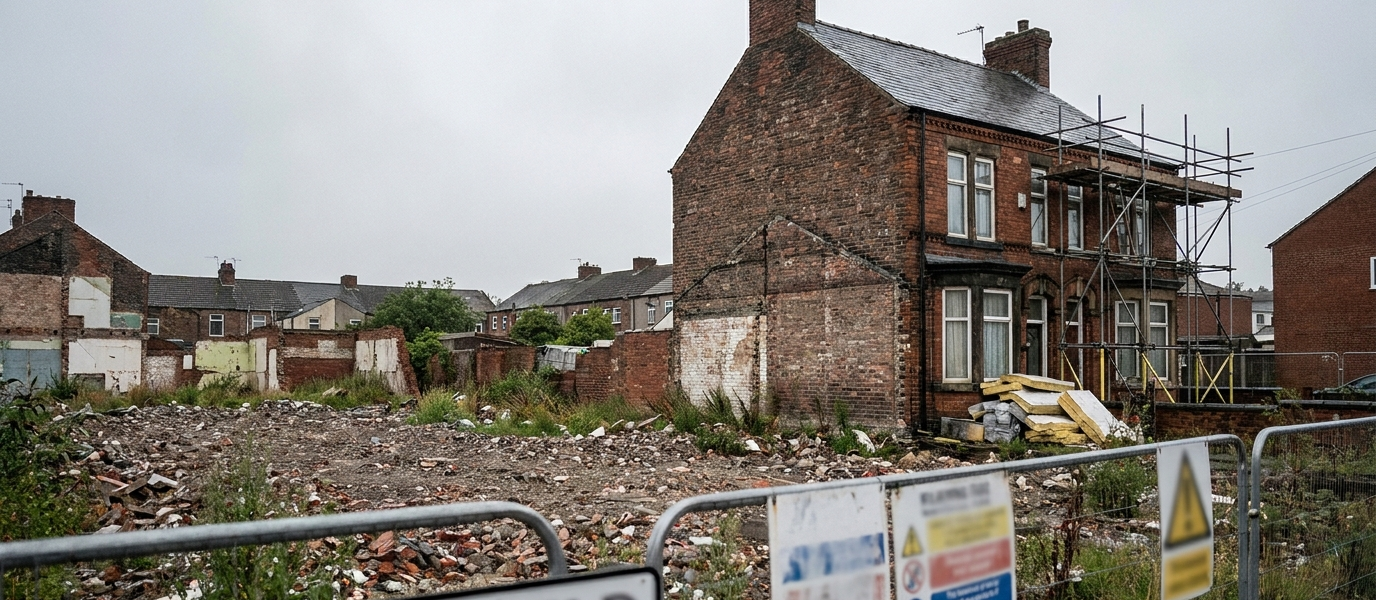
The UK demolishes roughly 50,000 homes a year, enough to fill a small city. Most are structurally sound, but tax rules make it cheaper to knock them down and rebuild than to insulate, draught-proof, and upgrade them. That is the central charge from campaigners this week, as reported by Materials Recycling World. For the 19 million owner-occupiers in England and Wales, the message is stark: the system is rigged against doing the right thing.
What the tax gap costs a typical household
Glazing is standard-rated for VAT at 20%. The zero rate for energy-saving materials covers insulation, heat pumps and solar panels; HMRC names secondary and double glazing as excluded (VAT Notice 708/6). Retrofit work, cavity wall insulation, double glazing, a heat pump, is charged at 20% unless you qualify for the reduced 5% rate on energy-saving materials, which only applies to installations in social housing or certain approved schemes. The result: a £10,000 retrofit job costs the homeowner £12,000, while a developer pays nothing on the same materials. Ofgem estimates the UK needs to retrofit 29 million homes to meet net-zero targets. At current rates, that bill lands squarely on households. Energy Saving Trust figures show a well-insulated 3-bed semi saves about £300 a year on gas, but the upfront tax penalty pushes payback periods past a decade for many families.
Demolition’s hidden carbon debt
The campaigners’ core argument is environmental: demolishing a house and rebuilding emits roughly 50 tonnes of CO2 before anyone moves in, the embodied carbon of concrete, steel, and transport. Retrofitting the same property avoids that upfront debt entirely. Yet the Treasury’s own carbon accounting treats demolition and rebuild as a clean slate. “The carbon cost of demolition is invisible in policy,” said one architect quoted in the report. The catch is that retrofitting a 1960s semi with solid walls, single glazing, and no cavity can cost £25,000-£40,000, more than many households can borrow. Without a grant or tax break, the rational financial choice for a developer is to demolish. For the homeowner, it is to do nothing.
Who qualifies, and who doesn’t
Glazing is standard-rated for VAT at 20%. The zero rate for energy-saving materials covers insulation, heat pumps and solar panels; HMRC names secondary and double glazing as excluded (VAT Notice 708/6). That excludes many DIY upgrades and small-scale jobs. The Boiler Upgrade Scheme offers £7,500 off a heat pump, but only if you replace a fossil-fuel boiler, not if you combine it with insulation. The Green Homes Grant was scrapped in 2021 after 9% of vouchers were redeemed. Policy gaps like these mean the average EPC rating of English homes has barely budged since 2015. The campaigners want VAT equalisation, 0% on all retrofit work, and a national retrofit strategy that treats upgrades as infrastructure, not consumer spending.
What you can do now
Until the Treasury moves, homeowners have limited options. Check if you qualify for the 5% VAT rate via the Energy Company Obligation (ECO4) scheme, which funds insulation and heating upgrades for low-income households. If you are on a standard tariff, contact your energy supplier about ECO4 eligibility, applications close when funding runs out. For the rest, the cheapest first step is draught-proofing: tape, brushes, and letterbox covers cost under £50 and can cut heat loss by 10%. The bigger wins, cavity wall insulation (£2,000-£3,000), loft insulation (£500-£1,000), a heat pump (£7,500 after grant), will become viable only when the tax system stops punishing them. Write to your MP. The next budget is the moment to demand change.
Frequently Asked Questions
Retrofitting a 1960s semi-detached house with solid walls, single glazing, and no cavity typically costs between £25,000 and £40,000 in the UK. This includes insulation, draught-proofing, and heating upgrades, but the upfront tax penalty adds 20% VAT unless you qualify for the reduced 5% rate on energy-saving materials.
In the UK, retrofit work like cavity wall insulation, double glazing, and heat pumps is charged at 20% VAT for most homeowners. A reduced 5% rate applies to energy-saving materials, but only for installations in social housing or certain approved schemes, and the work must be part of a single contract with a VAT-registered installer.
Demolishing a house and rebuilding emits roughly 50 tonnes of CO2 before anyone moves in, due to the embodied carbon of concrete, steel, and transport. Retrofitting the same property avoids this upfront carbon debt entirely. That makes it a much greener option for UK homes.
The Energy Company Obligation (ECO4) scheme funds insulation and heating upgrades for low-income households in the UK, and the Boiler Upgrade Scheme offers £7,500 off a heat pump if you replace a fossil-fuel boiler. However, the Green Homes Grant was scrapped in 2021 after only 9% of vouchers were redeemed, leaving limited options for most homeowners.
A £10,000 retrofit job costs the homeowner £12,000, but a developer pays nothing on the same materials, creating a tax gap that discourages upgrades despite environmental benefits.




