Why Arbroath Homeowners Are Finally Taking Double Glazing Seriously
There’s a moment every winter in Arbroath when you truly understand why your heating bill is what it is. The North Sea wind pushes in from the east, temperatures drop well below what they do further south, and single-glazed or ageing double-glazed windows become the most obvious weak point in your home. If you’re sitting in a terraced house off Millgate Loan or a semi-detached on the Keptie Road side of town, you’ll know exactly what that feels like.
Arbroath sits in a part of Scotland where heating demand runs 20 to 30 per cent above the national average. With most homes sitting at EPC Band D and gas usage averaging 13,500 kWh per year, noticeably higher than the UK median of around 12,000 kWh, the financial case for upgrading windows has never been stronger. Energy prices haven’t returned to the comfortable levels we once took for granted, and for a town of 24,000 people where working family budgets genuinely matter, reducing what leaks out through old glazing makes real sense.
There’s also a generational factor at play. A large proportion of Arbroath’s housing stock dates from the Victorian and Edwardian eras, as well as the post-war council-build period. Many of those homes still have their original frames, or early double glazing fitted in the 1990s that’s now well past its effective lifespan. Seals fail, frames warp, and what once felt like an upgrade now performs little better than single glazing.
What Double Glazing Actually Involves When Your Home Is in Arbroath
For a typical semi-detached or terraced property in Arbroath, double glazing isn’t a complicated concept, but the installation reality has a few wrinkles worth knowing about before you get quotes.
Victorian terraces, particularly those in the older parts of town near the harbour and the High Street conservation area, often have non-standard window openings. Frames aren’t always perfectly square after 120-plus years of settlement, which means bespoke sizing is sometimes needed rather than off-the-shelf units. This adds cost and time.
Post-war semi-detacheds, common on estates like Warddykes and Westway, tend to have more standard openings, which makes installation faster and cheaper. However, these homes often feature large picture windows at the front, and getting the right energy performance rating in a larger pane requires upgraded glass specification rather than the cheapest option available.
A few practical things to expect during installation in Arbroath specifically
- Most quality installers are based in Dundee (26km away) or occasionally St Andrews (28km away), very few operate exclusively from Arbroath itself, so factor in travel time when scheduling and note that some charge a small call-out addition
- Parking for installation vans on the narrower terraced streets near the town centre can be tight, so flagging this to your installer before they arrive avoids unnecessary delays
- Older stone-built properties may need a lintel inspection before new frames are fitted, a reputable installer will check this as standard
- If your home has cavity walls from the 1960s or 70s, combining your window upgrade with cavity wall insulation (where applicable) maximises the thermal benefit considerably
Installation typically takes one to two days for a full house of windows on a standard Arbroath semi-detached, or half a day to a full day for a front-only replacement. Disruption is real but short-lived, and most good installers will sheet the floor and clean up thoroughly.
How Much Double Glazing Costs in Arbroath and Across the Angus Area in 2026
Let’s get straight to the numbers, because vague “from £X” figures aren’t helpful when you’re trying to plan a budget. The table below reflects realistic installed costs for Arbroath homes in 2026, including materials, labour, removal of old frames, and disposal.
| Property Type | Number of Windows | Standard uPVC Double Glazing | Premium uPVC or Composite | Timber-Effect uPVC (Conservation Areas) |
|---|---|---|---|---|
| Small terraced (2-bed) | 5–7 windows | £2,800 – £4,200 | £4,200 – £5,800 | £5,200 – £7,000 |
| Mid terraced (3-bed) | 7–9 windows | £3,800 – £5,500 | £5,500 – £7,500 | £6,500 – £9,000 |
| Semi-detached (3-bed) | 8–10 windows | £4,200 – £6,000 | £6,000 – £8,500 | £7,200 – £10,500 |
| Semi-detached (4-bed) | 10–13 windows | £5,500 – £7,800 | £7,800 – £11,000 | £9,000 – £13,500 |
| Front elevation only (terraced) | 3–4 windows | £1,400 – £2,200 | £2,200 – £3,200 | £2,800 – £4,000 |
Compared to the Scotland-wide average, Arbroath sits roughly in line, but you may see quotes slightly higher than Dundee city prices simply because installers factor in travel time from their Dundee or Forfar depots. Don’t be surprised if the same specification comes in £200 to £400 more than a comparable Dundee quote. That’s not price gouging, it’s genuine logistics.
Triple glazing is available and worth considering for Arbroath homes given the climate, but expect costs around 25 to 40 per cent above double glazing equivalents. More on whether it’s worth it in the products section below.
How Arbroath’s Weather and Coastal Position Should Shape Your Glazing Choices
Arbroath is genuinely one of the more demanding thermal environments for a home in mainland Britain. With over 2,200 heating degree days per year, your windows work hard for seven to eight months of the year, not just December and January.
The town sits directly on the Angus coast, and while it’s not quite as dramatically exposed as some parts of Caithness or Orkney, easterly winds off the North Sea are a real and regular factor. That means window seals, gaskets, and frames face more stress from wind pressure than an equivalent home in Edinburgh or Glasgow. Cheap uPVC frames with thin wall sections simply don’t hold up as well over time under those conditions.
Here’s what the local climate specifically means for your choices
- Wind resistance, prioritise windows with reinforced inner chambers in the uPVC profile, and multi-point locking systems that pull the sash tightly against the frame
- Condensation risk, Arbroath’s relatively high coastal humidity means warm edge spacer bars (as opposed to traditional aluminium spacers) are genuinely worth the additional cost, as they significantly reduce internal condensation forming at the glass edge
- Low U-values matter more here, where a U-value of 1.4 W/m²K might be acceptable in the Midlands, Arbroath homes benefit noticeably from pushing for 1.0 to 1.2 W/m²K or lower
- Solar gain is limited but real, with only 700 to 900 sunshine hours per year, don’t over-specify solar-control glass on north or east-facing elevations, as you’ll lose useful passive heat rather than reducing overheating (which is rarely a problem here)
Rainfall is moderate at 700 to 1,000mm per year, not exceptional, but driving rain from the east means window cills and external drainage channels must be correctly fitted and sealed. Poor installation in this respect leads to water ingress around the frame, which is one of the most common complaints after cheap installations in east-coast Scottish towns.
The Products and Specifications That Actually Perform Well in Arbroath Homes
Given everything above, here’s what an honest, knowledgeable recommendation looks like for a typical Arbroath property in 2026, not a generic brochure spec, but what genuinely suits the conditions.
uPVC Frames, The Right Grade for This Climate
Standard multi-chamber uPVC from a reputable system (Rehau, Veka, and Deceuninck all manufacture well for Scottish conditions) provides excellent value. Insist on a minimum five-chamber profile, this is better than three-chamber profiles at resisting cold bridging and frame flex in wind. Steel reinforcement within the frame is non-negotiable for anything wider than 600mm.
Glass Units, Argon-Filled as Standard, Krypton if Budget Allows
Argon-filled double-glazed units with a Low-E coating should be the absolute baseline. A good argon unit from a quality manufacturer will achieve a centre-pane U-value of around 1.0 to 1.1 W/m²K. If your budget stretches, krypton-filled units push this closer to 0.7 W/m²K without needing to go to triple glazing.
Triple Glazing, Worth It in Arbroath, Unlike Many Milder Areas
Triple glazing is sometimes dismissed as overkill in England, but for a home in Arbroath facing east or north, the additional investment genuinely pays back. A quality triple-glazed unit achieving a U-value of 0.6 to 0.8 W/m²K will noticeably reduce draughts and cold radiation from window surfaces, something you’ll appreciate on a February evening when the wind is coming in off the sea. Budget around 30 to 35 per cent more than equivalent double glazing.
Warm Edge Spacer Bars
These replace the traditional aluminium spacer between the panes with a thermally broken alternative (SuperSpacer and TGI are well-regarded brands). They’re not glamorous but they make a measurable difference in preventing condensation on the inner pane edge, which is particularly relevant given Arbroath’s humidity levels.
Frame Colours for Stone-Built Properties
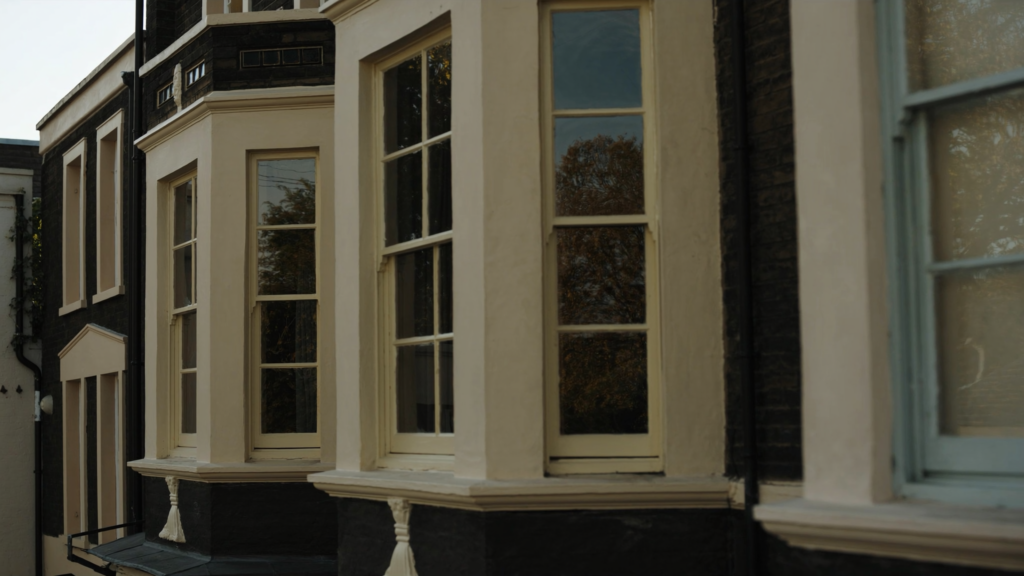
Many of Arbroath’s stone-built Victorian terraces look much better with cream or light grey frames rather than stark white uPVC. Foiled uPVC in these tones is marginally more expensive but doesn’t need painting, never fades significantly, and sits far more sympathetically against sandstone or rubble-stone walls.
How to Find a Trustworthy Double Glazing Installer When You’re Based in Arbroath
This is where local knowledge really matters. Arbroath doesn’t have a large pool of dedicated glazing installers operating solely within the town. Most reputable companies serving this postcode are based in Dundee, with some covering the full Angus corridor including Forfar, Montrose, and Brechin as well as Arbroath.
That’s not a problem, it just means you need to ask the right questions when getting quotes.
Certifications to Look For
- FENSA or CERTASS registration, this is the key one for windows. Registered installers self-certify compliance with Building Regulations (Scotland Section 6) without you needing a separate local authority inspection. If an installer isn’t FENSA or CERTASS registered, alarm bells should ring
- TrustMark registration, a good additional indicator of a quality-assessed business
- Which? Trusted Traders, useful for smaller, locally-based companies who may not be nationally listed but have passed independent vetting
Questions Worth Asking Before You Sign Anything
- Are you FENSA or CERTASS registered and will you provide a certificate on completion
- Who manufactures the frames and glass units, and can you provide the technical data sheet showing the U-value
- What is your guarantee on the sealed unit against failure, and is it backed by an insurance-backed guarantee rather than just the company’s own word
- How do you handle installation on older stone properties where frames may not be perfectly square
- Do you have any recent references from Arbroath or nearby Angus towns
Red Flags to Avoid
- High-pressure same-day decision tactics, walk away immediately
- Quotes that seem dramatically lower than others without a clear explanation
- No physical business address, or an address that turns out to be a virtual office
- Promises of U-values that seem implausibly low without providing the glass specification
Typical lead times from Dundee-based installers covering Arbroath currently run at four to eight weeks from survey to installation, which is reasonable. Get at least three quotes, not because you should automatically go with the cheapest, but because the spread of prices will tell you a lot about who’s being realistic.
Grants and Funding Available to Arbroath Residents in 2026
Scotland’s energy efficiency funding landscape is genuinely more generous than in England, and Arbroath homeowners should know exactly what’s available before spending a penny of their own money.
Home Energy Scotland Loan
This is the standout option for most Arbroath homeowners. Home Energy Scotland (administered by Energy Saving Trust on behalf of the Scottish Government) offers interest-free loans of up to £15,000 for energy efficiency improvements including double and triple glazing. You repay what you borrow, nothing more. There’s also a cashback element available for certain measures. Applications are made directly through Home Energy Scotland and the process is straightforward. This is not means-tested, so eligibility is broad.
Warmer Homes Scotland
If you’re on a low income, receive certain benefits, or are a private tenant meeting specific criteria, Warmer Homes Scotland may cover the full cost of glazing improvements with no repayment required. Angus Council works alongside this programme for eligible households. It’s worth a call to Home Energy Scotland even if you’re not sure whether you qualify, the eligibility criteria have been broadened in recent years.
ECO4 (Energy Company Obligation)
ECO4 applies in Scotland as well as England and Wales. Large energy suppliers are obligated to fund energy efficiency improvements for lower-income households. Glazing on its own is rarely funded through ECO4, but it can be included as part of a broader package of measures. If your home is EPC Band D or below (which most Arbroath homes are) and you’re on qualifying benefits, it’s worth checking with your energy supplier directly.
Great British Insulation Scheme (GBIS)
GBIS focuses primarily on insulation measures, but windows