Why Cambridge Homeowners Are Looking at Double Glazing Right Now
Cambridge is in an interesting position in 2026. With an average EPC rating of Band C, most homes here are already ahead of the national average, and yet double glazing enquiries are rising steadily across areas like Arbury, Romsey, and the newer estates out towards Trumpington and Cambourne. Why? Because “good enough” isn’t the same as “great,” and Cambridge homeowners tend to know the difference.
This is a city with one of the most tech-savvy, energy-conscious populations in the UK. With Cambridge City Council running active retrofit programmes and the University of Cambridge’s sustainability agenda rippling out into the wider community, there’s a culture here of taking home efficiency seriously. Residents aren’t just replacing old windows because they’re draughty, they’re doing it as part of a broader push to get from Band C to Band B (or even Band A).
There’s also a very practical driver. Those cold easterly winds that funnel across the fens in January and February are a Cambridge institution. Unlike cities protected by hills or urban mass, Cambridge sits open to the east, and a single-glazed Victorian bay window or an original 1960s sash will remind you of that every winter morning. Modern double glazing addresses exactly that, not by dramatically cutting your gas bill (Cambridge’s usage of 10,500 kWh per year is already close to the national median), but by lifting comfort levels meaningfully.
What Double Glazing Actually Involves for a Typical Cambridge Home
Most Cambridge homes fall into two broad categories, terraced Victorian and Edwardian properties in areas like Mill Road, Petersfield, and Romsey, and semi-detached homes from the 1930s through to the 1980s on estates across Arbury, Kings Hedges, Cherry Hinton, and Trumpington. Each comes with its own quirks for double glazing installation.
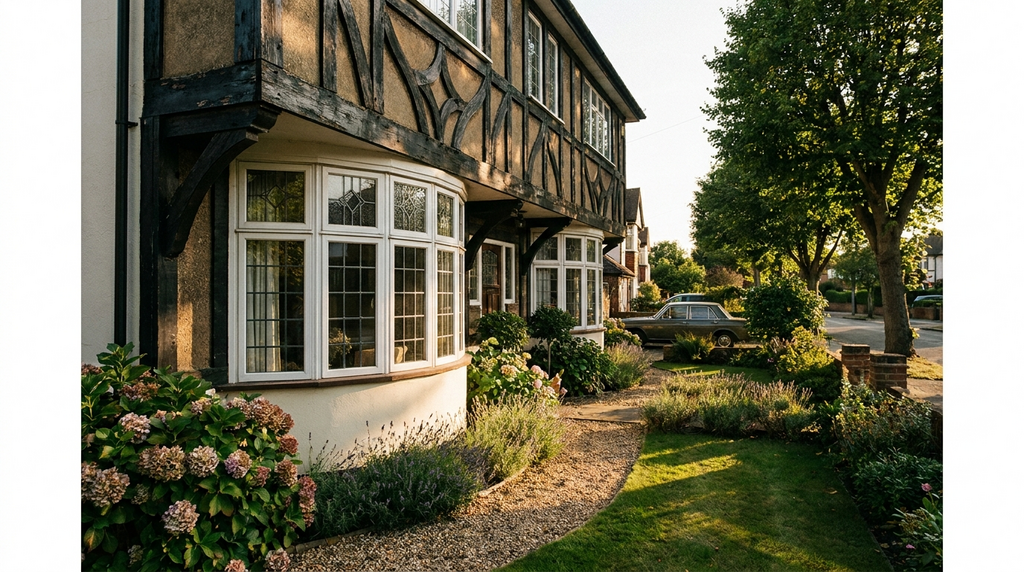
Victorian and Edwardian terraces, typically built between 1880 and 1914, often have larger sash windows with ornate architraves and timber frames that require more care during removal. Brick reveals tend to be on the narrower side, which can limit frame depth. If your home is on a tight terraced street near the city centre, access for installers can be genuinely tricky, think narrow ginnels, no front garden, and street parking restrictions that complicate material delivery.
1930s semis, which are extremely common across north Cambridge, usually have casement windows with larger opening panes and wider reveals. These are generally straightforward to replace, but many were built with non-standard sizes, meaning off-the-shelf units won’t fit and bespoke manufacture is needed. That adds a few hundred pounds to the job and extends lead times.
Post-war council-era properties, common in the Kings Hedges area in particular, often have concrete or steel lintels above window openings, and some have original steel-framed windows. Replacing these is perfectly achievable but requires specialist knowledge of the surrounding structure.
Key practical considerations for Cambridge homes include
- Parking permits and resident zone restrictions around central streets, some installers will charge a logistics fee
- Narrower Victorian window openings that may require custom-sized units
- Party walls in terraces that can complicate scaffold access
- Conservation area restrictions across large parts of central Cambridge (more on that in the planning section)
- Older timber lintels in pre-war properties that may need assessment before new frames are fitted
How Much Double Glazing Costs in Cambridge and the East of England Area in 2026
Cambridge sits in a sweet spot for installation costs, lower than London and the South East, but slightly above the rural East of England average due to higher labour costs and the access challenges discussed above. Nearby towns like Royston, Ely, and Newmarket tend to come in 5–10% cheaper simply because access is easier and parking is free. Saffron Walden, which shares some of Cambridge’s conservation area characteristics, is comparable in price.
| Property Type and Scope | Cambridge Cost Estimate | East of England Average | National Average |
|---|---|---|---|
| 2-bed terraced, full house (5–6 windows) | £3,800 – £5,200 | £3,400 – £4,800 | £3,200 – £4,600 |
| 3-bed semi-detached, full house (7–9 windows) | £5,200 – £7,500 | £4,800 – £7,000 | £4,500 – £6,800 |
| 4-bed detached, full house (10–12 windows) | £7,000 – £10,500 | £6,500 – £9,800 | £6,200 – £9,500 |
| Single window replacement (standard casement) | £500 – £850 | £450 – £750 | £400 – £700 |
| Bay window replacement (3-section) | £1,800 – £2,800 | £1,600 – £2,500 | £1,500 – £2,400 |
| Sash window replacement (per window, box sash) | £900 – £1,600 | £850 – £1,400 | £800 – £1,300 |
| Triple glazing upgrade (per window, vs double) | +£150 – £300 | +£140 – £280 | +£130 – £260 |
These figures assume uPVC frames, standard installation, and no structural surprises. Add £200–£600 to any project involving conservation-approved frames (such as slim aluminium or timber-effect uPVC), and budget a contingency of around 10% for older Cambridge terraces where surprises behind the plaster are not uncommon.
Most Cambridge installers serving the city also cover Newmarket, Ely, Royston, and Saffron Walden. If you’re happy with a company based in one of those towns, you’ll often find they’re very competitive on price, just confirm their FENSA registration is current before you commit.
How Cambridge’s Weather and Location Shape Your Double Glazing Choices
Cambridge’s climate is genuinely distinctive within the UK, and it matters more than people realise when choosing glazing specifications. You’re in one of the driest, sunniest parts of England, 1,200 to 1,500 sunshine hours per year, with solar irradiance of around 1,100 to 1,200 kWh per square metre annually. That’s excellent news for south-facing windows, but it also means solar gain through glazing is a real consideration in summer.
Standard clear double glazing on a south-facing room in Cherry Hinton or Trumpington can turn a bright afternoon into an uncomfortably hot one. Look at units with a solar control coating (often called a “warm edge” or low-g coating) for south and west-facing elevations. This reduces heat gain without meaningfully affecting winter performance.
The easterly wind factor is where Cambridge stands apart from many UK towns. Cold continental air streams across flat Fenland terrain with very little to slow it down. This makes draught sealing around frames just as important as the glass specification itself. When getting quotes, ask specifically about brush pile seals, compression gaskets, and how the frame will be fixed and sealed into the reveal. A well-sealed A-rated unit beats a poorly-fitted A++ unit every time.
Rainfall here is low (500–700mm per year), which is actually an advantage. Frames and seals last longer without the constant wet-dry cycling that affects western UK properties. uPVC holds up particularly well in these drier conditions. That makes it a sound long-term choice for Cambridge homes.
The Products and Options That Genuinely Perform Well Here
Given Cambridge’s climate and housing stock, here’s honest guidance on what’s worth paying for and what’s less essential.
For Victorian and Edwardian terraces in Romsey, Mill Road, and Petersfield
- Timber-effect uPVC sash windows with a W-rated energy performance or above, they look period-appropriate and satisfy most (but not all) conservation guidelines
- Argon-filled double glazing with a low-e coating as a minimum specification, standard air-fill units are a false economy
- Warm edge spacer bars rather than the older aluminium spacer, reduces cold bridging at the glass edge and condensation risk noticeably
For 1930s–1960s semis in Arbury, Kings Hedges, and Cherry Hinton
- uPVC casement windows in standard white or woodgrain finish, reliable, low maintenance, and well-suited to these wider openings
- Consider A++ rated units if you’re planning to improve your EPC from Band C to Band B, the incremental cost is modest and the long-term saving is real
- On south and west elevations, specify a solar control low-e glass to prevent overheating
Is triple glazing worth it in Cambridge?
Triple glazing is worth considering if your heating bills are a concern or if you’re near a busy road (the Newmarket Road corridor, Hills Road, or Huntingdon Road, for example). The sound reduction benefit is meaningful. However, given Cambridge’s relatively mild winters (1,200–1,500 heating degree days, lower than, say, Edinburgh or Manchester), the energy payback on triple glazing versus quality double glazing is long. It’s a comfort and noise upgrade more than a pure energy play here.
Frame materials worth considering
- uPVC, best value, lowest maintenance, works well in Cambridge’s drier climate
- Aluminium, slim sightlines, ideal for conservation area homes where permitted, more expensive but longer-lasting
- Timber, beautiful but requires ongoing maintenance; worth it in a listed building or strict conservation area where uPVC is not permitted
How to Find a Trustworthy Double Glazing Installer Near Cambridge
FENSA registration is the non-negotiable starting point. Any company replacing windows in Cambridge must either be FENSA-registered or arrange a separate building regulations inspection, and the latter adds cost and hassle. Ask for the installer’s FENSA number before you agree to anything, and verify it on the FENSA website. This is a two-minute check that eliminates a huge proportion of risky operators.
Beyond FENSA, look for
- TrustMark registration, government-endorsed quality scheme, particularly important if you’re applying for grant funding
- CERTASS membership, an alternative to FENSA, equally valid, used by many East of England independents
- Which? Trusted Trader or Checkatrade presence, with verified local reviews from Cambridge and surrounding towns
- Public liability insurance of at least £2 million, ask to see the certificate
Red flags to watch for include pushy same-day sales tactics, “today only” pricing, and quotes that don’t specify the glass unit U-value or energy rating in writing. Any reputable installer should be happy to provide a written specification before you sign.
Lead times across Cambridgeshire in 2026 are typically 4–8 weeks from survey to installation for standard orders. Custom or conservation-approved units can run to 10–12 weeks. If an installer is promising delivery in under two weeks for a full house, that’s worth querying, it may mean they’re fitting stock units that weren’t made to measure.
Many of the best local companies operate across the Cambridge-Ely-Newmarket-Royston cluster and have strong knowledge of conservation area requirements specific to Cambridge City Council. That local experience is genuinely valuable, they’ll know which frame profiles are pre-approved and which require a formal application.
Grants and Funding That Could Reduce Your Costs in 2026
The honest picture for double glazing grants in 2026 is nuanced. Standalone double glazing, replacing single with double, qualifies for support under certain schemes, but the eligibility criteria are specific.
ECO4 (Energy Company Obligation, Phase 4)
If your home is currently EPC Band D or below, and you receive qualifying benefits (Universal Credit, Pension Credit, Child Tax Credit, or similar), ECO4 can fund double glazing installation as part of a whole-house retrofit package. Single windows in isolation are less likely to be approved, the scheme favours whole-house measures. Cambridge City Council works with local energy charities to help residents navigate ECO4 applications. Contact the council’s housing team or Citizens Advice Cambridge as a starting point.
Given Cambridge’s average Band C rating, many properties will fall just outside the automatic eligibility threshold. However, properties in Band D or below, or those in lower council tax bands, may still qualify. Check your current EPC rating on the national EPC register before assuming you’re ineligible.
Cambridge City Council Local Schemes
Cambridge City Council and South Cambridgeshire District Council (for homes in the surrounding area) have both run local retrofit grant programmes in recent years. These tend to focus on lower-income households and private rented sector properties. Watch the council’s website for updated rounds, funding is released in tranches and can move quickly.
Warm Homes Local Grant
The national Warm Homes Local Grant, administered through local authorities, provides funding for energy efficiency measures including glazing for households below a certain income threshold. Cambridgeshire County Council coordinates this programme locally. Eligibility is income and property-rating based, if your household income is below £36,000 and your EPC is Band D or lower, this is worth pursuing.
Important note on grants, always use a TrustMark-registered installer when applying for any grant scheme. Non-registered companies’ work is typically ineligible, and you won’t find out until after the installation is complete.
Planning Permission and Cambridge’s Conservation Area Rules
For most Cambridge homes, replacing like-for-like windows with double glazing falls under permitted development rights and does not require planning permission. But Cambridge has more conservation areas than most UK cities of comparable size, and the rules inside those areas are meaningfully different.
Cambridge City Council has designated large parts of the city centre and inner suburbs as conservation areas. This includes significant stretches of Mill Road, Newnham, the Kite, parts of Romsey, and much of the Edwardian expansion around Hills Road and Cherry Hinton Road. If your home falls within a conservation area, you must ensure any replacement windows maintain the original character of the building, which in practice means the style, material, and profile of the frame must be sympathetic to the original.
This does not automatically mean uPVC is banned. Cambridge City Council’s conservation guidance permits slim-profile uPVC in certain circumstances, particularly where the original windows were already non-original. However, in properties where timber sash windows are considered a defining architectural feature, you may be required to use timber