Why Colwyn Bay Homeowners Are Turning to Double Glazing Right Now
There’s something about standing in a Colwyn Bay living room on a January evening, with the wind coming off the Irish Sea and rain hammering the windows, that makes you think seriously about your glazing. If you’ve got older single-glazed or tired double-glazed windows, that draught is uncomfortable and means money disappearing through the glass.
Colwyn Bay sits in a fascinating position. You’ve got Victorian and Edwardian terraces running through the older parts of town, post-war semis filling out areas like Rhos-on-Sea and Old Colwyn, and a steady stream of homeowners who are realising their EPC Band D rating isn’t going to improve itself. With Welsh Government energy efficiency targets becoming more ambitious by the year, and the Senedd pushing hard on fuel poverty reduction, the timing for upgrading your glazing has rarely been better.
Energy bills have reshaped how Colwyn Bay residents think about their homes. With average gas usage sitting at around 12,000 kWh per year, right on the UK median, there’s meaningful room to cut costs with the right upgrades. Double glazing isn’t a silver bullet, but as a starting point for a warmer, quieter, more efficient home, it’s one of the most impactful changes you can make.
What Double Glazing Actually Involves for a Typical Colwyn Bay Home
Most Colwyn Bay homes fall into two camps, Victorian and Edwardian terraces built between roughly 1880 and 1914, and post-war semis from the 1950s through to the 1980s. Each presents its own quirks for fitting new glazing.
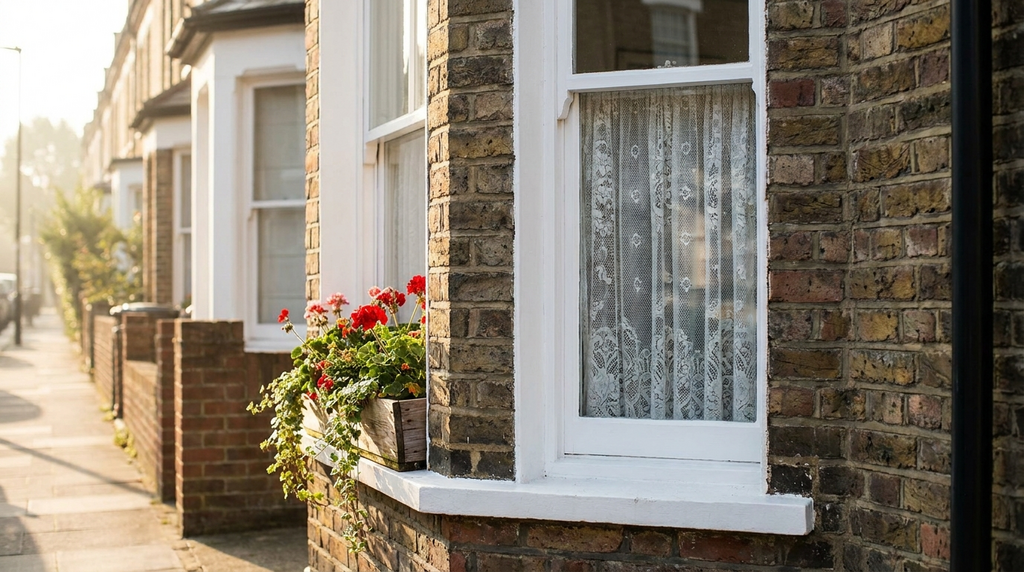
The older terraced properties you find around the town centre and along roads like Rhiw Road and Princes Drive often have non-standard window openings. Victorian builders weren’t working to modern measurements, which means off-the-shelf frames rarely drop straight in. Your installer will need to measure carefully and, in many cases, manufacture frames to order. This adds time and occasionally cost, but it’s completely manageable.
Post-war semis, especially those built through the 1960s and 70s, tend to have large picture windows at the front and smaller sash-style openings elsewhere. These are generally easier to fit, but the sheer size of some front windows means weight and structural support need checking. A good installer will assess the lintel above the opening before committing to a specification.
Access and Parking Realities
This is something that doesn’t get mentioned enough. Many of the terraced streets in central Colwyn Bay have limited parking and narrow frontages. Getting a delivery van close enough to carry frames safely can be genuinely tricky, especially on steeper streets closer to the hillside. Some properties in Old Colwyn sit on gradients that make scaffolding access for upper-floor windows a more complex operation than in, say, a flat suburban street in Llandudno.
Party walls are another consideration for terraced homes. Any work that affects a shared wall, even just drilling fixings nearby, may technically engage the Party Wall Act. Most double glazing work doesn’t trigger this, but it’s worth a quick conversation with your installer if your window openings sit very close to the shared wall.
How Much Double Glazing Costs in Colwyn Bay and the Wider Wales Area in 2026
Let’s get into the numbers. Prices across North Wales are broadly in line with the national average, though there are some factors that push costs slightly higher in Colwyn Bay compared to larger urban centres, limited local competition, delivery distances from major fabrication hubs in the Midlands and North West England, and the access issues mentioned above.
| Window Type and Scenario | Colwyn Bay Estimate | Wales Average | UK National Average |
|---|---|---|---|
| Single casement window (standard size) | £450 – £650 | £420 – £620 | £400 – £600 |
| Full terraced house (6–8 windows) | £3,200 – £5,500 | £3,000 – £5,200 | £2,800 – £5,000 |
| Semi-detached house (8–10 windows) | £4,200 – £7,000 | £4,000 – £6,600 | £3,800 – £6,400 |
| Bay window (Victorian style) | £1,400 – £2,200 | £1,300 – £2,100 | £1,200 – £2,000 |
| Sash window replacement (per window) | £900 – £1,600 | £850 – £1,500 | £800 – £1,400 |
| Triple glazing upgrade (per window) | £700 – £1,100 | £650 – £1,050 | £620 – £1,000 |
These figures include supply, fitting, and removal of old frames. VAT is included at the standard rate for supply-and-fit installations. Always get at least three quotes, prices can vary by 20–30% between installers serving the Colwyn Bay area, partly because some are based locally around the A55 corridor while others travel from Llandudno, Rhyl, or even further afield.
Insider tip, Installers who regularly work the Colwyn Bay to Bangor stretch of coast tend to be well-versed in coastal property challenges. They’re often worth paying a small premium over a firm that mostly works inland.
How Colwyn Bay’s Weather and Location Shape Your Double Glazing Choices
This is where living on the North Wales coast really matters. Colwyn Bay faces the prevailing south-westerly winds that sweep across Conwy Bay, and the town receives between 1,100mm and 1,400mm of rainfall annually. That’s significantly wetter than most English towns at a comparable latitude, and it has real implications for what you should be buying.
Driving rain is the key factor. When water is being pushed horizontally against your windows under pressure, which happens regularly between October and March here, you need frames with excellent weather sealing. Cheaper PVCu frames can develop micro-gaps in their gaskets after a few years, especially if they’re not properly installed. On a calm day this doesn’t matter. On a blustery January night in Rhos-on-Sea with gusts hitting 50mph, it matters a great deal.
Salt Air and Coastal Degradation
Homes within about 800 metres of the seafront, which includes a good chunk of the Bay area between Rhos-on-Sea and Old Colwyn, experience measurable salt air exposure. This accelerates corrosion on any metal components. For double glazing, this means specifying marine-grade or stainless steel hardware for hinges, handles, and locking mechanisms rather than standard zinc alloy fittings. The difference in cost is modest (roughly £15–£30 per window) but the difference in lifespan is significant. A decent installer serving this coastline will flag this without being asked.
Wind Load Ratings
Windows are tested to British Standards for wind resistance. For most UK inland locations, a Class 3 or Class 4 rating is perfectly adequate. For properties on the exposed western and northern flanks of Colwyn Bay, particularly anything overlooking the promenade or sitting on higher ground toward Bryn Euryn, specifying Class 4 or even Class E windows gives you meaningful extra protection against frame distortion and seal failure during storms.
The Products and Options That Actually Perform Well Here
Given the climate, here’s an honest expert view on what works best for Colwyn Bay homes rather than a generic list of everything that exists.
- PVCu frames with a 70mm or wider profile, The wider the profile, the better the thermal performance and the more space for solid weather sealing. For most Colwyn Bay homes, a 70mm PVCu system hits the sweet spot between cost and performance. White remains the most common choice but woodgrain foil finishes are popular on older terraces where plain white looks incongruous.
- Warm-edge spacer bars, Standard aluminium spacer bars conduct heat out of your window around the edges. Warm-edge alternatives (often polymer or stainless hybrid materials) reduce this thermal bridging. In a coastal climate with significant temperature differentials, warm-edge spacers reduce condensation risk noticeably and improve the frame’s U-value.
- Argon-filled units with low-E glass, Argon gas between the panes reduces heat transfer. Combined with a low-emissivity coating on the inner pane, you’re looking at a centre-pane U-value of around 1.0–1.1 W/m²K, which comfortably meets current Welsh building regulations requiring 1.4 W/m²K or better for replacement windows.
- Triple glazing for front-facing windows, If your property faces directly toward the sea or sits on a main route with traffic noise (the A55 corridor properties are a good example), triple glazing earns its premium. It adds roughly 30–40% to the cost of a standard unit but reduces heat loss further and offers noticeably better acoustic performance.
- Tilt-and-turn opening mechanisms, These are especially practical for upper-floor windows in terraced properties where you can’t easily clean the outside from a ladder. They let you clean both panes from inside, genuinely useful when you’re getting persistent West Coast rain leaving residue on the glass.
Finding a Trustworthy Double Glazing Installer Near Colwyn Bay
The good news is that the A55 corridor through North Wales means installers based in Llandudno, Colwyn Bay, Rhyl, and Prestatyn can all realistically serve your area within a reasonable call-out. The bad news is that this also means you might get quotes from firms with very different standards.
Certifications That Actually Matter
- FENSA registered, This is the one you genuinely need. FENSA registration means the installer self-certifies compliance with Welsh building regulations, handles the paperwork, and provides a certificate you’ll need when you sell your home. Without FENSA certification, you’d need a local authority building notice instead, adding bureaucracy and delay.
- TrustMark accredited, Government-endorsed quality scheme. Not mandatory but a strong indicator of a firm that has been independently audited.
- CERTASS registered, An alternative to FENSA, equally valid, less well-known, but perfectly acceptable.
- Which? Trusted Trader, Worth checking the Which? directory for Colwyn Bay area firms with verified reviews.
Questions Worth Asking Before You Sign Anything
- Are you FENSA or CERTASS registered and will you handle the building regulations compliance certificate
- Do you manufacture your own frames or are you a fitting-only company using a third-party fabricator
- What weather and wind load ratings do your standard windows carry
- Do you use marine-grade hardware for coastal properties
- What is your guarantee structure, who backs the guarantee if your company ceases trading
Red flag to watch for, Any installer who gives you a quote on the doorstep within 20 minutes of arriving and applies heavy pressure to sign the same day. Reputable installers measure carefully, go away to price it properly, and give you a written quote valid for 30 days.
Lead times in the North Wales area currently run at around 4–8 weeks from survey to installation for standard specifications, and up to 12 weeks for bespoke frames in unusual sizes or colours.
Grants and Funding Available to Colwyn Bay Residents in 2026
Colwyn Bay sits within Conwy County Borough Council’s area, and as a Welsh resident you have access to some funding streams that aren’t available in England, which is genuinely worth knowing about.
Warm Homes Nest (Wales-Specific)
This is the headline scheme for eligible Welsh residents. Administered on behalf of the Welsh Government, Nest provides free energy efficiency improvements including glazing upgrades to households who meet the qualifying criteria. To be eligible in 2026 you generally need to be in a property with a poor energy rating (Band E or below) and either be receiving certain means-tested benefits or have a household income below a threshold set by the Welsh Government. Given that much of Colwyn Bay’s housing stock sits at Band D or lower, it’s worth checking eligibility even if you think you might be borderline. Apply through the Nest helpline or via the Welsh Government’s online portal.
ECO4 (GB-Wide)
The Energy Company Obligation scheme requires large energy suppliers to fund improvements for lower-income households. Double glazing can be funded under ECO4 as part of a wider package of measures. Eligibility is based on income, benefits received, and property energy rating. Conwy residents can access this scheme through Nest referrals or directly through their energy supplier.
Great British Insulation Scheme
While GBIS is primarily focused on insulation rather than glazing specifically, it can contribute to overall retrofit costs where glazing is part of a broader improvement package. Worth exploring if you’re planning multiple upgrades simultaneously.
Council Tax Rebates and Conwy CBC Support
Conwy County Borough Council periodically runs additional fuel poverty support programmes in partnership with Welsh Government. These are worth checking directly with the council, as they can vary year to year based on Welsh Government block grant allocations.
Practical advice, Start with a free Nest referral before approaching any commercial installer. If you qualify for free or subsidised work, you want to know that before you’ve signed a contract and paid a deposit.
Planning Permission and Building Regulations in Colwyn Bay
The planning position for most Colwyn Bay homeowners is relatively straightforward, but there are important exceptions.
Under permitted development rights, replacing windows like-for-like in a standard residential property does not require planning permission. You do not need to notify Conwy County Borough Council planning department if you’re simply replacing windows in a non-listed, non-conservation-area home with similar-looking frames.
Conservation Area Considerations
Colwyn Bay has designated conservation areas, including parts of the Victorian town centre. If your property sits within a conservation area, the permitted development rules change. You may need planning permission for window replacements, particularly if you’re altering the style, material, or appearance significantly from the original. Traditional timber sash windows replaced with PVCu, for example, might require consent even in an ordinary conservation area property. Check with Conwy CBC’s planning department before ordering, it’s a free enquiry and takes the uncertainty away.
Listed Buildings
If your home is listed, there are several listed buildings in and around Colwyn Bay, you will need listed building consent for any window replacement, full stop. Standard double glazed units are often not acceptable in listed buildings; your options may include secondary glazing instead, which fits inside the existing frame without altering the exterior appearance.
Building Regulations
Regardless of planning, all replacement windows in Wales must meet current