Why Dorking Homeowners Are Paying Close Attention to Double Glazing Right Now
Dorking sits in a bit of a sweet spot. Tucked beneath the North Downs with Box Hill rising to the east, it’s a town where older housing stock meets high South East property values, and that combination makes home improvements like double glazing genuinely worthwhile in a way that doesn’t always apply in less affluent regions.
There’s also a quiet but real shift happening among Dorking residents right now. The town’s average EPC rating is already Band C, which is above the national average, so many homeowners here aren’t starting from scratch. They’re asking a more nuanced question: how do we go from good to genuinely excellent? Double glazing, especially upgrading older units or replacing single-pane originals, is one of the most direct answers to that question.
The cold easterly winds that sweep across Surrey in winter are a particular concern for Dorking properties. That eastward exposure, especially for homes on the fringes of town near the greensand hills, means draughts and heat loss can be worse than you’d expect for a southern English town. And with energy prices still elevated in 2026, even modest improvements to your glazing can translate to meaningful annual savings.
Finally, Dorking’s strong property market means any upgrade you make is working double duty, lowering your bills while protecting or enhancing your home’s value ahead of a potential sale. Estate agents across the Reigate-to-Guildford corridor consistently report that EPC Band B and above attracts stronger buyer interest. Double glazing is often the bridge to getting there.
What Double Glazing Actually Involves for a Typical Dorking Home
Dorking’s housing stock is fascinatingly varied. The town centre and areas around South Street and Rose Hill include Victorian and Edwardian terraces and semi-detached properties, often built between the 1880s and 1920s. Further out, particularly along the Pixham Lane and Sondes Place area, you’ll find mid-century detached and semi-detached houses from the 1950s to 1970s. Then there are the larger detached properties in areas like Deepdene and around Brockham Road, some of which are significantly older.
Each era presents different practical realities for double glazing installation:
- Victorian and Edwardian homes often have non-standard window openings, slightly irregular shapes, timber frames that have shifted over decades, and sash windows that require specialist replacement units rather than off-the-shelf casement frames
- 1950s–1970s semi-detached homes are typically the most straightforward to upgrade, their frames and openings tend to be more standard, and there’s often no conservation constraint to navigate
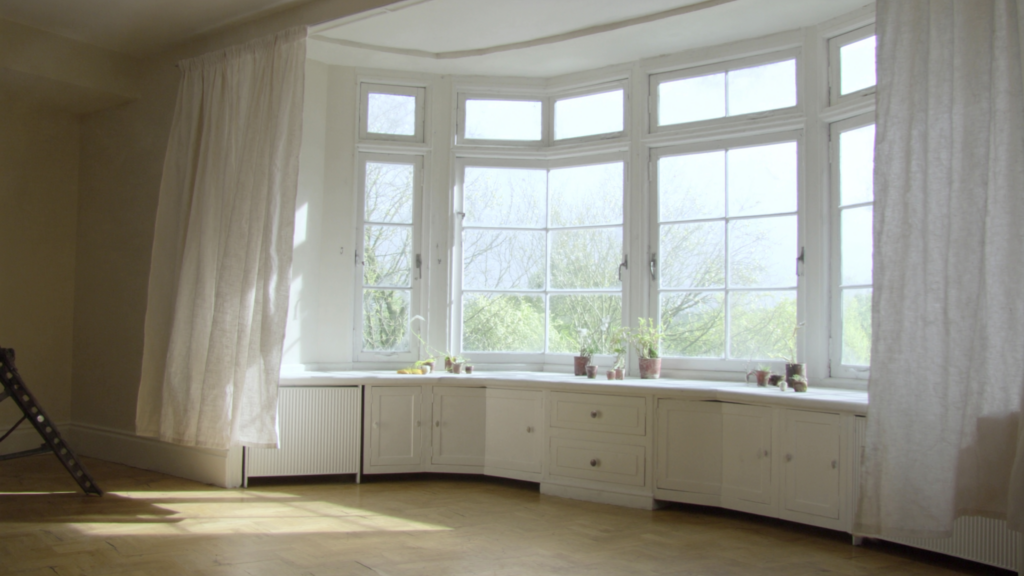
- Larger detached properties, particularly those with bay windows, arched openings, or original timber joinery, need a surveyor visit before you commit to a quote, dimensions vary considerably and bespoke units cost more
The typical installation for a three-bedroom semi-detached home in Dorking involves eight to twelve window units and one or two external doors. A full replacement takes one to two days with a competent crew, and most reputable installers will include removal and disposal of old frames in the quote (do check this, it’s a common upsell in the South East).
One practical challenge specific to Dorking is access. Some of the older streets in the town centre have narrow pavements and restricted parking, which can affect how easily installers move frames in and out. This is worth flagging when you’re getting quotes, it occasionally adds a small premium, particularly for upper-floor work where a small scaffold tower or ladder platform is needed.
How Much Double Glazing Costs in Dorking and the Surrounding Area in 2026
Costs in Dorking sit broadly in line with the wider South East average, though you’ll pay slightly more here than in, say, Crawley or Horsham, partly because of access considerations and partly because Dorking is a smaller town, installers factor in travel and logistics from their bases in Reigate, Guildford, or Epsom.
| Property Type | Number of Windows | Standard uPVC Double Glazing | Premium uPVC or Aluminium | Timber-Effect or Heritage Frames |
|---|---|---|---|---|
| 2-bed terrace or flat | 5–7 windows | £2,800–£4,200 | £4,500–£6,500 | £5,500–£8,000 |
| 3-bed semi-detached | 8–12 windows | £4,500–£6,800 | £7,000–£10,500 | £8,500–£13,000 |
| 4-bed detached | 12–16 windows | £6,500–£9,500 | £10,000–£15,000 | £12,000–£18,000 |
| Adding a door (composite) | Per door | £900–£1,400 | £1,500–£2,500 | £2,000–£3,500 |
These figures include VAT, fitting, removal of old frames, and a standard guarantee. The South East average for a three-bedroom semi sits around £5,500–£7,500 for mid-range uPVC, which makes Dorking broadly comparable. By contrast, the national average outside London and the South East is roughly £4,000–£5,500 for the same job, so yes, you do pay a regional premium here.
One useful tip, installers based in Reigate (9km away) or Epsom (12km away) often cover Dorking as part of their regular run and won’t add a travel surcharge. Guildford-based firms (17km) sometimes do add a modest travel fee for Dorking jobs, so it’s worth checking. Getting at least three quotes, from firms based in different towns, gives you a useful cross-reference.
How Dorking’s Weather and Location Shape the Best Glazing Choices
Dorking’s climate is kinder than much of the UK, milder winters, relatively low rainfall (500–700mm per year), and excellent sunshine hours. But it has quirks, and understanding them helps you choose the right glazing specification.
The cold easterly winds are the main thermal challenge. Properties with east-facing elevations, particularly those on the slopes below Box Hill or facing toward the Mole Valley, experience more heat loss than south or west-facing walls. If your main bedroom windows or living room faces east, prioritising triple glazing or at minimum a high-performance double-glazed unit (U-value of 1.2 W/m²K or better) on that elevation is genuinely worth the extra cost.
The south-facing sunshine is a real asset. Dorking receives some of the best solar irradiance in England (around 1,100–1,200 kWh/m² per year), which means solar gain through south-facing windows actually contributes meaningful passive heating in winter. You don’t want to over-specify solar control glass on south-facing panes, it can reduce those free heat gains. Save the solar control coatings for west-facing windows where summer afternoon overheating is more common.
Because rainfall is lower here than in western counties, frame deterioration from water ingress is somewhat less of an issue. Even so, the greensand and chalk geology around Dorking means ground movement is occasional, particularly in the older parts of town, and it’s worth choosing an installer who checks frame alignment carefully before fitting, especially on ground-floor openings in Victorian properties.
The Products That Actually Perform Well in Dorking Conditions
Given the local climate and housing stock, here’s a practical steer on what works best:
For most 1950s–1970s semi-detached homes
Standard white uPVC casement windows with a U-value of 1.2 W/m²K or better are entirely appropriate. Look for units with a low-emissivity (low-E) coating on the inner pane and argon gas fill, this is now effectively the entry-level specification for any reputable installer, but do check the spec sheet before signing.
For Victorian and Edwardian properties
Timber-effect uPVC or genuine timber double-glazed sash windows are worth the additional investment. Not just because of aesthetics, but because the proportions of older windows matter, installing chunky modern casement frames in a Victorian bay can look jarring and may even affect your property’s value. A well-specified heritage sliding sash in white or cream timber-effect uPVC costs more upfront but looks right and performs well.
For east-facing elevations (or if you’re upgrading from Band C to Band B)
Triple glazing with a U-value of 0.8 W/m²K is worth the premium on east-facing elevations. The additional upfront cost over standard double glazing is typically £150–£250 per window, and the thermal difference is tangible during Surrey’s cold easterly snaps. It also future-proofs your home for EPC improvements.
Frames to consider
- White uPVC, best value, low maintenance, suits modern or mid-century homes
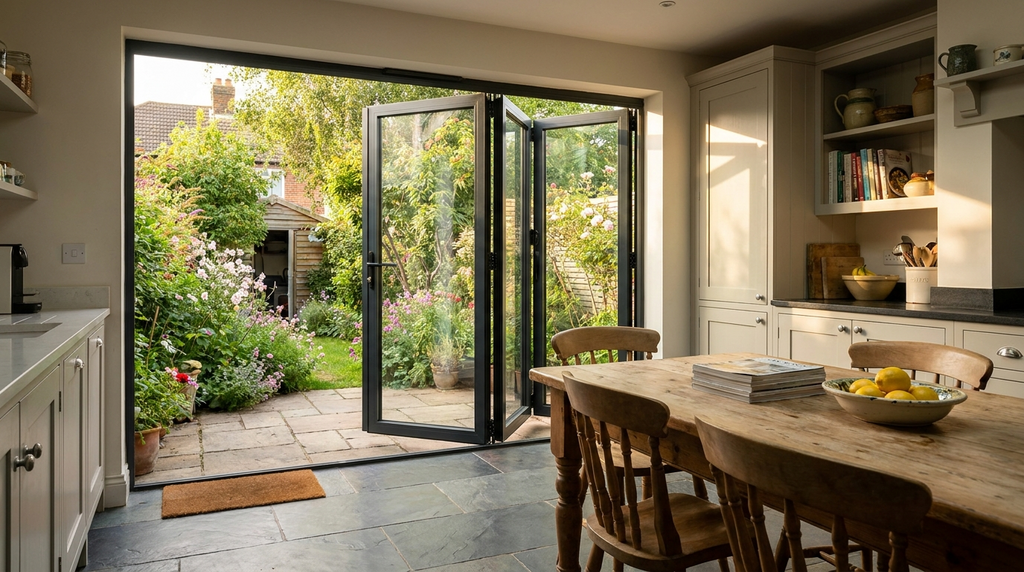
- Anthracite grey uPVC or aluminium, increasingly popular on detached properties in the Deepdene and Nower Hill areas, suits contemporary extensions
- Timber or timber-effect uPVC, essential for conservation area properties or Victorian originals, and honestly the right call aesthetically for many older Dorking homes
Finding a Double Glazing Installer You Can Actually Trust Near Dorking
Dorking is a small town, around 11,000 residents, so there’s no large cluster of double glazing companies based within the town itself. In practice, most homeowners here use installers whose main operation is in Reigate, Epsom, Guildford, or Crawley, all of which regularly service Mole Valley properties.
The most important certification to look for is FENSA registration (Fenestration Self-Assessment Scheme). FENSA-registered installers can self-certify that their work complies with Building Regulations, which matters enormously when you come to sell your home. Without a FENSA certificate, you’ll need a retrospective Local Authority Building Control inspection, an avoidable hassle.
Other useful markers of a trustworthy installer:
- TrustMark registration, government-endorsed quality scheme, increasingly required by lenders and local authority grant schemes
- Which Trusted Trader status, useful for consumer protection
- GGF membership (Glass and Glazing Federation), industry body with a consumer protection guarantee
- At least five verifiable local reviews, ideally with named properties or areas you can cross-reference
Red flags to watch for in the South East specifically include high-pressure same-day pricing tactics (this is still common in the region), quotes that exclude VAT until the final paperwork, and any firm that can’t provide a written specification of the U-values and glass specification they’ll be installing.
Lead times across the Reigate-to-Guildford corridor currently run at six to ten weeks for standard orders. Bespoke heritage or timber-effect units can be twelve to fourteen weeks. The proximity to London means that some larger South East firms get pulled toward higher-value London contracts during busy periods, a smaller Reigate or Epsom-based company often gives you more consistent scheduling for a Dorking job.
Grants and Funding Available to Dorking Residents in 2026
This is where many homeowners understandably get confused, so here’s a clear breakdown of what’s currently available and who actually qualifies:
ECO4 (Energy Company Obligation)
This is the main government scheme for lower-income households. It covers window upgrades as part of a broader retrofit, though double glazing on its own rarely qualifies, it typically needs to be part of a whole-home package that includes insulation or heating improvements. Eligibility is means-tested, based on receiving certain benefits or having a household income below approximately £31,000. Mole Valley District Council participates in ECO4 Flex, which allows the council to nominate households who don’t meet the strict benefit criteria but live in energy-inefficient properties. It’s worth calling Mole Valley’s housing team to ask about current eligibility thresholds.
Great British Insulation Scheme (GBIS)
The Great British Insulation Scheme closed on 31 March 2026. It funded insulation measures only and never covered windows or glazing. The Great British Insulation Scheme closed on 31 March 2026. It funded insulation measures only and never covered windows or glazing. The scheme is delivered through energy suppliers, so contact yours directly and ask for a GBIS assessment.
Mole Valley District Council Retrofit Scheme
Mole Valley has run targeted retrofit support programmes in recent years, and in 2026 the council is working within the South East Net Zero framework to support residents in improving their EPC ratings. These schemes tend to offer subsidised assessments, contractor referrals, and occasional grant-matching for qualifying properties. Glazing is standard-rated for VAT at 20%. The zero rate for energy-saving materials covers insulation, heat pumps and solar panels; HMRC names secondary and double glazing as excluded from it (VAT Notice 708/6, checked August 2026). This effectively saves you 20% compared to the standard rate, on a £6,000 job, that’s £1,200 back in your pocket without needing to apply for anything. This applies to detached and semi-detached houses replacing like-for-like window styles (casement for casement, etc.) in materials that are similar in appearance to the originals.
However, Dorking has some significant exceptions that catch people out:
Dorking Town Centre Conservation Area
Parts of central Dorking, particularly around the High Street, South Street, and West Street, fall within a designated conservation area managed by Mole Valley District Council. In these areas, any replacement windows must be approved before installation. The council typically requires that new windows match the character of the original frames, which in practice means timber or timber-effect uPVC rather than standard white uPVC casements. Installing the wrong type without consent can result in an enforcement notice requiring you to reinstate the originals at your own cost.
Listed Buildings
Dorking has a notable number of listed properties, particularly around the older parts of the town. If your home is listed (check the Historic England register or ask Mole Valley’s planning department), you’ll need Listed Building Consent for any window changes, regardless of what material you’re using. This is a separate process from standard