Why Woking Homeowners Are Turning to Double Glazing Right Now
There’s a quiet but noticeable shift happening across Woking’s suburban streets. From the Victorian terraces near the town centre to the post-war semis spreading out through Horsell, Sheerwater, and Knaphill, more homeowners are booking double glazing surveys than at any point in recent memory. This trend goes beyond warmth.
Woking sits in a peculiar sweet spot. Its average EPC rating is Band C, already above the national average of Band D, which means many residents have done some of the obvious work already. But that last push from good to genuinely great energy performance? Double glazing is often the piece that’s still missing.
With Woking Borough Council’s ongoing commitment to net-zero targets and the borough’s position as a commuter hub feeding into London, property values here are among the highest outside the capital. That changes the maths considerably. An upgrade that adds value and cuts bills is a financial decision as well as a comfort decision. A typical detached home on the Old Woking Road or in St John’s that gains a half-band EPC improvement can see meaningful uplift at sale time, in a market where buyers are scrutinising energy performance more carefully than ever.
Add to that the noise factor. Woking town centre’s regeneration has brought more activity, more traffic on the A320 and A247 corridors, and more ambient sound into homes that weren’t built expecting it. Modern double glazing, particularly acoustic variants, addresses that directly.
What Double Glazing Actually Involves for a Typical Woking Home
Woking’s housing stock is wonderfully mixed, which means no two installations are quite the same. The borough contains a substantial number of late Victorian and Edwardian properties, particularly around the central wards and Monument Road area, alongside large swathes of 1930s to 1960s semis and detached homes across estates like Maybury, Pyrford, and Hook Heath.
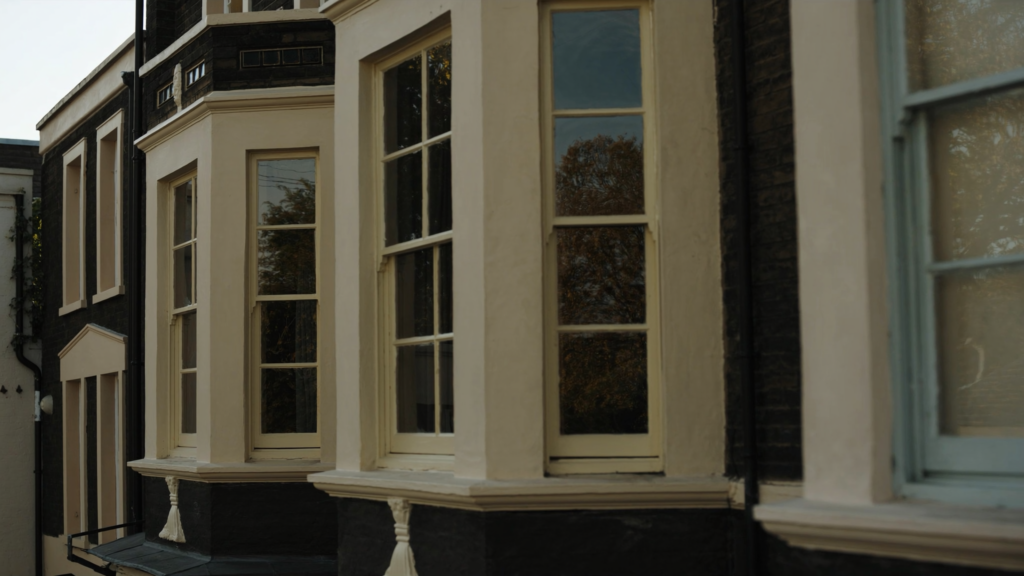
For the Victorian and Edwardian properties, the original single-glazed sash windows are often the biggest challenge. Replacing them with standard casement double glazing is technically straightforward, but you may need to consider slimmer profile units to maintain the original proportions, especially if you’re near any of the borough’s conservation areas (more on that below).
The interwar and post-war semis, arguably the most common property type here, are in many ways ideal candidates. They typically have standardised window openings, good access from the front and rear, and solid masonry construction that makes frame fitting clean and predictable. A three-bedroom semi in Horsell or Goldsworth Park can usually be fully double glazed in a single day.
The larger detached homes common in Hook Heath and Pyrford Village often have more complex rooflines, bay windows, and period features that add time and cost. Bay windows in particular need careful measurement and often require specialist angled frames. It’s worth budgeting an extra 20–30% for bay configurations compared to standard flat-wall installations.
One practical note specific to Woking, many of the older streets in central wards have limited driveway space and on-street parking restrictions. Fitters need to unload large sealed units, which occasionally means a permit or a quick conversation with Woking Borough Council’s highways team. Good installers will sort this themselves, but it’s worth asking upfront.
How Much Double Glazing Costs in Woking and the South East in 2026
Woking sits in the mid-to-upper range of South East pricing, cheaper than central London, but noticeably more than inland towns like Basingstoke or Andover. Labour costs here reflect the proximity to the capital, and the competitive local market (with installers typically covering Woking, Guildford, Farnborough, Godalming, and Aldershot as a cluster) keeps prices from going completely off the scale.
Here’s a realistic breakdown of what you’ll pay in 2026:
| Property Type | Window Count | Standard uPVC Double Glazing | Premium uPVC / Aluminium | Timber-Effect or Heritage Frames |
|---|---|---|---|---|
| 2-bed terrace / flat | 6–8 windows | £3,200 – £4,500 | £4,800 – £6,500 | £6,000 – £8,500 |
| 3-bed semi-detached | 8–12 windows | £4,800 – £6,800 | £7,000 – £9,500 | £9,000 – £13,000 |
| 4-bed detached | 12–16 windows | £7,000 – £10,000 | £10,500 – £15,000 | £13,000 – £19,000 |
| 4-bed detached with bays | 12–16 + bays | £8,500 – £12,500 | £12,000 – £17,500 | £15,000 – £22,000 |
For context, South East average prices run roughly 8–12% higher than the national midlands average, while Woking-area quotes typically come in around 5% above the broader Surrey average. This reflects demand pressure from London-based installers pulling resource towards the capital.
Double glazing in Guildford (9km away) tends to price similarly to Woking. Godalming and Farnborough quotes often come in slightly lower. If you’re getting comparison quotes, pulling in a firm based in Aldershot or Farnborough can sometimes sharpen a Woking installer’s pencil.
Insider tip, always ask for a fixed-price written quote that includes frame disposal, making good around reveals, and any required local authority notification fees. These can silently inflate “headline” prices by several hundred pounds.
How Woking’s Weather and Location Shape the Right Double Glazing Choice
Woking enjoys some of the best solar irradiance in the UK, around 1,100 to 1,200 kWh per square metre per year. Combined with relatively mild winters (the borough sees roughly 1,200 to 1,500 heating degree days annually, well below northern England), this means your double glazing choices should be shaped as much by solar management as by heat retention.
South and south-west facing rooms, very common in the mid-century semis on Goldsworth Park estate and the detached homes in the Pyrford and Wisley areas, can overheat in summer with standard clear double glazing. Specifying a low solar gain coating (sometimes called solar control glass) on these elevations makes a real difference to summer comfort, without meaningfully reducing winter warmth gains.
Woking isn’t a coastal town, so you don’t face the salt-laden wind and driving rain challenges of somewhere like Brighton or Worthing. Rainfall is moderate at 700 to 900mm per year, enough to require well-fitted, well-sealed units, but nothing that demands marine-grade specifications. Standard quality seals and gaskets are perfectly adequate here.
Noise is an increasingly important factor. The A3 corridor runs just to the south-east, and Woking railway station, one of the busiest on the South Western Main Line, creates a noise envelope across central residential streets. For homes within a kilometre of the railway or major A-roads, acoustic laminated glass inner panes (typically 6.4mm laminate) offer a noticeable improvement over standard clear float glass.
The Products That Actually Perform Best in Woking’s Housing Stock
Based on the specific mix of properties, climate, and planning context in the borough, here’s what genuinely works well, not a generic list, but an honest recommendation.
- uPVC casement windows with A++ rated units, the workhorses of Woking’s semis and detached homes. Look for a U-value of 1.2 W/m²K or below (ideally 1.0). Argon-filled units are standard; krypton fill is worth the upgrade only for very exposed or northerly-facing windows.
- Warm-edge spacer bars, small detail, big difference. Foam or silicone spacers reduce condensation at the edge of the glass significantly. Every reputable Woking installer should be offering these as standard by now, but do check.
- Slim-profile aluminium frames for period properties, particularly relevant for the Edwardian stock near Monument Road and the older streets around Old Woking. Modern thermally-broken aluminium achieves U-values comparable to mid-range uPVC, with a much slimmer sight line that suits period proportions.
- Solar control glass for south-facing elevations, as discussed above, genuinely useful in Woking’s sunny microclimate. Pilkington Activ Solar or equivalent products manage heat gain without you needing to fit external blinds.
- Acoustic laminated glass for railway and A-road proximity, homes within the noise footprint of the South Western Main Line or the A320 will notice a real quality-of-life change with 6.4mm laminate inner panes. Worth every penny.
What to avoid, cheap Chinese-manufactured units with poorly-fitted gaskets. These perform adequately for 18 months and then begin failing. In the South East resale market, surveyors and buyers are increasingly checking glass unit manufacture dates and quality marks. Stick to British Fenestration Rating Council (BFRC) certified products.
Finding a Trustworthy Double Glazing Installer Near Woking
The Woking-to-Guildford corridor has excellent installer coverage. Most companies serving this area operate across the Woking, Guildford, Farnborough, and Aldershot cluster, which keeps availability reasonable and competition healthy. Lead times in 2026 typically run four to eight weeks for standard residential work, longer in spring and autumn when demand peaks.
Here’s what to look for and ask about:
- FENSA registration, non-negotiable for window and door replacement. FENSA-registered installers self-certify compliance with building regulations, saving you the cost of a council inspection. Always verify registration at the FENSA online checker.
- TrustMark accreditation, government-endorsed quality scheme, increasingly required if you’re accessing any grant funding.
- Insurance-backed guarantees, not just the company’s own guarantee. If the installer folds (it happens), an insurance-backed guarantee means you’re still covered. Ask specifically which insurer backs it.
- Local references, ask for two or three completed jobs in Woking specifically. Not just Surrey generally, you want someone who knows the parking restrictions on Chobham Road and has dealt with Woking Borough Council’s planning department.
Red flags to watch for, same-day pressure to sign, “today only” discounts, upfront deposits exceeding 25%, and quotes that arrive without a site visit. Legitimate installers in this area measure every window opening on-site before quoting. Anyone quoting from photos or generic measurements is cutting corners that will show up later.
Grants and Funding That Could Cut Your Costs in 2026
Double glazing sits in an interesting position with funding, it’s not eligible for the Boiler Upgrade Scheme (BUS), but it does qualify under several other routes depending on your circumstances.
ECO4 (Energy Company Obligation)
If your household income is below approximately £31,000 or you receive qualifying benefits, ECO4 can cover double glazing as part of a whole-home retrofit package. Importantly in Woking, you don’t need to be in Band F or G to qualify, but the improvement must be meaningful. A Band C home moving to Band B still qualifies for assessment. Contact Woking Borough Council’s housing team or an ECO4-registered installer to get an eligibility check.
Great British Insulation Scheme (GBIS)
GBIS can contribute to glazing costs, typically as part of a broader package that includes insulation. It covers a wider income range than ECO4, households in Council Tax bands A to D (which covers a significant proportion of Woking’s semi-detached stock) may qualify even without being on benefits.
Woking Borough Council Local Schemes
Woking Borough Council has historically run supplementary retrofit grants and interest-free loan schemes for energy efficiency improvements. In 2026, it’s worth contacting the council’s climate and sustainability team directly to ask what’s currently live, these schemes open and close based on funding cycles, and local advisors will know exactly what’s available. The council’s website lists current schemes under its sustainability and housing pages.
Flexible Finance from Installers
Most established South East installers now offer 0% finance over 24 to 60 months. Given that double glazing savings typically reach £150 to £300 per year for a semi-detached, spreading cost over three to four years can make the monthly outlay comfortably manageable without touching savings.
Planning Permission and Woking Borough Council Requirements
For most Woking homes, replacing windows with double glazing falls under permitted development rights, meaning no planning permission is required, as long as you’re using a FENSA-registered installer who self-certifies building regulation compliance.
However, Woking Borough Council administers several conservation areas where restrictions apply. The Hook Heath conservation area, parts of the St John’s area, and pockets of the Old Woking village area all have additional requirements. In these zones, you typically need windows that match the original style, proportions, and material, which usually means timber or high-quality timber-effect frames rather than standard white uPVC. Replacement glazing in conservation areas often requires a planning application unless you can demonstrate like-for-like replacement.
Listed buildings (there are several in and around Old Woking, Pyrford, and Horsell) require Listed Building Consent for any window changes. Secondary glazing, fitting a discreet inner pane rather than replacing the original, is often the approved route for listed properties, and it’s more effective than many people expect.
If you’re in a managed development or leasehold property (more common in central Woking’s newer apartment blocks), check your lease and get freeholder approval before proceeding. Installers experienced in the Woking area will know this and should flag it during the survey.
What You Will Actually Save, Honest Numbers for Woking Homes
Let’s use real figures. Woking’s average gas usage runs at around 10,500 kWh per year, slightly below the national median of 12,000 kWh, which reflects the borough’s milder winters and the fact that many homes are already reasonably well insulated (hence the Band C average EPC).
Upgrading from single glazing to A-rated double glazing on a typical three-bedroom semi in Woking:
- Annual heating saving, approximately £180 to £260 per year at current gas tariff rates, depending on property size and how much of the heat loss was through windows previously
- EPC improvement, typically 2 to 5 points within Band C, or a move from the lower end of C to the upper end. Properties already on poor single glazing may push from Band D into Band C