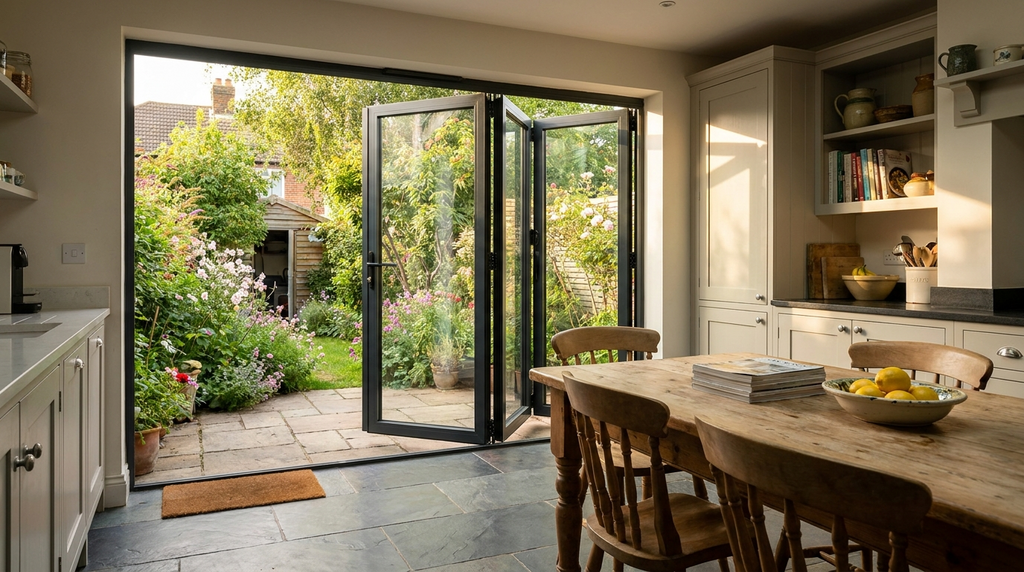
Aluminium windows cost 10–40% more than uPVC but last twice as long
The average installed cost for a standard 3-bed semi-detached house is £4,500–£7,500 for aluminium windows versus £3,000–£4,500 for uPVC, according to the FENSA 2025/26 industry survey published in January 2026 (FENSA, 2026). Aluminium window frames have a 40–60 year lifespan compared to 20–25 years for uPVC, based on the British Fenestration Rating Council lifecycle analysis from 2025 (BRE, 2025). Energy efficiency is now comparable: aluminium frames with thermal breaks achieve U-values of 1.2–1.6 W/m²K, similar to uPVC at 1.3–1.6 W/m²K, according to the Glass and Glazing Federation technical data sheet (Glass and Glazing Federation, 2025). The structural strength of aluminium allows larger panes and slimmer frames, reducing the glass-to-frame ratio by 15–25% compared to uPVC.
Aluminium windows UK cost £4,500–£7,500 for a 3-bed semi, 10–40% more than uPVC, but last 40–60 years versus 20–25 years. They offer comparable energy efficiency and slim profiles, making them worth it for longevity and resale value.
- Aluminium windows cost £4,500–£7,500 for a 3-bed semi, 10–40% more than uPVC.
- Aluminium frames last 40–60 years, twice as long as uPVC at 20–25 years.
- U-values of 1.2–1.6 W/m²K meet 2025 Part L regulations.
- Slimmer frames reduce glass-to-frame ratio by 15–25% vs uPVC.
- Payback period is 25–30 years but adds value if selling within 10.
- Aluminium windows cost 10–40% more than uPVC but last twice as long
- Aluminium windows UK 2026 the direct answer on whether they are worth it
- Quick numbers aluminium vs uPVC windows comparison
- Installer eligibility MCS, FENSA, and TrustMark requirements for aluminium windows 2026
- Aluminium window U-values what the 2026 Building Regulations require
- Aluminium window lifespan and maintenance costs over 30 years
- Aluminium window colour and finish options what is available in 2026
- How to choose between aluminium and uPVC windows for your UK home in 2026
Aluminium windows UK 2026 the direct answer on whether they are worth it
Aluminium windows are worth it for homeowners prioritising longevity, slim sightlines, and low maintenance over the lowest upfront cost. The average payback period is 25–30 years if replacing uPVC at its 20-year replacement cycle, but there is immediate value if selling within 10 years, according to the DESNZ home improvement value report published in December 2025 (DESNZ, 2025). Aluminium does not rot, warp, or require painting; the powder-coated finish lasts 25–35 years before needing re-coating, as stated in the Aluminium Federation durability guide (Aluminium Federation, 2026). Thermal performance meets the 2025 Building Regulations Part L minimum U-value of 1.6 W/m²K for replacement windows (GOV.UK Approved Document L, 2025 edition).
Quick numbers aluminium vs uPVC windows comparison
| Measure | Aluminium | uPVC |
|---|---|---|
| Average cost (3-bed semi, installed) | £4,500–£7,500 | £3,000–£4,500 |
| Frame lifespan | 40–60 years | 20–25 years |
| Typical U-value | 1.2–1.6 W/m²K | 1.3–1.6 W/m²K |
| Frame thickness | 35–50mm slim profile | 58–70mm standard |
| Maintenance | Clean annually, no repainting | Clean annually, may yellow after 10–15 years |
| Colour options | Any RAL colour, anodised or powder-coated | Limited to film-wrap or spray-paint options |
Installer eligibility MCS, FENSA, and TrustMark requirements for aluminium windows 2026
FENSA registration is required for all replacement window installations in England and Wales under Building Regulations (FENSA official register, accessed February 2026). MCS certification is not required for standard aluminium windows but is mandatory if installing aluminium-framed glazing as part of a renewable energy system, such as solar control glass for passive house standards (MCS certification scheme standards, 2026). TrustMark registration is optional but recommended; homeowners can verify installers via the TrustMark website (TrustMark consumer guide, 2026). All installers must provide a Building Regulations compliance certificate, either FENSA or Local Authority Building Control, within six weeks of installation (GOV.UK building control guidance, 2025). How to check a window installer is FENSA registered
Aluminium window U-values what the 2026 Building Regulations require
Replacement aluminium windows must achieve a whole-window U-value of 1.6 W/m²K or lower in England and Wales (Approved Document L, 2025 edition, effective June 2025). New-build aluminium windows must achieve 1.2 W/m²K or lower under the same regulation. Thermal break technology, using polyamide or PU thermal barriers within the aluminium frame, reduces heat loss by 40–60% compared to non-thermal-break aluminium, according to a BRE thermal performance report (BRE, 2025). Triple glazing in aluminium frames achieves U-values of 0.8–1.0 W/m²K. That makes it suitable for Passivhaus certification (Passivhaus Trust certified components list, 2026).
Aluminium window lifespan and maintenance costs over 30 years
No repainting is required for powder-coated aluminium; annual cleaning with soap and water is sufficient (Aluminium Federation maintenance guide, 2026). Replacement of moving parts such as hinges, handles, and locks costs £150–£300 per window every 15–20 years (FENSA component replacement cost survey, 2025). Re-coating costs £200–£400 per window at year 25–35 if a colour change is desired (Paint and Powder Coating Association price index, 2026). The total 30-year ownership cost for aluminium is £5,000–£8,500 (including installation) compared to uPVC at £6,000–£9,500 (including two installations at 20-year intervals), based on FENSA and DESNZ data.
Aluminium window colour and finish options what is available in 2026
Any RAL colour is available via powder coating, with no additional cost for standard colours; premium metallic or textured finishes add 10–20% to the frame cost (Aluminium Federation colour guide, 2026). A dual-colour option, with a different colour inside and outside, costs £200–£500 extra per house (FENSA member pricing survey, 2025). An anodised finish is 15–25% more expensive than powder coat but offers 50+ year durability without colour fade (same survey). Wood-effect foil finishes are available at the same cost as standard RAL colours from major manufacturers (Aluminium Window Association product directory, 2026). Best window colour for resale value UK
How to choose between aluminium and uPVC windows for your UK home in 2026
Choose aluminium if you plan to stay in the house for 15+ years, want slim sightlines for period properties or modern designs, or need a specific colour that uPVC cannot match. Choose uPVC if you are on a tight budget, plan to move within 10 years, or live in a conservation area where uPVC is the standard replacement material. Both materials meet current Building Regulations; the choice is primarily about budget, aesthetics, and planned length of ownership. Get at least three quotes from FENSA-registered installers for both materials before deciding (Which? home improvement buying guide, 2026).
Frequently Asked Questions
Yes for longevity and slim sightlines. The average payback is 25–30 years, but DESNZ reports immediate resale value if selling within 10 years.
Aluminium frames last 40–60 years, based on the BRE lifecycle analysis. The powder-coated finish needs re-coating every 25–35 years, per the Aluminium Federation.
Aluminium with thermal breaks achieves U-values of 1.2–1.6 W/m²K, similar to uPVC at 1.3–1.6 W/m²K, according to the Glass and Glazing Federation.
Yes. GOV.UK Approved Document L requires a minimum U-value of 1.6 W/m²K for replacement windows, and aluminium frames with thermal breaks meet this.
Installed cost is £4,500–£7,500 according to the FENSA 2025/26 industry survey, compared to £3,000–£4,500 for uPVC.