Why Horsham Homeowners Are Looking at Double Glazing Right Now
There’s a quiet revolution happening in the residential streets around Horsham’s Carfax and out towards the newer developments at Roffey and Broadbridge Heath. More and more homeowners are booking double glazing surveys, and the reasons go beyond simply wanting warmer rooms in January.
Horsham sits in a sweet spot that makes double glazing genuinely compelling. Property values across the town are among the strongest in West Sussex, meaning any improvement that nudges your EPC rating upward delivers a measurable boost to your home’s market value. In a town where a decent semi-detached regularly trades above £400,000, even a modest EPC improvement from Band C to Band B is worth real money at sale time.
The other driver is energy costs. Horsham’s average gas consumption sits around 10,500 kWh per year, close to the national median, but the town already performs above average on efficiency with most homes sitting at Band C. That’s actually where double glazing becomes most interesting: you’re not starting from scratch, you’re finishing the job. Getting from good to great is often cheaper and faster than people expect.
And then there’s the cold easterly wind that sweeps across West Sussex in winter. Horsham may be in the milder south, but those easterlies cut through single-glazed or poorly sealed older windows with remarkable efficiency. If you’ve ever sat in a Victorian terrace off Brighton Road or in a 1970s semi near Broadbridge Heath and felt a persistent draught despite the heating being on full, you’ll know exactly what we mean.
What Double Glazing Actually Involves for a Typical Horsham Home
Horsham’s housing stock is a genuine mix, and that mix matters enormously when you’re planning a double glazing installation. You’ve got Victorian and Edwardian terraces clustered around the town centre, substantial interwar semis spreading out towards Roffey and Littlehaven, and then a significant wave of 1960s–1980s detached and semi-detached properties on estates like Tanbridge and Broadbridge Heath. Each era brings different window dimensions, frame materials, and installation challenges.
Victorian properties (roughly 1880–1910) are the trickiest. The original sash or casement openings were designed for single-glazed wooden frames, and simply swapping in modern uPVC double glazing can look jarring and, in some cases, breach planning rules in conservation areas. If you’re on Hurst Road or near the town’s historic core, you may need to consider slimline double glazing units or even secondary glazing to keep the character intact.
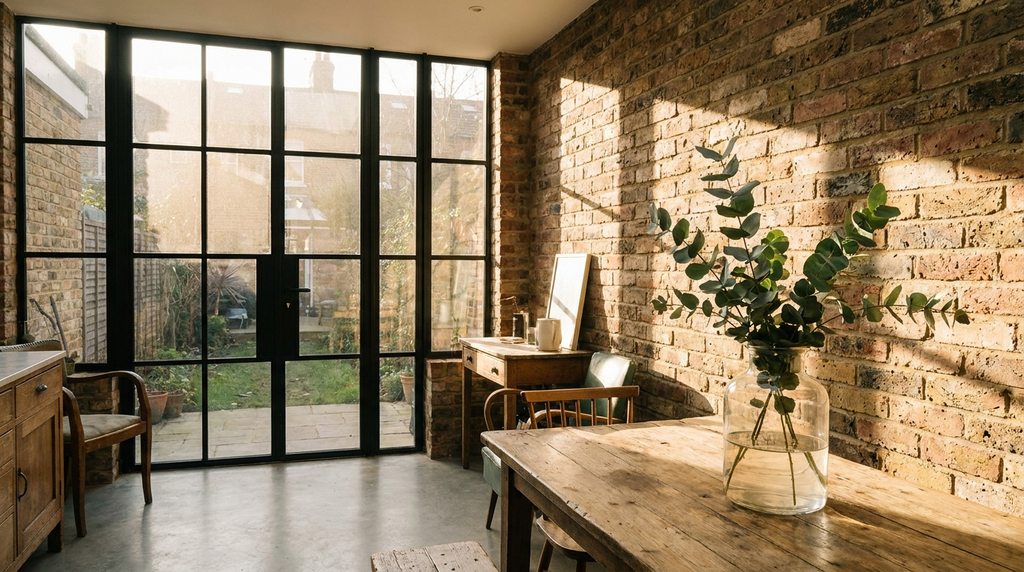
Interwar semis, probably the most common property type in Horsham, are generally the easiest to upgrade. The original steel Crittall windows are notoriously draughty and corrode badly in Sussex’s damp winters. Replacing them with modern frames is straightforward, the openings tend to be fairly standard sizes, and there’s rarely a conservation restriction at play in the wider Roffey or Littlehaven areas.
For 1960s–1980s homes, many will already have had one round of double glazing installed, possibly 20–25 years ago. That first generation of units is now failing: seals break down, the gas fills deplete, and condensation forms inside the units. Replacing failed double glazing with modern A-rated or A+ units is one of the best-value upgrades you can make, because the frames are already there and labour costs are lower than a full installation from scratch.
Key installation considerations specific to Horsham properties:
- Access and parking on older streets near the town centre can add time and therefore cost to installations
- Horsham’s clay-heavy soil can cause slight frame movement in older properties, a good installer will check for this before quoting
- Period properties in or near the Horsham Conservation Area require careful consideration of permitted development rights
- Many detached homes on Bishopric-area streets have bay windows that require specialist frame joining, budget accordingly
How Much Double Glazing Costs in Horsham and the South East Area in 2026
Let’s talk real numbers. Costs in Horsham are broadly in line with the South East average, though you’ll typically pay 5–10% more than the national average because installer operating costs (fuel, wages, premises) are higher in this part of England. Even so, there’s a healthy competitive installer market serving the Horsham, Crawley, and Haywards Heath triangle, which keeps prices from going too far out of hand.
The table below gives you honest 2026 benchmarks for a typical Horsham property. These are supply-and-fit prices including VAT.
| Property Type | Number of Windows | Standard uPVC A-Rated | Premium uPVC A+ Rated | Aluminium Slimline | Composite (Conservation Style) |
|---|---|---|---|---|---|
| 2-bed terrace/flat | 5–7 | £3,200–£4,500 | £4,400–£6,000 | £5,500–£7,500 | £6,000–£8,500 |
| 3-bed semi-detached | 8–10 | £4,800–£6,500 | £6,200–£8,500 | £7,800–£10,500 | £8,500–£12,000 |
| 4-bed detached | 12–16 | £7,000–£9,500 | £9,000–£12,500 | £11,500–£16,000 | £12,000–£18,000 |
| Large detached/5-bed | 16–20+ | £9,500–£13,000 | £12,000–£17,000 | £15,000–£22,000 | £16,000–£24,000+ |
South East vs national comparison: The national average for a 3-bed semi with standard uPVC sits around £4,200–£5,800. In Horsham and the wider South East, expect to add roughly £600–£800 to that figure. Crawley installers sometimes quote slightly lower than Horsham-specific firms because of their higher volume, so it’s worth getting quotes from companies that cover both towns.
Extras that can affect your final bill in Horsham specifically include bay window joins (add £150–£400 per bay), lead detailing to match period properties (add £80–£200 per window), and restricted access parking surcharges on older town-centre streets (typically £50–£150 per day).
How Horsham’s Weather and Location Affect Your Double Glazing Choices
People often assume that because Horsham enjoys one of the milder climates in England, double glazing is less important here than in, say, Yorkshire. That’s not quite right. The thermal performance story is more nuanced than simple temperature averages.
Yes, Horsham has fewer heating degree days (roughly 1,200–1,500 per year) than northern England. Your heating season is shorter. But those cold easterly winds that sweep across the Weald in January and February are genuinely punishing on poorly sealed windows. The wind-driven infiltration through ageing window seals can account for up to 20% of heat loss in older Horsham properties, and that’s a problem that high-quality double glazing with good sealing systems directly solves.
On the solar side, Horsham’s position in the South East is a genuine advantage. With solar irradiance of around 1,100–1,200 kWh per square metre per year, you actually want your glazing to be doing some solar thermal work. This means south-facing windows should have a higher Solar Heat Gain Coefficient (SHGC), typically 0.4 or above, to allow passive solar gain during winter months, rather than the lower-SHGC “solar control” glass you’d use in an office building.
North-facing windows are the opposite story. These get virtually no useful solar gain but are a constant source of heat loss. For north-facing elevations, common in the back bedrooms of Horsham’s many south-facing-fronted semis, prioritise the best possible U-value (0.8 W/m²K or lower) and consider argon or krypton gas fills for maximum performance.
Rainfall in Horsham is on the lower end for southern England at 500–700mm per year, which actually works in your favour. Dryer conditions mean window frames and seals last longer, and you’re less likely to see the accelerated weathering that affects coastal West Sussex properties just 30 miles south.
The Products and Options That Work Best Here
Given Horsham’s specific conditions, mild-but-easterly winters, strong solar potential, predominantly detached and semi-detached stock, and a mix of Victorian through to 1980s builds, here’s what genuinely performs well.
For Interwar and Post-War Semis (the Roffey and Littlehaven stock)
Standard uPVC double glazing with a warm-edge spacer bar and argon gas fill is the reliable workhorse choice. Look for units achieving a Window Energy Rating (WER) of A or A+. A centre-pane U-value of 1.0–1.1 W/m²K is achievable at reasonable cost and will deliver a genuinely meaningful improvement over the original Crittall or early timber frames.
For Victorian and Edwardian Town-Centre Properties
Timber or composite frames that replicate the original profile are worth the premium here, both for planning reasons and for resale value. Slimline double glazed units (typically 4mm-cavity units achieving around 1.4–1.6 W/m²K) can be fitted into original sash frames where full replacement isn’t possible. Secondary glazing is a legitimate option in the most sensitive conservation properties and can achieve comparable thermal performance.
For Larger 1970s–1980s Detached Homes (Broadbridge Heath and Tanbridge Area)
If your original double glazing is failing, cloudy panes, broken seals, visible condensation, consider triple glazing for the replacement. Triple glazed units are now competitively priced in the South East market and can achieve U-values of 0.6–0.7 W/m²K. For a larger detached home with significant glazed area, the additional cost over standard double glazing (typically 20–30%) is often recovered in energy savings within 8–10 years.
Specifications worth asking your installer about:
- Warm-edge spacer bars rather than aluminium spacers (reduces cold bridging at the frame edge)
- Argon gas fill as standard, krypton gas for triple glazed units where budget allows
- Low-E glass coating on the inner pane for all north and east-facing windows
- Higher SHGC glass (0.4+) on south and west-facing elevations to capture Horsham’s excellent solar resource
- Trickle ventilators built into frames to manage condensation risk in well-sealed homes
How to Find a Trustworthy Double Glazing Installer Near Horsham
The installer market in and around Horsham is reasonably healthy. Companies based in Horsham itself tend to serve the town and the surrounding Weald villages, while larger firms operating out of Crawley (11km north-east) will often quote competitively for Horsham jobs because they’re combining it with other work in the area. Haywards Heath-based installers (17km south-east) are also worth approaching for quotes.
The critical certification to look for is FENSA registration. In England, any company fitting replacement windows must either be FENSA registered or you’ll need to obtain a building regulations compliance certificate separately, which costs extra and is an unnecessary complication. FENSA-registered installers self-certify compliance, which is the industry standard.
Also look for:
- TrustMark registration, the government-endorsed quality scheme that covers installation standards
- Membership of the Glass and Glazing Federation (GGF) or British Standards Institute (BSI) Kitemark on products
- Public liability insurance of at least £2 million, ask to see the certificate
- A minimum 10-year guarantee on sealed units and frames (reputable South East firms offer this as standard)
Questions worth asking before you sign anything:
- Are you FENSA registered and will you provide a FENSA certificate on completion
- What is the U-value and WER rating of the specific unit you’re quoting
- Who manufactures your sealed units and where are they made
- What’s your current lead time for installation in the Horsham area
- Do you have experience working with properties in or near the Horsham Conservation Area
Lead times in the South East in 2026 are running at 4–8 weeks for most residential jobs. Proximity to London means installers serving Horsham sometimes get drawn toward higher-value London jobs in peak periods, if you want a specific installation date, get it confirmed in writing before paying a deposit.
Red flags to watch for: pressure to sign on the same day, no written quotation breaking down unit costs and labour separately, and any reluctance to provide a FENSA number or company registration details. Walk away from any quote that doesn’t itemise what you’re actually getting.
Grants and Funding That Could Reduce Your Costs in 2026
The honest position on double glazing grants in 2026 is that they’re targeted rather than universal. Don’t expect a cheque just for wanting new windows, but if you meet specific criteria, there’s real money available.
ECO4 (Energy Company Obligation)
ECO4 is the main fully-funded scheme, and double glazing can be funded under it as part of a wider home improvement package. Eligibility centres on being in receipt of qualifying benefits (including Universal Credit, Pension Credit, and others) and living in a property rated EPC Band D or below. Given that Horsham’s average is Band C, many residents won’t qualify on EPC grounds alone, but if you’re in a Band D or E property in parts of Roffey or on the older town-centre streets, it’s absolutely worth checking. Apply through your energy supplier or via the government’s Simple Energy Advice service.
Great British Insulation Scheme (GBIS)
The Great British Insulation Scheme closed on 31 March 2026. It funded insulation measures only and never covered windows or glazing. Horsham District Council has engaged with this scheme, so it’s worth contacting the council’s energy team directly to understand current availability in your area.
Horsham District Council Schemes
Horsham District Council periodically runs or signposts retrofit funding programmes, particularly for fuel-poor households and older residents. The council’s housing team is the right starting point, ask specifically about any current West Sussex-wide retrofit partnerships, as the county has historically run coordinated programmes that individual district councils administer locally.
VAT