Why Great Yarmouth Homeowners Are Looking at Double Glazing Right Now
If you live in Great Yarmouth, you already know that winters here have a particular bite to them. Those cold easterly winds that roll in off the North Sea don’t just feel unpleasant, they actively drive heat out of your home, pushing your boiler harder and your energy bills higher. It’s one of the reasons double glazing is such a hot topic on streets like Salisbury Road, Churchill Road, and across the terraced rows of Cobholm and Southtown right now.
There’s another factor too. Great Yarmouth’s average EPC rating sits at Band E, a full band below the national average of Band D. That tells a clear story about the housing stock here. Many of the town’s Victorian and Edwardian terraces, post-war semis, and seaside-era builds are still losing enormous amounts of heat through single-glazed or tired old double-glazed windows. Upgrading them isn’t a luxury, it’s one of the most cost-effective things you can do to make your home warmer and cheaper to run.
The timing is also driven by funding opportunities that won’t last forever. Several grant schemes available to Great Yarmouth residents in 2026 specifically target homes in Band E and below, which means a significant chunk of the town qualifies for financial help. More on that later, but the short version is that waiting could mean missing money that’s sitting on the table right now.
What Double Glazing Actually Involves for a Typical Great Yarmouth Home
Most of Great Yarmouth’s residential housing falls into two broad eras, the Victorian and Edwardian terraces built between roughly 1880 and 1914 (you’ll find clusters of these around the town centre and the Rows area), and the post-war council and private semis built between 1945 and 1980 across areas like Southtown, Cobholm, and the northern estates. Each era comes with its own quirks for fitting double glazing.
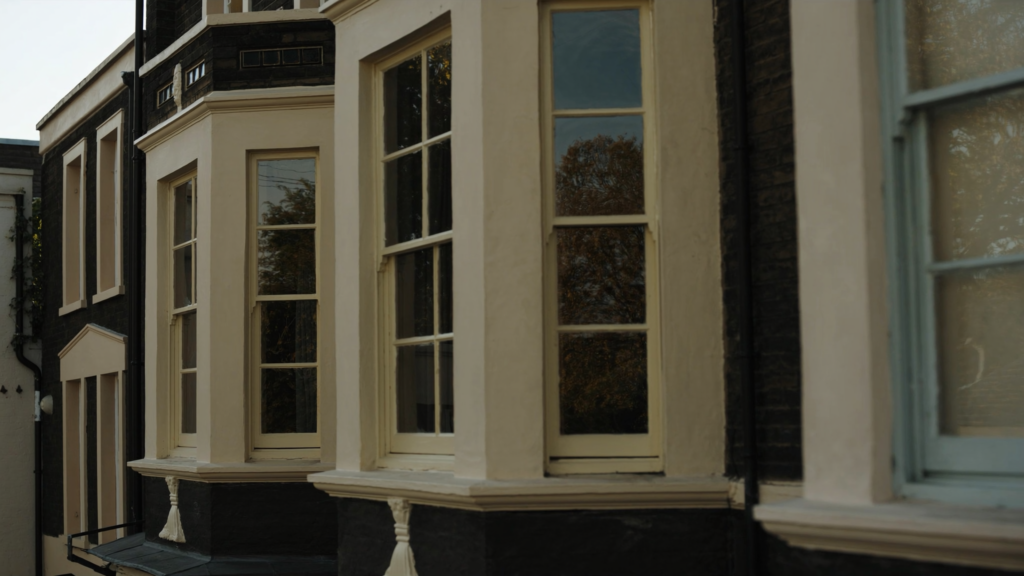
For Victorian and Edwardian terraces, the original window openings are often tall and narrow with sash-style frames. Many still have their original timber sashes, which are draughty but can actually be restored or upgraded to double-glazed sash units rather than replaced wholesale. If your terrace sits in or near the South Quay Conservation Area or any of the town’s listed streetscapes, you’ll need to think carefully about style, more on planning below.
Post-war semis tend to be more straightforward. Window openings are more standardised, frames are often already uPVC from a previous upgrade cycle in the 1990s or 2000s (meaning those frames may now be due a second replacement), and access is generally easier. The main consideration here is that 1990s-era double glazing has aged significantly, the gas fill in the units has often failed, seals have deteriorated, and the U-values no longer come close to what modern units achieve.
One practical challenge specific to Great Yarmouth’s terraced streets is access and parking. On narrow streets near the town centre, installers may need to bring frames in through the property rather than from the rear, which adds time and occasionally cost. It’s worth flagging this to any installer quoting your job so they account for it properly.
How Much Double Glazing Costs in Great Yarmouth and the East of England Area in 2026
Let’s get straight to the numbers, because that’s usually the first thing you want to know. Prices in Great Yarmouth sit broadly in line with the East of England average, though you may find slightly keener pricing than in Norwich city centre simply due to lower overheads for local companies. Even so, if your property has unusual access constraints or sits in a conservation area, expect some premium on the standard quotes.
| Window Type and Scope | Great Yarmouth Estimate | East of England Average | National Average |
|---|---|---|---|
| Single casement replacement (standard uPVC) | £400 – £550 | £420 – £580 | £450 – £600 |
| Full terraced house (8–10 windows, uPVC) | £3,800 – £5,500 | £4,000 – £5,800 | £4,200 – £6,200 |
| Full semi-detached (10–14 windows, uPVC) | £4,500 – £7,000 | £4,800 – £7,400 | £5,000 – £7,800 |
| Timber sash double glazed units (per window) | £800 – £1,400 | £850 – £1,500 | £900 – £1,600 |
| Aluminium frames (per window, modern slim sightline) | £650 – £1,000 | £700 – £1,100 | £700 – £1,200 |
| Triple glazing upgrade (per window, vs standard DG) | £150 – £250 premium | £150 – £280 premium | £180 – £300 premium |
| Bay window (uPVC, including structural considerations) | £900 – £1,600 | £950 – £1,700 | £1,000 – £1,800 |
These figures assume standard installation without scaffolding. If you’re in a mid-terrace with no rear lane access and windows above ground floor that need scaffold or a tower, add £200–£500 to your project total. Companies based in Great Yarmouth typically serve a cluster that includes Lowestoft (15km south), Norwich (29km west), and sometimes Cromer (46km north), so if you’re getting quotes, a local firm will generally be cheaper than one travelling from Norwich or beyond.
Always get three quotes in writing. And check whether VAT is included, it should be at 20% on new installations, though some grant-funded work qualifies for a reduced rate.
How Great Yarmouth’s Weather and Location Affect Your Double Glazing Choices
Great Yarmouth’s position on the eastern tip of Norfolk makes it genuinely different from towns just 30 miles inland. You’re exposed to North Sea winds in a way that Norwich, Wymondham, or Cromer simply aren’t. Those cold easterlies in January and February aren’t just uncomfortable, they create significant wind pressure on the north and east-facing elevations of your home, which matters when you’re choosing window specifications.
For east-facing windows especially, you want frames and glazing units that are rated for higher wind load categories. Most standard uPVC systems will cope fine, but make sure your installer confirms the hardware (hinges, locking points, and handles) is rated appropriately. Cheap hardware can fail under repeated coastal wind stress faster than it would on a sheltered Midlands terrace.
The North Sea influence also brings salt-laden air, particularly if you’re within a kilometre or so of the seafront. Salt air is corrosive and will degrade lower-quality aluminium frames or poorly powder-coated hardware over time. If you’re considering aluminium frames, which do look excellent in modern or Georgian-style properties, invest in a marine-grade powder coat finish. It costs a little more upfront but will outlast standard coating by years in this environment.
On the positive side, Great Yarmouth enjoys more sunshine hours than most of England. This is genuinely good news for double glazing performance, because south and west-facing windows will contribute meaningful passive solar gain through autumn, winter, and spring. Choosing a glazing unit with a higher solar factor (SHGC) on south-facing elevations lets more of that free warmth into your home, a smart move that’s often overlooked by installers who just fit the same spec throughout.
Rainfall here is on the lower end nationally (around 600mm per year), which means external sills and frames stay cleaner and weather-related degradation is slower than in, say, the Lake District. Your maintenance burden is genuinely lighter here than in much of the UK.
The Products and Options That Work Best Here
Given everything above, easterly wind exposure, salt air near the seafront, good solar potential, and a housing stock dominated by older terraces and semis, here’s what actually makes sense for a Great Yarmouth home in 2026:
- uPVC frames with A++ rated glazing units remain the best all-round choice for most properties. They’re unaffected by salt air, require minimal maintenance, and the current generation of A++ units with warm-edge spacer bars and argon fill delivers U-values around 1.2 W/m²K, a huge improvement over single glazing at 5.8 W/m²K.
- Triple glazing is worth serious consideration for north and east-facing elevations where solar gain is limited and wind-driven heat loss is highest. The premium of £150–£250 per window pays back faster on these elevations than on south-facing ones. Look for units achieving U-values of 0.7–0.8 W/m²K.
- Timber sash double-glazed units are the right call for Victorian terraces in or near the conservation area. Modern engineered timber sash units look authentic, perform well thermally, and are far more acceptable to planning officers than uPVC in sensitive streetscapes.
- Solar control glass on south-facing windows is something to discuss with your installer. A mid-range solar control coating lets winter sun in (helpful) while reducing summer overheating, especially relevant in ground-floor front rooms facing south or southwest.
- Warm-edge spacer bars (rather than the traditional aluminium spacers) should be standard in 2026, ask for them specifically. They reduce cold bridging at the edge of the glass and prevent the condensation lines you often see on cheaper older units.
- Multi-point locking hardware in stainless steel or marine-grade finish for any property within 500 metres of the seafront. This is a small detail that makes a big difference to longevity.
How to Find a Trustworthy Double Glazing Installer Near Great Yarmouth
The double glazing industry has more than its share of cowboys, high-pressure sales tactics, inflated “was/now” pricing, and quality that doesn’t match the brochure. Here’s how to protect yourself in Great Yarmouth’s market specifically.
The most important certification to look for is FENSA registration (or alternatively CERTASS). These are the government-authorised competent person schemes for window installation. A FENSA-registered installer can self-certify that your new windows comply with Building Regulations, which you’ll need documented when you come to sell your home. Without it, you’ll need to pay for a Local Authority Building Notice separately.
Also look for TrustMark registration, which signals broader quality and trading standards compliance. For any installer working on listed buildings or in conservation areas, ask specifically about their experience with Great Yarmouth Borough Council’s planning team, a good local installer will know the expectations without needing to be told.
Practical questions to ask any installer quoting your job:
- Are you FENSA or CERTASS registered and will you issue a certificate on completion?
- What U-value will the completed installation achieve?
- What warranty do you offer on frames, sealed units, and hardware separately?
- Who manufactures the sealed units, are they made locally or imported?
- Can you provide references from similar jobs in Great Yarmouth in the past 12 months?
Red flags to watch for: unsolicited door-to-door sales calls, pressure to sign on the day for a “special price,” quotes that don’t specify the U-value or energy rating of the glass, and warranties that are issued by a company rather than an independent insurer (if the company folds, the warranty is worthless).
Local installers typically cover Great Yarmouth alongside Lowestoft, Caister-on-Sea, and the surrounding Norfolk villages as a core patch, with some extending to Norwich and Cromer. A company with a base in or very close to Great Yarmouth will generally offer faster response times for remedial visits, which matters if a seal fails or a handle breaks three years down the line.
Grants and Funding That Could Reduce Your Costs in 2026
This is where being a Great Yarmouth homeowner in Band E can actually work in your favour. There are real funding routes available, here’s how they break down:
ECO4 (Energy Company Obligation) is the main national scheme that covers windows as part of a broader home upgrade package. Eligibility is means-tested, if your household receives certain benefits (Universal Credit, Pension Credit, Child Tax Credit and others) and your home is Band D or below, you’re very likely to qualify. Given Great Yarmouth’s average Band E rating, a large proportion of the town meets the property efficiency threshold. The scheme is delivered through energy suppliers, contact yours directly or use the government’s referral service to be matched with an installer.
The Great British Insulation Scheme closed on 31 March 2026. It funded insulation measures only and never covered windows or glazing. It focuses on single insulation measures rather than whole-house packages, and double glazing can qualify as the primary measure. Households in the lower Council Tax bands (A–D) and EPC bands D–G are eligible through the general track. Great Yarmouth Borough Council has been actively promoting take-up of this scheme, check their website or contact their housing team for locally signposted routes.
Warm Homes Plan, the government’s successor to previous fuel poverty schemes, is being rolled out through 2026 with a focus on lower-income households in energy-inefficient properties. Watch for updates from Norfolk County Council and Great Yarmouth Borough Council on locally administered elements of this funding.
A few honest caveats. These schemes are not blank cheques, they typically require windows to be part of a wider improvement package, and the installer must be scheme-approved. Standalone window replacement for a homeowner who doesn’t meet the income criteria isn’t funded. But if you do qualify, the contribution can be substantial, in some cases covering the majority of installation costs for a typical terraced home.
Planning Permission and Regulations in Great Yarmouth
For most Great Yarmouth homeowners, replacing windows falls under Permitted Development rights, meaning you don’t need to apply for planning permission. This applies provided the new windows are a like-for-like replacement in terms of appearance and the property isn’t in a designated area.
However, Great Yarmouth has some important exceptions you need to know about:
- South Quay Conservation Area and other designated conservation areas in the town centre and historic seafront require any window changes to be sympathetic to the character of the area. This typically means no uPVC frames on front elevations, and sash-style replacements rather than casement on Victorian properties. You’ll need to check with Great Yarmouth Borough Council’s Planning Department before ordering anything.
- Listed buildings (and there are several in the town’s historic core and along the seafront) require Listed Building Consent for window changes, this is separate from planning permission and applies even to internal alterations. Get this in writing before any work starts.
- Flats and maisonettes, if you own a flat, Permitted Development rights may not apply and you’ll likely need both planning permission