Why Lancaster Homeowners Are Looking at Double Glazing Right Now
There’s something telling about Lancaster’s housing market in 2026. With the majority of homes sitting on a Band D EPC rating and energy bills still biting hard, a lot of local homeowners are realising that their single-glazed or poorly-performing older windows are quietly draining hundreds of pounds every winter, and that’s before you factor in the damp, draughty mornings that anyone living near the River Lune or up towards Scotforth knows all too well.
Lancaster sits in an interesting position geographically. You’re close enough to Morecambe Bay to feel the Atlantic-influenced weather systems rolling in from the west, but you’re not fully exposed to the brutal coastal battering that Morecambe itself gets. Even so, the Lune Valley creates its own wind corridor, and anyone in Skerton, Bowerham, or the older terraced streets around Bulk Road will tell you their homes feel the chill earlier in autumn and hold onto winter damp longer than you’d expect for a town this far inland.
There’s also a practical push happening right now. Lancaster City Council’s housing improvement agenda, combined with national ECO4 funding availability, means some Lancaster residents can access subsidised or even fully-funded double glazing for the first time. That’s created a genuine wave of interest, and rightly so.
What Double Glazing Actually Involves for a Typical Lancaster Home
Most Lancaster housing stock falls into two distinct eras that directly shape what double glazing installation looks like in practice. You’ve got the dense Victorian and Edwardian terraced streets, think the grid of roads between Dalton Square and the university campus, or the tight rows up through Greaves, and then you’ve got the post-war semi-detached estates that spread across areas like Ridge, Marsh, and out towards Slyne-with-Hest.
For those Victorian terraces, the original timber sash windows are often beautiful but thermally terrible. Replacing them involves careful measurement because older properties rarely have standardised window openings, every frame can be a slightly different size. The reveals (the depth of the wall surrounding the window) in solid brick construction tend to be shallower than in cavity-wall semis, which affects what profile you can fit without compromising aesthetics or, importantly, fire escape requirements in upstairs rooms.
Here are the key practical realities for typical Lancaster property types:
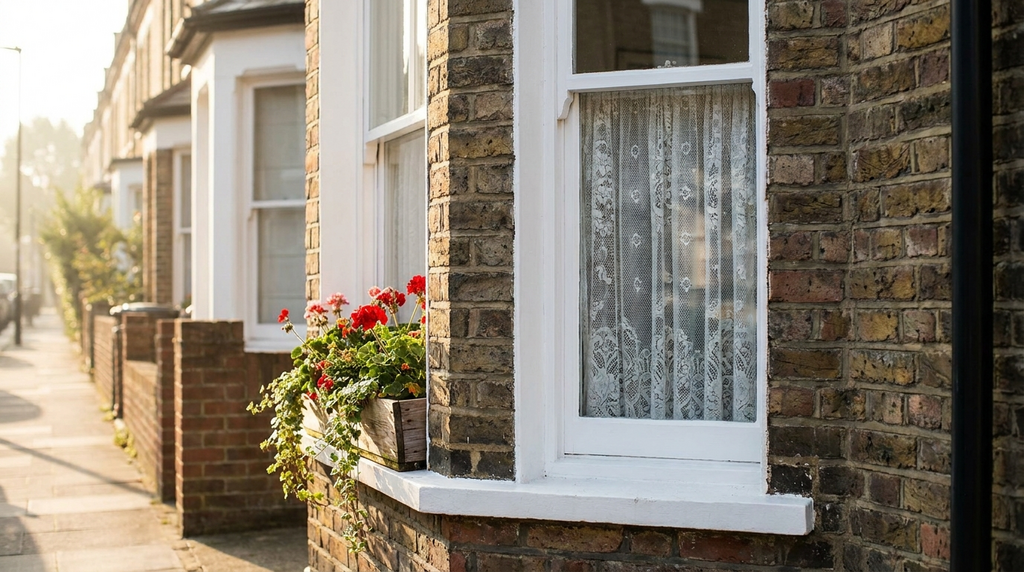
- Victorian terraced homes, Often have bay windows on the ground floor, which increases both material costs and installation time significantly. Access from the street is usually straightforward, but rear windows can require working through narrow ginnels or back yards.
- Edwardian semis, These typically have larger window openings than the Victorian terraces, sometimes with stained glass fanlight panels above. Preserving decorative elements while upgrading to modern glazing requires a thoughtful installer, not just the cheapest quote.
- Post-war council-built semis (Marsh, Ridge), These often have steel-framed original windows that are long overdue replacement. Fitting replacement uPVC or aluminium into these openings is technically straightforward, though the openings can be non-standard sizes.
- 1970s and 1980s estates, Some homes in this bracket had double glazing installed in the 1990s or early 2000s that is now failing, seals gone, condensation between panes, frames warped. Replacement glazing here is often a like-for-like swap and can be the most cost-effective job of all.
One thing to flag, parking and access in Lancaster’s older residential streets can genuinely affect your installation cost. Streets around the university in Bailrigg or the terraced areas near the city centre sometimes require parking permits, skip licenses, or careful scheduling around school runs and market days. A good local installer will flag this upfront; a less experienced one won’t mention it until you’re being charged extra.
How Much Double Glazing Costs in Lancaster and the North West Area in 2026
Let’s talk real numbers, because vague “from £X” figures are useless when you’re trying to budget. Costs in Lancaster sit broadly in line with the North West average, but you’ll typically pay 5–10% more than in larger cities like Preston or Manchester simply because there are fewer competing installers and logistics add a small premium for orders that don’t hit big urban volume thresholds.
| Property Type | Window Count | uPVC (A-rated) | Composite/Aluminium | Full House inc. Doors |
|---|---|---|---|---|
| Two-bed terrace (e.g. Bulk Road area) | 6–8 windows | £3,200–£4,500 | £4,800–£6,500 | £5,500–£7,800 |
| Three-bed semi (e.g. Bowerham, Scotforth) | 8–10 windows | £4,200–£5,800 | £6,200–£8,200 | £7,500–£10,500 |
| Three-bed terrace with bay (e.g. Greaves) | 8–10 windows inc. bay | £5,100–£6,800 | £7,500–£9,500 | £9,000–£13,000 |
| Four-bed detached (e.g. Ridge, Slyne-with-Hest) | 12–14 windows | £6,800–£9,200 | £9,500–£13,500 | £12,000–£17,000 |
| Conservation area property (specialist glazing) | Variable | N/A | Slim-profile only | Add 20–35% premium |
For comparison, the same three-bed semi job in Preston typically comes in £300–£600 cheaper, and in Manchester’s larger installer market you might save £500–£900 on a full house. That gap is real but not enormous, and a local Lancaster installer who knows the area’s quirks (listed building proximity rules, access on narrow terraced streets, council permit requirements) is often worth the slight premium.
Labour in the North West runs at roughly £180–£250 per day per fitter, and a typical full-house job takes 2–4 days depending on complexity. Bay windows add around £400–£700 to the job on their own.
How Lancaster’s Weather and Location Affect Your Double Glazing Choices
Lancaster’s climate is genuinely distinct from what you’d find in, say, Garstang to the south or Kirkby Lonsdale to the east. You’re in that transitional zone between the relatively sheltered Fylde coast lowlands and the genuinely exposed upland fringes of the Forest of Bowland. Average annual rainfall sits around 900–1,000mm, notably wetter than the national average, and with the Lake District just 20km to the north driving localised wet weather systems that regularly sweep south through the Lune Valley.
What does that actually mean for your windows? A few specific things:
- Warm-edge spacer bars are essential here. Lancaster’s combination of mild-but-damp winters creates the conditions where cheap aluminium spacer bars lead to visible condensation on the inner glass edge, known as “cold bridging.” Warm-edge spacers (Super Spacer or equivalent) reduce this significantly.
- Frame drainage and ventilation matter more than in drier parts of England. uPVC frames need functioning drainage slots to handle the volume of water that runs down glazed surfaces during prolonged Lancashire rain. Ask your installer to show you how drainage is managed.
- West-facing windows get the hardest weather. If your home faces roughly west, common in the terraced streets running perpendicular to the Lune, those windows bear the brunt of prevailing weather. Specifying a slightly higher-spec unit on these elevations makes practical sense.
- Solar gain matters more than people expect. Lancaster only gets around 1,100 sunshine hours per year, so choosing glass with a high solar factor (g-value above 0.55) on south-facing windows helps capture free warmth on bright winter days. This is especially relevant for south-facing terraces in Greaves and Scotforth.
The Products and Options That Work Best Here
Given Lancaster’s damp, moderately cold winters and the specific demands of local housing stock, here’s a frank view of what genuinely performs well rather than just what sounds impressive in a brochure.
For most Lancaster terraces and semis, A-rated uPVC double glazing with argon-filled units remains the best value choice. Triple glazing sounds appealing but the payback period in a Lancaster home simply doesn’t justify the 30–45% price premium in most cases, you’d need to be heating a very large, very leaky home for the maths to work out. Save triple glazing for new-build or major renovation projects.
Here’s a practical product guide for local conditions:
- Frame material, uPVC, Best all-round choice for durability in wet conditions. Modern uPVC handles Lancaster rainfall far better than the degrading frames fitted in the 1990s. Choose a reinforced profile (70mm+) for bay windows and wider openings.
- Frame material, aluminium, Excellent for contemporary-looking semis on Ridge or newer estates. More thermally efficient modern profiles (thermally broken aluminium) have closed the gap with uPVC significantly. Costs more but looks superb and lasts longer.
- Frame material, timber or composite, Worth considering for Victorian properties in conservation areas or where matching existing character matters. Composite (timber-aluminium hybrid) handles Lancaster’s moisture levels better than pure softwood.
- Glazing unit, Minimum 4-16-4mm argon-filled units with warm-edge spacers as standard. Low-E glass coating (typically 0.1 emissivity or better) on the inner pane reduces heat loss significantly. Look for a U-value of 1.2 W/m²K or below for the whole window unit.
- Security, All units should meet PAS 24 security standard as a minimum. Given that some terraced streets in Lancaster have higher burglary rates than the national average, this is non-negotiable.
Insider tip: For older Lancaster properties with period character, “sculpted” uPVC profiles with run-through sash horns closely mimic the look of traditional timber sashes. From the street, they’re virtually indistinguishable. This approach satisfies most planning officers in Lancaster’s sensitive streets without the cost premium of genuine timber.
How to Find a Trustworthy Double Glazing Installer Near Lancaster
Lancaster’s installer market is smaller than you’d find in Preston or Manchester, which has pros and cons. The good news is that genuinely local companies, ones who also cover Morecambe, Carnforth, and Garstang, tend to rely heavily on reputation in a tight-knit community. A cowboy operation doesn’t survive long when everyone knows everyone.
The main certifications to look for:
- FENSA or Certass registered, This is non-negotiable. These schemes allow your installer to self-certify that the work meets Building Regulations, and you get a certificate that protects you legally (and is essential when you sell your home). Without this, you’ll need separate Building Regulations approval, adding cost and delay.
- TrustMark, The government-endorsed quality scheme. The Great British Insulation Scheme closed on 31 March 2026. It funded insulation measures only and never covered windows or glazing.
- GGF Membership, The Glass and Glazing Federation’s membership indicates the company has met industry standards and has access to GGF’s deposit protection scheme.
Questions worth asking any Lancaster installer before you sign anything:
- Can you show me your FENSA or Certass registration number (and I’ll verify it online myself)
- Who actually manufactures the units, a local fabricator or a distant supplier
- What is your process for dealing with Lancaster’s conservation area properties
- What is included in your guarantee and who backs it if your company closes
- Do you handle the building regulations certificate as part of the job
Red flags to watch for: High-pressure same-day deals, “we’ll price-match anyone” before they’ve even surveyed properly, and any company that can’t show you FENSA registration. Also be cautious of national call-centre operations that subcontract to local fitters, you lose accountability quickly when something goes wrong in a Lancaster terrace and the company is based in Birmingham.
Lead times in Lancaster currently run at 4–8 weeks from survey to installation for most companies, with the premium end of the market sometimes stretching to 12 weeks. Companies serving the Lancaster-Morecambe-Carnforth cluster are typically busiest from September through November as homeowners panic before winter.
Grants and Funding That Could Reduce Your Costs in 2026
This is where it gets genuinely interesting for Lancaster residents, because there are multiple funding routes and not all of them are well publicised by installers (unsurprisingly, since full grants eat into margin).
ECO4 (Energy Company Obligation 4), This remains active in 2026 and is the biggest potential source of fully-funded double glazing for eligible Lancaster homeowners. If your household receives means-tested benefits (Universal Credit, Pension Credit, Income Support, and others) and your home is rated Band D or below on EPC, which describes most of Lancaster, you could qualify for free or heavily subsidised glazing. Contact Lancashire County Council’s Warm Homes scheme or apply directly through a TrustMark-registered installer.
The Great British Insulation Scheme closed on 31 March 2026. It funded insulation measures only and never covered windows or glazing. Unlike ECO4, eligibility extends to some households not on benefits, based on council tax band and EPC rating. Lancaster homes in council tax bands A–D on EPC Band D or below are potentially eligible. Worth a direct application to your energy supplier.
Lancaster City Council’s own schemes, Lancaster City Council has periodically run targeted housing improvement grants for privately-owned homes in priority areas, particularly in parts of Skerton and Morecambe that fall within the council area. Check with Lancaster City Council’s housing team directly, these pots of money often aren’t widely advertised and are first-come, first-served.
Lancashire County Council Warm Homes Fund, Lancashire-wide funding for energy efficiency improvements, administered through local authorities. This has supported glazing works for eligible households in the past and continues in a revised form in 2026.
A realistic summary of what’s achievable:
- Full ECO4 funding for eligible households, potentially £3,000–£8,000 of work at zero cost to you
- GBIS partial contribution, typically £1,500–£3,500 toward the total cost
- Glazing is standard-rated for VAT at 20%. The zero rate for energy-saving materials covers insulation, heat pumps and solar panels; HMRC names secondary and double glazing as excluded (VAT Notice 708/6).