Why Morecambe Homeowners Are Paying Too Much to Heat Their Homes Right Now
If you live in Morecambe and your energy bills feel stubbornly high, your windows are almost certainly part of the problem. The town sits right on Morecambe Bay, and that west-facing coastal position means wind, salt air, and damp conditions that older single-glazed or failed double-glazed units simply cannot cope with. Draughts around window frames, condensation between panes, and heat pouring out through glass, these aren’t just inconveniences here, they’re expensive daily realities.
The numbers back this up. Morecambe’s average EPC rating sits at Band E, which is a full band below the national average of Band D. That means most homes here are losing more heat, and spending more money, than they should be. With gas usage running at around 12,500 kWh per year (close to the national median), the potential savings from proper double glazing aren’t small. They’re meaningful, and they’re achievable without a major renovation.
There’s also been a real shift in awareness locally. Lancaster City Council, which covers Morecambe, has been pushing retrofit improvements as part of its climate commitments, and residents are increasingly seeing their neighbours taking action. If you’re on one of the town’s many terraced streets near Bare, in a semi-detached in Heysham, or closer to the seafront in the West End, double glazing is one of the most impactful upgrades you can make right now.
What Double Glazing Actually Involves for a Typical Morecambe Home
Most homes in Morecambe were built between 1880 and 1960, a mix of Victorian and Edwardian terraces near the town centre, and inter-war semis spreading out towards Torrisholme, Heysham, and Bare. That building era matters enormously for double glazing, because the original window openings were designed for wooden sash or simple casement frames that behave very differently from modern UPVC or aluminium.
In a typical Morecambe terrace, you might have narrow window openings, solid brick reveals (the surrounding stonework or brickwork), and in some cases, original timber frames that have been painted over multiple times and are now embedded into the wall. Getting those out cleanly, without cracking plaster, damaging the surrounding brickwork, or disturbing the lintel above, takes experience. A good local installer will survey this carefully before quoting. Be cautious of anyone who gives you a price without visiting.
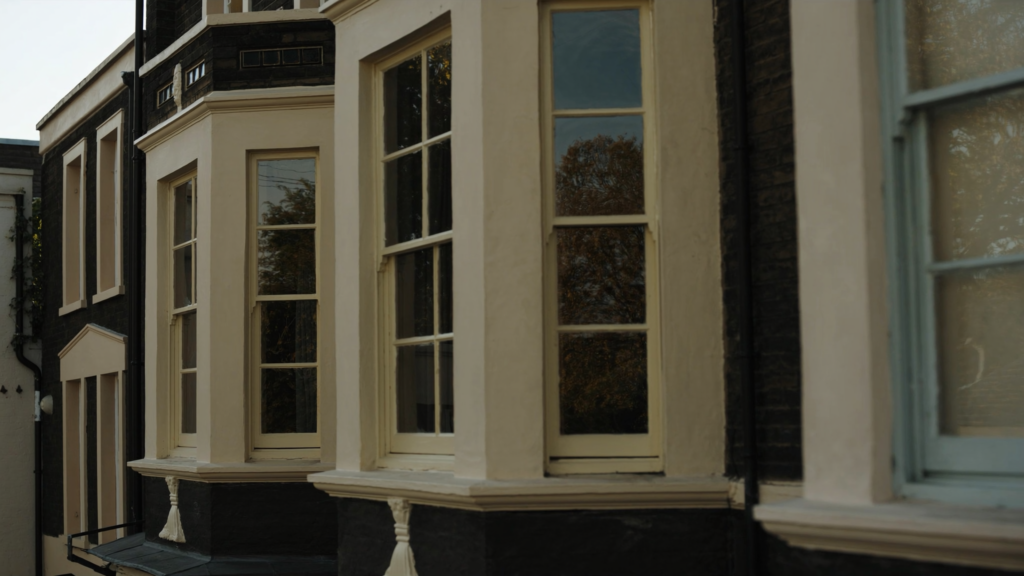
Semi-detached properties in areas like Torrisholme and Westgate tend to have larger window openings with bay windows at the front, and bay windows are one of the trickier jobs in double glazing. They require either a purpose-made bay unit or careful measurement of multiple angles, and the cost reflects that complexity. Don’t assume a bay window is the same price per pane as a standard casement.
A few practical realities worth knowing before you start
- Older Morecambe homes often have rubble-filled cavity walls, which can complicate lintel conditions above windows, your installer should check this
- Salt air from the bay accelerates corrosion on cheaper hardware, this is a real consideration for any property within half a mile of the seafront
- Parking and access on narrow terraced streets can add time (and occasionally cost) to installation days
- Properties in Morecambe Conservation Area near the seafront promenade have specific restrictions on window styles, more on this below
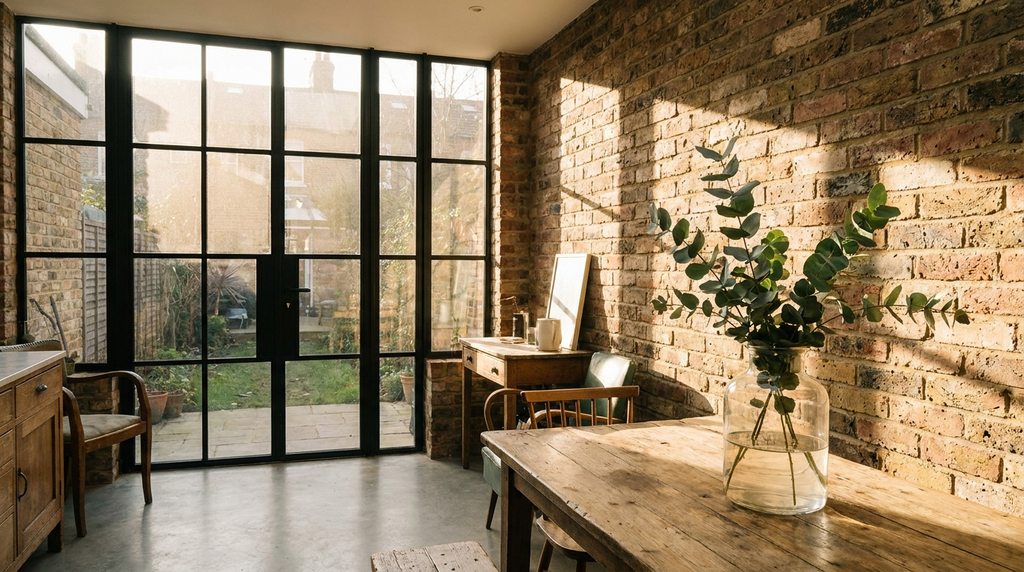
- Some inter-war semis still have original steel Crittall-style windows, which need specialist replacement rather than a standard UPVC swap
How Much Double Glazing Costs in Morecambe and Across the North West in 2026
Let’s talk real numbers. Prices in Morecambe sit slightly below the national average but are broadly in line with the North West region. Labour costs here are more affordable than in Manchester or Lancaster city centre, but installer travel time from larger depots (many are based in Preston or Lancaster) can sometimes add a modest surcharge for larger jobs.
| Property Type | Number of Windows | Standard UPVC (A-rated) | Premium UPVC or Composite | Aluminium Slim-Frame |
|---|---|---|---|---|
| Mid-terrace (2-bed) | 5–7 windows | £2,800–£3,800 | £3,800–£5,200 | £5,500–£7,500 |
| End-terrace (3-bed) | 7–9 windows | £3,600–£4,800 | £4,800–£6,500 | £6,500–£9,000 |
| Semi-detached (3-bed) | 8–11 windows | £4,200–£5,800 | £5,800–£7,800 | £7,500–£11,000 |
| Semi-detached with bay | 9–12 windows + bay | £5,000–£6,800 | £6,800–£9,200 | £9,000–£13,500 |
| Front door (composite) | 1 door | £950–£1,400 | £1,400–£2,200 | £1,800–£2,800 |
For context, equivalent jobs in Lancaster typically cost 5–10% more due to higher overheads, while Carnforth and Garstang are broadly similar to Morecambe. Ulverston jobs occasionally attract a small travel premium from North West-based companies. The national average for a 3-bed semi with double glazing runs around £5,500–£7,000, so Morecambe is genuinely competitive.
One insider tip, getting quotes in late autumn or January tends to unlock better pricing. Installers in this region are busy through spring and summer, but they actively seek work in quieter winter months. You won’t get a worse job, and you might save 10–15%.
How Morecambe’s Coastal Position Changes What You Actually Need
Morecambe is a coastal town that genuinely sits on the edge of one of the UK’s largest estuaries, and that changes your double glazing requirements in ways that a standard showroom brochure won’t tell you. The prevailing south-westerly winds sweep across Morecambe Bay with very little to slow them down, meaning seafront and west-facing properties experience genuine wind-driven rain that tests seals, gaskets, and frame quality far harder than an inland property would.
For homes on Marine Road, the West End streets, or anywhere facing the prom, specifying a higher weather rating on your windows isn’t an upsell, it’s a practical necessity. Look for frames and seals rated to at least Class 3 air permeability and Class 3A water tightness under BS6375. Any reputable installer covering the Morecambe area should know what this means and specify it without you having to ask.
Salt air is the other factor. Cheaper UPVC hardware, hinges, handles, locking mechanisms, can corrode noticeably within a few years on exposed coastal properties. Spending a little more on stainless steel or quality-coated hardware pays for itself. The same applies to any aluminium frames, which should have a proper marine-grade powder coat rather than a basic anodised finish.
Inland areas like Torrisholme and Heysham Village are somewhat more sheltered, so the standard specifications are fine there, but even here, Morecambe’s above-average rainfall (the wider Lancaster district sees around 1,000mm per year) means good drainage channels in the sill design matter for keeping water out over the long term.
The Products and Specifications That Actually Perform Well Here
Based on Morecambe’s conditions, here’s what genuinely works well, and what to avoid.
For the majority of terraced and semi-detached homes, a high-quality A-rated or A+-rated UPVC casement window with a warm-edge spacer bar (rather than the old aluminium spacer) will do an excellent job. The warm-edge spacer dramatically reduces condensation at the glass edge, which is particularly valuable given Morecambe’s damp winters. Brands like Rehau and Veka are widely installed in the region and have strong supply chains through local fabricators.
For seafront and exposed west-facing properties, consider stepping up to triple glazing for the windows that take the brunt of the weather. Triple glazing costs roughly 20–25% more than double, but on a property where the prevailing wind hits the front elevation hard, the improvement in comfort and noise reduction is substantial. The U-value drops from around 1.2 W/m²K for a good double-glazed unit to around 0.8 W/m²K for triple, and that difference is felt on cold, windy January nights.
For conservation area properties or Victorian terraces where a traditional aesthetic matters, flush-sash UPVC or timber-alternative frames are worth considering. Modern flush-sash windows sit flat within the frame like the original timber sashes, avoiding the chunky rebated look that can feel out of place on an 1890s Morecambe terrace. They cost more, typically 15–20% above standard casements, but they look right and they don’t require the same maintenance as real timber.
Key specifications to ask for as a minimum
- Whole-window U-value of 1.4 W/m²K or better (ideally 1.2 or below)
- Energy rating of A or A+ under the British Fenestration Rating Council scheme
- Argon gas fill between panes (standard on most modern units, confirm it’s included)
- Low-E (low emissivity) glass coating, this is the layer that reflects heat back into your room
- Warm-edge spacer bar rather than aluminium spacer
- For any seafront or exposed property, stainless steel hardware as standard
Finding a Trustworthy Installer in and Around Morecambe
The installer landscape around Morecambe covers a fairly tight geographic cluster. Most companies serving this area are based in Lancaster, with some operating from Preston or Carnforth, and they typically cover Morecambe, Heysham, Bolton-le-Sands, Carnforth, and Garstang as their core patch. A few specialist firms come from further afield (Blackpool, Barrow-in-Furness) for particular product types, but for standard double glazing you want someone local enough to return if there’s a warranty issue.
The most important certification to check for is FENSA registration. In England and Wales, any installer fitting replacement windows in an existing home must either be FENSA-registered or obtain a building regulations certificate through the local council (Lancaster City Council in your case). FENSA registration means the installer self-certifies compliance, which saves you having to apply separately. Always ask for the FENSA number and verify it at the FENSA website, it takes 30 seconds and weeds out a lot of chancers.
TrustMark registration is also worth looking for. It’s a government-endorsed quality scheme and adds an extra layer of accountability. For any installer you’re seriously considering, also check their Google and Checkatrade reviews specifically for Morecambe and Lancaster jobs, regional reputation matters.
Questions worth asking every installer who quotes
- Are you FENSA-registered, and will you provide the certificate after installation
- Who fabricates your frames (in-house or bought in) and which profile system do you use
- What is the warranty on the sealed units and on the frames separately
- Have you worked on properties in conservation areas in Morecambe or Lancaster before
- How do you handle access on narrow terraced streets, do you need a parking arrangement
- What’s your current lead time for installation
Current lead times in the North West are running at around 4–8 weeks for most installers. Be wary of anyone offering installation within a week of quoting, that either means they’re struggling for work (worth asking why) or they’re cutting corners on manufacturing time for the units.
Grants and Funding Available to Morecambe Residents in 2026
This is where Morecambe’s Band E average EPC rating actually works in your favour. Lower EPC ratings make you more likely to qualify for government-backed support, and there are several routes worth exploring.
The Great British Insulation Scheme (GBIS) is one of the most accessible options for Morecambe homeowners. It’s income and EPC-linked, and homes rated Band E, F, or G are explicitly prioritised. Eligible households can receive free or heavily subsidised energy efficiency improvements, and while the scheme leads with insulation, some upgrade packages can include window improvements as part of a broader measure. Contact Lancaster City Council’s energy efficiency team, they can assess your eligibility and connect you with approved assessors.
ECO4 (Energy Company Obligation) is the other major route. If your household receives means-tested benefits (Universal Credit, Pension Credit, Child Tax Credit and others), your energy supplier is obligated to fund improvements under this scheme. Double glazing can be included as part of an ECO4 package if it’s identified as a recommended measure in your home assessment. The key is getting an ECO4 survey done, your energy supplier or a TrustMark-registered assessor can arrange this.
The Warm Homes Plan, introduced at a national level, continues to provide funding directed through local authorities for households with low incomes and poor energy performance. Lancaster City Council administers local allocations, it’s worth contacting them directly or checking the council’s website to see what’s currently available for Morecambe residents.
Eligibility indicators that suggest you should investigate grants immediately
- Your home is EPC Band E, F, or G (very common in Morecambe)
- You receive any means-tested benefit
- Your household income is below approximately £31,000 per year
- You are over 65 or have a long-term health condition affected by cold homes
- You are a private tenant, your landlord may have obligations under the Minimum Energy Efficiency Standards
Planning Permission and Local Authority Requirements in Morecambe
For most Morecambe homeowners, double glazing replacement falls under permitted development rights, meaning you don’t need to apply for planning permission. This applies to standard replacements in terraced and semi-detached homes where the new windows are broadly similar in appearance to the originals. Lancaster City Council follows standard national planning guidance here, and FENSA registration handles the building regulations side automatically.
However, there are important local exceptions. Morecambe has several designated conservation areas, and properties within them face stricter rules. The Morecambe Conservation Area covers sections of the seafront and some of the older residential streets near the town centre, if your property is in this area, any window replacement technically requires planning consent unless it can be demonstrated to be like-for-like in appearance and materials. In practice, UPVC is often not considered acceptable in