Why Bolton Homeowners Are Looking at Double Glazing Right Now
There’s a quiet but very real revolution happening on Bolton’s terraced streets. From the Victorian rows of Halliwell and Tonge Moor to the post-war semis of Breightmet and Horwich, homeowners are replacing tired single glazing and ageing double-glazed units at a faster rate than at any point in the last decade. And honestly, it makes complete sense given where we are in 2026.
Bolton sits at Band D on the EPC scale, right at the national average, which sounds reassuring until you realise that Band D means your home is almost certainly losing a significant chunk of heat through its windows every single winter. With gas at its current rates and Bolton homes averaging 12,500 kWh of gas usage per year, that’s a heating bill that stings. Modern double glazing directly targets one of the most persistent heat loss points in the typical Bolton terrace or semi.
There’s also the Greater Manchester Combined Authority’s retrofit push to consider. The GMCA has been backing insulation and glazing upgrades across its ten boroughs, and Bolton Council has been channelling that energy into its housing improvement schemes. More on funding later, but know that there’s genuine financial help available right now if you qualify, which makes this one of the best moments in years to make the move.
What Double Glazing Actually Involves for a Typical Bolton Home
If your home is one of the hundreds of thousands of Victorian and Edwardian terraces that line Bolton’s residential streets, think areas like Great Lever, Farnworth, and the older parts of Heaton, the reality of a double glazing installation is slightly more involved than a glossy brochure suggests.
These properties were built between roughly 1870 and 1920 with thick stone or brick reveals and timber frames that have, over a century, shifted, settled, and sometimes warped. That’s not a disaster, it just means a good installer needs to take careful measurements and potentially trim or re-seal around the frame rather than assuming a standard-size unit will drop straight in. Rushing this step is where problems start, so don’t let anyone quote you without a proper survey.
Post-war semis, particularly on estates built from the 1950s through to the 1980s in areas like Westhoughton, Harwood, and Lostock, tend to be more straightforward. Frames are more regular, reveals are shallower, and access is generally easier since most semis have side access and off-road parking that installers genuinely appreciate (Bolton town centre terraces on narrow streets can be genuinely awkward for delivery and installation days).
Key installation considerations for Bolton properties:
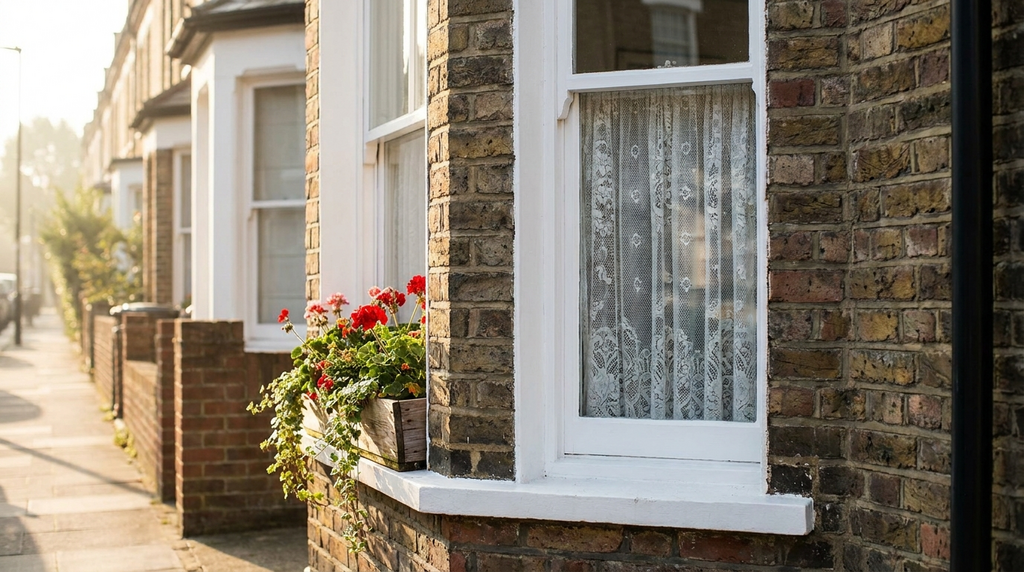
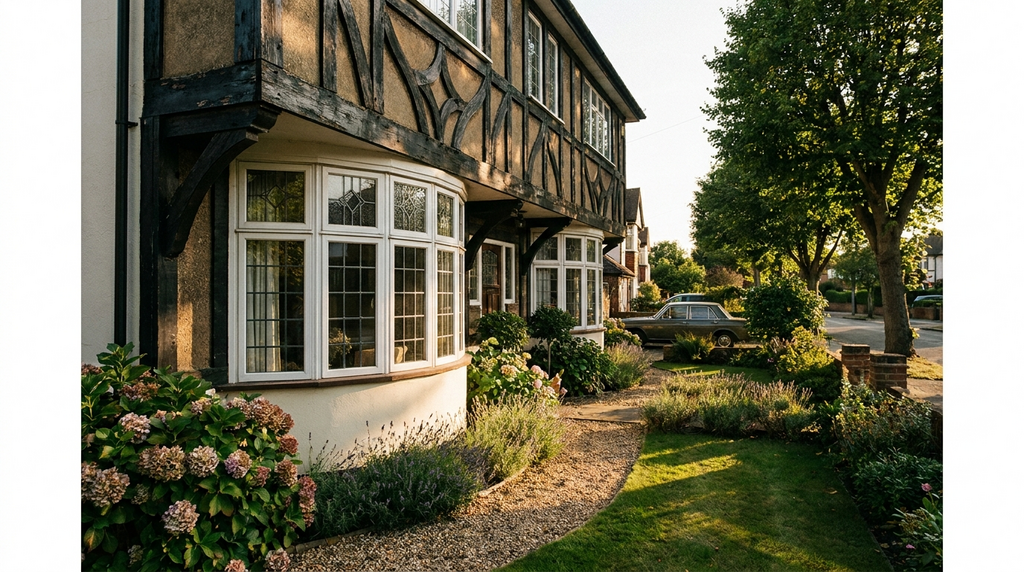
- Victorian bay windows, very common in Bolton terraces, require specialist bay frame systems and add cost, but transform both the look and thermal performance of a front room
- Narrow streets in older parts of town can make large-pane deliveries tricky; some installers charge a small access premium
- Stone lintels and reveals need careful sealing to prevent cold bridging, a step that cheaper installers sometimes skip
- Older homes may have lead paint around existing frames; responsible installers will flag this and handle disposal correctly
- Sash window homes (common in better-quality Edwardian streets near Bolton town centre) need sash-specific double glazed units to preserve character
How Much Double Glazing Costs in Bolton and the North West Area in 2026
Let’s talk real numbers, because vague ranges are useless when you’re trying to budget. Bolton sits in a sweet spot for labour costs, cheaper than central Manchester or Salford, broadly in line with Bury and Wigan, and slightly more competitive than you’d find in the affluent commuter belt to the south. Here’s what you should realistically expect to pay in 2026.
| Property Type | Number of Windows | Standard uPVC Double Glazing | A-Rated uPVC Double Glazing | Triple Glazing Upgrade |
|---|---|---|---|---|
| Mid-terrace (2-bed) | 4-5 windows | £2,800 – £3,400 | £3,200 – £4,000 | £4,200 – £5,200 |
| End-terrace (3-bed) | 6-7 windows | £3,600 – £4,400 | £4,200 – £5,200 | £5,400 – £6,800 |
| Semi-detached (3-bed) | 7-9 windows | £4,200 – £5,400 | £5,000 – £6,400 | £6,600 – £8,200 |
| Semi-detached (4-bed) | 9-11 windows | £5,200 – £6,600 | £6,200 – £7,800 | £8,000 – £10,400 |
| Bay window addition | Per bay | £600 – £900 extra | £800 – £1,100 extra | £1,100 – £1,600 extra |
These figures include supply, installation, removal of old frames, and basic making-good. They assume standard white uPVC frames, coloured or woodgrain finishes add roughly 10-15% to the frame cost. Aluminium frames, which are increasingly popular on modern homes in areas like Lostock and Horwich, cost around 25-35% more than equivalent uPVC.
For comparison, equivalent jobs in central Manchester or Salford typically run 8-12% higher due to parking restrictions, congestion charges, and higher overheads. Wigan and Leigh installers price very similarly to Bolton. If you’re getting quotes, companies based in Bolton and serving the Bury-Leigh-Wigan cluster (which is most local installers’ natural patch) won’t be padding the price for travel time.
How Bolton’s Weather and Location Affect Your Double Glazing Choices
Bolton doesn’t get the brutal Atlantic exposure of somewhere like Blackpool or the Cumbrian coast, but don’t be fooled into thinking this is mild central England either. The town sits on the western edge of the Pennines, and when a south-westerly system rolls in off the Irish Sea, which it does frequently between October and March, Bolton gets the full benefit of Greater Manchester’s 870mm-plus annual rainfall hitting houses that face the prevailing weather.
This matters for your glazing choices in several specific ways. First, the seals and gaskets on cheaper double glazing units degrade faster in persistently wet conditions. Investing in units with quality EPDM rubber gaskets and thermally broken frames is genuinely worth it here, not just marketing language. Second, the moderate but persistent dampness means any poorly fitted frame that allows even small amounts of water ingress will lead to condensation between panes or mould growth around reveals within a couple of winters.
Bolton also gets a meaningful temperature swing, winters regularly drop to 0-3°C overnight, and the town’s elevation (it sits noticeably higher than Manchester city centre) means it can feel a degree or two colder than neighbouring lower-lying areas like Leigh or Salford. A window’s U-value, which measures heat loss, matters here. Aim for U-values of 1.2 W/m²K or below for the whole window unit, not just the glass pane.
What this means practically:
- Low-e coated glass is a must, it bounces heat back into the room rather than letting it bleed out on cold nights
- Argon gas filling between panes outperforms air-filled units in Bolton’s cold winters and is worth the small premium
- West and south-west facing windows take the most weather punishment, prioritise these if you’re replacing in phases
- Warm-edge spacer bars (instead of standard aluminium spacers) reduce cold bridging at the frame edge, cutting condensation significantly in damp conditions
The Products and Options That Work Best Here
Given everything above, here’s an honest expert view on what actually performs well in Bolton’s specific mix of Victorian housing stock, moderate-but-wet climate, and typical household budgets.
For most Bolton terraces and semis, A-rated uPVC double glazing with argon fill and warm-edge spacers hits the sweet spot. It’s not the cheapest option, but the performance jump over basic double glazing is significant, we’re talking whole-window U-values around 1.2-1.4 W/m²K versus 1.8-2.0 W/m²K for budget units. In a 3-bed terrace in Great Lever or Tonge Moor, that difference translates to noticeably warmer rooms and lower bills, not just a marginal improvement on paper.
Triple glazing is worth considering if you’re on a particularly exposed street, properties on higher ground in Bromley Cross or Egerton, for example, or if you’re next to a busy road and noise is a factor alongside heat retention. Triple glazing’s main advantage in Bolton’s climate is the significant noise reduction and the extra thermal buffer on bitter nights. Budget around 25-30% more than A-rated double glazing for triple.
For older Bolton properties with character windows, Heritage-style flush casement windows in a foiled woodgrain finish are worth the modest premium. They satisfy most conservation area requirements (see below) and actually look appropriate on a Victorian terrace in a way that standard white uPVC frankly doesn’t. Sash-style double glazed units are available for properties that originally had sliding sash windows, don’t let anyone talk you into casements just because they’re simpler to fit.
Recommended specification for a typical Bolton home:
- Frame material, uPVC (standard) or composite (premium, better longevity in wet conditions)
- Glass, low-e coated, argon-filled, 28mm double-glazed unit minimum
- Spacer bars, warm-edge (thermoplastic or stainless steel, not standard aluminium)
- Target whole-window U-value, 1.2 W/m²K or better
- Energy rating, BFRC Window Energy Rating of A or A+
- Ventilation, trickle vents included (required under current Building Regulations for replacement windows)
How to Find a Trustworthy Double Glazing Installer Near Bolton
Bolton has good installer coverage, you’re not in a rural area where you’re dependent on whoever happens to cover your postcode. The local market is served by a mix of national companies with regional offices, Greater Manchester-based firms, and genuinely local Bolton and Bury independents. The independents are often the sweet spot, competitive pricing, local reputation to protect, and actually able to get back to you within a day when there’s a problem.
The certification to look for without exception is FENSA registration. All replacement window installers in England are required to self-certify their work under Building Regulations, and FENSA is the main competent person scheme for glazing. An installer registered with FENSA will issue you a certificate automatically, this is what you’ll need when you sell your home. No FENSA registration is a serious red flag, not a minor oversight.
Questions to ask any installer before signing anything:
- Are you FENSA registered, and will you provide a FENSA certificate on completion
- Do you carry £2m public liability insurance (ask to see proof)
- What is the manufacturer’s guarantee on the sealed units, and what is your installation guarantee
- Will you survey in person before providing a firm quote, or are you quoting blind
- Who actually does the fitting, your own employed team, or subcontractors
- What is your current lead time for installation
In 2026, typical lead times for Bolton installers range from 4-8 weeks for standard uPVC work, and 8-12 weeks if you’re ordering non-standard colours or timber-look finishes. If someone is promising to start next week and pushing for a deposit today, walk away. Reputable installers have full order books and don’t need high-pressure tactics.
Installers based in Bolton commonly cover the wider cluster of Bury, Leigh, Wigan, and Salford, so don’t limit your search to Bolton postcodes only. A well-reviewed firm based in Farnworth or Bury servicing all four towns is often a better bet than a large national company whose local team changes frequently.
Grants and Funding That Could Reduce Your Costs in 2026
This is where things get genuinely interesting for Bolton homeowners, because the funding landscape in 2026 is better than it’s been for years, if you know where to look.
ECO4 (Energy Company Obligation 4) is the big one. If your household income is below £31,000, you receive certain means-tested benefits, or your home is rated EPC Band D or below (which most Bolton homes are), you could qualify for fully funded or heavily subsidised glazing as part of a wider energy efficiency package. Bolton Council works with approved ECO4 installers, and the process starts with a benefits check and EPC assessment. Glazing alone isn’t usually funded under ECO4, it typically needs to be part of a package that includes insulation, but if you’re replacing single glazing in an older terraced home, there’s a real chance you qualify for substantial help.
The Great British Insulation Scheme (GBIS) runs alongside ECO4 and focuses on single measures for homes in lower EPC bands. Again, Band D Bolton properties sit right at the eligibility boundary, worth checking even if you’ve been told you don’t qualify before.
Greater Manchester’s Retrofit Programme, delivered through the GMCA’s housing partnerships, has been rolling out across all ten boroughs including Bolton. The scheme has targeted funding for private homeowners as well as social housing. Contact Bolton Council’s housing improvement team directly to ask what’s currently active, as specific scheme availability changes across the year.
0% VAT on glazing applies when double glazing is installed as an energy efficiency measure on an existing residential property, this has been in place since 2022 and remains current in 2026, saving you 20% compared to a standard-rated job.Glazing is standard-rated for VAT at 20%. The zero rate for energy-saving materials covers insulation, heat pumps and solar panels; HMRC names secondary and double glazing as excluded (VAT Notice 708/6).
A quick eligibility summary:
- ECO4, benefits recipient or income under £31,000, EPC D or below, usually needs insulation element too
- GBIS, EPC D or below, single measure possible, less strict income criteria than ECO4
- GMCA Retrofit, check with Bolton Council for current active rounds
- Glazing is standard-rated for VAT at 20%. The zero rate for energy-saving materials covers insulation, heat pumps and solar panels; HMRC names secondary and double glazing as excluded (VAT Notice 708/6).
Planning Permission and Regulations in Bolton
Here’s the good news for most Bolton homeowners, replacing like-for-like double glazing in a standard terraced or semi-detached house does not require planning permission. It falls under Permitted Development rights, provided the replacement windows are broadly similar in appearance to the originals and the property isn’t in a designated area.
Bolton Metropolitan Borough Council administers planning across the borough,