Why Rawtenstall Homeowners Are Waking Up to Double Glazing Right Now
There’s a particular kind of cold that settles into the Rossendale Valley in January. You’ll know it if you’ve lived here, that damp, bone-deep chill that rolls in off the moors above Rawtenstall and finds every draughty window frame in a Victorian terrace on Bacup Road or a 1950s semi on the edges of town. It’s not imagination. Rawtenstall sits at around 150 metres above sea level, tucked into the valley of the River Irwell, and that geography means cool, wet air funnels through with real persistence.
Right now, Rawtenstall homeowners are actively looking at double glazing for two very practical reasons. First, the town’s average EPC rating is Band E, that’s below the national average of Band D, which means most homes here are genuinely inefficient and energy bills reflect that. Second, the combination of Rossendale Borough Council’s growing interest in retrofit and the national ECO4 scheme means there’s real funding available for eligible households. It’s rare that timing lines up this well between need and opportunity.
If your windows are original single-glazed units, or even older double glazing from the early 2000s, the performance gap between what you have and what modern A-rated double glazing can offer is enormous. This guide is written specifically for homes in Rawtenstall, the terraces, the semis, the stone-built Victorian properties, not for some average UK house that doesn’t really exist.
What Double Glazing Actually Involves for a Typical Rawtenstall Home
Most homes in Rawtenstall fall into two broad categories, the older Victorian and Edwardian terraces that line the main streets and side roads through the town centre, and the post-war semis that spread out toward Crawshawbooth and Waterfoot. Each of these has its own quirks for double glazing installation.
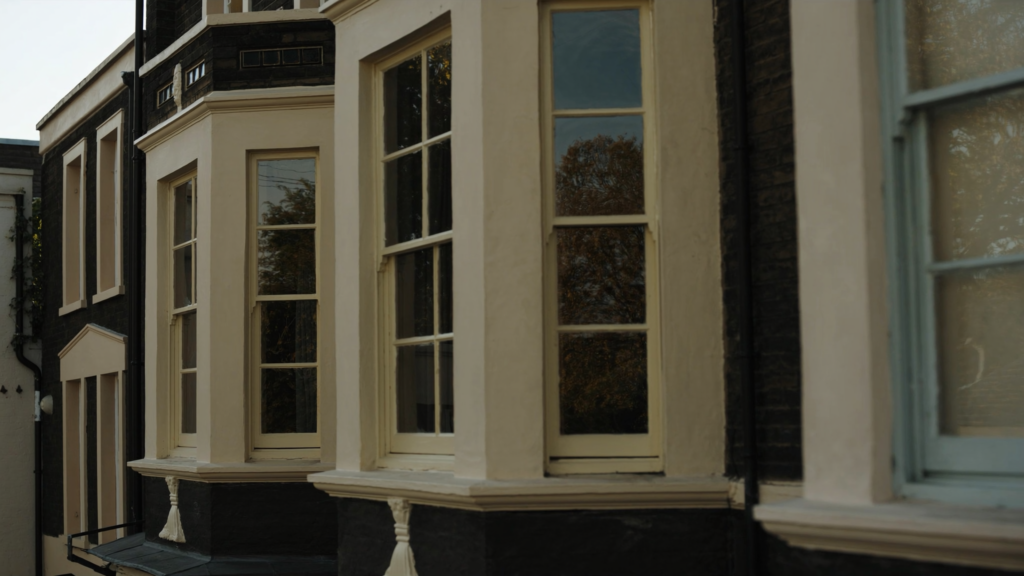
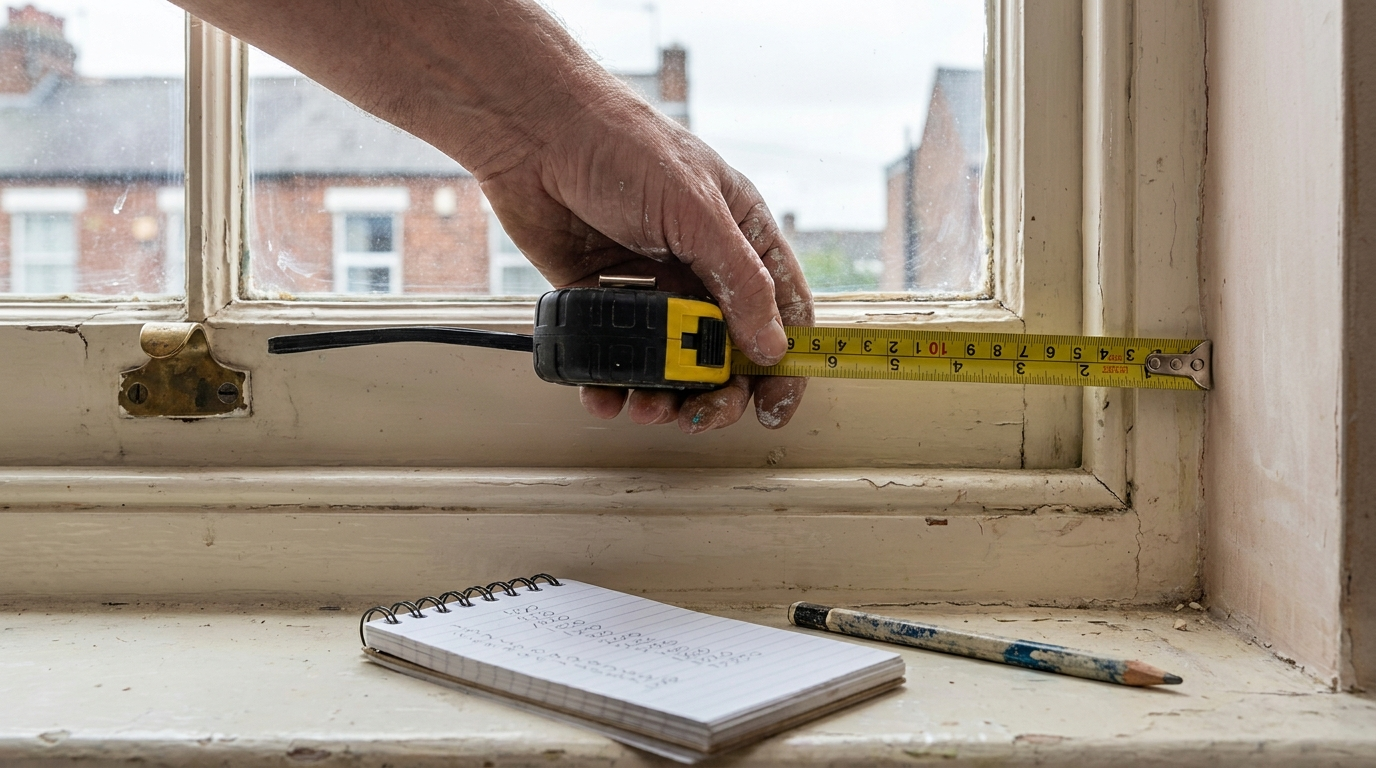
The Victorian terraces, particularly those built between 1870 and 1910, were constructed with thick stone or brick walls and window openings designed for timber sash frames. If your home still has those original sash windows, there are real decisions to make. Replacing them outright with uPVC casement windows is the most cost-effective option, but some homeowners choose timber or aluminium alternatives to preserve the character. The window reveals in older stone properties can be deep and irregular, which means a good installer needs to measure carefully, poorly fitted frames in these openings are a common source of draughts and condensation.
For the 1950s and 1960s semis, the original steel-framed Crittal windows were often replaced at some point, but not always with the best quality units. If your double glazing is more than 15 years old, it’s likely underperforming. The seals fail, the gas fill leaks out, and you lose most of the insulating benefit. These homes also tend to have larger window openings than the Victorian terraces, which slightly increases unit costs but also means you’ll feel the benefit more dramatically.
A few things that make installation in Rawtenstall specifically worth thinking about:
- Narrow access, Many terraces have no rear vehicle access and tight side passages. Installers need to carry frames through the house, which adds time and slightly increases labour costs compared to properties with drive access
- Stone lintels and cills, Original stone window cills are common and usually fine to work around, but occasionally need repair or replacement before new frames are fitted
- Uneven brickwork and mortar, Older properties can have uneven reveals that require more precise fitting and additional foam/sealant work
- Parking for installer vans, On some of the tighter streets near the town centre, parking restrictions or simply space can slow down delivery of frames and materials
None of these are deal-breakers, they’re just things a good local installer will already know about and price accordingly. Always ask whether they’ve worked on similar properties in Rawtenstall before.
How Much Double Glazing Costs in Rawtenstall and the North West Area in 2026
Let’s get into actual numbers, because vague estimates aren’t helpful when you’re budgeting. Prices below reflect typical 2026 costs for Rawtenstall and the surrounding Rossendale area, including labour. The North West sits slightly below the national average for installation costs, but not dramatically so, the savings on London prices are real but don’t expect a dramatic discount.
| Property Type | Number of Windows | uPVC Double Glazing | Timber Double Glazing | Aluminium Double Glazing |
|---|---|---|---|---|
| Mid-terrace (typical Rawtenstall) | 6–8 windows | £3,200–£4,800 | £5,500–£7,500 | £5,800–£8,000 |
| End-terrace / semi-detached | 8–12 windows | £4,500–£6,500 | £7,000–£10,000 | £7,500–£11,000 |
| Detached (3–4 bed) | 12–16 windows | £6,500–£9,500 | £10,000–£14,500 | £11,000–£15,500 |
| Single window replacement (supply and fit) | 1 | £350–£600 | £600–£950 | £650–£1,100 |
These figures assume standard casement windows without complicated shapes or heritage glazing bars. Bay windows and shaped units add roughly 20–35% to the cost of those individual frames. If your property is in a conservation area (more on that below), specialist glazing that meets planning requirements adds cost, budget an extra £150–£300 per window for heritage-style units with slim sightlines and correct glazing bar profiles.
Compared to nearby towns, Rawtenstall sits in the middle of the pack. Burnley (10km away) and Accrington (7km) have broadly similar pricing. Bury (12km), being closer to Greater Manchester, can be slightly more competitive due to higher installer density. If you’re getting quotes, it’s absolutely worth contacting installers based across this cluster of towns, many serve all of them routinely.
How Rawtenstall’s Weather and Location Affect Your Double Glazing Choices
Rawtenstall’s position in the Rossendale Valley gives it a distinct microclimate. The valley sits between the West Pennine Moors and the Forest of Rossendale, which means rainfall is higher than the national average, typically 900–1,000mm per year, and while it’s not as exposed as the Pennine ridge above, persistent damp and wind-driven rain from the west are real features of local weather.
What does this mean practically for your double glazing choices? Several things:
- Frame seals matter enormously, Wind-driven rain in the valley means lower-quality seals on frames and gaskets will fail faster than they would in drier, more sheltered areas. Specify Class 3 air permeability and Class 5A water tightness ratings as a minimum
- Thermal performance over solar gain, With only around 1,000–1,100 sunshine hours per year, the solar gain argument for special solar-reflective glass is weaker here than in sunnier regions. Focus your budget on U-values (heat loss) rather than g-values (solar transmittance)
- Condensation management, The damp valley air makes interstitial and surface condensation more of a risk. Warm-edge spacer bars (look for ones that achieve better psi-values than standard aluminium spacers) are genuinely worth the modest extra cost in Rawtenstall’s conditions
- Frame durability in damp conditions, uPVC is the most solid choice in wet, exposed conditions. Timber requires proper treatment and maintenance to resist moisture over time, not impossible, but a commitment
The good news is that Rawtenstall’s heating degree day figure of around 1,600–1,800 per year means upgrading to well-specified double glazing delivers meaningful and measurable savings rather than marginal ones. You’re heating your home hard for a good chunk of the year, and heat loss through poor windows is a real contributor to those bills.
The Products and Options That Work Best in Rawtenstall
Based on the conditions above, here’s what genuinely makes sense for most Rawtenstall homes rather than a generic product list.
uPVC A-rated double glazing with warm-edge spacers is the right choice for the majority of terraced and semi-detached homes here. Look for units with a whole-window U-value of 1.2 W/m²K or better (some premium units now achieve 1.0). The glass specification should be low-emissivity (low-E) coated, with argon fill, krypton fill is better but rarely justifies the cost premium in this climate.
For the Victorian stone terraces specifically, consider these product points:
- Sculpted or chamfered uPVC profiles look significantly better in older properties than flat-faced budget profiles, the price difference is usually only £30–£60 per window and the aesthetic improvement is real
- Woodgrain foil finishes in anthracite grey or Irish oak are popular across the Rossendale Valley and blend well with stone-built properties without the cost of real timber
- Trickle vents should be included on all new installations, building regulations require them, and in Rawtenstall’s damp conditions adequate ventilation matters for preventing mould
- Laminated safety glass on ground floor windows is worth specifying, it’s a modest upgrade that improves both security and safety
If you’re replacing original sash windows in a property that isn’t in a conservation area, a well-made uPVC vertical sliding sash is a reasonable compromise between character and performance. In a conservation area, you’ll likely need timber or aluminium sashes with slimmer profiles to satisfy Rossendale Borough Council.
How to Find a Trustworthy Double Glazing Installer Near Rawtenstall
Rawtenstall has a small local trade community, and for specialist work like window installation, most homeowners end up working with companies based across the wider cluster of towns, Accrington, Burnley, Bury, and Todmorden all have installers who cover Rossendale regularly. This is perfectly normal and nothing to be concerned about, but it does mean checking credentials carefully rather than assuming local familiarity.
The key certification to look for is FENSA registration. When a FENSA-registered installer fits your windows, they self-certify compliance with Building Regulations on your behalf, which is important when you come to sell your home. Without this, you’d need a Local Authority Building Notice, which adds cost and complexity. Always ask for the FENSA certificate on completion, your installer should provide it automatically.
Also look for:
- TrustMark registration, the government-endorsed quality scheme that covers home improvement trades
- Membership of the Glass and Glazing Federation (GGF), a trade body with a deposit indemnity scheme that protects your payment if the company fails
- Insurance-backed guarantees, most reputable installers offer 10-year guarantees, but check these are backed by an independent insurer, not just the company itself
Red flags to watch for include pressure selling (“this price is only valid today”), no physical business address in the area, requests for large deposits before any work begins, and reluctance to provide references from local jobs. In the North West, typical lead times for a full house of windows run to 4–8 weeks from order to installation in 2026, depending on installer workload and any bespoke glazing requirements.
When getting quotes, always get at least three, and make sure they’re quoting identically specified products, comparing a basic uPVC quote with a premium warm-edge argon-fill quote isn’t an apples-to-apples comparison. Ask each installer to confirm the U-value of the finished unit in their quote in writing.
Grants and Funding That Could Reduce Your Costs in 2026
This is genuinely important for Rawtenstall residents, because the town’s average Band E EPC rating means a significant proportion of households qualify for help that many homeowners don’t know they’re entitled to.
ECO4 (Energy Company Obligation Scheme) is the main national grant programme and Rawtenstall households are well-positioned to benefit. ECO4 targets homes with EPC ratings of Band D or below, that’s most of Rawtenstall. If your household receives qualifying benefits (including Universal Credit, Pension Credit, Child Tax Credit, or others) or if your home has an EPC of E, F, or G and your household income is under £36,000, you may qualify for fully or partly funded window upgrades as part of a wider retrofit package. Double glazing isn’t typically funded in isolation under ECO4, but as part of a whole-house approach it’s often included.
The Great British Insulation Scheme closed on 31 March 2026. It funded insulation measures only and never covered windows or glazing. It targets homes in Council Tax bands A–D, which covers a large proportion of Rawtenstall properties. Again, EPC Band E homes are a priority.
Rossendale Borough Council periodically runs or participates in area-based retrofit schemes, often channelled through the Greater Manchester Combined Authority’s retrofit programmes or Lancashire-specific initiatives. It’s worth contacting the council directly or checking their website to ask what’s currently available, these schemes open and close through the year and are often undersubscribed simply because residents don’t know about them.
To check your eligibility for national schemes, the Simple Energy Advice service (gov.uk) is the starting point. For ECO4, you can also approach a registered ECO4 installer directly, they’ll carry out a free eligibility check. Don’t pay anyone to check your eligibility; this should always be free.
Planning Permission and Regulations in Rawtenstall
For most Rawtenstall homeowners, replacing windows with double glazing falls under Permitted Development rights, meaning you don’t need to apply for planning permission, provided the replacement windows are similar in appearance to the originals and don’t use materials that are materially different from what’s already there.
However, there are important exceptions specific to this area:
Conservation areas, Rawtenstall town centre and some surrounding streets fall within designated conservation areas administered by Rossendale Borough Council. If your property is within one of these areas, Permitted Development rights for window replacement are removed. You’ll need to apply for planning permission, and the council will typically require that replacement windows match the style, material, and glazing bar configuration of the originals. This usually means timber or aluminium rather than uPVC, and authentic sash profiles on Victorian properties rather than modern casements. Always check the Rossendale Borough Council planning portal or call their duty planner before ordering, it’s a straightforward check that could save you an enforcement notice.
Listed buildings, If your property is Listed (there are some listed buildings in the Rawtenstall area, including some of the older mill