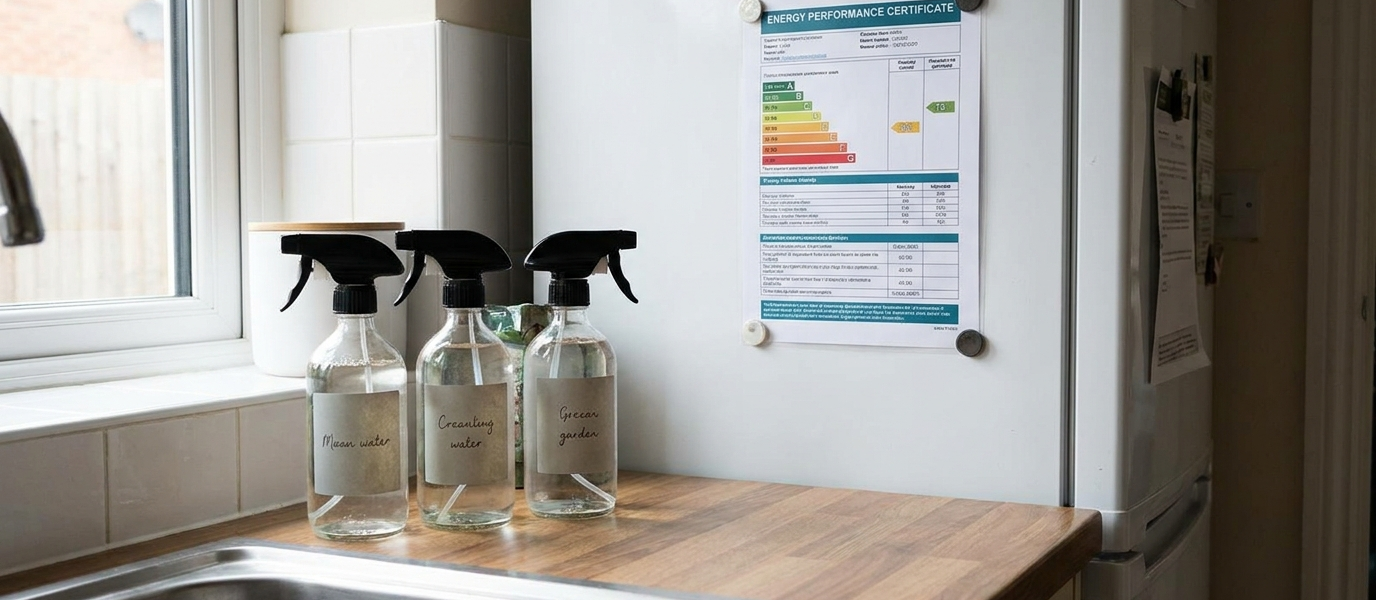
Sixteen natural cleaning products passed The Independent’s tests last month, but for UK homeowners, the real story is what they leave out of your home. Not just microplastics and VOCs, but the hidden energy cost of ventilating a house full of chemical fumes.
As reported by The Independent, the 16 products range from multi-surface sprays to laundry tablets. But the testers focused on cleaning power, not what happens after you wipe down the worktop. That matters because every spritz of conventional cleaner releases volatile organic compounds into your indoor air.
How cleaning products affect your EPC
Your Energy Performance Certificate rates ventilation efficiency. A home with poor air quality often needs mechanical ventilation, extractor fans, MVHR systems, which consume electricity. Ofgem estimates running a typical MVHR unit costs about £50 a year on a 3-bed semi. Switch to low-VOC cleaning products, and you may reduce the need for such systems, improving your EPC score indirectly. The Energy Saving Trust notes that airtight homes, common in new builds, trap chemical residues more than older draughty ones.
What to look for on the label
Not all ‘green’ labels are equal. The UK has no mandatory eco-cleaning standard, so certification matters. EU Ecolabel, UK Soil Association, and COSMOS organic certifications are reliable. Avoid vague terms like ‘natural’ or ‘plant-based’, they have no legal definition. A 2023 Which? investigation found 40% of products labelled ‘eco’ contained synthetic fragrances linked to allergies. The catch is that genuinely certified products can cost 20-30% more upfront, but bulk concentrates or refill pouches cut plastic waste and long-term cost.
Real-world action for homeowners
Start with the products you use most: kitchen spray, laundry detergent, and bathroom cleaner. Swap to concentrate tablets that you dissolve in water, they cut packaging by 90% and cost roughly 15p per use versus 30p for spray bottles. For EPC improvements, combine this with a simple trick: open windows for 10 minutes after cleaning, even in winter. That reduces moisture and VOCs without needing a powered fan. The government’s Clean Heat Grant does not cover cleaning products, but a lower ventilation load can help you meet the 2025 Future Homes Standard ventilation requirements.
Households on standard variable tariffs can start today. Check labels for EU Ecolabel or Soil Association certification. Bulk buy concentrate refills to cut cost per use. And if you are planning a retrofit, ask your assessor about low-VOC materials, they count towards EPC points. The Independent’s list is a useful starting point, but the real test is what stays out of your air.
Frequently Asked Questions
Using low-VOC eco cleaning products can indirectly improve your EPC rating by reducing the need for mechanical ventilation like extractor fans or MVHR systems, which consume electricity. For a typical 3-bed semi, running an MVHR unit costs about £50 a year according to Ofgem, and switching to eco products may lower this ventilation load. This helps meet the 2025 Future Homes Standard ventilation requirements and can positively influence your EPC score.
Look for EU Ecolabel, UK Soil Association, or COSMOS organic certifications, as the UK has no mandatory eco-cleaning standard. Avoid vague terms like 'natural' or 'plant-based' since they have no legal definition, a 2023 Which? investigation found 40% of 'eco' labelled products contained synthetic fragrances linked to allergies. Genuinely certified products cost 20-30% more upfront, but bulk concentrates or refill pouches cut plastic waste and long-term cost.
Eco cleaning concentrate tablets cost roughly 15p per use, compared to 30p per use for conventional spray bottles, a 50% saving. While certified eco products can be 20-30% more expensive upfront, bulk buying refill pouches or concentrates cuts packaging by 90% and reduces long-term costs. On a standard variable tariff, this switch is affordable and helps lower your home's environmental impact.
Yes, using low-VOC eco cleaning products reduces indoor air pollutants, which can lower the need for mechanical ventilation like MVHR systems in airtight new builds. The Energy Saving Trust notes that newer homes trap chemical residues more than older draughty ones, so eco products help meet the 2025 Future Homes Standard ventilation requirements. Opening windows for 10 minutes after cleaning further reduces moisture and VOCs without using powered fans.
No, the government's Clean Heat Grant does not cover cleaning products, but using low-VOC options can reduce your ventilation load and help meet building regulations. For EPC improvements, combining eco products with a simple trick, opening windows for 10 minutes after cleaning, cuts moisture and VOCs without extra cost. If you're planning a retrofit, ask your assessor about low-VOC materials, as they count towards EPC points.





