Why East Ayrshire Is Worth Paying Attention to When It Comes to Eco Homes
East Ayrshire sits in the centre of southwest Scotland, a county that stretches from the urban streets of Kilmarnock down through rolling farmland, former mining communities, and some genuinely dramatic upland countryside. It’s a place with real character, shaped by its industrial past and increasingly looking toward a greener future.
What makes East Ayrshire stand out is the mix. You’ve got a relatively compact population of around 46,000 residents, a strong sense of community identity, and a housing stock that, like much of Scotland, was built in an era when energy efficiency simply wasn’t a priority. That combination means there’s a huge opportunity here to make meaningful improvements that genuinely change how warm and affordable your home feels.
The climate matters too. Winters here are colder and wetter than the UK average, with prevailing westerly winds sweeping in from the Firth of Clyde. Your heating system works harder than it would in, say, Surrey. That means the financial case for insulation, better heating systems, and smarter energy use is actually stronger here than in many parts of England.
There’s also the Scottish funding picture to consider. Scotland’s residents have access to some of the most generous eco home support available anywhere in the UK, including schemes that simply don’t exist south of the border. If you own or rent a home in East Ayrshire, there’s a real chance you could make significant improvements at little or no upfront cost.
Understanding Energy Performance Across East Ayrshire Homes
The average EPC rating across East Ayrshire is Band D, which puts the county right at the national UK average. That sounds reassuring, but Band D is honestly not a great place to be. It means most homes here are losing heat faster than they should, and energy bills reflect that.
A typical Band D home in East Ayrshire using 13,500 kWh of gas per year and 3,300 kWh of electricity is likely paying somewhere around £1,800 to £2,200 annually on energy bills, depending on tariff and household habits. For households on fixed or low incomes, that’s a serious chunk of money.
The variation across the county is significant. Kilmarnock, as the main urban centre, has a wide range of housing types, from Victorian and Edwardian terraces in older neighbourhoods to post-war council estates and more modern developments on the fringes. The older the property, the more likely it is to sit at the lower end of Band D or even Band E.
Former mining villages and rural settlements across the county tend to have older, solid-wall properties that are particularly expensive to heat. Solid walls lose heat roughly twice as fast as cavity walls, and they require a different (and usually more expensive) insulation approach. If your home was built before the 1930s and you haven’t had any insulation work done, there’s a strong chance it’s costing you more than it needs to.
Newer estates, particularly those built from the 1990s onwards, tend to perform better, often sitting at Band C or even Band B. But even these homes can benefit from solar panels, heat pumps, and smart energy systems that reduce running costs further.
The good news is that moving from Band D to Band B is entirely achievable with the right combination of upgrades, and it can reduce annual energy bills by £600 to £1,000 or more depending on the property.
The Full Range of Eco Home Services Available in East Ayrshire
If you’re looking to make one targeted improvement or transform your home from top to bottom, there’s a broad range of services available to East Ayrshire homeowners. Here’s a practical rundown of what’s on offer and what each one actually does for you.
Solar Panels
Solar PV (photovoltaic) panels generate electricity from daylight, not just direct sunshine, which matters in a county that sees 850 to 1,000 sunshine hours per year. That’s on the lower end nationally, but modern panels are significantly more efficient than older models, and they’ll still generate meaningful electricity across a Scottish year.
A typical 4kWp system costs around £6,000 to £8,000 installed and can save a household £400 to £600 annually when combined with a battery storage unit and smart usage habits. Solar is particularly effective when paired with an electric vehicle charger or a heat pump.
Heat Pumps
Air source heat pumps are one of the most talked-about upgrades right now, and for good reason. They extract heat from outside air (even in cold Scottish winters) and use it to heat your home and hot water, typically producing 3 units of heat for every 1 unit of electricity used.
They work best in well-insulated homes, which is why heat pumps and insulation upgrades often go hand in hand. Supply and installation typically costs £8,000 to £14,000, though the Boiler Upgrade Scheme (BUS) grant can take £7,500 off that price for eligible households.
Insulation
Insulation is the unglamorous foundation that makes everything else work better. Loft insulation, cavity wall insulation, solid wall insulation, and underfloor insulation all have a role to play depending on your property type.
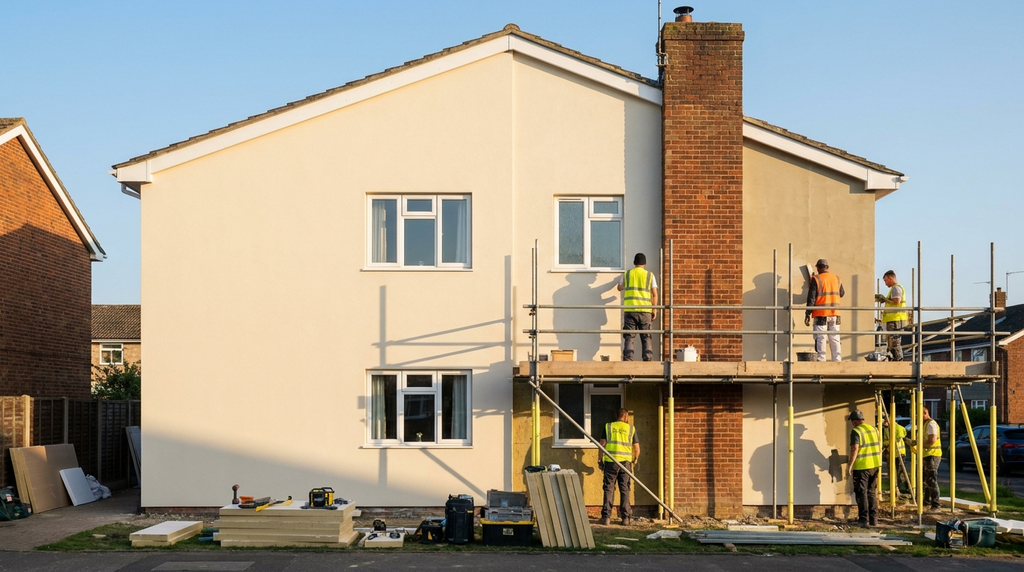
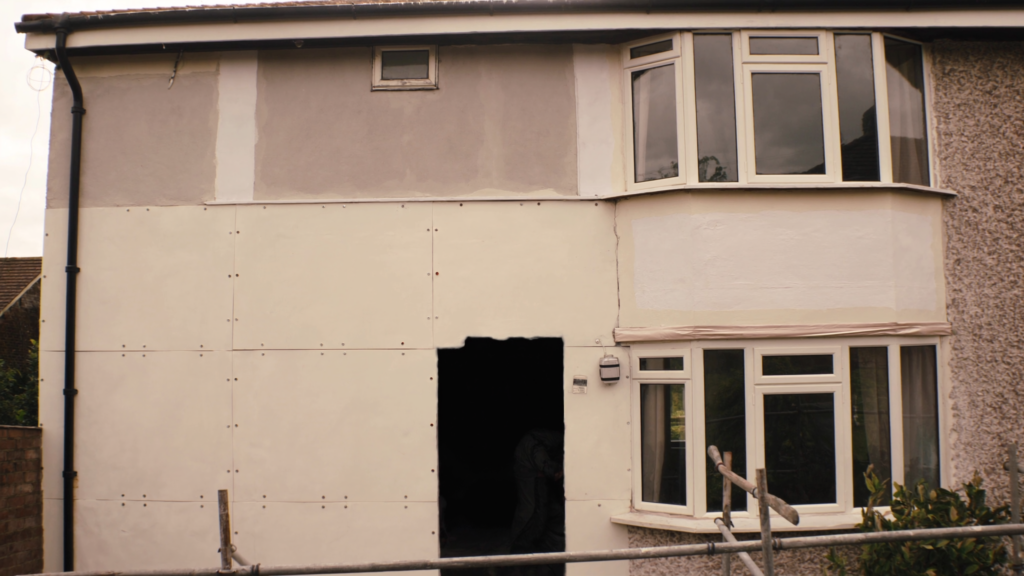
For a typical semi-detached or terraced home in Kilmarnock, loft insulation costs around £300 to £500 and can save £150 to £250 per year on its own. Cavity wall insulation is similarly cost-effective. External solid wall insulation is more expensive (£8,000 to £20,000 for a whole house) but can transform the performance of an older property.
Double and Triple Glazing
If your home still has single glazing or older double glazing from the 1990s, replacing it makes a noticeable difference to both warmth and noise. A full house reglaze typically costs £4,000 to £10,000 depending on the number of windows and specification chosen.
Energy Efficiency Improvements
Smaller improvements, smart thermostats, LED lighting throughout, hot water cylinder insulation, draught-proofing, and smart heating controls, often deliver surprisingly strong returns for their cost. Many of these can be done for under £500 in total and collectively save £100 to £200 per year.
Typical Costs and Savings for East Ayrshire Homes
The table below gives you a realistic picture of what common eco improvements cost in East Ayrshire, what you might save each year, and roughly how long they take to pay for themselves. Figures are based on a Band D home with average energy usage.
| Improvement | Terraced Home (typical cost) | Semi-Detached (typical cost) | Estimated Annual Saving | Approximate Payback Period |
|---|---|---|---|---|
| Loft Insulation (top-up) | £300 – £400 | £350 – £500 | £150 – £250 | 2 – 3 years |
| Cavity Wall Insulation | £500 – £700 | £600 – £900 | £150 – £300 | 3 – 4 years |
| External Solid Wall Insulation | £8,000 – £14,000 | £10,000 – £20,000 | £300 – £600 | 20 – 30 years |
| Solar PV (4kWp + battery) | £8,000 – £11,000 | £8,500 – £12,000 | £500 – £700 | 13 – 18 years |
| Air Source Heat Pump | £8,000 – £12,000 | £9,000 – £14,000 | £300 – £700 | 12 – 20 years |
| Double Glazing (full house) | £4,000 – £7,000 | £5,000 – £10,000 | £100 – £250 | 20 – 30 years |
| Smart Controls and Draught-Proofing | £200 – £400 | £200 – £450 | £100 – £200 | 2 – 3 years |
Practical tip, the best value upgrades for most East Ayrshire homes are insulation first, then smart controls, then solar or a heat pump once the fabric of the home is sorted. Putting a heat pump in a poorly insulated house is like filling a bath with the plug out.
Grants and Funding Available to East Ayrshire Residents in 2026
This is genuinely one of the most exciting parts of being a homeowner in Scotland right now. The funding landscape here is more generous than almost anywhere else in the UK, and a surprising number of people haven’t claimed what they’re entitled to.
Home Energy Scotland
This is the big one for Scottish homeowners. Home Energy Scotland offers free, impartial advice from trained advisors, plus access to interest-free loans of up to £15,000 to fund eco improvements. There’s also a cashback element for certain measures. You don’t have to be on a low income to qualify for the loan, it’s available to most homeowners in Scotland.
Warmer Homes Scotland
For households who are on certain benefits, have a low income, or include someone who is elderly or has a health condition made worse by cold, Warmer Homes Scotland can fund free improvements including insulation, heating upgrades, and even heat pumps. The value of measures available can reach £15,000 or more per household. East Ayrshire households should contact Home Energy Scotland to check eligibility.
ECO4 (Energy Company Obligation)
ECO4 is a UK-wide scheme that requires large energy suppliers to fund improvements for lower-income and fuel-poor households. In Scotland, ECO4 runs alongside Scottish Government schemes and can fund insulation, heating system upgrades, and more. Eligibility is based on income, benefits, and your current EPC rating, Band D or below typically qualifies.
The Boiler Upgrade Scheme (BUS)
If you’re replacing a gas boiler with a heat pump, the BUS scheme offers a £7,500 grant toward an air source heat pump. This is available across Great Britain including East Ayrshire. Your installer applies on your behalf, you just receive the reduced price at point of purchase.
Great British Insulation Scheme (GBIS)
The GBIS targets homes in the lower EPC bands with a single insulation measure, typically loft or cavity wall insulation. It’s available to both lower-income households and those in Band D or below regardless of income, though the eligibility rules are specific. Worth checking even if you think you won’t qualify.
| Scheme | Who It’s For | Maximum Support Available | Where to Apply |
|---|---|---|---|
| Home Energy Scotland Loan | Most Scottish homeowners | £15,000 interest-free loan | homeenergyscotland.org |
| Warmer Homes Scotland | Low income or vulnerable households | Free improvements, typically £5,000 to £15,000+ | Via Home Energy Scotland |
| ECO4 | Low income or Band D and below | Varies, can cover full installation costs | Via energy supplier or installer |
| Boiler Upgrade Scheme | Replacing gas boiler with heat pump | £7,500 off heat pump | Via MCS-certified installer |
| Great British Insulation Scheme | Band D and below / lower income | One free insulation measure | Via installer or energy supplier |
Start with Home Energy Scotland, they’ll help you work out which combination of schemes applies to your situation, and they’re genuinely helpful rather than trying to sell you anything.
Planning Permission and Local Authority Considerations in East Ayrshire
Most standard eco home improvements fall under permitted development rights, meaning you don’t need planning permission to install them. Solar panels on a rear roof slope, cavity wall insulation, and internal works typically don’t require any application at all.
However, East Ayrshire has its own planning framework administered by East Ayrshire Council, and there are situations where you’ll need to check before proceeding.
Solar panels on a front roof (visible from the street) may require consent in certain areas. Listed buildings, and East Ayrshire has a number of these, particularly in and around Kilmarnock’s historic core, require Listed Building Consent for most external and some internal alterations. This includes external wall insulation, replacement windows, and heat pump installations that affect the character of the building.
Conservation areas in and around Kilmarnock also have additional restrictions, particularly for changes to the external appearance of a property. It’s always worth a quick call to East Ayrshire Council’s planning department before commissioning work if your home is in one of these areas.
Scotland also operates under its own building regulations, Section 6 of the Building (Scotland) Regulations covers energy efficiency and is distinct from the Building Regulations that apply in England. Any significant works will need to comply with Section 6, and your installer should be aware of this. Always ask whether your installer is familiar with Scottish building regulations specifically.
For most terraced and semi-detached homes in Kilmarnock that aren’t listed or in a conservation area, the planning picture is straightforward. The main thing is to check rather than assume, and a good local installer will flag any issues before work begins.