Why Inverclyde Is One of Scotland’s Most Interesting Counties for Eco Home Improvements
Inverclyde sits on the southern bank of the Firth of Clyde, just west of Glasgow, and it has a character all of its own. This is a county shaped by shipbuilding history, dramatic coastal scenery, and tight-knit communities where neighbours still know each other’s names. Greenock, the county’s main town, carries that industrial heritage proudly, but it also carries a legacy of older, draughty housing that costs residents far more to heat than it should.
With a population of around 44,000 and a compact geographical footprint, Inverclyde is small enough that a single installer can cover the whole county from one base. That’s genuinely useful, because it keeps travel charges down and means you’re not competing with half of Scotland for a contractor’s diary.
What really sets Inverclyde apart is the combination of factors that make eco improvements both urgent and rewarding here. Cold, wet winters. Above-average heating bills. An average EPC rating of Band E, well below the Scottish national average. And a stack of grants available specifically for Scottish homeowners that can dramatically reduce what you actually pay out of pocket. If you’ve been thinking about upgrading your home’s energy performance, Inverclyde is genuinely one of the best places in the UK to do it right now.
Understanding Energy Performance Across Inverclyde, What Band E Really Means for Your Bills
An average EPC rating of Band E across Inverclyde tells a clear story. It means most homes here are losing heat faster than they should, relying heavily on gas or electric heating systems that were never built to be efficient, and costing homeowners significantly more than necessary every single year.
To put that in plain numbers, if your home is Band E, you’re likely spending somewhere in the region of £2,200 to £2,800 per year on energy bills, depending on your property size and heating habits. A well-insulated Band C or Band B home in a similar-sized property might spend £1,100 to £1,500. That gap, potentially over £1,000 a year, is money leaving your pocket that doesn’t need to.
Inverclyde’s housing stock is dominated by terraced properties and flats, many of which were built during the industrial boom of the late nineteenth and early twentieth centuries. These homes were built for workers, not for energy efficiency. Solid stone walls, single-glazed sash windows, and minimal or no loft insulation are common features, particularly in older parts of Greenock like the town centre and surrounding residential streets.
Homes built before 1930 tend to sit at the lower end of the EPC scale here, often Band E or even Band F. Post-war council housing from the 1950s and 1960s performs slightly better on average but still has significant room for improvement, particularly around heating systems and wall insulation. More modern properties from the 1990s onwards generally achieve Band D or above, though even these can benefit from solar panels or heat pump upgrades.
The good news is that Band E homes have enormous potential. Moving from Band E to Band C is entirely achievable for most Inverclyde properties, and with the grants currently available in Scotland, the cost of getting there is lower than it’s ever been.
The Full Range of Eco Home Services Available to Inverclyde Homeowners
If you’re starting with a single improvement or planning a full retrofit, here’s a straightforward overview of what’s available across Inverclyde right now.
Solar Panels
Solar photovoltaic (PV) panels generate electricity from daylight, not just direct sunshine, which matters a lot in Inverclyde’s climate. With around 850 to 1,000 sunshine hours per year, you won’t match what’s achievable in the south of England, but a well-positioned south-facing roof can still generate 2,500 to 3,200 kWh per year from a typical 4kW system. Given that the average Inverclyde home uses around 3,400 kWh of electricity annually, that’s a significant chunk of your electricity bill covered.
Battery storage is increasingly popular alongside solar panels. This allows you to store energy generated during the day and use it in the evening. Costs for a combined solar and battery system typically run from £8,000 to £12,000, though the Smart Export Guarantee means you also get paid for any surplus electricity you export to the grid.
Heat Pumps
Air source heat pumps are the heating upgrade getting the most attention across Scotland right now, and for good reason. They work by extracting heat from outside air (even on cold days) and using it to heat your home and hot water. They’re typically two to four times more efficient than a gas boiler for every unit of electricity they use.
For Inverclyde’s climate, they work well provided your home has decent insulation. The honest caveat is that a heat pump in a poorly insulated Band E home will struggle, so the best approach is usually to insulate first, then switch your heating system. Expect to pay £8,000 to £14,000 for a quality installation before any grants.
Insulation
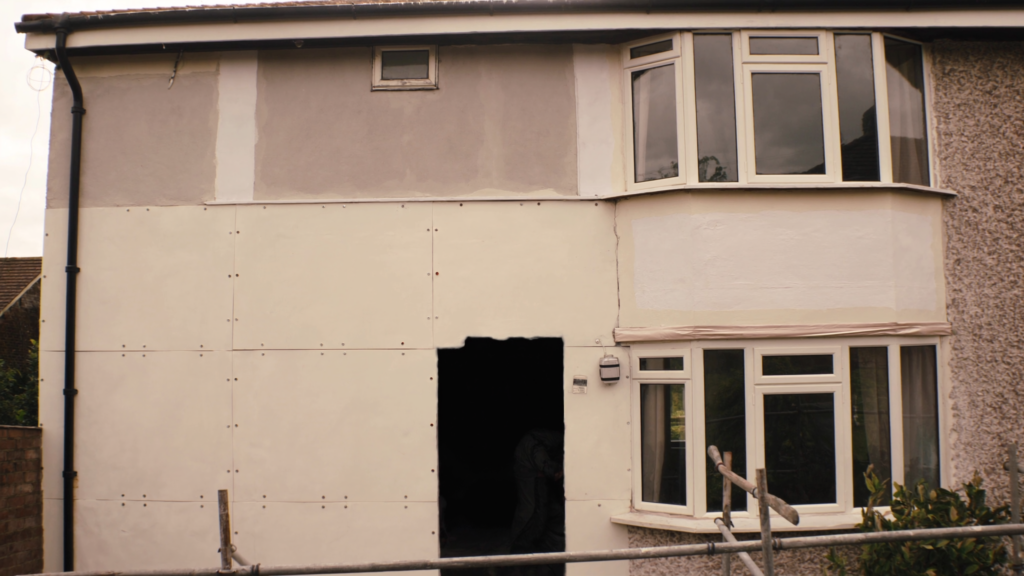
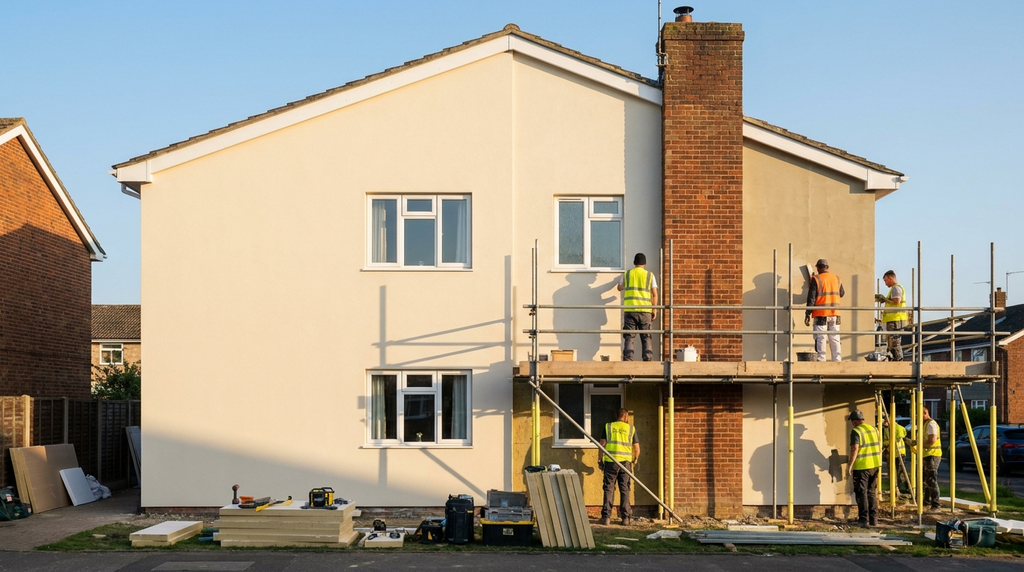
This is where the biggest bang for your buck usually comes in older Inverclyde properties. Loft insulation, cavity wall insulation (where applicable), external wall insulation, and underfloor insulation all reduce heat loss dramatically. For solid-walled terraced properties, very common in Greenock, external wall insulation (EWI) is often the most effective option, though it’s also one of the more expensive interventions.
Double and Triple Glazing
Replacing single-glazed or old double-glazed windows with modern A-rated units makes a noticeable difference in both comfort and heating bills. In older Greenock tenements and terraced homes, window replacement is often one of the most impactful first steps. Costs vary from around £300 to £700 per window depending on size and specification.
EV Charging Points
Home electric vehicle chargers are increasingly being installed alongside other eco improvements. A standard 7kW home charger costs around £800 to £1,200 installed, and pairs well with solar panels if you can charge during daylight hours.
Energy Efficiency Upgrades
Smart thermostats, LED lighting, hot water cylinder insulation, and heating controls might sound modest, but collectively they can save £150 to £400 per year for a typical Inverclyde home, often at very low upfront cost.
Typical Costs and Savings for Common Eco Improvements in Inverclyde
| Improvement | Typical Cost (Terraced) | Typical Cost (Flat) | Estimated Annual Saving | Approximate Payback Period |
|---|---|---|---|---|
| Loft Insulation | £400 – £600 | £300 – £500 | £200 – £350 | 2 – 3 years |
| External Wall Insulation | £8,000 – £15,000 | £5,000 – £9,000 | £400 – £700 | 15 – 25 years |
| Cavity Wall Insulation | £600 – £1,200 | £500 – £900 | £150 – £300 | 3 – 5 years |
| Double Glazing (full house) | £4,000 – £8,000 | £2,500 – £5,000 | £150 – £280 | 15 – 30 years |
| Solar Panels (4kW system) | £5,500 – £8,000 | £4,500 – £7,000 | £400 – £650 | 10 – 16 years |
| Solar Panels with Battery | £8,000 – £12,000 | £7,000 – £10,500 | £600 – £900 | 10 – 15 years |
| Air Source Heat Pump | £8,000 – £14,000 | £6,000 – £11,000 | £300 – £700 | 12 – 20 years |
| Smart Thermostat and Controls | £150 – £400 | £150 – £350 | £120 – £250 | 1 – 2 years |
A practical tip, payback periods shorten considerably when grants are applied. For many Inverclyde households, insulation and heat pump upgrades can be partially or fully funded through Scottish Government schemes, bringing the effective payback period down dramatically.
Grants and Funding Available to Inverclyde Homeowners in 2026
This is where living in Scotland genuinely pays off. Inverclyde residents have access to both UK-wide schemes and Scotland-specific programmes that together offer some of the most generous eco home funding available anywhere in Britain.
Home Energy Scotland
Run by the Scottish Government, Home Energy Scotland offers free, impartial energy advice for every Scottish homeowner, no strings attached. Beyond advice, they also offer interest-free loans of up to £15,000 for energy efficiency improvements and renewable energy installations. Repayments are spread over several years, making major upgrades genuinely affordable. This scheme is available to all Inverclyde residents regardless of income.
Warmer Homes Scotland
If you’re on a low income, receiving certain benefits, or living in a home with a poor EPC rating, Warmer Homes Scotland could fund free insulation, heating upgrades, and other improvements with no repayment required. Priority is given to households with EPC ratings of Band D or below, which covers a large proportion of Inverclyde homes. This scheme is worth checking first if you’re eligible.
ECO4 (Energy Company Obligation)
ECO4 is a UK Government scheme that obliges large energy suppliers to fund improvements for eligible low-income or vulnerable households. It covers insulation, heating system replacements, and in some cases solar panels. Inverclyde households in receipt of qualifying benefits or with low EPC ratings will likely qualify. There’s no upfront cost for eligible households.
Great British Insulation Scheme (GBIS)
The GBIS targets homes in Council Tax Bands A to D with EPC ratings of Band D or below, a bracket that includes many Inverclyde properties. It provides funded or subsidised insulation improvements and is available to both low-income and middle-income households in eligible bands.
Boiler Upgrade Scheme (BUS)
The BUS offers a £7,500 grant toward the cost of installing an air source heat pump, making the switch from gas boilers significantly more affordable. This UK-wide scheme is available in Scotland and can be combined with a Home Energy Scotland loan to cover the remaining installation cost.
Comparison of Available Funding Schemes
| Scheme | Who It Covers | Maximum Support | Repayment Required |
|---|---|---|---|
| Home Energy Scotland Loan | All Scottish homeowners | £15,000 interest-free loan | Yes (interest-free) |
| Warmer Homes Scotland | Low income / EPC D and below | Full cost of improvements | No |
| ECO4 | Benefit recipients / low EPC | Full cost for eligible works | No |
| Great British Insulation Scheme | EPC D and below, Council Tax A–D | Partial to full insulation costs | No |
| Boiler Upgrade Scheme | Any homeowner replacing boiler | £7,500 toward heat pump | No |
Start with a free call to Home Energy Scotland, they’ll help you understand which schemes you’re eligible for and in what order to apply. Their number is 0808 808 2282 and the advice is completely free.
Planning Permission and Local Authority Considerations in Inverclyde
Inverclyde Council is the single local authority responsible for planning across the county, which simplifies things considerably. For most standard eco improvements, you won’t need planning permission at all, but there are important exceptions worth knowing about.
Solar panels on a pitched roof typically fall under permitted development rights in Scotland, meaning no planning application is required, provided the panels don’t project more than 200mm from the roof surface and don’t face onto a highway. However, if your property is a listed building or sits within a conservation area, different rules apply, and Greenock has several conservation areas around its Victorian and Edwardian townscape.
External wall insulation changes the external appearance of your home, which means planning permission is usually required for properties in conservation areas and always required for listed buildings. If you’re in a tenement block, you’ll also need agreement from other owners before proceeding with any external work. Check with Inverclyde Council’s planning department before starting, a quick phone call or online pre-application enquiry can save significant hassle later.
Heat pumps installed in domestic properties generally fall within permitted development in Scotland, but again, listed buildings and conservation areas require a closer look. The MCS (Microgeneration Certification Scheme) registration of your installer also matters for grant eligibility, make sure any installer you use is MCS-certified.
Scotland’s building regulations (known as Section 6) govern the energy performance standards for new builds and major renovations, and they’re among the most demanding in the UK. If you’re doing significant work on your home rather than just adding renewable technologies, your building warrant application will be assessed against these standards.
How Inverclyde’s Climate Shapes the Best Eco Home Choices
Inverclyde sits on the western edge of Scotland, and its climate is genuinely distinctive. Annual rainfall regularly exceeds 1,500mm, one of the wettest parts of the UK, and prevailing westerly winds come straight off the Atlantic with nothing to slow them down.