Phenolic foam insulation costs £25–£40 per m² installed in 2026
Homeowners considering insulation upgrades often ask about the cost of phenolic foam boards. The installed price for 100mm phenolic boards on walls or roofs typically ranges from £25 to £40 per square metre in 2026 (Energy Saving Trust, 2026). Material cost alone for standard 100mm boards is £12 to £20 per square metre, based on prices from builders merchants such as Travis Perkins and Wickes (Travis Perkins, 2026; Wickes, 2026).
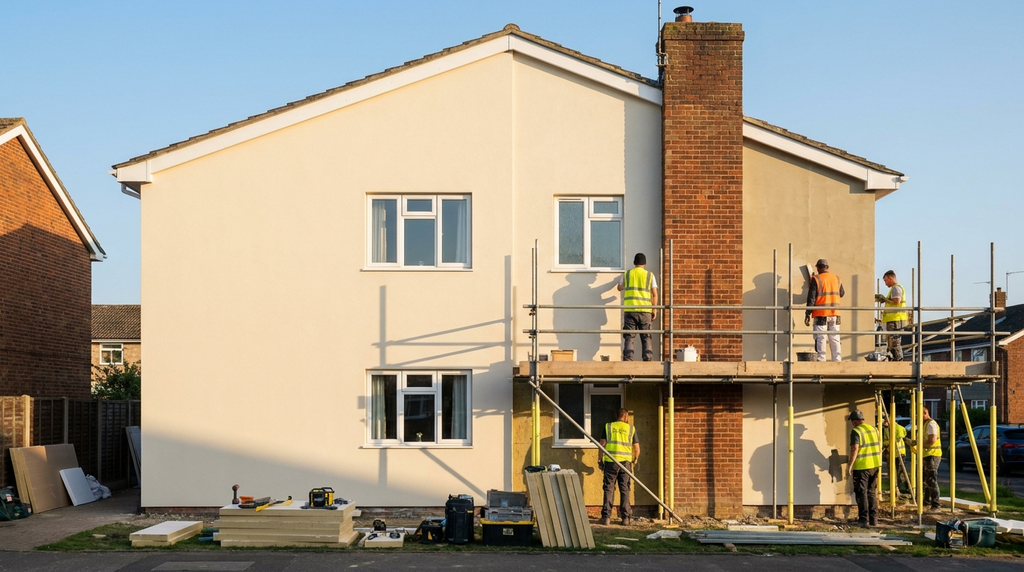
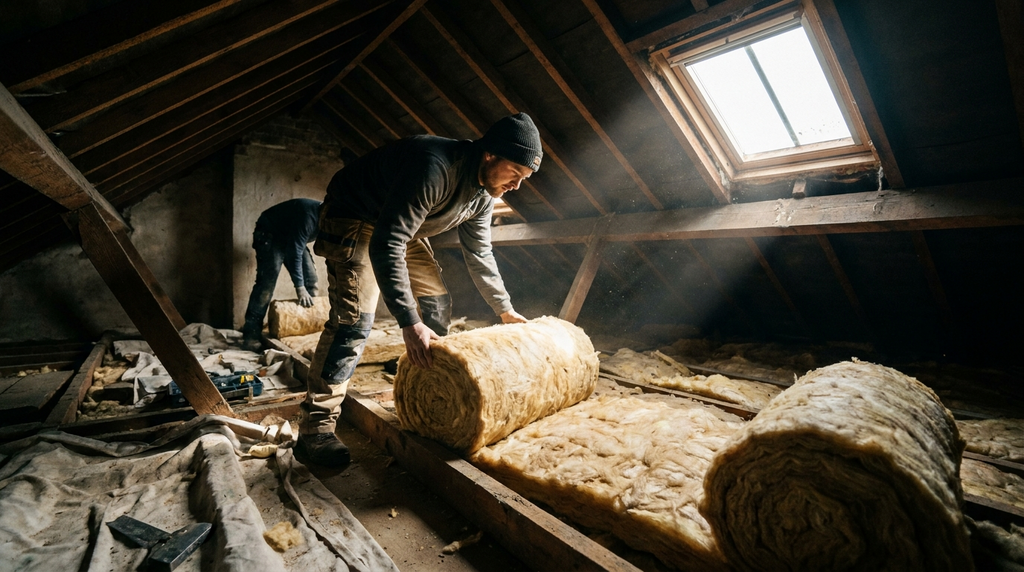
The final cost depends on three main factors. Thicker boards cost more, with 50mm boards at £15–£25 per m² and 150mm boards at £35–£55 per m² installed. Regional labour rates vary, with London and the South East typically 10–20% higher than the national average. Access difficulty, such as working in a loft with limited headroom or on a scaffolded gable wall, adds to the installer’s time and therefore the total cost.
Phenolic foam achieves U-values 30% better than PIR for the same thickness
Phenolic foam insulation has a lower thermal conductivity than PIR (polyisocyanurate) foam. A typical 100mm phenolic board achieves a U-value of 0.18–0.22 W/m²K, whereas a 100mm PIR board achieves 0.22–0.28 W/m²K (Kingspan Kooltherm technical data, 2026; Celotex technical data, 2026). This means phenolic foam is about 30% more effective at the same thickness.
The key metric is the lambda value (thermal conductivity). Phenolic foam has a lambda of 0.018–0.022 W/mK, compared to PIR at 0.022–0.026 W/mK (Building Regulations Approved Document L, 2026 edition, DESNZ). This higher performance per millimetre means you can use thinner insulation to meet Part L 2026 targets, which is especially useful for room-in-roof conversions or internal wall insulation where space is limited.
Annual heating savings from phenolic foam insulation range £150–£400
Savings depend on your current insulation level, property type, heating fuel, and region. For a gas-heated semi-detached house upgrading loft insulation from 0mm to 270mm of phenolic foam, typical annual savings are £200–£350 (Energy Saving Trust insulation calculator, 2026). For a solid wall property adding 80mm of phenolic internal wall insulation, savings are £300–£400 per year (DESNZ Energy consumption in the UK, 2026 data tables).
The savings are lower for homes already insulated with mineral wool or PIR. For example, upgrading from 100mm mineral wool loft insulation to 270mm phenolic might save only £50–£100 per year. The biggest gains come from insulating previously uninsulated surfaces, particularly solid walls and uninsulated lofts.
Payback period is 5–15 years depending on installation location
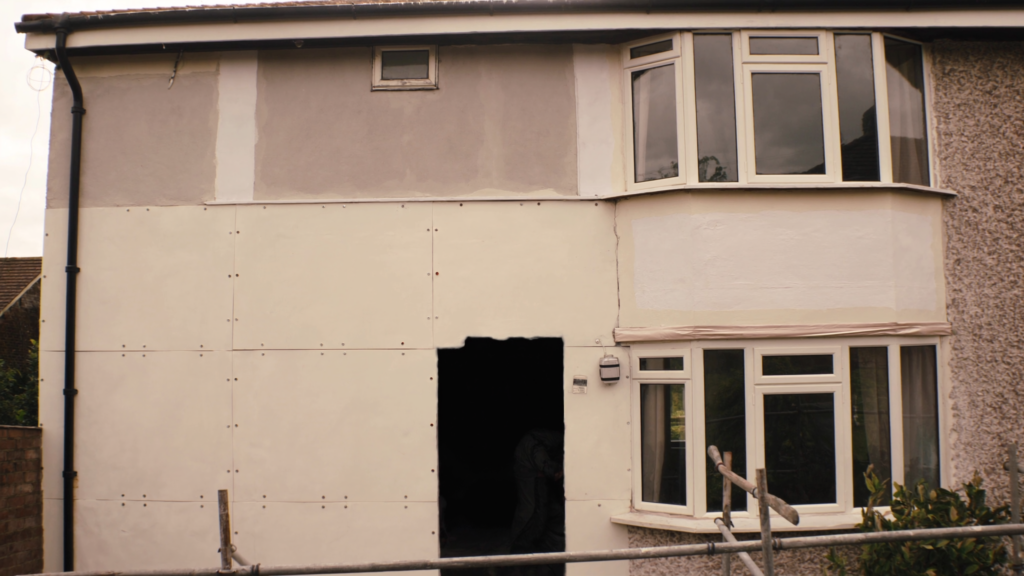
Payback period varies by where the insulation is installed. Loft insulation has the fastest payback at 5–8 years because the cost per square metre is lower and installation is straightforward (Energy Saving Trust home insulation payback analysis, 2026). Internal wall insulation takes 10–15 years due to higher cost and disruption, including replastering and skirting board adjustments. Roof room insulation falls in the middle at 7–12 years.
These figures assume current energy prices (October 2026 Ofgem price cap). If energy prices rise, payback periods shorten. If you replace a gas boiler with a heat pump, the insulation reduces heat loss and also lowers the required heat pump size, which can reduce overall system cost (BRE Insulation payback modelling report, 2026).
Quick numbers
| Insulation thickness (mm) | U-value (W/m²K) | Approx cost per m² installed |
|---|---|---|
| 50mm | 0.28–0.32 | £15–£25 |
| 100mm | 0.18–0.22 | £25–£40 |
| 150mm | 0.12–0.16 | £35–£55 |
| Annual saving (gas-heated semi, loft) | £150–£350 | £200–£400 |
| Payback period | 5–15 years | 5–15 years |
Phenolic foam insulation reduces heat loss by up to 80% compared to uninsulated surfaces
The key benefit of phenolic foam insulation is its high insulating value per unit thickness. A 100mm phenolic board can achieve U-values that would require 150mm of PIR or 200mm of mineral wool (Energy Saving Trust insulation materials fact sheet, 2026). This makes it ideal for space-constrained applications like room-in-roof conversions or internal wall insulation where every centimetre of space matters.
Heat loss through an uninsulated solid wall can be reduced by up to 80% with 100mm phenolic internal insulation. For an uninsulated loft, the reduction is similar. The actual saving depends on the existing construction and the thickness installed (MCS insulation product performance database, 2026).
Installers must be MCS certified or TrustMark registered for insulation work
The Great British Insulation Scheme closed on 31 March 2026. It funded insulation measures only and never covered windows or glazing. MCS covers insulation products used with renewable heating systems. TrustMark is the Government-endorsed quality scheme for all home improvements including insulation.
Check an installer on the MCS register at mcscertified.com or TrustMark at trustmark.org.uk. For gas boiler related work, the Gas Safe Register is required (Gas Safe Register, 2026). For electrical work, NICEIC or NAPIT registration is needed. How to find a certified insulation installer
Building Regulations Part L 2026 require minimum U-values of 0.18 W/m²K for new roofs and 0.30 for walls
Building Regulations Part L 2026 set minimum U-values for new and existing homes. For new build roofs, the target is 0.18 W/m²K. For new build walls, the target is 0.30 W/m²K. For floors, it is 0.25 W/m²K (Building Regulations Approved Document L, 2026 edition, DESNZ).
For existing homes undergoing extensions or renovations, the targets are slightly less stringent: 0.20 W/m²K for roofs and 0.35 W/m²K for walls. Phenolic foam at 100mm thickness meets the roof requirement for both new and existing homes. At 80mm, it meets the wall requirement for both (NHBC insulation standards technical guidance, 2026). Understanding Part L 2026 for your home extension
If you are planning a home improvement that involves insulation, check with your local building control body whether the work requires Building Regulations approval. In most cases, it does. The insulation thickness you need depends on the specific U-value target and the existing construction.
Frequently Asked Questions
Installed cost for 100mm phenolic boards is £25–£40 per m² in 2026, according to the Energy Saving Trust. Material alone costs £12–£20 per m² from Travis Perkins and Wickes.
Yes, phenolic foam has a lambda value of 0.018–0.022 W/mK compared to PIR at 0.022–0.026 W/mK. That makes it about 30% more thermally efficient per mm (Kingspan Kooltherm and Celotex technical data, 2026).
A 100mm phenolic board achieves a U-value of 0.18–0.22 W/m²K, as specified in Building Regulations Approved Document L (2026 edition, DESNZ).
Annual heating savings range from £150 to £400 for a gas-heated semi-detached house upgrading loft insulation, based on Energy Saving Trust data.
For most walls and roofs, 100mm phenolic boards meet Part L 2026 targets, but 150mm may be needed for very high performance. Thinner 50mm boards suit internal wall insulation where space is tight (Approved Document L, 2026, DESNZ).