Why South Ayrshire Is a County Worth Taking Seriously for Eco Home Improvements
South Ayrshire sits on Scotland’s south-west coast, stretching from the bustling town of Ayr down through the Carrick hills to the rugged Galloway borderlands. It’s a county of real contrasts, Georgian townhouses along the seafront, Victorian terraces packed into older neighbourhoods, post-war semis spread across housing estates, and exposed rural cottages clinging to hillsides that see the full force of Atlantic weather rolling in off the Firth of Clyde.
With around 46,000 residents, this is a compact and close-knit county. People here tend to know their neighbours, know their streets, and know when something’s working well, which is exactly why word travels fast when a family cuts their energy bills in half or gets a heat pump installed through a grant scheme they didn’t know existed.
What makes South Ayrshire genuinely different from many parts of Scotland is the combination of older housing stock, a coastal climate that puts serious pressure on heating systems, and access to some of the most generous eco home funding available anywhere in the UK. Scotland has its own dedicated funding programmes, separate from and often more generous than what’s available south of the border, and many South Ayrshire homeowners simply don’t know they’re eligible.
Better insulating, heating, and powering your home saves you money, and those savings are very real. It also makes your home genuinely comfortable through cold, wet winters, which matters enormously in a county where the rain comes in sideways and the wind off the coast is no joke.
What EPC Band D Actually Means for South Ayrshire Homes and Bills
The average home in South Ayrshire sits at EPC Band D, which puts the county right at the UK national average. That might sound reassuring, but it’s really nothing to celebrate. Band D means your home is losing heat it shouldn’t be losing, and you’re paying for it every month.
A typical Band D semi-detached home in South Ayrshire, using around 13,500 kWh of gas per year and 3,300 kWh of electricity, is likely paying somewhere in the region of £1,800 to £2,300 a year on energy bills. Coastal properties and older stone-built homes, particularly in parts of Ayr close to the seafront or in older rural settlements, often perform worse than that average and can tip well above £2,500 annually.
The county’s housing stock tells a varied story. Ayr itself contains everything from well-insulated modern new-builds to draughty Victorian terraces and 1960s council-built semis with minimal wall insulation. The older the property, the more likely it is to sit in Band E or even Band F, and those homes are where both the highest bills and the biggest potential savings live.
Properties built before 1920, and there are plenty of them in South Ayrshire, typically have solid stone walls rather than cavity walls, which makes insulation more complex but absolutely still possible. External wall insulation is often the right answer for these homes, though it requires more planning and more upfront investment.
The good news is that moving from Band D to Band B or C is entirely achievable for most homes with the right combination of upgrades. That jump can reduce annual energy bills by £600 to £1,200 a year depending on the starting point and the measures installed.
The Full Range of Eco Home Services Available Across South Ayrshire
If you’re just starting to think about eco improvements or you’re ready to go all-in on a full retrofit, there’s a broad range of services available to South Ayrshire homeowners. Here’s what’s on the table.
Solar Panels
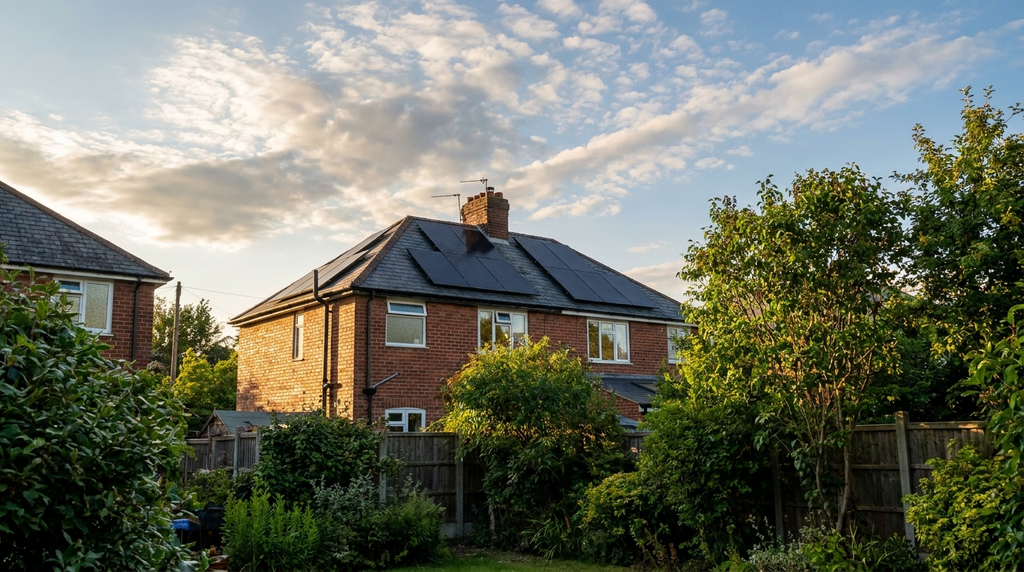
Solar PV systems generate electricity from daylight, and despite what people assume about Scotland, South Ayrshire gets enough sun to make solar worthwhile. With 850 to 1,000 sunshine hours per year, a well-positioned system can generate meaningful electricity. A typical 4kWp system costs around £5,500 to £7,000 installed and can save a household £400 to £600 a year through reduced bills and Smart Export Guarantee payments for surplus electricity exported to the grid.
Heat Pumps
Air source heat pumps are increasingly popular in South Ayrshire, particularly as gas boiler replacements in homes with decent insulation. They work by extracting heat from outside air, even in cold weather, and are well-suited to the Scottish climate. A typical installation costs £8,000 to £14,000 before grants, though the Boiler Upgrade Scheme can reduce that significantly. Ground source heat pumps are also an option for rural properties with sufficient land.
Insulation
This is where most homes see the fastest returns. Loft insulation, cavity wall insulation, and solid wall insulation all reduce the heat your home leaks, and the less heat you lose, the less energy you need to buy. Loft insulation can cost as little as £300 to £600 and often pays back within two to three years. Cavity wall insulation typically runs £500 to £1,500. Solid wall insulation (internal or external) is more involved at £8,000 to £20,000 but can transform the performance of an older stone-built home.
Double and Triple Glazing
Replacing single-glazed windows with modern double or triple glazing makes an immediate difference to comfort and heating bills. Full double glazing for a three-bedroom semi typically costs £3,500 to £6,000. Triple glazing costs more upfront but performs better in exposed coastal locations where wind and rain put extra pressure on window seals.
Energy Efficiency Improvements
Smaller measures, smart thermostats, hot water cylinder insulation, LED lighting upgrades, draught-proofing, often get overlooked but collectively make a real difference. A smart thermostat alone can save £150 to £200 a year. These are also often the lowest-cost entry point for homeowners who aren’t ready for major works yet.
Cost and Savings Comparison for Common South Ayrshire Property Types
| Improvement | Terraced Home (Typical Cost) | Semi-Detached (Typical Cost) | Estimated Annual Saving | Approximate Payback Period |
|---|---|---|---|---|
| Loft insulation (top-up to 270mm) | £300 – £500 | £400 – £600 | £150 – £250 | 2 – 4 years |
| Cavity wall insulation | £500 – £900 | £700 – £1,500 | £200 – £350 | 3 – 5 years |
| External wall insulation (solid walls) | £8,000 – £14,000 | £10,000 – £20,000 | £400 – £700 | 15 – 25 years (shorter with grants) |
| Double glazing (full house) | £3,000 – £5,000 | £3,500 – £6,000 | £150 – £300 | 12 – 20 years |
| Air source heat pump | £8,000 – £12,000 | £9,000 – £14,000 | £300 – £800 | 10 – 20 years (shorter with BUS grant) |
| Solar PV (4kWp system) | £5,500 – £6,500 | £5,500 – £7,000 | £400 – £600 | 9 – 14 years |
| Smart thermostat and controls | £200 – £350 | £200 – £350 | £150 – £200 | 1 – 2 years |
All figures are estimates based on typical South Ayrshire property sizes and energy prices in 2026. Your actual costs and savings will depend on your specific property, current insulation levels, and which funding schemes you can access.
Grants and Funding South Ayrshire Residents Can Actually Access in 2026
This is where living in Scotland genuinely pays off. South Ayrshire homeowners have access to a more generous set of funding options than most of England, and stacking multiple schemes together can dramatically reduce what you pay out of pocket.
Home Energy Scotland
This is Scotland’s flagship advice and funding service, and it’s completely free to use. Home Energy Scotland advisors can assess your home, identify the best improvements, and connect you with funding. Critically, they also offer interest-free loans of up to £15,000 for energy efficiency improvements, that’s real money you can borrow at zero cost and pay back over time. Ring them or use their online service as your first step.
Warmer Homes Scotland
If you’re on a low income or receiving certain benefits, Warmer Homes Scotland can fund free insulation, heating upgrades, and even heat pumps for eligible households. There’s no upper age limit, and the scheme covers owner-occupiers and some private renters. This is one of the most generous schemes in the UK, genuinely life-changing for households struggling with cold, inefficient homes.
ECO4 (Energy Company Obligation)
ECO4 is a UK-wide scheme where energy suppliers fund home improvements for lower-income households. In South Ayrshire, this typically covers insulation and heating upgrades for homes in Bands D, E, F, or G where the occupants meet income criteria. Your energy supplier is legally obliged to participate, and it’s worth asking directly.
Boiler Upgrade Scheme (BUS)
The BUS grant gives South Ayrshire homeowners £7,500 off the installed cost of an air source heat pump (or £7,500 for a ground source heat pump). This is a UK-wide scheme and doesn’t require you to be on a low income, it’s available to most owner-occupiers replacing a fossil fuel heating system. Combined with Home Energy Scotland’s interest-free loan, this makes heat pump installation genuinely affordable.
Great British Insulation Scheme (GBIS)
The Great British Insulation Scheme closed on 31 March 2026. It funded insulation measures only and never covered windows or glazing. It runs alongside ECO4 and is accessible through energy suppliers. Eligibility is partly based on EPC rating and partly on local area deprivation data, many South Ayrshire streets qualify on area grounds alone, even without means-testing.
South Ayrshire Council and Regional Support
South Ayrshire Council periodically runs area-based improvement schemes, particularly in older housing areas of Ayr. These schemes sometimes combine council funding with Scottish Government money to deliver whole-street or whole-tenement external insulation projects at significantly reduced cost to individual homeowners. It’s always worth checking with the council’s housing improvement team to see what’s currently active in your area.
Planning Permission and Local Authority Rules for South Ayrshire Homeowners
Most standard eco home improvements fall under permitted development rights in Scotland, meaning you don’t need planning permission for them. Solar panels on a roof, cavity wall insulation, and loft insulation upgrades typically go ahead without any planning application at all.
However, South Ayrshire has its nuances, and it’s important to know when you do need to check in with the council. All planning applications in South Ayrshire are handled by South Ayrshire Council’s planning department, which covers the whole county as a single planning authority.
There are several situations where you’ll need to look into this further before starting work.
- Listed buildings, South Ayrshire has a significant number of listed buildings, particularly in Ayr town centre, Maybole, and coastal settlements like Culzean. If your home is listed, you’ll need listed building consent for almost any external changes, including cladding or external wall insulation.
- Conservation areas, Parts of central Ayr and several historic villages are designated conservation areas. External changes including new render finishes, solar panels visible from the street, or significant cladding works may require consent.
- Heat pump installations, In most cases these are permitted development, but units that face a highway or are in a conservation area may need permission.
- Solar panels on flat roofs or outbuildings, These sometimes fall outside standard permitted development rules and are worth checking first.
Scotland’s building regulations (Section 6) apply to all new heating and insulation work, and installers must comply with these when carrying out any notifiable work. Always check that your installer is registered with the relevant body, MCS certification for heat pumps and solar, and appropriate CIGA or equivalent guarantees for insulation.
If you’re unsure whether your project needs planning permission, South Ayrshire Council offers a free pre-application enquiry service, it takes a little time but saves a lot of headaches later.
How South Ayrshire’s Climate Shapes the Best Choices for Your Home
The climate here is not gentle. South Ayrshire sits in the path of Atlantic weather systems tracking in from the west, meaning rainfall of 1,000 to 2,000mm a year, prevailing westerly winds, and winters that are cold enough to rack up serious heating bills. The county averages 1,800 to 2,200 heating degree days per year, that’s the technical measure of how much heating a building needs, and it sits firmly in the higher range for the UK.
What does this mean practically for the eco improvements you choose?
- Insulation is your single highest-impact investment. In a climate this cold and wet, every bit of heat you stop leaking out of your home is money directly saved. Prioritise loft and wall insulation before anything else.
- External wall insulation needs the right specification. In a high-rainfall area like coastal Ayrshire, the render system used on external insulation must be properly breathable and weather-resistant. A system that performs well in Surrey may not be the right choice here, always ask your installer about their experience with wet, exposed sites.
- Air source heat pumps work well here. Modern heat pumps operate efficiently in temperatures well below freezing, and Scotland’s climate is no barrier. In fact, the mild maritime winters of the Ayrshire coast (rarely as cold as inland Scottish regions) suit heat pumps well.
- Solar panels are viable but manage your expectations. You won’t generate as much electricity here as a home in the south of England, but with