Oban, Gateway to the Isles, and a Town Where Energy Bills Hit Hard
Oban sits on the west coast of Argyll, squeezed between the steep hills of Argyll Forest to the east and the Firth of Lorn to the west. It’s a working town, a ferry port, a local hub for surrounding communities, and home to around 8,000 people who know exactly what Atlantic winter weather feels like. The famous McCaig’s Tower looks down from the hillside above George Street, and just below it sits row after row of Victorian and Edwardian stone terraces, semis, and detached villas that were built long before anyone thought about insulation.
Most of Oban’s housing stock was built between 1880 and 1960, with a scattering of post-war council housing in areas like Soroba and Longsdale, and some newer builds out towards Dunbeg and Benderloch. That Victorian stone construction looks beautiful, but it leaks heat like a sieve in January. When Atlantic gales roll in off the Firth, homes here work overtime to stay warm.
That’s why eco home improvements matter more in Oban than they do in many other Scottish towns. You’re not just being green, you’re protecting your household budget against some of the toughest winter conditions in the UK.
How Energy Efficient Are Oban Homes Really
The average home in Oban sits at EPC Band D, the same as the UK national average, but that figure hides an important detail. Because Oban’s climate is significantly colder and wetter than the national baseline, a Band D home here costs considerably more to run than a Band D home in, say, Bristol or even Edinburgh.
The average gas usage in Oban is 14,500 kWh per year, which is around 20% above the UK median of roughly 12,000 kWh. At current gas tariff rates in 2026, that translates to a typical annual gas bill of around £1,160–£1,300 for heating and hot water alone, before you add electricity on top.
Electricity usage averages 3,500 kWh per year, adding roughly £900–£1,050 to annual bills depending on your tariff. That gives a combined energy spend in the region of £2,100–£2,350 per year for a typical Oban household. That’s real money, and it’s money that good insulation and smarter heating can significantly reduce.
The Scotland average EPC sits around Band D to C, so Oban isn’t dramatically behind the Scottish picture, but the combination of older stone housing, coastal exposure, and northern latitude means the gap between where homes are now and where they could be is worth taking seriously.
| Energy type | Oban average annual use | UK median | Estimated annual cost in Oban |
|---|---|---|---|
| Gas | 14,500 kWh | 12,000 kWh | £1,160–£1,300 |
| Electricity | 3,500 kWh | 3,100 kWh | £900–£1,050 |
| Combined total | £2,100–£2,350 |
Solar Panels on the West Coast, More Viable Than You Might Think
People always raise an eyebrow when solar panels come up in Oban. “Up here? In all this rain?” But sunshine hours tell a more interesting story. Oban gets around 700–900 sunshine hours per year, and while that’s lower than southern England, modern solar panels don’t need direct sunshine, they generate electricity from daylight, including diffuse light on overcast days.
The long summer days at this latitude genuinely compensate for the short winter ones. In June and July, Oban gets around 17–18 hours of daylight, which means your panels are working for far longer each day than panels further south. The net annual generation figures are lower than Cornwall, yes, but they’re still perfectly viable.
There are a few things specific to Oban you need to plan for. Salt air from the Firth of Lorn will corrode standard aluminium frames over time, so marine-grade fixings and frames are essential, not an optional upgrade. Winter storms here are serious, and panels need to be secured with solid fixing systems designed for the wind loads on Atlantic-facing roofs. Snow loading is also a factor for properties on the higher ground above town, around Pulpit Hill and the areas above Soroba Road.
Solar panels also need more frequent cleaning in Oban than they would in an inland town. Salt deposits and coastal grime reduce output, so budget for a clean once or twice a year.
| System size | Typical installed cost (2026) | Estimated annual generation in Oban | Annual bill saving (self-use + export) | Simple payback period |
|---|---|---|---|---|
| 3 kW | £5,500–£6,500 | 2,100–2,400 kWh | £350–£450 | 13–17 years |
| 4 kW | £6,800–£8,000 | 2,800–3,200 kWh | £460–£580 | 13–16 years |
| 6 kW | £9,500–£11,500 | 4,200–4,800 kWh | £680–£850 | 12–15 years |
If you’re also installing a heat pump or an EV charger, a larger system pays back faster because you’re using more of the electricity you generate. Adding a battery storage system (typically £3,000–£5,000 extra) helps you capture the summer surplus and use it in the evenings rather than exporting it cheaply.
Planning permission is not usually required for solar panels in Oban unless your property is in a conservation area or is listed. Argyll and Bute Council handles all planning applications in this area, their planning team can advise if your property has any constraints before you commit to an installer.
Heating Choices That Actually Suit an Oban Winter
Oban experiences over 2,200 heating degree days per year, that’s a measure of how hard your heating system has to work, and it’s 20–30% above the UK national average. Choosing the right heating system here involves balancing eco credentials with the ability to keep your home warm when Atlantic storms come in off the Firth in February.
Gas boilers
Most Oban homes currently use gas central heating, and a modern condensing combi boiler remains a solid option if you already have gas supply. A new A-rated condensing boiler costs around £2,000–£3,500 installed and can reduce gas use by 15–20% compared to an older unit. It’s the lowest-disruption upgrade available, though it won’t help with your carbon footprint as dramatically as switching to a heat pump.
Air source heat pumps
Air source heat pumps (ASHPs) work by extracting heat from outdoor air, even in temperatures as low as -15°C. For Oban’s climate, you need a model rated for cold-climate performance, not a budget unit designed for milder southern England winters. Properly specified and installed, an ASHP in Oban can deliver a coefficient of performance (COP) of 2.5–3.0 through winter, meaning you get 2.5–3 units of heat for every unit of electricity you buy.
Running costs depend heavily on your electricity tariff, but a typical Oban detached home switching from gas to a well-installed ASHP could see annual running costs of around £1,100–£1,500 for heating and hot water, broadly similar to gas, but with the potential to drop significantly if you pair it with solar panels or an EV-optimised tariff. Installation costs run £10,000–£14,000 before any grant support.
Ground source heat pumps
Ground source heat pumps (GSHPs) use the stable temperature of the ground rather than the air, giving them more consistent performance in severe winters. They’re particularly well-suited to larger detached properties with garden space for horizontal ground loops, there are plenty of these in areas like Glencruitten Road and out towards Kilmore. Installation is more disruptive and expensive at £18,000–£28,000, but performance is more predictable through Oban’s coldest months.
| Heating system | Installed cost (2026) | Estimated annual running cost | Best suited to |
|---|---|---|---|
| New gas condensing boiler | £2,000–£3,500 | £1,100–£1,300 | Homes already on gas, short-term fix |
| Air source heat pump | £10,000–£14,000 | £1,100–£1,500 | Well-insulated semis and detached homes |
| Ground source heat pump | £18,000–£28,000 | £900–£1,300 | Larger detached with outdoor space |
One important note, heat pumps work best in well-insulated homes. If your Oban Victorian terrace still has uninsulated walls and single-glazed sash windows, sort the insulation first. A heat pump in a leaky house is like running a bath with the plug out.
Where to Start With Insulation in an Oban Home
Given Oban’s housing stock, mostly Victorian and Edwardian stone builds in the town centre, post-war semis in Soroba and Lochavullin, and more recent builds out at Dunbeg, the insulation priorities vary by property type. Here’s a practical priority order for most homes.
Loft insulation, start here, always
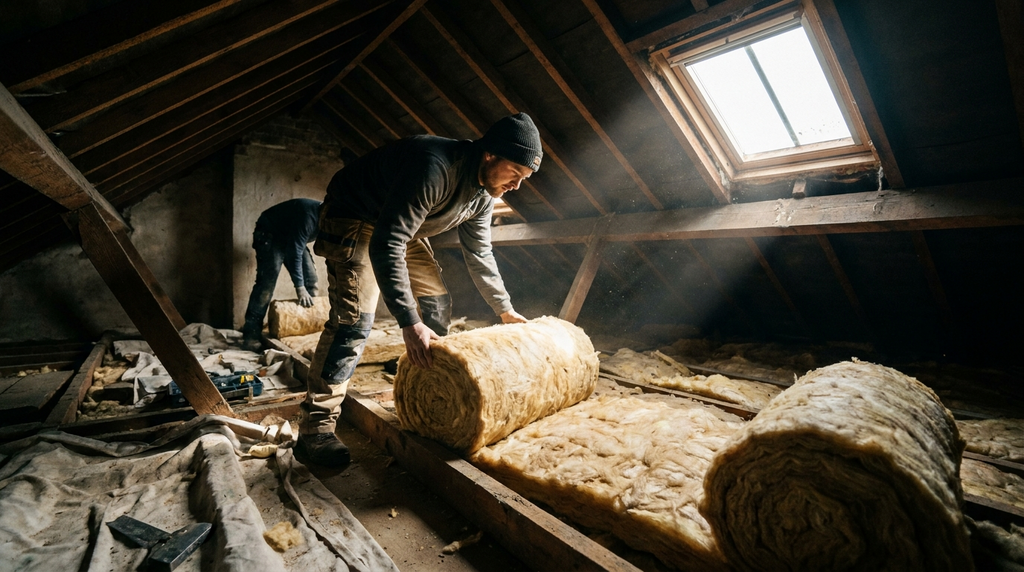
Heat rises, and in an uninsulated or poorly insulated loft, it goes straight through your roof. Top up to the recommended 270mm depth of mineral wool and you could save £200–£350 per year. Cost is typically £300–£600 for a standard semi-detached, making this the fastest-payback upgrade available. Many Oban homes still have old, thin loft insulation, check yours if you haven’t recently.
Solid wall insulation, the big one for Victorian Oban
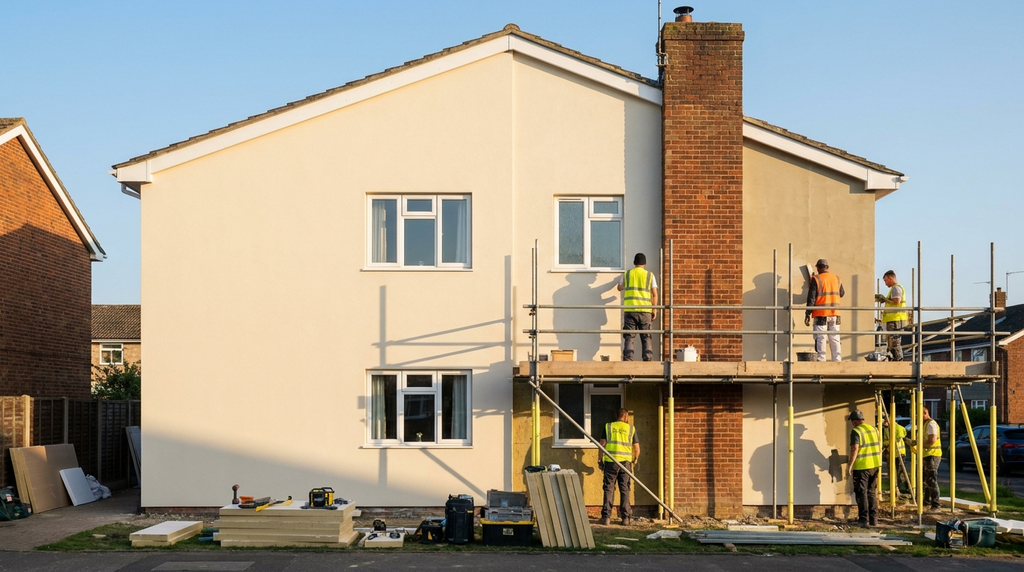
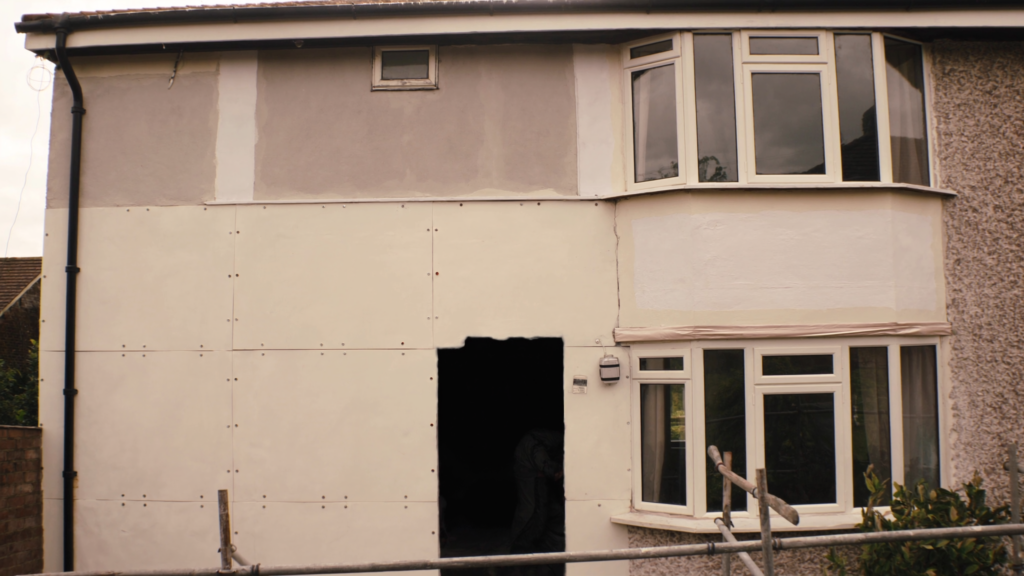
The stone-built homes on streets like Breadalbane Street, Combie Street, and the Victorian terraces above the town centre have solid walls with no cavity, which means cavity wall insulation isn’t an option. External wall insulation (EWI) or internal wall insulation (IWI) are the routes available. EWI is generally more effective but involves a render finish on your exterior walls, and in Oban’s wet, windy coastal conditions, the render system you choose really matters. Cheaper acrylic renders can crack and let in the Atlantic rain. Ask your installer specifically about silicone or mineral renders designed for high-exposure coastal locations.
EWI for a typical Oban semi costs around £8,000–£15,000 and can save £400–£700 per year on heating. IWI is cheaper at £4,000–£8,000 but reduces internal floor area slightly.
Cavity wall insulation, for post-war homes
The post-war semis in Soroba, Lochavullin Estate, and Longsdale Road areas typically have cavity walls. Cavity fill insulation is relatively quick and cheap, around £400–£800, and saves roughly £150–£250 per year. However, Oban’s high rainfall and driving westerly winds mean you need an installer who will properly assess exposure risk before filling cavities. On very exposed west-facing walls, partial fill or a specialist product may be more appropriate than standard blown bead.
Double glazing and draught proofing
Many Oban homes still have original sash windows, they’re a character feature worth preserving where possible. Secondary glazing (fitted inside the existing frame) is a cheaper and often planning-friendly alternative to full replacement in conservation areas, costing around £200–£500 per window. Draught-proofing sash windows costs as little as £50–£150 per window and makes an immediate difference in a west-coast winter.
| Insulation measure | Typical cost in Oban (2026) | Estimated annual saving | Payback period |
|---|---|---|---|
| Loft insulation top-up | £300–£600 | £200–£350 | 1–3 years |
| Cavity wall insulation | £400–£800 | £150–£250 | 2–4 years |
| External wall insulation (solid walls) | £8,000–£15,000 | £400–£700 | 15–25 years |
| Internal wall insulation (solid walls) | £4,000–£8,000 | £300–£600 | 10–18 years |
| Secondary glazing (per window) | £200–£500 | £30–£70 | 5–10 years |
| Draught proofing | £200–£400 whole house | £80–£150 |
Services in ObanWindows & Glazing Solar Panels Boilers & Heating Home Insulation Energy Saving Government Grants Nearby Towns
Fort William
50.5 km away
Helensburgh
64.3 km away
Greenock
67.2 km away
Rothesay
69 km away
Largs
78.2 km away
Callander
79.7 km away Frequently Asked Questions About Eco Homes in Oban – Energy Saving Solutions and Local ServicesHomeowners in Oban can access the Scottish Government's Warmer Homes Scotland scheme, which offers fully funded or heavily subsidised upgrades for eligible households. Argyll and Bute Council also administers Area Based Schemes that can cover insulation and heating improvements for properties in EPC Band D or below. It is worth contacting Home Energy Scotland on their free helpline first, as they can map out every grant you qualify for based on your specific postcode and circumstances. In Oban and the wider Argyll and Bute area, solid wall insulation typically runs between £8,000 and £15,000 depending on property size and access, while loft insulation is considerably cheaper at around £400 to £600 for a standard home. Cavity wall insulation, where applicable, usually sits between £700 and £1,200. Keep in mind that rural Argyll properties often attract slightly higher labour costs due to travel time for installers, so always get at least three quotes. Absolutely, air source heat pumps are actually well suited to the Oban climate because modern units work efficiently even at temperatures well below zero. Many Argyll and Bute homeowners have found them a practical replacement for oil boilers, which are common in this area due to the lack of mains gas. The UK Government's Boiler Upgrade Scheme currently offers a £7,500 grant toward installation costs, making the switch far more affordable in 2026. Look for installers registered with MCS (Microgeneration Certification Scheme) for renewable technologies like solar or heat pumps, as this certification is required for you to claim government grants. Home Energy Scotland can provide a list of vetted local and regional contractors who work across Argyll and Bute. It is also worth asking in local community groups, as word-of-mouth recommendations are particularly valuable in a smaller town like Oban where tradespeople rely heavily on their local reputation. For a typical Band D property in Oban, the highest-impact upgrades are usually loft insulation top-ups, draught proofing, and switching from oil heating to a heat pump or biomass boiler. If your walls are uninsulated, addressing that can push your rating up by a full band or more. A free Home Energy Scotland assessment will give you a prioritised list tailored to your exact property type, which is especially useful given the variety of older stone-built homes common across Argyll and Bute. Oban receives enough annual sunlight for solar panels to be a worthwhile investment, the west coast of Scotland gets more sunshine than many people expect, and modern panels generate usable electricity even on overcast days. A typical 4kW system in Argyll and Bute could save you between £500 and £800 per year on electricity bills based on 2026 energy prices. Pairing panels with a battery storage system is increasingly popular in rural areas like Oban where grid reliability can vary. Featured eco home guides.
Home Insulation
Best Insulation for UK Climate 2026If you are a homeowner looking to cut energy bills and keep your home warm, choosing the right insulation is one of the most effective steps you can take. The UK’s cool, damp climate places specific demands on insulation materials, and the wrong choice can lead to damp problems or wasted money. Quick Answer The […]
Home Insulation
Insulation vs Heat Pump, Priority (UK, 2026)Installing full fabric insulation before a heat pump saves roughly £1,000–£2,000 on the heat pump installation cost alone Should you install insulation or a heat pump first in 2026? The short answer is insulation, because it directly reduces the size and cost of the heat pump you need. Quick Answer Insulating before a heat pump […]
Home Insulation
Loft vs Roof Insulation, Comparison (UK, 2026)Loft vs roof insulation the average saving gap is £195–£270 a year Homeowners looking to cut energy bills often ask whether loft or roof insulation offers better value. The answer depends on whether you want to keep the loft as a cold storage space or convert it into a habitable room. Loft insulation (250–300 mm […]
Home Insulation
Cavity vs External Wall Insulation UK 2026Cavity wall insulation costs roughly half as much as external wall insulation but saves less energy When choosing between cavity and external wall insulation, the cost difference is the first thing most homeowners notice. For a typical semi-detached house, cavity wall insulation (CWI) costs between £700 and £1,500, while external wall insulation (EWI) for the […]
Home Insulation
Insulation Vapour Barrier, When Needed (UK, 2026)Most UK homes do not need a separate vapour barrier, here is why You may have heard that insulation must include a vapour barrier to stop damp. This is not true for most UK homes. The majority of existing solid-wall and cavity-wall insulation retrofits rely on the plaster finish or the insulation’s own facing as […]
Home Insulation
DIY Loft Insulation, Doing It Without Hurting YourselfDIY loft insulation costs roughly £300 in materials but can save a semi-detached home up to £300 a year on heating bills If your loft has little or no insulation, you are almost certainly losing heat through the roof. A typical three-bedroom semi-detached house can lose up to 25% of its heat through an uninsulated […] Get Eco Home Quotes in ObanCompare quotes from trusted local eco home installers. No obligation. Get a Free Quote |