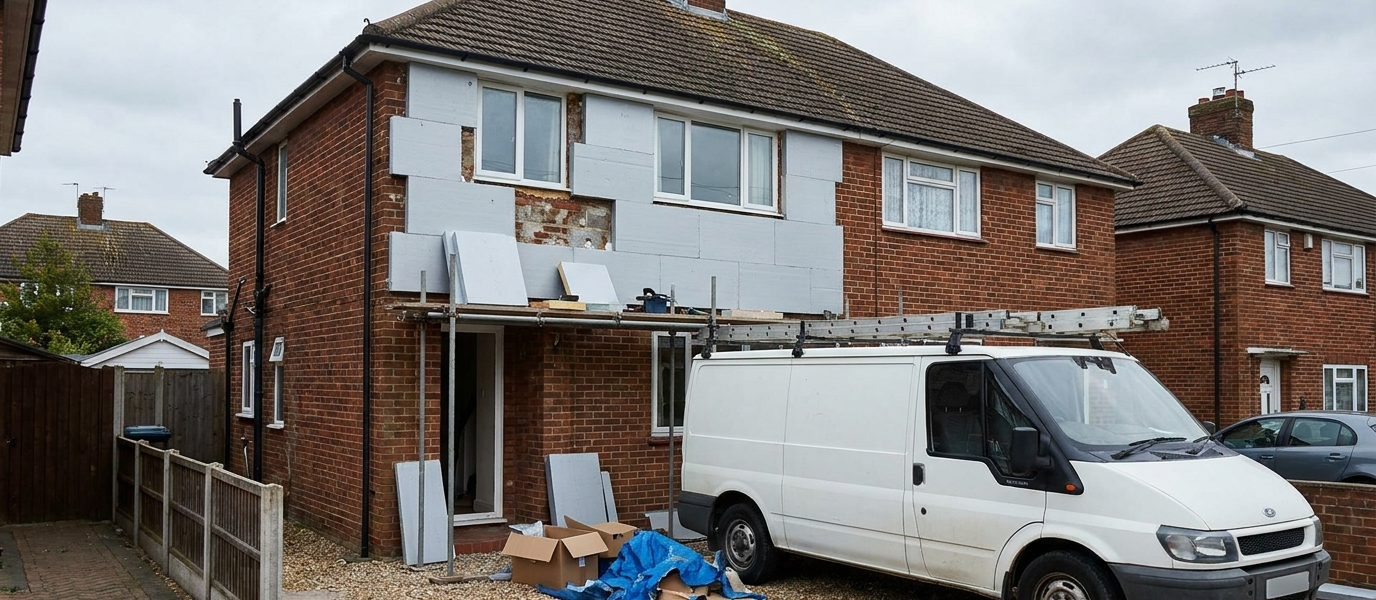
The number of households defrauded by rogue insulation fitters under the ECO4 scheme is not yet known, but four arrests in a single police operation suggest the problem is real, and potentially widespread. The Energy Company Obligation (ECO4) is meant to help low-income and vulnerable homes cut heating costs. Instead, it has become a target for criminals.
As reported by BBC News, four individuals have been arrested on suspicion of defrauding the scheme. The investigation, led by the National Investigation Team for the Department for Business and Trade, centres on claims that work was either not completed or was done to a dangerously poor standard. No court proceedings have yet begun, but the case sends a clear signal to every household considering an ECO4 upgrade: verify everything.
How the scam works, and who pays
ECO4 is funded by energy suppliers, not taxpayers directly, but the cost is passed to all billpayers through levies on household energy bills. When a fraudulent installer claims payment for work not done, or for substandard insulation, the money still flows, and the household is left with a cold, damp home and no legal recourse if the installer disappears.
Typical ECO4 grants cover cavity wall insulation, loft insulation, and solid wall insulation. A legitimate installation can cut annual heating bills by £200–£400 for a three-bed semi. But a botched job, damp trapped in walls, missing insulation, inadequate ventilation, can cost far more to fix. The Energy Saving Trust warns that poorly installed insulation can actually increase mould risk and reduce indoor air quality.
Who qualifies, and who doesn’t
ECO4 is targeted at households on means-tested benefits or with low incomes, and at properties with an EPC rating of D or below. The scheme runs until March 2026. Eligible homeowners can receive fully funded insulation or heating upgrades, but only through suppliers or their authorised installers.
The catch is that not all installers are equal. The government requires all ECO4 work to be carried out by TrustMark-registered businesses. TrustMark is the only government-endorsed quality scheme for home improvements. Yet fraudsters have found ways to pose as legitimate contractors, using fake certification, cloned websites, or door-to-door sales tactics.
What to check before you sign
Three things matter above all else. First, confirm the installer is on the TrustMark register, search their name at trustmark.org.uk. Second, ask for their Gas Safe or relevant competence certification if the work involves gas or electrical systems. Third, never pay upfront. ECO4 work is funded by the energy supplier, so the household should not be asked for cash.
If a company pressures you to sign a contract on the doorstep, or offers a deal that seems too good to be true, it probably is. The same goes for firms that claim your home is ‘pre-approved’ for a grant without a proper survey. Legitimate installers will always carry out a full property assessment before quoting.
What to do if you suspect fraud
If you believe you have been a victim of ECO4 fraud, contact the Citizens Advice consumer helpline on 0808 223 1133. You can also report it to Action Fraud online or by calling 0300 123 2040. For ongoing cases, the police have set up a dedicated email: [email protected].
Households currently considering an ECO4 upgrade should check their eligibility at gov.uk/eco4, and only proceed with an installer recommended by their energy supplier or listed on the TrustMark database. The scheme is meant to help, but only if the work is done right.
Frequently Asked Questions
You should verify the installer on the TrustMark register at trustmark.org.uk, as TrustMark is the only government-endorsed quality scheme for home improvements in the UK. Also ask for their Gas Safe or relevant competence certification, and never pay upfront since ECO4 work is fully funded by your energy supplier.
Warning signs include door-to-door sales tactics, pressure to sign a contract on the spot, claims your home is 'pre-approved' without a proper survey, or offers that seem too good to be true. Fraudulent installers may use fake certification or cloned websites, and often disappear after claiming payment for work not done or done to a dangerously poor standard.
ECO4 is for low-income and vulnerable households on means-tested benefits, with properties that have an EPC rating of D or below. The scheme runs until March 2026 and provides fully funded insulation or heating upgrades, but only through energy suppliers or their authorised TrustMark-registered installers.
A legitimate ECO4 installation, such as cavity wall, loft, or solid wall insulation, can cut annual heating bills by £200–£400 for a typical three-bed semi-detached house in the UK. However, a botched job can increase mould risk and cost far more to fix, so vetting your installer is essential.
Report your concerns to the National Investigation Team for the Department for Business and Trade, as they lead fraud investigations into the ECO4 scheme. You should also contact your energy supplier directly and check if the installer was TrustMark-registered, as poor work can leave you with a cold, damp home and no legal recourse if the installer disappears.





