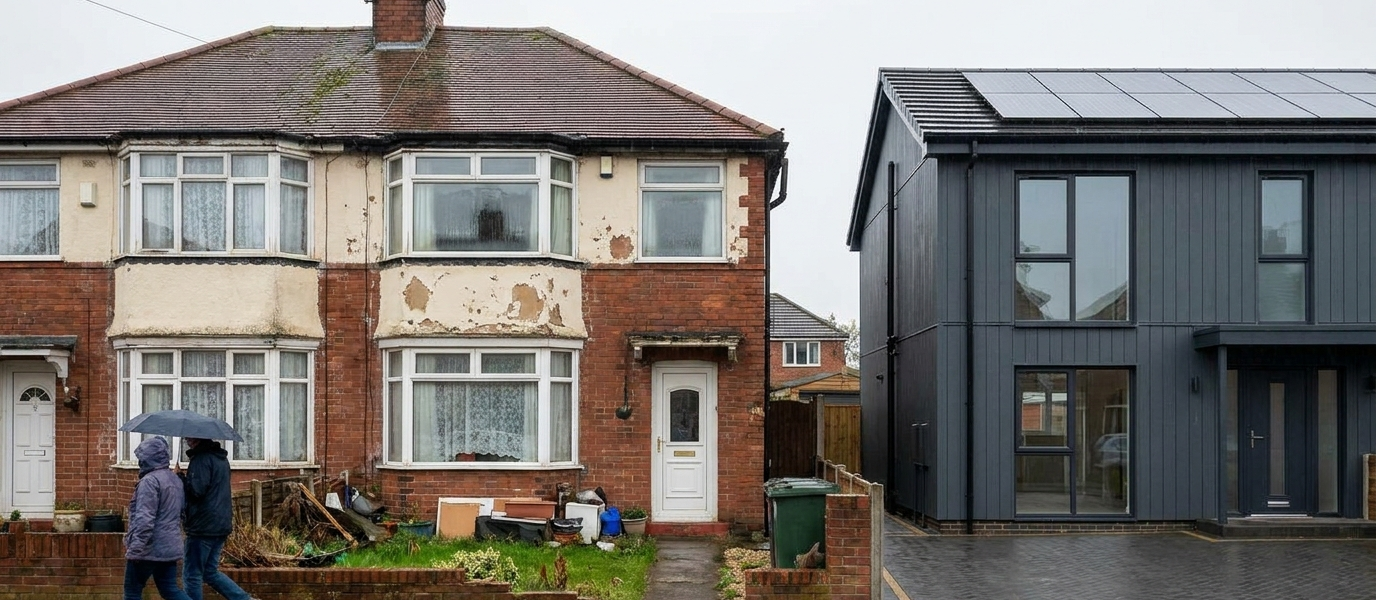
The average EPC F-rated three-bed semi costs about £30,000 less than its C-rated neighbour, but it also burns through £2,800 more in gas and electricity each year. That headline figure, drawn from recent market analysis, is the arithmetic behind a new report from BuyAssociation Group, which suggests low-rated homes could be a bargain for savvy buyers.
As reported by BuyAssociation Group, the price discount on an F- or G-rated home can look tempting, but the catch is that energy costs and mandatory retrofit deadlines are closing in fast.
Who qualifies, and who doesn’t
The rental sector already knows this story. From 2025, landlords cannot let a property with an EPC rating below E. From 2028, the bar rises to C for new tenancies, and by 2030 all existing tenancies must meet C. Owner-occupiers face no legal deadline yet, but mortgage lenders are starting to price in risk: several now offer lower rates for C-rated homes, and some limit lending on F–G properties.
Buyers eyeing a low-rated bargain need to check three things: the property’s current EPC certificate (valid for 10 years), the local authority’s planning rules on solid-wall insulation or listed-building consent, and whether the home is off the gas grid, because heat pump grants top out at £7,500 under the Boiler Upgrade Scheme, but only if the property has adequate insulation first.
What it costs a typical 3-bed semi
Energy Saving Trust data suggests a typical 1930s semi with single glazing, uninsulated cavity walls, and an old gas boiler uses around 18,000 kWh of gas per year. That costs roughly £2,700 at the current price cap (July 2025). The same house upgraded to EPC C, with cavity-wall insulation, loft insulation to 270mm, double glazing, and a modern condensing boiler, uses about 10,500 kWh and costs £1,600. The gap: £1,100 a year.
Retrofit costs vary wildly. A full package, cavity-wall insulation (£2,500), loft insulation (£500), double glazing (£5,000–£10,000), and a new boiler (£2,500–£4,000), runs £10,500–£17,000. Add an air-source heat pump (£7,000–£13,000 after the grant) and the total hits £17,500–£30,000. The buyer’s upfront saving of £30,000 disappears fast if they have to fund the work themselves.
The Great British Insulation Scheme closed on 31 March 2026. It funded insulation measures only and never covered windows or glazing. Buyers on a modest income could see their retrofit bill cut by 50–80%.
The ‘bargain’ only works with a plan
BuyAssociation Group is right that low-rated homes offer an entry point to the market that C-rated properties don’t. But the bargain is conditional. A buyer who spends £30,000 less on an F-rated house and then spends £25,000 on retrofit has saved £5,000, and still faces higher bills for the first year while the work is done. A buyer who qualifies for ECO4 could net a £30,000 house discount and pay nothing for insulation, saving £30,000 net.
The catch is that not every property qualifies. Solid-wall homes, flats above shops, and listed buildings often fall outside grant criteria. And the clock is ticking: ECO4 funding runs until March 2026, though a successor scheme is expected.
For owner-occupiers, the smart move is to get an EPC assessment (£60–£120) and a retrofit assessment from a TrustMark-registered installer before making an offer. That gives a firm cost figure and a list of eligible grants. Without that, the ‘bargain’ is just a guess.
Households considering a low-EPC purchase should check their eligibility for ECO4 through the Energy Saving Trust’s postcode checker and get a quote from three accredited installers. The window for the best grant funding closes in 2026. Buyers who act now can lock in the discount and the subsidy.
Frequently Asked Questions
In the UK, upgrading a typical 1930s three-bed semi from EPC F to C costs between £10,500 and £30,000. This includes cavity-wall insulation (£2,500), loft insulation (£500), double glazing (£5,000–£10,000), a new boiler (£2,500–£4,000), and potentially an air-source heat pump (£7,000–£13,000 after the £7,500 Boiler Upgrade Scheme grant).
Yes, EPC F-rated three-bed semis are typically about £30,000 cheaper than similar C-rated properties in the UK. However, this upfront saving can be offset by higher annual energy costs of around £2,800 and mandatory retrofit costs if you're a landlord or need to meet future mortgage lender requirements.
From 2025, UK landlords cannot let a property with an EPC rating below E. By 2028, new tenancies must have a C rating, and by 2030 all existing tenancies must meet C. Owner-occupiers face no legal deadlines yet, but mortgage lenders increasingly offer lower rates for C-rated homes and may limit lending on F–G properties.
Yes, the ECO4 scheme covers insulation and heating upgrades for low-income households, potentially cutting retrofit costs by 50–80%. The Great British Insulation Scheme closed on 31 March 2026. It funded insulation measures only and never covered windows or glazing.
It can be, but only with a plan. Buying an F-rated home for £30,000 less and spending £25,000 on retrofit saves £5,000 net, plus you face higher bills during the first year. If you qualify for ECO4, you could save the full £30,000 discount with no insulation costs. Check the EPC certificate, local planning rules, and off-gas grid status first.




